The lawyer had a bowl of peppermints on his desk, the kind that stick to your teeth if you leave them there too long. I took one because my hands needed something to do while he read Mama’s will. By the time he got to the farm, I had the wrapper folded into a tiny square.
The house and most of the land went to Galen and Ray. The bank accounts, too. I got Mama’s butter churn.
Galen laughed. “Don’t spend it all in one place, sis.”
I’m the one who fed and bathed her for six years while my brothers mailed cards from their suburban homes. I didn’t say that in the lawyer’s office. I just looked down at the paper and tried not to let Galen see how much that line landed.
The farm was worth maybe $300,000. At least, that was the number Galen kept saying. He talked about a realtor and “getting things moving” before I’d even picked up the churn. Ray nodded along. He didn’t laugh, but he didn’t tell Galen to stop, either.
I took the churn home because it was Mama’s. It sat on the passenger seat, heavy enough that I drove slowly over the potholes on County Road 14. I remember thinking I’d clean it up and put it in the parlor. I wasn’t going to throw away the last thing she’d left me just because my brothers had made a joke of it.
Mama’s health had failed six years before she died. I moved into her farmhouse and took over her meals, her medicine, the laundry, the trips to appointments. At first Galen and Ray came by now and then. Then there were reasons they couldn’t. Work, kids, a bad back, a long drive. Holiday cards kept arriving. Sometimes there was a note inside. “Hope you’re both doing well.”
I used to save those cards on the kitchen counter so Mama could read them. I know how that sounds now. I wanted her to feel remembered, even when I was the one changing her sheets and getting her up before dawn.
That evening, I set the churn on the kitchen table and wiped dust from the wood with a damp cloth. I knew its little sounds. The handle clicked when Mama used it. The dasher made a soft thunk when it settled into place.
This time it wouldn’t seat right.
I lifted it, turned it over, and ran my thumb around the bottom. There was a thin cedar panel tucked inside, screwed in tight. It looked like part of the churn unless you were looking for it. I wasn’t. I tried to get one screw loose with a butter knife and nearly put the point through my thumb.
Then the panel shifted.
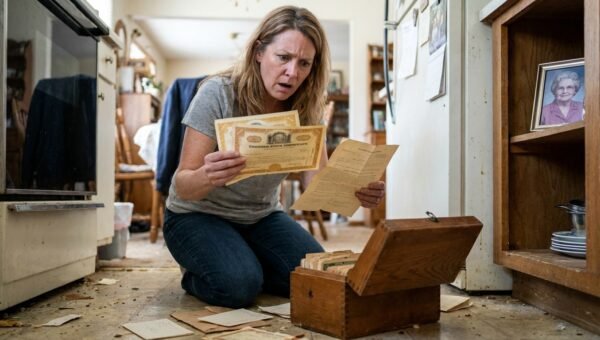
I sat down. My hands were shaking enough that I had to try twice more. Under the false bottom was a roll of bills thick as my wrist, a folded deed, and a letter in Mama’s shaky hand. I recognized her writing from the labels she put on freezer containers.
The letter began, “For the one who actually showed up. The land they’re fighting over was already…”
I stopped there. I don’t know why. I had to set it down and wash the butter and dust off my fingers first, as if that mattered.
Then I picked it back up and read the whole thing.
“The land they’re fighting over was already deeded to you three years ago. They thought love was something you could write on a Hallmark card twice a year. Let them fight over what’s left in the empty checking account and the brush lot down in the bottoms.”
I read that part twice.
Mama wrote that the deed was recorded at the county courthouse, in a particular book and on a particular page. She named Attorney Miller, who had prepared it. She told me to call him the next morning and not to hand the original to Galen, no matter what he said.
The deed had a county recorder’s stamp. It was a Transfer-on-Death deed for the 120-acre home tract, including the farmhouse. The date was three years earlier. I didn’t understand every line, but I understood enough to know this wasn’t some note Mama had made herself. It had been signed and recorded.
The money was in neat bundles of hundreds. I counted it at the kitchen table. Eighteen thousand dollars.
Mama wrote that it was her emergency money for the filing fees and property taxes, so I wouldn’t have to ask my brothers for help or take on debt to keep the place. I counted it again because I thought I’d made a mistake. I hadn’t.
The next morning, I called Attorney Miller’s office. I had to say my name twice before the receptionist found the appointment book. Mr. Miller remembered me. He’d been to the house years earlier, when Mama could still walk to the front door with her cane.
He shut his office door when I came in. “You found the churn,” he said.
I put the deed on his desk. “Did Mama really do this?”
“She did,” he said. “And it was recorded.”
I asked why he’d let the will be read like that. He didn’t look pleased with the question, but he answered me straight. The will was an older one from nine years ago. Mama had never revoked it. The deed was separate, and it had already taken the home tract out of the estate. The will couldn’t put it back in.
“She wanted them to hear the will first,” he said. “She wanted to know what they’d do when they thought it was theirs.”
I didn’t like that. Mama had made me sit in that room and be laughed at, even if I didn’t know she’d planned it. I said so.
Mr. Miller rubbed his thumb over the edge of his desk. “She knew you’d be hurt. She also knew they’d show you who they were.”
I wanted to tell him that wasn’t fair. I wanted Mama to have told me herself, to have let me know I wasn’t just the child who stayed because somebody had to. But the deed was there, and the writing was hers. I couldn’t pretend she hadn’t made a choice.
Mr. Miller brought up the county records on his computer and showed me the deed book and page. The public registry confirmed what was written on the paper. The 120-acre home farm had transferred to me upon Mama’s death. The only land still in the estate was a 15-acre woodlot down in the bottoms. It was scrubby, swampy ground with an outstanding lien attached.
Galen and Ray had the older will and an idea of what the farm was worth. They didn’t have the home place.
Mr. Miller went over what I needed to do. The deed was properly recorded. He could give me a certified copy. I could pay the back taxes and transfer costs from Mama’s money and have the paperwork settled. I had spent months worrying about whether I could afford to keep the property. She’d thought of that, too.
“Don’t argue with them over the phone,” he said. “Show them the records.”
That was good advice. I still typed a text to Galen in the parking lot. I wrote that he’d been cruel and that he had no idea what Mama had left me. I deleted it before I sent it. I didn’t trust myself to keep the deed out of a shouting match.
I paid the taxes and fees. The $18,000 covered them, with enough left to handle the first round of upkeep. The title to the home tract was clear, and I didn’t owe the bank or my brothers a penny.
I thought that would be the end of it. It wasn’t.
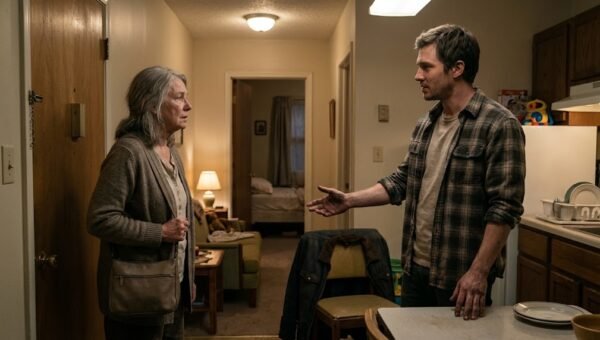
Three days later, I heard tires on the gravel drive. Galen’s truck came first, too clean for that road. Ray was in the passenger seat. Behind them was a local realtor I’d met once at the feed store.
The realtor got out holding a clipboard. Galen had a For Sale sign under one arm.
I went to the porch before they reached the steps. I’d been pulling weeds from Mama’s garden, and dirt was packed under my nails. Galen looked at my hands and then at the house.
“You’ll need to pack by the weekend,” he said. “We’re having her place appraised.”
Ray stood behind him, not quite looking at me. The realtor glanced between us. She looked uncomfortable, but she didn’t leave.
I asked Galen what made him think he could sell the farm.
“The will,” he said. “You were there.”
I said I was there. I also said Mama had recorded a deed three years ago.
He laughed once, like he had at the lawyer’s office. “That doesn’t sound like something she’d do without telling us.”
That was the part that got to me. He had not visited enough to know what she’d do. He had not asked her what she was worried about, or sat beside her when she couldn’t get out of bed. But he still spoke as if he knew her better than I did.
I handed the certified copy to the realtor. She took it and read the stamp, then the description of the property. I watched her finger move down the page.
“Mr. Galen, this home tract isn’t part of the probate estate,” she said. “You don’t have authority to list it.”
Galen took a step toward her. “The will says, ”
“The deed is recorded,” she said. “I can’t appraise or list property you don’t own.”
She handed it back to me, gathered her clipboard, and went to her car. She wasn’t rude. She didn’t need to be.
Ray looked at the ground. Galen looked at me.
“You had this the whole time?”
“I found it in the churn the night after the reading. Mr. Miller verified it. The county records verified it.”
“You’ve been hiding this from us?”
I was tired of answering questions as if I’d done something wrong. Mama had kept the deed where she wanted it. I had found it and checked it before I spoke.
“You came here with a sign,” I said. “You didn’t come to ask.”
He said he’d sue. I told him he could talk to Mr. Miller. He said I’d regret turning my back on my own family. Ray finally looked up, then looked away again.
I was angry, but I didn’t yell. My voice felt like it belonged to somebody who had finished being useful.
“You can keep your holiday cards and the debt on the brush lot,” I said. “Get off my dirt.”
Galen didn’t answer. He took the For Sale sign and walked back to his truck. Ray followed him. Neither one offered to help with Mama’s garden, or the roof, or any of the things they’d once said were too much trouble.
The realtor drove off first. The brothers stayed in the truck for a minute, talking to each other. Then they left, and the tires kicked up gravel just as they had when they arrived.
I haven’t spoken to either of them since. I don’t miss the holiday cards. I thought I might feel guilty for saying what I said, but mostly I felt tired. The kind of tired that comes after you’ve carried something for years and finally set it down.
I still have work to do on the house. The porch rail needs fixing, and one pasture gate sags when it rains. I’m not pretending everything is easy now. It’s just mine to manage. That is different.
That evening, I put the churn in the parlor and polished the golden cedar rim with a soft cloth. I rested my hands where Mama’s hands used to work and looked out the front window across my sunlit pasture.