PART 1
The hospital floor smelled like floor wax and rubbing alcohol, a cold, sharp smell that always makes my stomach turn. It was two in the morning on a rainy Tuesday in October. I was sitting on a stiff vinyl chair in the waiting bay of the intensive care unit, my jeans soaked through at the knees because I had dropped to the wet linoleum of my stepmother Clara’s hallway an hour earlier to lift her head off the floor.
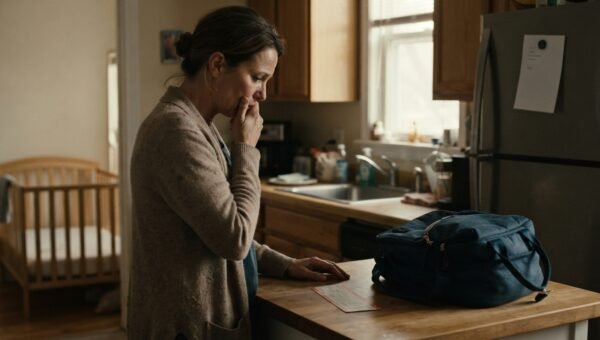
Clara was seventy-one. She had suffered a massive hemorrhagic stroke in her kitchen while boiling water for peppermint tea. When the paramedics wheeled her through the double doors, her left side was entirely limp, her mouth pulled down, her eyes staring blankly at the ceiling tiles.
My hands were still trembling as I dialed Clara’s biological daughter, Mia. Mia was thirty-two, lived twenty minutes away across town, and had not visited her mother in four months except to pick up cash for her car payments.
The phone rang five times before Mia answered. Music was thumping in the background, along with the clink of glasses.
“Mia, it is your mom,” I said, my voice cracking. “She had a severe stroke. I found her on the kitchen floor. We are at Mercy General in the ICU. The doctor says the bleeding in her brain is critical. You need to get down here right now.”
There was a pause. I heard a man laugh in the background, and then Mia’s voice came through the receiver, flat, dry, and annoyed.
“Seriously, Nora? It is two in the morning. What am I supposed to do about it? I am not a neurosurgeon.”
“Mia, she might not make it through the night,” I whispered, pressing the phone hard against my ear. “Do you understand what I am saying? She is dying.”
“Look, you are already there,” Mia replied, letting out an irritated sigh that crackled in my ear. “Call me when she is dead. Until then, handle it.”
The line clicked dead.
I sat there staring at the illuminated screen, unable to breathe. I had known Mia was selfish, but hearing those exact words cut right through me. For seven years, ever since my father passed away and left Clara on her own, I had been the one driving Clara to her cardiology appointments, picking up her prescriptions from Walgreens, cleaning her gutters, and planting her spring petunias. Mia only ever showed up when her rent was short.
Before I could even put my phone back into my purse, a tall man in a navy trench coat walked into the ICU waiting area. He scanned the room and locked eyes with me. For a split second, I thought my husband, Greg, had finally come to support me. I had texted him three times from the ambulance, begging him to meet me at the hospital.
Instead, the man stepped forward and stopped two feet from my chair. He did not look like Greg at all. He pulled a thick manila envelope from under his arm.
“Eleanor Vance?” the man asked.
“Yes?” I stammered, standing up.
“You have been served,” he said in a monotone voice, extending the envelope toward my chest. “Legal notice of dissolution of marriage and temporary orders. You have thirty days to respond.”
He dropped the packet into my lap, turned on his heel, and walked out the automatic doors into the pouring rain.
My fingers went numb. I pulled the papers out of the envelope under the harsh fluorescent lights.
The title across the top of the first page read: *Petition for Dissolution of Marriage.* Petitioner: Gregory Vance. Respondent: Eleanor Vance.
Greg and I had been married for twenty-two years. We had built a life, paid down a mortgage on a modest three-bedroom ranch, and raised our kids through college. Things had been quiet between us lately, distant even, but I thought we were just tired, middle-aged, and worn down by daily life. But as I flipped through the petition, I saw the date stamped by the county clerk. Greg had filed these papers four days ago. He had hired a private process server to hunt me down. He knew Clara was failing, he knew where I would be, and he chose this exact moment, while my stepmother lay dying behind a glass partition, to hand me the end of my marriage.
A text buzzed on my screen thirty seconds later. It was from Greg.
*I know you got the papers. Do not come back to the house tonight. I changed the deadbolts on the front door and garage. Your clothes are packed in three boxes on the covered back porch. You have spent seven years pouring all your time and our extra money into your father’s widow instead of our home. I am done competing with an old woman who is not even your real mother. My lawyer will handle everything from here on out.*
I sank down onto the vinyl chair, holding the divorce petition in one hand and my phone in the other. Tears stung my eyes, but I did not let them spill over. A strange, hollow calm settled into my chest. In the span of twenty minutes, my stepmother’s daughter had discarded her, and my husband had discarded me.
At 4:15 that morning, the doctor in scrubs walked out to the waiting room, took off his surgical cap, and shook his head. Clara was gone. She had slipped away without waking up.
I walked into her room, held her cold hand, kissed her forehead, and whispered goodbye. I signed the release paperwork. I arranged for the funeral home to collect her body. I paid the initial five-hundred-dollar transport deposit out of my own checking account because nobody else was there to do it.
I texted Mia: *Your mother passed away at 4:15 AM. The service is Friday at Oakwood Memorial.*
She did not reply.
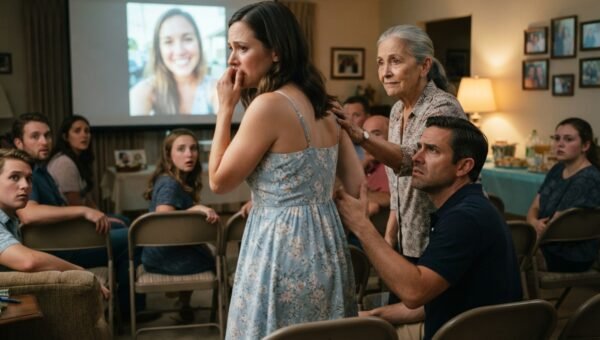
Two days later, on Friday morning, six people gathered at the cemetery. It was cold, the ground soft with mud. Mia arrived ten minutes late, wearing oversized designer sunglasses, a black wool coat, and high heels that sank into the grass. She did not shed a single tear. She did not look at the casket. She stood by the path checking her phone until the pastor finished his short prayer.
When the casket was lowered, Mia turned directly toward me and cleared her throat.
“The lawyer’s office is at two o’clock,” she said loudly, not caring that the pastor was still standing right beside us. “Mr. Henderson on Main Street. The will reading. Be there or do not, but do not think you are stalling it.”
I looked at her, exhausted down to the marrow of my bones. I was staying at an extended-stay motel near the highway, surviving on black coffee and diner toast, with all my belongings sitting in the trunk of my ten-year-old Subaru.
“I will be there, Mia,” I said quietly.
At two o’clock sharp, I sat across from Mia in the wood-paneled conference room of Arthur Henderson, Clara’s longtime estate attorney. Mia had brought her boyfriend along, a young guy in a leather jacket who reeked of cheap cologne. Mia sat with her legs crossed, swinging her foot impatiently.
Mr. Henderson, an older man with wire-rimmed glasses, cleared his throat and opened Clara’s red file folder.
“We are here for the formal reading of the Last Will and Testament of Clara Mae Vance,” Mr. Henderson said. He looked over the tops of his glasses, his eyes lingering on Mia for a second before turning to the paper.
“To my biological daughter, Mia Vance,” Henderson read, “I bequeath my primary residential property located at 412 Elm Street, free and clear of encumbrance, along with all active checking, savings, and certificate of deposit accounts held at First National Bank, totaling approximately two hundred and forty thousand dollars. I also leave her all personal jewelry, household furnishings, and motor vehicles.”
Mia let out a triumphant gasp. She grabbed her boyfriend’s arm, her face lighting up with a wide, arrogant smirk.
“I knew it,” she whispered loud enough for the entire room to hear. “I knew she would not dare cut me out.”
Mr. Henderson paused, turned the page, and looked directly at me.
“To my stepdaughter, Eleanor Vance,” Henderson continued, reading steadily, “who gave me her time and care when I needed it most, I leave all my indoor potted houseplants, specifically the snake plant, the peace lily, and the three large Boston ferns currently situated in my front sunroom, provided she removes them from the residence within forty-eight hours of my passing.”
Henderson closed the folder. “That concludes the distribution of specific assets. The remainder of the estate passes to the primary beneficiary, Mia Vance.”
Silence fell over the room.
I sat there, my hands resting in my lap. Potted houseplants. Three ferns, a peace lily, and a snake plant.
Mia burst out laughing. It was a harsh, ugly sound that bounced off the mahogany walls.
“Houseplants!” she cackled, pointing her manicured finger straight at my face. “She gave you her dusty, dying weeds! Seven years of wiping her counters and driving her to the pharmacy, Nora! Seven years of being the dutiful little martyr, and all you got was dirt in plastic pots!”
I did not yell. I did not cry. I just looked at her.
“She used you all those years,” Mia sneered, leaning across the table, her eyes gleaming with cruel delight. “She used you because you were stupid enough to let her. Hope you finally learned your lesson, big sister. You can come get your stupid weeds today. After tomorrow, the locks are changed, and whatever is left goes straight into the dumpster.”
PART 2
I drove over to Clara’s house at four that afternoon. The autumn sky was gray, spitting a fine, cold drizzle. When I pulled into the driveway, Mia’s boyfriend’s pickup truck was already backed up to the front porch. The front door stood wide open.
Inside, the house was already being ransacked. Cardboard boxes were piled haphazardly in the hallway. Mia was in the living room, wrapping Clara’s vintage silver tea service in newspaper, tossing pieces into a plastic tote bin like junk.
She looked up when the screen door creaked shut behind me. She was chewing gum, a smug grin plastered across her face.
“Back for your prize garden?” she scoffed, waving a hand toward the sunroom at the front of the house. “Take them and get out. I have an estate liquidator coming tomorrow at nine, and a Realtor coming at noon. I am cashing out this entire place by the end of the month.”
I did not answer her. I walked past her into the sunroom.
It was a bright, glass-enclosed space facing south. Clara had spent almost all her mornings here, sitting in her wicker armchair, sipping tea and tending to her greenery. In the corner sat the tall, hardy snake plant with its stiff, yellow-edged leaves. On the side table was the peace lily, its dark green foliage thick and glossy. Hanging from heavy brass ceiling hooks were the three massive Boston ferns, their fronds spilling over the sides of wide, hanging wire baskets lined with brown coconut coir.
I walked over to the first hanging fern. The basket was surprisingly heavy, packed tight with soil and roots. I unhooked it carefully, cradling the damp coir against my coat, and carried it out to the trunk of my Subaru.
Mia watched me from the front porch, leaning against the railing with her arms crossed, laughing quietly with her boyfriend.
“Make sure you get every single one, Nora,” Mia called out, her voice dripping with mockery. “I would hate for you to miss out on your massive inheritance. Do not leave a single leaf behind.”
I said nothing. I went back inside, carried out the second fern, then the third. Then I brought out the peace lily and the heavy ceramic pot holding the snake plant. I loaded all five plants into the back of my wagon, arranging them carefully so the fronds would not crush against the roof.
Before I shut the tailgate, I looked back at Clara’s front door one last time. Clara had loved this house. Her husband, my father, had built the back deck with his own hands. Now Mia was tearing through it like a vulture, eager to turn decades of family memories into quick cash.
I got behind the wheel, started the engine, and drove back to the highway motel.
My room was on the ground floor, small and outdated, with a humming mini-fridge and two double beds covered in brown floral polyester spreads. I carried all five plants inside, setting the ferns and the lily along the windowsill so they could catch what little daylight remained. The room immediately smelled like fresh earth, damp moss, and green leaves. It smelled like Clara’s sunroom.
I sat on the edge of the bed and kicked off my boots. My entire life had collapsed in seventy-two hours. I had no permanent home. My husband of twenty-two years had locked me out and filed for divorce. The woman I had spent seven years caring for had left everything to the daughter who despised her.
Yet as I looked at those green plants resting against the cheap motel curtains, I did not feel angry. Clara was an old-fashioned woman, proud and fiercely independent, but she had not been stupid. She had known exactly who Mia was. For months before her stroke, Clara had watched Mia demand money, blow through checks, and dodge calls. Clara had seen it all.
So why the plants?
I stood up and walked over to the largest Boston fern hanging from the curtain rod. Clara had watered this plant every single Sunday morning like clockwork. She had mixed her own soil blend, talking to the ferns as if they were old friends.
I reached out and touched the lush, feathery fronds. As my fingers parted the thick foliage, feeling down toward the base of the stems, my fingertips brushed against something hard nestled deep inside the crown of the roots.
Soil in a fern basket should be soft, spongy, and fibrous. But near the center of the root ball, about two inches below the green shoots, there was a firm, solid shape wrapped in heavy plastic.
My heart gave a sudden, hard thud.
I carefully lifted the hanging wire basket off the curtain rod and carried it over to the small laminate desk. I spread out a bath towel from the bathroom, placed the fern in the middle, and began gently pushing back the moss and topsoil with my fingers.
Underneath a layer of damp sphagnum moss was a thick, vacuum-sealed pouch made of heavy industrial freezer plastic. It was completely waterproof, nestled snugly between the root clusters.
I peeled back the tape sealing the pouch. Inside was a crisp, folded piece of cream-colored stationery written in Clara’s neat, looping cursive script, dated three weeks before her stroke.
*My dearest Nora,* the letter began.
*If you are reading this, I am gone, and Mia has already shown you who she truly is. I know what the will said today, and I know how hard it must have been to sit in Arthur’s office and hear it. Please forgive an old woman who had to play a very careful game.*
*Mia is my flesh and blood, but she has a sickness of greed in her heart that I could never fix. For two years, she has been threatening to take me to court to declare me incompetent so she could seize control of this house and my bank accounts. Her boyfriend put her up to it. If I had left you the house or the money in a normal will, Mia and her lawyers would have tied you up in probate court for years. She would have contested every comma, drained you in legal fees, and made your life a living hell out of pure spite.*
*I could not protect you from her anger, Nora, but I could protect you from her greed. So I gave Mia exactly what she demanded. I gave her the house and the accounts.*
*Now, look under the roots of the other two ferns. What you find belongs to you. It has always belonged to you. Take it, hire the best divorce lawyer in this state, and build yourself the peaceful life you earned.*
*With all my love and gratitude, Clara.*
My hands were shaking violently. I set the letter down and rushed to the second fern.
I brought it to the desk, parted the thick fronds, and dug my fingers into the root ball. Sure enough, another heavy plastic pouch was wedged deep inside the wire frame.
I sliced open the plastic. Inside were four neat stacks of crisp, hundred-dollar bills, bound with blue paper bank bands, totaling forty thousand dollars in cash. Tucked beneath the cash was an official velvet jeweler’s box containing Clara’s grandmother’s antique diamond ring and sapphire pendant, appraised insurance certificates folded neatly inside, valued at over sixty-five thousand dollars.
I moved to the third fern with tears streaming down my face.
In the center of the third basket, sealed in a double-layered waterproof pouch, was a set of legal documents and an active bank passbook from an offshore branch in the Cayman Islands, along with a formal transfer of a payable-on-death trust account held in my name at an independent wealth management firm.
The account balance printed on the final certified quarterly statement was four hundred and ten thousand dollars.
Clara had not used me. She had not left me with nothing. She had known that direct probate would trigger a vicious lawsuit from Mia. So over the last eighteen months of her life, quietly, methodically, she had liquidated her secondary retirement funds and moved them into private, untouchable trusts and cash, hiding the physical proof inside the only thing she knew Mia would never look twice at: her front-porch ferns.
I sat back in the desk chair, holding Clara’s letter against my chest, and sobbed until my ribs ached.
PART 3
Early the next morning, I did not go to work. I drove straight to the office of Sarah Jenkins, the most formidable family law and estate attorney in the county.
I laid the cash, the trust documents, and Greg’s divorce papers on her desk.
Sarah looked over the paperwork, her eyebrows lifting as she reviewed the dates, the bank balances, and the eviction text Greg had sent me while Clara was dying.
“First of all, Eleanor,” Sarah said, leaning forward, “your husband locking you out of your marital home without a formal court order is completely illegal. It is considered an unlawful self-help eviction. Second, any asset acquired by you through an inheritance or private trust held solely in your name is separate property under state law. Greg cannot touch a single dollar of Clara’s trust. But because he abandoned you and attempted to hide marital assets before filing, we are going to file an emergency motion for exclusive occupancy of your house and freeze every single joint account he controls.”
Within three hours, Sarah had filed the emergency petition. By noon, a sheriff’s deputy met me at my house, walked up the driveway, and ordered Greg to hand over the newly cut keys.
Greg stood in the driveway in his socks, his face turning pale and blotchy as the deputy informed him that he had two hours to pack his personal clothing and vacate the premises immediately under a temporary protective order.
“Nora, what are you doing?” Greg stammered, looking terrified as the neighbors watched from across the street. “You cannot do this! We can talk about this! You do not have the money for a lawyer like Sarah Jenkins!”
“I do,” I said calmly, looking him straight in the eyes. “Clara took care of me. My lawyer will handle everything from here on out. Exactly like you wanted.”
I walked into my home, locked the door behind me, and began unpacking my things.
For the rest of the afternoon, my world was quiet. I cleaned the kitchen, placed Clara’s peace lily on the dining table, and began organizing my life.
Then, just before five o’clock, less than twenty-four hours after the will reading, my phone began to ring.
The caller ID flashed: *Mia.*
I picked up and pressed accept.
Before I could say hello, a sound came through the speaker that did not sound human. It was a ragged, hysterical wail. Mia was sobbing so violently she could barely draw breath, choking on her own tears, her voice shrill and completely unhinged.
“Nora!” she shrieked, gasping for air. “Nora, please, you have to answer me! Please!”
“Mia?” I said, keeping my voice entirely neutral. “What is wrong?”
Then she choked out the six words that explained everything:
“The house has a reverse mortgage!”
She broke down into uncontrollable weeping, her breath coming in jagged, wheezing gasps.
“The bank just called me,” she screamed through her tears, her words tumbling out in a panic. “The Realtor ran the title search this morning! Mom took out a reverse mortgage four years ago! The bank owns the house! There is an active lien of three hundred and eighty thousand dollars on it! The payment is due immediately because she died! And the bank accounts, Nora… the checking and savings accounts had only four hundred dollars in them! The rest was an automatic line of credit she drew down to zero! I do not have two hundred thousand dollars! I owe the bank three hundred and eighty thousand dollars, or they are foreclosing on Friday! Everything is gone! I have nothing! Nothing!”
ENDING
I stood in my quiet kitchen, holding the phone against my ear, listening to Clara’s biological daughter completely unravel.
“Nora, you have to help me!” Mia cried, her pride completely shattered. “You were with her every day! Where did all her money go? She had a pension! She had Dad’s life insurance! Where is it? Did she give it to you? You have to give it back! I am her real daughter! You cannot let them take the house! Nora, please!”
I looked across the room at the dining table, where Clara’s peace lily sat in the afternoon sunlight, its glossy green leaves catching the golden rays.
Clara had planned every single detail.
When my father died seven years ago, Clara was left with a modest life insurance policy and a home that was already aging. Mia had immediately begun demanding money, forcing Clara to give her thousands of dollars under the threat of abandonment. Clara had realized very early that Mia would never stop until every dime was drained.
So Clara played the long game. She took out a reverse mortgage on the home, pulling equity out month by month. She funneled that money quietly into private trust funds and certified bonds held entirely off the radar of county probate records. She let Mia believe that the house on Elm Street was a grand prize waiting at the finish line, keeping Mia’s greedy eyes firmly locked on a hollow shell.
Clara had left Mia exactly what Mia demanded: the house and the bank accounts. But Clara had made sure that what Mia actually inherited was the debt she had driven her mother to take on.
“Nora! Are you listening to me?” Mia screamed, her voice cracking with desperation. “Say something!”
“I am listening, Mia,” I said softly.
“What did she leave you? Tell me! Did she hide money with you?”
I took a slow, steady breath.
“She left me five houseplants, Mia,” I said. “Just like the lawyer read in the will. Three Boston ferns, a peace lily, and a snake plant. You made sure everyone in that office heard it.”
“Do not lie to me!” Mia shrieked. “Where is the money?”
“I don’t owe you an explanation, Mia,” I replied, my voice steady and cold. “Two nights ago, when your mother was dying in the ICU, you told me to call you when she was dead. You told me to handle it. Well, Mia, you inherited the estate. Now you handle it.”
I hung up the phone.
Mia called back immediately. Once, twice, five times. I blocked her number.
Over the next two weeks, the collapse of Mia’s world was swift and absolute. The bank initiated foreclosure proceedings on the Elm Street house. The estate liquidator she had hired canceled the contract when they discovered the house was tied up in liens. Her boyfriend, the one who had laughed at me during the will reading, packed his bags and left her the moment he realized there was no windfall coming. Mia was forced to move into a tiny, run-down studio apartment across the county line, working double shifts at a diner to pay off the legal fees she had racked up trying to challenge the bank’s mortgage contract.
Meanwhile, my own life began to heal.
With Sarah Jenkins leading the way, Greg’s attempt to cut me out backfired completely. Faced with the evidence of his illegal eviction and his concealment of marital savings, Greg’s attorney advised him to settle immediately. I kept our three-bedroom house, free of any claim from him, and received half of his retirement pension. Greg was forced to rent a small apartment near the highway, paying his own legal debts while living with the consequences of his betrayal.
Clara’s trust fund gave me a security I had never known in my entire life. I paid off the remainder of my home mortgage. I put aside funds for my children’s future, and I donated ten thousand dollars to the palliative care unit at Mercy General in Clara’s name, ensuring that other families sitting in that cold waiting room would have comfortable chairs and warm blankets.
On Sunday morning, six months after Clara’s passing, I sat in the sunroom of my own home.
The morning light poured through the glass windows, warming the floorboards. The three Boston ferns hung from sturdy brass hooks above me, their green fronds long, lush, and thriving. Clara’s peace lily sat on the table beside my chair, blooming with three crisp, white flowers.
I picked up my watering can, filled with cool water, and carefully poured it into the rich soil of each basket.
Mia had believed that love could be measured in deeds, titles, and bank balances, and she had ended up with nothing but dust and debt. Clara had known that true loyalty is quiet, patient, and resilient.
I set the watering can down, sat back in my wicker chair, and took a sip of hot peppermint tea. For the first time in twenty-two years, my home was completely peaceful, and I was finally free.