PART 1
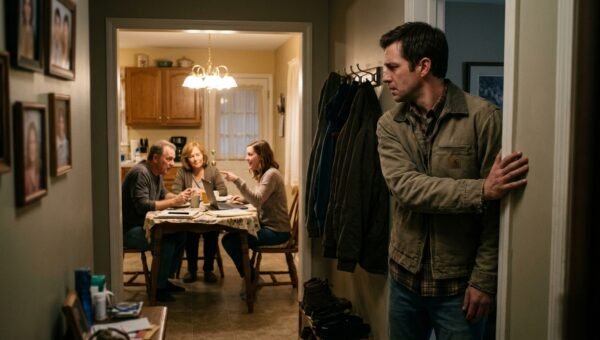
My husband had been dead for less than three months when my oldest sister-in-law threw the first stone right in the middle of Sunday dinner.
“Look, Mariana, don’t take this the wrong way,” Leticia said, adjusting her hair as if it actually pained her to say it out loud, “but it’s about time you cleared out of the master bedroom. Carlos and I want to move in. Ruben is gone, and you still sleeping in that big room just looks weird to everybody.”
My mother-in-law, Sofia, kept her soup spoon suspended over her bowl for barely a second. Then she dipped it right back into the broth and kept eating, as if she had not heard a word.
My brother-in-law Hector did not even lift his head from his phone.
I set my cloth napkin down beside my plate. I looked straight at Leticia and smiled, slowly.
“Thanks for worrying about me, Leticia,” I said, keeping my voice very quiet. “But I’m worried about what people might say if I do that.”
Her face tightened up instantly. She was expecting tears. For two and a half months, ever since Ruben’s heart gave out in his sleep at fifty-six, she had watched me shuffle through that house in gray sweatpants, numb and half-asleep on grief. She thought the fight had gone out of me for good.
“People don’t care about that,” Leticia scoffed, crossing her arms on the tablecloth. “What they talk about is common sense.
My parents built this house forty years ago. Ruben brought you here to live with the family when things got tight for you two. Now that he isn’t here, you’re basically occupying space that belongs to his blood. It’s time to pack your clothes, move down into the little guest room in the basement, or find yourself a cheap apartment across town.”
I took a sip of my ice water. My hand shook just enough to make the glass clink against the rim of my plate, but I did not look away from her.
“Is that what you think happened, Leticia?” I asked.
Sofia cleared her throat. She dabbed her mouth with a paper napkin and looked at the wall behind my head instead of looking at my face.
“Mariana,” Sofia said, her voice carrying that smooth, church-choir sweetness she used whenever she was about to twist a knife. “Leticia is only thinking about the family balance.
Carlos works hard, and their kids need more room. You know how Ruben loved his sister. If Ruben were here, he would want his family taken care of first. You’re young enough to start over. You’re fifty-two, you have your bookkeeping job at the clinic, and you don’t need four bedrooms.”
“Ruben bought this house from the bank eight years ago,” I said plainly.
Leticia laughed out loud, a sharp, ugly bark that made Hector finally look up.
“Ruben did paperwork for Mama, that’s all he did,” Leticia said, pointing a manicured red nail at me. “Mama had credit issues back then, so Ruben signed for her. Everybody knows that. It was family money, Mariana. Mama gave him the cash for the payments. You don’t have a claim on this roof just because you did Ruben’s laundry.”
“Leticia is right,” Sofia murmured, folding her hands neatly in her lap. “Ruben held the title as a favor to me.
He was going to put it in Carlos’s name next spring anyway. He told me so before he passed. We didn’t want to bring it up while you were crying every day, but Carlos’s lease is up on the thirty-first. We need the keys to the master suite by next Friday.”
They had rehearsed this. I could tell by the clean handoff between mother and daughter, the rehearsed calm, the way Hector slid his chair back an inch, ready to play referee if I started screaming.
They expected me to beg for an extra month. They expected me to run upstairs, shut the door, and bury my face in Ruben’s old flannel shirts.
Instead, I stood up from the table.
“I’m not moving down to the basement,” I told them. “And Carlos isn’t setting a single cardboard box in my hallway.”
Leticia’s eyes narrowed. “It’s not your hallway, Mariana. Monday morning, I’m having a lawyer draw up a formal thirty-day notice. You can leave with your dignity, or you can have the county sheriff walk you down the driveway while the neighbors watch.”
I walked out of the dining room without saying another word.
I went up the stairs, walked into the master bedroom, and shut the heavy oak door behind me. My chest felt hollow, like somebody had scooped out my ribs with an iron spoon.
Ruben and I had lived in this house for nearly a decade. When his father passed away eight years earlier, the property was three weeks away from a county tax auction, carrying an unpaid balance of $48,000 in back property taxes and an old second mortgage that had ballooned out of control. Sofia had cried at our kitchen table back then, begging Ruben to save the family home.
Ruben had come to me that night. We had $62,000 saved in a joint high-yield account, money we had scraped together from twenty years of double shifts and strict budgeting so we could eventually buy a small retirement cabin near the lake.
“If we pay off the delinquent taxes and clear the liens, the bank will let us refinance the whole property in my name,” Ruben had told me, holding my hands under the kitchen lamp. “We save the house for Mama, and we take ownership. We’ll give her the downstairs suite for the rest of her life, free and clear. But the property will be ours, Mariana. Yours and mine.”
I trusted him. We wired the $48,000 the following Tuesday.
Now, sitting on the edge of the mattress where my husband used to read the paper every morning, Leticia’s words echoed in my ears. *Ruben did paperwork for Mama, that’s all he did. It was family money.*
Ruben handled all the big financial files. He kept them in a green metal lockbox on the top shelf of the bedroom closet, behind his hunting boots. I had never touched that box in eight years because I never had a reason to doubt him.
I stood up, dragged the wooden step stool from the bathroom, and reached for the top shelf.
My fingers touched cold, dusty metal. I pulled the lockbox down onto the bed.
The small brass key had always hung on the ring Ruben kept inside his bedside drawer. I unlocked the latch, pulled open the lid, and began sifting through old car titles, tax returns, and life insurance policies.
Near the bottom of the stack, folded inside an official county recorder folder, was the recorded deed from eight years ago.
I opened the stiff cream paper, expecting to see Ruben’s name and my name side by side, exactly as he had promised me in the kitchen.
My eyes hit the line under the legal property description, and the room seemed to go dead silent.
My name wasn’t on the deed.
PART 2
The document in my hands was a Special Warranty Deed, dated October 14, eight years ago.
The grantee line did not say *Ruben Ramos and Mariana Ramos, husband and wife.*
It said *Ruben Ramos, a married man, as his sole and separate property.*
Beneath that line was a second document, stapled directly to the back of the deed. It was a Quitclaim Deed, signed with my name, dated the very same week.
I stared at the signature at the bottom of the page. It looked like my handwriting, but I had never seen that piece of paper before in my life. I had never stood in front of a notary public to sign away my rights to the house. I had never agreed to let our $48,000 life savings buy a home that excluded me completely.
Ruben had gone to the closing alone while I was covering a weekend shift at the clinic. He had brought the papers home later that evening, kissed my forehead, and told me the title was secure in our names.
He had lied to me. For eight years, he had lived with me in this bedroom, eaten dinner with me at that table, and let me spend my clinic paychecks paying down the principal mortgage balance, all while holding a deed that left me with nothing if he died.
Downstairs, I could hear Leticia laughing in the kitchen, followed by the clatter of Sofia washing the dessert plates. They thought they were holding all the cards because Sofia had always known about the separate property title. That was why Leticia had spoken with so much confidence at the dinner table. They knew my name wasn’t on the deed.
I sat on the edge of the bed for nearly an hour, staring at that forged quitclaim deed. My head pounded, but the panic began to fade, replaced by a cold, steady anger.
I took out my phone and took clear, well-lit photos of every single page, including the county recording stamps and the notary seal. The notary’s name was Evelyn Vance, with a commission stamp that expired six years ago.
At eight o’clock Monday morning, I didn’t go to work at the clinic. I drove straight to the county courthouse in downtown San Antonio.
I paid six dollars at the public records desk and pulled the complete historical file for 412 Oakridge Lane. The clerk handed me the full bundle: the original deed from Ruben’s parents, the tax liens from eight years ago, the mortgage Ruben took out, and the recorded quitclaim deed carrying my supposed signature.
Then I walked two blocks over to an estate and real estate attorney named David Keller, a man whose firm our clinic had used for years.
David sat behind a clean mahogany desk, adjusted his glasses, and looked over the documents I placed in front of him. He listened quietly as I explained the dinner table confrontation, the $48,000 wire from our joint savings, the monthly payments I made from my own checking account, and the signature I had never penned.
“Under Texas law, real estate acquired during a marriage is presumed to be community property,” David said, tapping a pen against the Special Warranty Deed. “However, when a deed specifically recites that property is taken as sole and separate, and is accompanied by a recorded quitclaim deed from the spouse, title companies treat it as separate property on paper.”
“Even if that signature isn’t mine?” I asked.
“If the signature is fraudulent, the quitclaim is void,” David said firmly. “A void deed conveys nothing. Furthermore, even if Ruben attempted to make this his separate estate, you used $48,000 of joint community funds to clear the prior liens to acquire it, plus eight years of community earnings to pay down the mortgage and improve the property. At minimum, the community estate has an enormous equitable reimbursement claim against this house that would force a sale anyway.”
“I don’t just want reimbursement, David,” I said, looking him dead in the eye. “I poured eight years of my life into that house. I replaced the roof two summers ago with my own bonus money. I cared for Ruben through his diabetes, and I looked after Sofia every time her arthritis flared up. I want the truth on paper.”
David leaned back in his chair. “Then we verify the notary first. If the notary record doesn’t show you in person with valid identification on that date, we file a suit to declare the deed void, establish your community interest, and freeze any attempt by Sofia or Leticia to open an administration that disposes of the real estate.”
He made a quick phone call to his investigator, who tracked down the surety bond and historical logbook records for Evelyn Vance.
By two o’clock that afternoon, David had the notary’s archived ledger page in his inbox.
On October 14, eight years ago, Evelyn Vance had notarized three documents for Ruben Ramos at a small title office near the highway. The logbook showed Ruben’s signature and driver’s license number. Next to the entry for the quitclaim deed, the line for Mariana Ramos was blank, with a handwritten note in the margin that read: *Spouse signature brought in by husband, confirmed by phone.*
David let out a low whistle. “She broke state law. A notary cannot certify an acknowledgment by telephone. She admitted on her own ledger that you were never in her presence.”
Armed with that logbook entry and a certified bank record of our $48,000 joint wire, David drafted a formal petition for declaratory judgment and an application for an injunction prohibiting anyone from altering, transferring, or entering the property without my consent.
I had copies made. Then I drove back to the house on Oakridge Lane.
PART 3
When I pulled into the driveway at five in the afternoon, Carlos’s silver pickup truck was already parked by the garage.
Two large plastic storage bins were sitting on the front porch.
I walked through the front door. The living room smelled like floor wax. Leticia was standing near the fireplace, directing Carlos, who was carrying a roll of bubble wrap toward the stairs. Sofia was seated in the armchair by the window, watching them with a pleased, relaxed look on her face.
“What are those bins doing on the porch?” I asked, setting my purse on the entryway table.
Leticia turned around, wiping her hands on an apron. “We told you, Mariana. Carlos needs to measure the bedroom for his king mattress. We brought some bins so you can start packing your clothes tonight. It makes things easier for everybody.”
“Put the bubble wrap down, Carlos,” I said.
Carlos paused on the second step, looking over his shoulder at his mother. He had always been timid, the kind of man who let his wife and mother do all the shouting while he carried the boxes.
“Mariana, don’t make a scene,” Sofia said from her chair, her voice turning sharp. “We spoke with Ruben’s cousin over the phone this morning. He works in title insurance. He checked the county site and told us the truth. The deed is in Ruben’s name alone. You never owned a single brick of this house. Ruben kept you here as his wife, but this is family property. Legally, you are a tenant, and we have the right to claim the estate.”
“Show her the notice, Leticia,” Sofia added.
Leticia reached into her handbag and pulled out a single sheet of paper, stepping across the rug to hold it out to me. It was a printed letter, signed by Sofia, demanding that I vacate the master bedroom within forty-eight hours and vacate the premises within thirty days.
I didn’t take the paper from her hand.
Instead, I opened the manila folder I was carrying and pulled out three stapled documents.
“You called Ruben’s cousin, but you didn’t look at the whole file,” I said, keeping my voice entirely level.
Leticia gave an impatient sigh. “We don’t need to see your old utility bills, Mariana.”
“This isn’t a utility bill,” I said. I handed the top document to Sofia. “That is the Special Warranty Deed. And that stapled page behind it is the quitclaim deed Ruben had drawn up eight years ago.”
Sofia looked down at the paper. Her expression did not change, which told me everything I needed to know. She had known about that quitclaim deed since the day it was filed.
“See?” Leticia stepped behind her mother’s chair, glancing at the page. “Your name is signed right there. You gave up whatever rights you had. Ruben did that to protect the Ramos name.”
“Read the second page in your hand, Sofia,” I said quietly.
Sofia looked down at the copy of the notary ledger from Evelyn Vance.
“Evelyn Vance noted in her official record that I was never at that office,” I explained, looking right at Leticia. “Ruben signed my name himself. He called the notary from his truck and told her I gave permission over the phone. That is a fraudulent conveyance under Texas law. A void instrument.”
Carlos slowly set the roll of bubble wrap down on the steps. “Wait. What does that mean?”
“It means the quitclaim deed is legally non-existent,” I said. “And because the house was purchased during our marriage, using $48,000 of our joint retirement savings to clear your mother’s tax liens, this property is community property. Half of it belongs to me outright by law. The other half belongs to Ruben’s estate.”
Leticia’s face hardened, but the smug confidence in her eyes vanished. “Even if that’s true, half belongs to the family! Sofia is his mother. Carlos is his brother. We have rights to his half!”
“Ruben died without a will,” I replied, pulling the third document out of the folder. “Under Texas Estates Code Section 201.003, when a married person dies without a will, and all surviving children are children of the surviving spouse, or when there are no surviving children at all, the deceased spouse’s entire interest in community property passes directly to the surviving spouse.”
I let those words sit in the quiet room.
“Ruben had no children,” I said. “Not with me, and not with anyone else. His mother does not inherit his community property. His siblings do not inherit his community property. I inherit his entire estate.”
Sofia’s fingers trembled against the edge of the paper. She looked up at me, her mouth slightly open, the sweet choir-mother expression completely stripped away.
“Ruben wouldn’t do that to me,” Sofia whispered. “This was my home.”
“Ruben took $48,000 from our savings account while you let him believe I didn’t care about the deed,” I told her. “You sat at our kitchen table eight years ago and cried until we handed over our lake cabin fund. You knew he forged my name on that paper, Sofia. You knew it the entire time.”
Sofia looked away, unable to meet my eyes.
“David Keller filed an emergency petition at the courthouse two hours ago,” I said, turning to Carlos and Leticia. “If you touch one piece of furniture in that bedroom, or if those bins aren’t off my porch in ten minutes, I’m calling the sheriff’s department with an active injunction. You don’t have thirty days, Leticia. You have ten minutes to get off my property.”
Carlos didn’t say a word. He grabbed the roll of bubble wrap, turned around, and walked straight out the front door.
Leticia stood frozen for a few seconds, her face flushed red with humiliation. She grabbed her handbag, turned on her heel, and followed her husband out, slamming the screen door so hard the glass rattled in the frame.
ENDING
The house was completely silent after the truck pulled out of the driveway.
Sofia was still sitting in the armchair by the window, staring down at her lap. Her hands looked very frail against the dark fabric of her dress.
“Mariana,” she said, her voice barely louder than a whisper. “Where am I supposed to go?”
I stood by the fireplace, looking around the room. I looked at the crown molding Ruben and I had spent two weekends painting. I looked at the hardwood floors I had stripped and stained by hand while Ruben worked overtime shifts to cover the property insurance.
“You have the downstairs suite,” I said. “You’ve lived there for eight years, and Ruben gave you his word you would have a roof over your head. I’m not going to throw you into the street