PART 1
I graduated high school at seventeen years old because I needed an escape route with a calendar date attached to it. The day I held that diploma in my hand was the exact day I walked out of my parents’ house for good. That house was filled with screaming, broken dishes, and the kind of unpredictability that makes your stomach ache the second you hear tires in the driveway.
I did not have any savings or a safety net. I couch-surfed for a couple of months, moving from a friend’s spare room to an acquaintance’s basement pull-out, keeping my clothes in two plastic tote bins. The week I turned eighteen, my boyfriend Mark and I signed the lease on our very first apartment.
It was a tiny, drafty one-bedroom on the second floor of an older brick complex. To make the rent, we both worked minimum-wage jobs, clocking sixty-plus hours every single week. Mark took night shifts stocking shelves, and I worked double shifts at a local diner, running food until my ankles swelled. When we unlocked that door for the first time, our echo filled the entire place. We had almost nothing. We owned a mattress on the floor, a thirty-inch TV that Mark had bought used off an older cousin, his Xbox, and our toiletries in the bathroom.
We ate our meals sitting cross-legged on the carpet using paper towels for plates.
Those first two years tested every ounce of grit we had. We budgeted down to the exact dollar, cutting our own hair and skipping anything that felt like a luxury. Our first major goal was getting reliable transportation. We saved every dollar of overtime until we finally had enough cash to buy a used, reliable four-door sedan.
Having that car changed our lives. We were no longer tied to bus routes, which allowed us to apply for jobs at a regional logistics warehouse on the edge of town. They offered higher base pay, predictable shifts, and fewer hours than our combined grind. For the first time, we had breathing room. The company gave scheduled wage reviews every few months and quarterly profit-sharing checks.
Slowly, deliberately, we built a real home. We bought a kitchen table with mismatched chairs from a yard sale. We bought actual ceramic plates, curtains, and a proper bed frame.
The last piece missing was a living room couch. We were still saving for one when the apartment manager, Mrs. Gable, knocked on our door one Tuesday afternoon. A tenant in building C had been evicted after abandoning the unit, leaving behind clean, intact furniture. Mrs. Gable knew how hard Mark and I had worked, and she knew our living room was still half empty. With the help of the maintenance crew, we carried up a clean, sturdy navy blue sectional. For the first time, our home felt whole.
With space to finally breathe, we started hosting a weekly Dungeons & Dragons game on Friday nights. It became our sanctuary. It was just Mark running the game as the Dungeon Master, me, my younger sister Clara, and Mark’s longtime coworker Leo. Clara had stayed with our parents two years longer than I had before moving into a shared campus apartment nearby.
She had witnessed the same chaotic childhood I did, so bringing her into our warm, quiet living room felt like healing an old wound.
Then, on a Friday in October, Clara showed up twenty minutes early. She did not bring her character sheet or the bag of chips she usually brought. Instead, she brought our mother.
PART 2
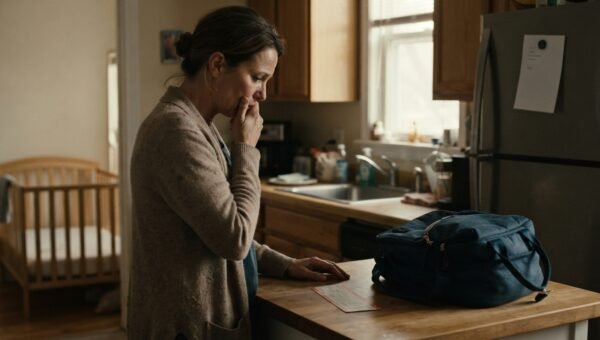
When I opened that door and saw my mother standing behind Clara on the welcome mat, every muscle in my neck locked up. I had not spoken to my mother in three years. She looked smaller than I remembered, wearing an oversized beige cardigan and clutching an old vinyl purse against her ribs, but her eyes carried that same familiar, evaluating glare that used to dictate the mood of our entire childhood home.
Clara would not look me in the eye. She stared down at the doormat and mumbled that Mom had nowhere else to go for the weekend because our father had locked her out after an argument.
Mark immediately walked over from the kitchen island, placing a steady hand on the small of my back. He did not say a word, but his presence kept my feet planted. My mother stepped past me without waiting for an invitation, walking straight into our living room. She looked at the polished hardwood, the neat bookshelf, the sectional couch, and the dinner we had prepared on the counter. Her first words were not a greeting or an apology.
She turned to me and said that it must be nice to live in luxury while leaving your own family behind in the dirt.
A cold wave washed over me. I looked at Clara, who finally raised her chin and said that since Mark and I were doing so well financially with our new jobs, we had a moral responsibility to put Mom up in our spare room until she found an apartment. Clara said it was cruel of me to keep secrets about how much money we were making while our mother was struggling.
It hit me then that Clara had spent the last six months taking inventory of everything Mark and I had achieved. Every time she sat on our couch, every time she noticed a new appliance or heard us mention our quarterly bonuses, she had been reporting back to our mother. They had constructed an entire fantasy where I was living in excess and deliberately withholding help out of spite.
I told my mother she was not staying the night. I told her plainly that she could sit on the couch for ten minutes while we helped her look up an extended-stay motel, and that Mark and I would pay for two nights out of our pocket just to keep her safe, but she could not stay in our home.
My mother’s voice instantly changed from meek to venomous. She told me that everything in this apartment belonged to her by right because she had suffered raising me. Then she pointed at Clara and said that Clara had already promised her she could move in by Monday.
PART 3
The living room went dead silent. Clara crossed her arms, looking defensive, and said that family does not abandon family, especially when one sister clearly has enough to share.
Mark spoke up, his voice firm and completely level. He reminded Clara that her name was not on the lease, that she did not pay a single utility bill in this building, and that she had no legal or personal right to offer our home to anyone. Mark walked over to the front door, pulled it wide open, and told my mother that the offer to pay for a motel room was officially off the table because of how she had spoken to me.
My mother refused to move. She sat down heavily on the navy sectional, folded her arms, and dared us to call the police on our own flesh and blood. She claimed that because she was invited inside by a family member, she had tenant rights.
That was the moment any remaining guilt broke inside my chest. For years, I had carried the quiet fear that maybe I had been too harsh when I walked away at seventeen. But seeing her sit on the couch that Mark and I had wiped down and earned through honest sweat, trying to hold my peace of mind hostage, washed away the fog.
I walked to the kitchen, picked up our landline receiver, and dialed the property management office directly. It was just after six o’clock, but Mrs. Gable was still downstairs finishing paperwork. I explained clearly that an unauthorized person was refusing to leave our leased premises and causing a disturbance.
Mrs. Gable arrived at our door four minutes later, accompanied by the building’s head of security. Mrs. Gable did not waste time. She looked directly at my mother and stated that she was trespassing on private property, that she was not listed on any occupancy agreement, and that if she did not gather her purse and exit the building within sixty seconds, the local police department would be dispatched to remove her in handcuffs.
Clara began crying, shouting that I was a heartless monster for humiliating our mother in front of building staff. My mother stood up, her face twisted with fury, and knocked over one of our mismatched dining chairs on her way out the door. The security guard followed them down the hall until the heavy exterior lobby door clicked shut.
ENDING
After they were gone, the apartment felt eerily quiet. Mark and I stood in the hallway together for a long time without speaking. Then he quietly walked over, picked up the overturned wooden chair, and set it upright against the table.
That night, we did not play our game. Mark called Leo and explained that we had an unexpected family emergency, and Leo was kind enough not to pry. Clara sent me seven long text messages before midnight, accusing me of betraying the family and claiming I would die alone because of my selfishness. I did not respond with anger or defensive explanations. I read them once, took a deep breath, and blocked her number on my phone.
The next morning, Mark and I went down to the rental office to apologize to Mrs. Gable for the scene. She waved her hand before I could finish the sentence. She told us she had seen plenty of families over the years who only show up once someone has managed to dig themselves out of a hole. She made sure our unit was flagged for security so neither my mother nor Clara could buzz the intercom to get past the front entrance.
A few months have passed since that Friday. Mark and I received another scheduled raise at the warehouse, and our savings account is finally large enough to start looking at starter homes outside the city.
Cutting Clara out of my life was not easy. There are still moments when I see a set of dice on our coffee table and feel a sharp ache for the sister I thought was healing alongside me. But I have learned that shared trauma does not guarantee shared loyalty. Mark and I built our peace with sixty-hour workweeks, cold nights on a bare floor, and mutual respect. Nobody is ever going to walk through that door and take it from us again.