PART 1
I wrote the cashier’s check for $25,000 on a Tuesday morning in October. My sister, Brenda, sat at my kitchen table with her head down while her husband, Greg, did all the talking. He kept wiping his palms on his jeans, saying the bank was two days away from filing a notice of default on their split-level home in Oak Creek. He swore they had nowhere else to turn.
He told me that if I could float them the money until his commercial roofing contracts cleared in the spring, they would pay me back every dime with interest.
I didn’t ask for interest. I was fifty-eight years old, working fifty hours a week managing a local dental clinic, and that $25,000 represented nearly half of what I had managed to set aside after my divorce. But Brenda was my younger sister. When we were kids sharing a drafty bedroom upstairs, our mother always told us that family came before pride. So I drove to the credit union, had the check made out directly to Greg and Brenda Miller, and handed it across the counter.
I didn’t make them sign a promissory note. I thought about printing one off the internet, but when Greg picked up the check, Brenda began crying and squeezed my hand until her knuckles went pale.
Asking a sister for a signature while she was sobbing felt cold. I told myself their word was enough.
For the first year, I never mentioned the money. I knew roofing had slow seasons, and whenever Brenda called, she complained about grocery prices and the cost of property taxes. Then two years passed. I noticed Greg had traded his older work truck for a late-model crew cab with chrome wheels, and Brenda had redone their kitchen counters in quartz. Whenever I visited, neither of them brought up the $25,000.
By the third year, my furnace went out in the middle of January, and my dental clinic cut everyone’s hours by ten percent. I had to dip into my remaining savings to replace the unit. That was when I realized I needed my money back.
I waited until a Sunday afternoon in April. I called Brenda and asked if I could come over for coffee.
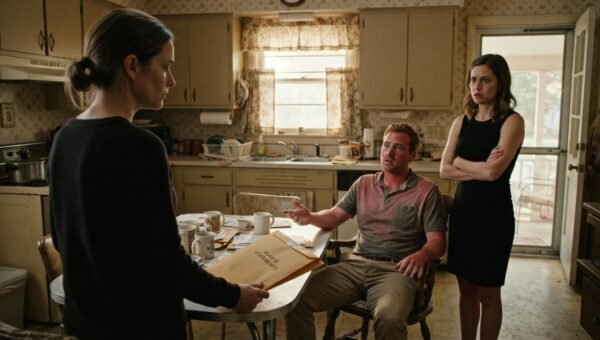
When I sat down in their new kitchen, I kept my voice calm. I told them things were tight for me, and I asked if we could set up a plan for them to start repaying the $25,000, even if it was just $500 a month.
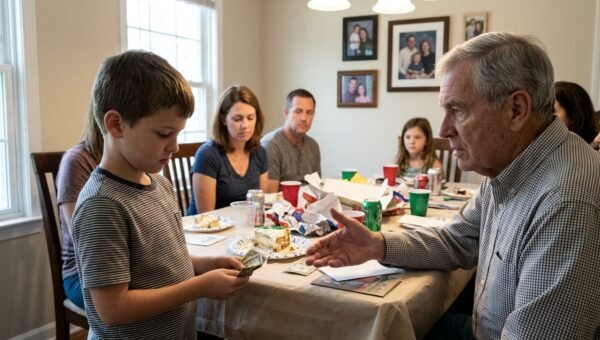
Greg didn’t look at his hands this time. He leaned back against the counter, crossed his arms, and looked straight at me. “We don’t owe you anything,” he said. “You gave that to us to help family. You never made us sign a single paper, and there’s nothing on record.”
I turned to Brenda, expecting her to look embarrassed or step in. Instead, she looked out the window toward the backyard and said, “Greg is right, Claire. You offered it. You can’t just come into our house three years later and demand it back like a bill collector.”
I stood up, walked out to my car, and drove home without saying another word.
That was the last time we spoke. For six weeks, my house felt like a tomb. Every time I looked at my check register, the betrayal felt heavier than the missing money.
Then on a rainy Thursday in June, I stopped at the grocery store on Highway 18. As I pushed my cart past the bakery section, I ran into Evelyn Vance. Evelyn was our second cousin and had known Brenda and Greg since high school.
She grabbed my sleeve, leaned in close, and said, “Claire, have you heard what happened to your sister and Greg?”
PART 2
I stopped with one hand on the grocery cart handle. Evelyn was breathing hard, looking around as if someone might overhear us next to the bakery racks.
“I haven’t spoken to Brenda in almost two months,” I said.
Evelyn gave me an uncomfortable look, shifting her purse from one shoulder to the other. “Well, Greg got pulled into the county assessor’s office last week. Word travels fast through the township. They found out he filed an exemption application on the house three years ago claiming an emergency hardship transfer, using an unrecorded private loan to stall county proceedings.”
“What are you talking about?” I asked. “They told me the mortgage company was taking the house.”
“Claire, the mortgage was never in default,” Evelyn said, keeping her voice low. “The bank wasn’t touching that property. Greg’s brother told my husband the whole story over Memorial Day weekend. Greg had a tax lien from the state on his business equipment, and the county was going after his personal assets to settle it. He took your money, but he didn’t give it to any bank. He put it into a separate holding account under an LLC he registered in his cousin’s name.”
My mouth felt dry. “He told me they were going to be on the street.”
“They were never going to be on the street,” Evelyn said. “And that isn’t the worst part. When you asked for the money back, Greg filed a sworn statement with the township claiming the funds in that account were an outright gift from family to settle his commercial obligations, so they wouldn’t classify it as personal income or a concealed loan. But the county audited the filing two weeks ago because the dates didn’t line up with his corporate filings.”
Evelyn squeezed my arm once and hurried off toward the checkout, leaving me standing in the aisle with my cart.
I didn’t buy my groceries. I walked out to my car, sat behind the wheel, and opened the glove compartment where I kept my old banking receipts. I didn’t have a signed contract, but I still had the carbon copy of the certified cashier’s check request from three years earlier. In the memo line, written in my own hand, were five words: “Loan for Oak Creek property.”
When I got home, I didn’t call Brenda. I didn’t scream or leave furious voicemails. Instead, I drove down to the county clerk’s office on Friday morning. I paid seven dollars for a printed public records request on the parcel number for Brenda and Greg’s address, along with the recent lien documentation attached to Greg’s name.
The clerk handed me four stapled sheets. The timeline was laid out in black and white. There had never been a foreclosure filing from their mortgage lender. The only document on file for October of that year was a deferred lien settlement from the state department of revenue, cleared thirty-six hours after I handed Greg my $25,000 check.
Attached to the back of the tax file was a copy of the formal affidavit Greg had submitted to explain the sudden deposit. In paragraph three, Greg had typed: “The sum of $25,000 received on October 14 was an unconditional family gift with no expectation of repayment or claim against personal assets.”
Underneath that line was Brenda’s signature right next to his.
PART 3
Seeing Brenda’s signature on a sworn paper declaring my life savings was an “unconditional gift” cleared away whatever hesitation I had left. They hadn’t just taken my money when they were desperate. They had carefully calculated how to keep it from the state, and then used that lie to lock me out.
I took the public records and my cashier’s check receipt straight to an attorney named David Harris, whose office was two blocks from the municipal building. He sat behind an oak desk, adjusted his glasses, and read through both papers twice.
“They think they’re protected because you didn’t execute a formal note,” Mr. Harris said. “People make that assumption all the time. But in this state, an oral agreement backed by bank records and clear intent can still be enforced, especially when there is evidence of fraudulent inducement.”
“What does that mean?” I asked.
“It means if they told you the money was to prevent an immediate home foreclosure, but used it to shield commercial assets under false pretenses, that is not a gift. That is misrepresentation. And Greg signed an affidavit under penalty of perjury claiming it was a gift to avoid a business lien review. If he maintains under oath that you gave it freely, he has to prove that was your intent. But you have the bank’s original counter slip showing the cashier’s check memo.”
Mr. Harris drafted a formal demand letter that afternoon. It outlined the exact transaction date, the cashier’s check number, the explicit purpose stated at the time of the transfer, and a formal notification that we intended to submit the bank records to the county assessor and the department of revenue for review if the debt was not settled.
The letter was delivered to Brenda and Greg’s home by certified mail on Tuesday.
On Wednesday evening at seven, someone pounded on my front door. I looked through the peephole and saw Brenda standing on my porch. It was raining, and she didn’t have an umbrella.
I opened the door, but I didn’t unhook the brass safety chain.
“Claire, please,” she said. Her mascara was smudged and her coat was soaked at the shoulders. “You have to call your lawyer off. You don’t understand what this will do to Greg.”
“I understand completely,” I said. “I read the public file, Brenda. I saw what you signed.”
She flinched. “Greg told me we had to do it that way. He said if the county thought it was a loan, they would freeze the equipment anyway. We were drowning, Claire. We were terrified.”
“You weren’t terrified when you put quartz on your counters,” I told her. “You weren’t terrified when Greg bought that new truck. And you certainly weren’t terrified when you told me to my face that you didn’t owe me a dime because I trusted you without a signature.”
“We can pay you something,” she whispered, looking down at the porch boards. “We can scrape together $5,000 by next month. Just tell the lawyer not to send the file to the state.”
“The amount is $25,000,” I said. “Not a penny less. You have until Friday at five o’clock to deliver a certified bank draft to Mr. Harris’s office, or he files the complaint with the clerk and the revenue office.”
“We don’t have that sitting in an account,” she cried. “Greg would have to sell his truck.”
“Then he better find a buyer by Friday,” I said, and closed the door.
ENDING
On Friday afternoon at four-fifteen, Mr. Harris called my home phone.
“They brought in the check, Claire,” he said. “Certified funds for the full $25,000, plus my filing fee. The settlement agreement is signed. It’s done.”
I drove down to his office, signed the release form, and took the check back to my credit union. The teller who handled the deposit was the same woman who had printed the original check for me three years earlier. She stamped the back, handed me my receipt, and smiled.
When I looked at the slip, my balance was back where it belonged. The money that had taken me ten years of early mornings and missed vacations to save was safe. But the quiet inside my house that evening felt different than it used to.
Two weeks later, Evelyn called to tell me that Greg had traded his new truck for an older van, and Brenda had taken a part-time job working retail at the mall. Our family didn’t call me to take sides. Most of them had heard about the affidavit Greg tried to file, and nobody wanted to get tangled in the mess he had made.
A box arrived in my mail the following month. It was an old wooden jewelry box that belonged to our mother, with a small brass latch that never quite caught right. Brenda had kept it on her dresser since the funeral eight years ago. There was no note inside, no apology on a card, and no return address on the parcel. Just the box wrapped in brown shipping paper.
I didn’t call Brenda to thank her, and she didn’t reach out to see if it arrived.
I set the jewelry box on my dresser next to the window. Sometimes late in the evening, after the clinic is closed and the house settles, I look at the worn wood and think about that morning at my kitchen table when I gave away half of everything I owned because I thought blood was stronger than paper.
I got my money back. But the table has stayed empty, and I have learned to live with the quiet.