PART 1
My husband, David, had to stay late at the plant to cover an extra shift, so I drove over alone around seven on a Tuesday evening to drop off a tin of oatmeal cookies for his mother. Margaret had been feeling under the weather for nearly three weeks, and every time David or I called to check in, his father picked up the phone. Harold always had a quick, sensible excuse ready.
She had just drifted off, she was soaking her feet, or she had taken a mild sleeping pill and could not be disturbed.
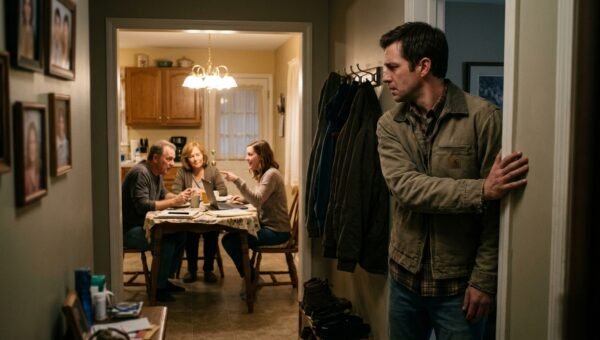
When I pulled into the gravel driveway of their two-story colonial, the porch light was off. The lower windows were dark, but Harold’s tan pickup was gone from the carport. I walked up the front steps, tapped the brass knocker three times, and waited. The house stayed dead quiet.
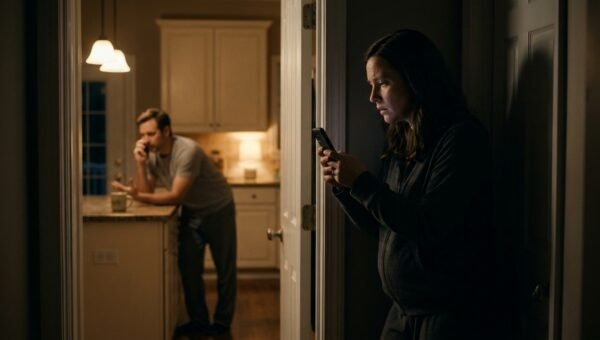
I pulled out my phone and sent Harold a quick text: “Hi Harold, brought cookies for Margaret. Are you two home?”
A minute later, my screen lit up with his reply: “I’m out with the guys. Margaret’s resting. You can head home.”
It felt wrong right away. Margaret was seventy-two, proud, and lived for family drop-ins. Even when she had a bad cold, she never just turned people away, and Harold never spent Tuesday nights out with anyone.
He spent them in the den watching cable news or tinkering in the detached garage.
I tried the front knob. To my surprise, the latch clicked and the heavy wood door swung inward. Harold had left it unlocked, probably rushing out in a hurry.
“Margaret?” I called into the dark front hallway.
The house smelled faintly of stale lemon wax and cold tea. I set the cookie tin on the entry table and listened. There was no television on, no refrigerator hum, nothing from the downstairs bedroom where she and Harold slept.
Then, from somewhere above the second floor, I heard a dull, rhythmic tapping.
Tap. Tap. Tap.
It sounded like knuckles hitting floorboards.
I climbed the carpeted stairs, my grip tight on the railing. The guest bedroom was empty. The hall bathroom was dark. At the very end of the corridor was the narrow door leading up to the finished attic.
Harold had kept that door padlocked or deadbolted for fifteen years, calling it his private storage and workshop. David and his brother were never allowed up there as boys, and I had never once seen the inside of it.
Tonight, the small brass skeleton key was sticking straight out of the brass plate beneath the knob.
My heart hammered against my ribs. I walked to the door, turned the key, and pushed it open. A steep set of uncarpeted wooden stairs led up into a dim, dusty room under the eaves.
I climbed five steps, stuck my head past the ceiling beam, and stopped breathing.
Sitting in a straight-backed wooden chair beneath a bare hanging bulb was Margaret. She had a faded green quilt pulled tight around her narrow shoulders. Her grey hair was unbrushed, and her face looked grey and hollowed out. A small plastic bucket sat by the foot of the chair, next to half a glass of tap water on an upside-down cardboard box.
She did not look startled. She looked exhausted, like a woman who had run out of tears hours ago.
“Margaret?” My voice came out in a raspy squeak. “What’s going on here? Why are you up here?”
I ran up the remaining steps, dropped to my knees beside her chair, and reached for her cold hands. Her fingers were stiff.
When I touched her, she flinched slightly, looked toward the open attic door, and whispered, “He took my purse, Beth. He took my house keys. He locks it from the outside so I won’t go to the bank.”
PART 2
I helped Margaret slowly out of the chair. Her knees buckled on the first try, but she leaned her weight against my shoulder until she found her balance.
“How long have you been up here today?” I asked, keeping my voice down even though the house was empty.
“Since noon,” she whispered. Her lips were dry and cracked. “He brings me down in the morning to use the bathroom, then he puts me back up here before he runs his errands. He tells the neighbors I have walking pneumonia.”
I did not waste another second asking questions in that drafty attic. I guided her down the steep wooden steps one by one, keeping my arm hooked firmly under hers. When we reached the second-floor hallway, I pulled the attic door shut, left the key right where it was, and hurried her down to the ground floor.
I grabbed her winter coat from the hall closet, bundled her into it, and led her out the front door straight to my sedan. I locked her safely in the passenger seat with the heater blowing warm air before running back inside to grab her medications from the kitchen counter. That was when I saw Harold’s heavy oak desk in the corner of the living room.
The top drawer was pulled out half an inch. Sticking out from beneath a stack of utility bills was Margaret’s floral checkbook and a bright yellow legal pad covered in Harold’s tidy, angular handwriting.
I pulled the legal pad out. On it, Harold had written three separate columns of figures. The top line said: “Margaret CD Mature Date: Oct 12.” Below that was an exact number: $84,650. And under that were four credit card balances, personal loan notes, and a name I recognized: Blue Ridge Land Holdings.
Harold had incurred over $60,000 in speculative debt on an undeveloped parcel of timberland out in the county, an investment he had bragged about two years ago at Thanksgiving. The notes showed the final balloon payment was due by Friday, and the interest penalties were mounting daily.
He was not just locking her away out of cruelty. He was keeping her isolated until the certificate of deposit matured at the end of the week, planning to use the power of attorney she had signed five years ago to liquidate her personal savings to cover his bad speculation.
My hands shook as I folded the yellow sheet, shoved it into my coat pocket alongside her heart pills, and walked out the front door, pulling it firmly shut behind me.
I got into the car, backed out of the gravel drive, and drove straight toward my house. As soon as we were two miles down the two-lane county road, I called David on hands-free.
“Where are you?” I asked.
“Just clocking out,” David said, his voice tired. “Did you drop the cookies off?”
“David, listen to me carefully,” I said, looking over at Margaret, who was staring out the window at the passing telephone poles with tears silently running down her cheeks. “Your mother is in my car right now. Your father had her locked in the attic without her phone, her keys, or her purse. I am taking her to our house, and you need to meet us there immediately.”
The line went dead silent for five seconds. “What did you just say?”
“Get home right now,” I said.
PART 3
By the time David pulled into our driveway, I had Margaret sitting at our kitchen table wrapped in a clean fleece blanket, sipping hot chicken broth. Her color was beginning to come back, but she would not let go of my wrist.
David came through the back door with his work jacket half-zipped, his face pale and tight. When he saw his mother sitting there in her disheveled clothes, looking frail and hollow, he dropped his keys on the counter and fell to his knees in front of her.
“Mom,” he said, taking both of her hands. “Mom, what did he do?”
Margaret started crying, the deep, ragged sobs of someone who had held back humiliation for too long. “He said I was losing my mind, David. He told me if I went around telling people he lost money on that timberland, he would have the county declare me incompetent. He said he had the legal papers already.”
I took the yellow legal pad from my pocket and laid it flat on the table between them.
“He owes $60,000 on that land deal, David,” I said. “And your mother’s certificate of deposit, the one left from your grandfather’s estate, matures this Friday. It is worth $84,650. Harold has been keeping her trapped so she could not revoke his signature authority or walk into the branch herself.”
David read the figures. His knuckles turned white against the edge of the table. “He locked her in the attic for money?”
“He took my purse on Sunday,” Margaret said softly. “He told me he would let me back downstairs for good on Friday afternoon once the wire went through. He said it was family money anyway and I was being stubborn.”
Before David could answer, my phone rang on the counter. The caller ID showed Harold.
David reached over and pressed the speaker button.
“Beth?” Harold’s voice was loud, breathless, and irritated. “Where are you? Did you come inside the house? The front door was unlocked and Margaret isn’t in her room. Where is she?”
David leaned over the phone. His voice was lower and steadier than I had ever heard it. “She is with us, Dad.”
The other end went completely quiet.
“David?” Harold’s tone shifted instantly, trying to sound reasonable and paternal. “David, thank God. Look, you don’t understand what’s been happening here. Your mother has been wandering. She’s been confused. I had to keep her upstairs so she wouldn’t fall or leave the house while I was running an errand. I was going to call you tonight.”
“We found the legal pad, Dad,” David said. “We know about the $84,650. We know about Blue Ridge Land Holdings. You locked your wife in an unfinished attic with a bucket because you ruined yourself on timber.”
Harold paused, his breath rattling against the receiver. When he spoke again, the pleasant father routine was completely gone. His voice turned hard and sharp. “That money belongs to this household. If I don’t clear that note by Friday, the bank takes the land and our credit is ruined. Bring her home, David. This is between me and your mother.”
“If you come anywhere near my house tonight,” David said, “I will call the county sheriff and hand them the notes you left on your desk, along with the key you left in the attic door. Do not call this number again.”
David hung up the phone.
ENDING
We did not call the police that night, because Margaret begged us not to. She was from a generation that viewed public family scandal as a fate worse than injury, and she was terrified of being paraded in front of deputies and neighbors.
Instead, we took control the only way that mattered.
First thing Wednesday morning, David and I drove Margaret to First National Bank on Main Street. We walked straight into the branch manager’s office, a woman named Mrs. Henderson who had known Margaret for thirty years. Margaret sat upright in the leather chair, her coat buttoned, her hands steady on the desk.
She formally revoked Harold’s power of attorney on every account bearing her name. She transferred the maturing $84,650 CD directly into a brand-new sole-owner account at an entirely different banking institution across town, with David listed as the sole transfer-on-death beneficiary.
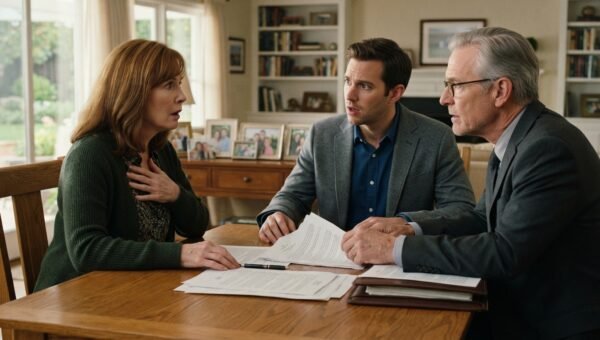
By noon, we sat in an elder-law attorney’s office two blocks away. Margaret signed paperwork removing Harold from all medical directives, and the lawyer drafted an immediate legal notice warning Harold that any attempt to encumber Margaret’s personal assets or enter our property would result in an emergency protective filing.
Harold did not make his balloon payment on Friday. The timber parcel went into default, and the holding company initiated foreclosure proceedings against him.
He moved out of the colonial three weeks later, unable to afford the upkeep on his own, and moved into a rented single-wide trailer forty miles north near his surviving brother. He tried sending two letters through the mail, blaming David and me for breaking up his marriage over a temporary business shortfall. Margaret never opened them. She handed both envelopes directly to David to file away with the legal records.
Margaret lives in our spare bedroom now. We moved her sewing machine in last month, and she spends her afternoons sewing quilts for the local children’s home.
She still wakes up occasionally around dawn, looking around the room with wide, startled eyes until she sees the open doorway and the hallway light glowing outside. Every night before she turns out her bedside lamp, she leaves her bedroom door cracked open three inches, and she leaves her purse sitting right on top of the dresser, right where she can see it.