PART 1
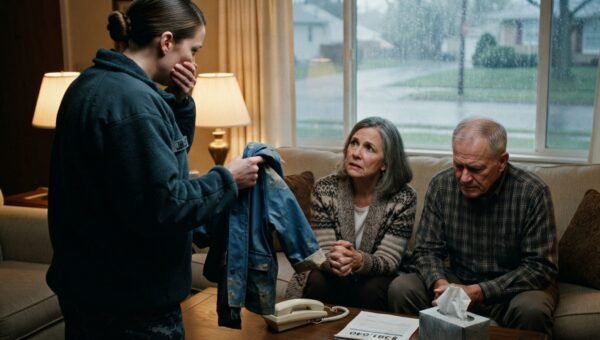
I handed my sister Brenda a cashier’s check for $25,000 on a rainy Tuesday night because she sat at my kitchen table with her head in her hands.
Her husband, Greg, was waiting out in their truck with the wipers going back and forth. Brenda told me the bank had given them until Friday afternoon. She said if they couldn’t produce the money, the notice of default would turn into an auction date on their split-level home out on Mill Creek Road.
She was crying so hard she couldn’t catch her breath. I was fifty-four, working double shifts as an administrative assistant at the county health clinic, and that money was the bulk of what our mother had left me when she passed away eighteen months earlier.
“You’re saving our lives, Laura,” Brenda whispered. She squeezed my fingers until her knuckles went pale. “Greg got behind with his drywall subcontracting, but three big jobs are coming through in the spring. We’ll start paying you back in six months. Every penny.”
I loved my sister. She was two years younger than me, and ever since we were girls sharing a small bedroom in eastern Ohio, I had always stepped in when things got rough. I had a generic promissory note printed out from the internet sitting on the counter by the toaster. When I reached for it, Brenda looked at it, then looked at me with tears pooling in her lower lashes.
“You’re going to make me sign a contract?” she asked, her voice cracking. “Laura, I’m your sister. We’re talking about our family.”
I felt ashamed for even printing it. I pushed the paper aside and slid the bank check across the laminate table instead. That was my mistake. I let sentiment override common sense.
For the first year, I didn’t say a word. I knew how hard it was to climb out of a hole. When Brenda mentioned they were doing better, I simply smiled and nodded. But by the second year, things looked different. Greg bought a newer Ford F-250 with polished chrome trim. Brenda had her hair colored and highlighted every six weeks, and they put in a stamped concrete patio out back. Every time I drove past their turnoff, my stomach tightened, but I kept telling myself they had probably refinanced or Greg had landed a large commercial bid.
By the third year, my own furnace failed in the middle of January, and the estimate to replace the heat pump and ductwork came back at $8,200. My savings had never recovered from giving Brenda that money. I called her on a Sunday afternoon and asked if we could sit down.
The conversation lasted less than four minutes.
We met at the local diner off the bypass. Greg came inside with her this time. He sat with his arms crossed over a heavy canvas jacket, while Brenda ordered a diet cola and never looked directly at my eyes.
“I wouldn’t ask if I didn’t need it,” I told them, keeping my voice low so the waitress wouldn’t hear. “The furnace died, and my roof has a slow leak over the back porch. If you could just pay me five thousand to help with the repair, we can figure out a monthly plan for the rest of the twenty-five thousand.”
Greg leaned forward over the table. The corners of his mouth turned down into a cold, flat smirk.
“We don’t owe you anything,” he said.
I stared at him, thinking I had misheard. “Greg, I gave you twenty-five thousand dollars so you wouldn’t lose your house.”
“You gave Brenda a gift,” Greg said. “And besides, you never made us sign a thing. You can’t produce a contract, Laura. You never had one.”
I turned to my sister. “Brenda? Tell him. You promised me on Mom’s memory.”
Brenda looked out the diner window at the traffic passing on Route 4. She picked at a paper napkin, tearing off small strips.
“Greg is right, Laura,” she said, her voice completely flat. “We don’t owe you anything. You gave it to us freely. You never made us sign.”
They stood up, tossed a two-dollar bill on the table for her drink, and walked out into the parking lot. That was the last time we spoke. For three weeks, my chest felt like an iron band had been clamped around it. I couldn’t sleep. The betrayal wasn’t just about the money; it was the realization that my own sister had calculated my trust as weakness.
Then, on a Friday morning at the county grocery store, I was picking through apples when Helen Vance rolled her shopping cart right into my aisle. Helen had lived two doors down from Brenda and Greg for almost fifteen years, and our mothers had attended the same church choir.
Helen grabbed my forearm and lowered her head. “Laura, I’ve been meaning to call you all week. Did you hear what happened to your sister and her husband?”
PART 2
I gripped the plastic produce bag in my hand. “No, Helen. Brenda and I aren’t talking right now.”
Helen glanced toward the bakery counter as if someone might overhear us. “Greg moved out on Monday. Packed up his truck and hauled his tools out while she was at work. The county sheriff showed up at the property yesterday afternoon with an eviction notice. The house is going to the courthouse steps on the first Tuesday of next month.”
The fluorescent lights overhead suddenly felt too bright. “That’s impossible,” I said. “They caught up on that mortgage three years ago.”
“Laura,” Helen said gently, touching my sleeve. “They never caught up on anything. Greg lost his contractor’s license four years back. He hasn’t had a legitimate commercial drywall job in this county since before the pandemic. That house has had a lien on it from the state tax board for eighteen months. The whole neighborhood has known their business since last summer.”
I stood there in the produce section while Helen walked away toward the dairy case.
My mind raced through the last three years. If Greg had lost his license four years ago, then when Brenda came to my kitchen table in tears, the house was already underwater beyond repair. They hadn’t used my $25,000 to save a mortgage. They had used it for something else entirely.
I left my groceries, walked out to my sedan, and drove straight home. I pulled out my old steel filing box from the bedroom closet. I kept every bank statement, every tax return, and every carbon copy check slip. I found the bank statement from that Tuesday three years ago: a certified cashier’s check drawn from my checking account, made out directly to Brenda Miller for the amount of $25,000. Under the memo line, written in my own blue ink, it said: *Emergency housing loan / repayment spring.*
Below it, in the small box for the bank’s processing record, was the teller’s validation stamp and the routing details from the deposit. Brenda hadn’t deposited it into their joint mortgage escrow account. She had deposited it directly into a sole checking account at a local credit union under her own maiden name.
I felt a cold prickle of anger that replaced every ounce of hurt. They had lied to me from the very first second she walked through my door.
I sat at my kitchen table until nearly six in the evening. I was just getting up to put on the kettle when a set of headlights cut across my blinds. A truck idled in my driveway. The engine shut off, and the driver’s door clicked open.
I pulled the curtain back an inch. It wasn’t Brenda.
It was Greg.
He was wearing an old flannel jacket with drywall dust still clinging to the sleeves. His hair was messy, and he looked ten years older than he had in the diner three weeks ago. He walked up my front steps and knocked twice on the storm door.
I locked the deadbolt, cracked the main door three inches, and left the brass chain on.
“What do you want, Greg?” I asked.
He looked down at his boots. He took a heavy, ragged breath.
“Laura,” he said, his voice hoarse. “I need to talk to you. Not about money. About what Brenda did.”
PART 3
I didn’t invite him inside. I opened the door, stood on the porch, and wrapped my sweater tighter around my shoulders.
“Say whatever you came to say,” I told him. “And then get off my property.”
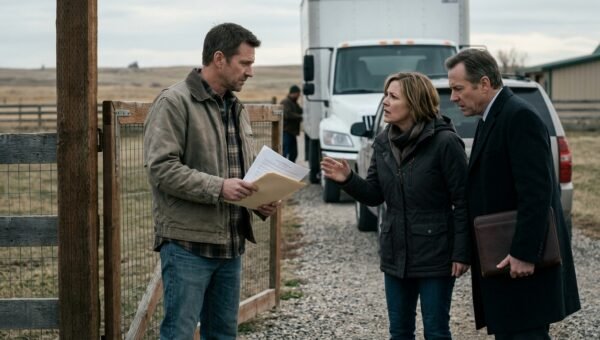
Greg didn’t try to puff out his chest like he did at the diner. He reached into his coat pocket and pulled out a worn manila folder folded in half.
“Brenda told you I forced her to say those things at the diner, didn’t she?” Greg asked.
“Brenda didn’t say a word to me,” I said. “You did the talking. You told me you didn’t owe me a dime because I didn’t make you sign.”
Greg let out a short, bitter laugh that sounded like dry leaves scraping pavement. “She told me you offered her that money as a payoff so she wouldn’t contest your mother’s estate. She told me you felt guilty because your mother left you the bulk of the savings and only left Brenda the old furniture.”
I stared at him. “Our mother left us equal shares of the life insurance, Greg. Brenda blew her half in six months on credit cards. Mom left me her private savings account because I took care of her in home hospice for fourteen months while Brenda visited three times.”
Greg opened the folder with shaking fingers. He pulled out a printed bank document from three years ago and handed it to me under the yellow porch light.
“I found this two nights ago in her jewelry box when I was packing my clothes,” he said. “Three years ago, I didn’t even know she came to your house that Tuesday night. I was working a night repair shift on an apartment complex over in Belmont. That truck sitting in your driveway wasn’t mine. That was her friend Randy’s truck.”
The paper in my hand was a receipt from an online vacation agency and a receipt for a $14,000 cash balance payoff on a personal credit card Brenda had opened in secret under her own name.
“She took twenty-five thousand dollars from you,” Greg said, his voice cracking. “She told you we were losing the house. But our mortgage wasn’t behind back then. Our mortgage didn’t fall behind until last year when I got hurt and couldn’t keep up with the tax liens. Brenda used nine thousand dollars of your money to take a luxury cruise with her girlfriends to the Caribbean that spring, and she paid off her hidden retail cards with the rest. When you called asking for the money back, she told me you were trying to extort us because you knew our house was finally facing foreclosure.”
“And the diner?” I asked, my voice barely audible. “Why did you say that to me at the diner?”
“Because she coached me all the way there,” Greg said, rubbing his eyes with the back of his hand. “She said you were threatening to put a lien on our truck. She said you hated her and wanted to see us on the street. She told me if I didn’t shut you down hard and fast, you’d drag us into small claims court.”
He reached into his pocket again and pulled out his checkbook. He tore out a check and pressed it against the wooden porch railing.
“I don’t have twenty-five thousand, Laura,” he said quietly. “I had to sell my utility trailer and two of my commercial spray rigs yesterday to rent a room above a garage in town. But here is three thousand dollars. It’s half of what I have left to my name.”
I looked down at the pale blue check. Written on the line was $3,000.00, signed in his clumsy handwriting.
“Why are you giving this to me?” I asked.
“Because I called your name trash in that diner,” he said, looking straight at me. “And because I let my pride make me a fool for a woman who was lying to both of us. The sheriff is taking the house on Tuesday. Brenda moved into an apartment in Canton with whatever she could pack in her car. I’m going to pay you back my half of that money, Laura. Even if it takes me until I’m seventy.”
ENDING
I didn’t take the check from his hand. I reached over, took the manila folder from under his arm, and slipped the check inside it.
“Keep your money right now, Greg,” I said. “You need a roof over your head, and you need your tools so you can work. But you are going to write down every word you just told me on a piece of paper, and you are going to sign it with a notary at the bank tomorrow morning.”
Greg looked at me, his eyes red in the porch light. He nodded once. “Eight in the morning. I’ll meet you at the branch on Main.”
The next morning, Greg was waiting in the bank lobby before the doors unlocked. He signed a sworn affidavit detailing Brenda’s confession, the misappropriation of the funds, and the fake story she had fed him about my mother’s estate. Along with the canceled cashier’s check showing Brenda’s sole endorsement and the receipts from her jewelry box, I drove straight to the county clerk’s office.
My attorney filed a formal civil claim against Brenda for fraud and unjust enrichment by the end of the week. When Brenda was served at her new rental in Canton, she called my phone six times in twenty minutes.
On the seventh call, I answered.
“How could you do this to your own family?” Brenda screamed through the receiver. Her voice was shrill, completely stripped of the soft, helpless tone she had used at my kitchen table three years earlier. “I don’t have twenty-five thousand dollars, Laura! They’re going to garnish my paycheck!”
“You had it when you took it from Mom’s savings,” I said evenly. “And you had it when you told me you didn’t owe me a thing.”
“We’re sisters,” she sobbed, trying to shift back into the old rhythm. “Blood is supposed to matter.”
“It did matter,” I said. “That’s why it took me three years to realize you were stealing from me.”
I hung up the phone. I didn’t block her number, but I never picked up again.
The county court ordered a wage garnishment against Brenda’s clerical job last month. Every two weeks, the county clerk deposits $215 directly into my checking account. It will take years to recover the principal, and after the lawyer took his portion, the money doesn’t make me feel rich.
Last Tuesday, the furnace repairman finally finished installing the new heat pump in my basement. When he packed up his wrenches, he handed me a paid invoice for $8,200. I wrote the check from my own earnings, walked out onto the front porch, and listened to the quiet hum of the unit running against the side of the house.
I still have the internet promissory note I printed out three years ago. It sits in the bottom drawer of my desk, unsigned and creased down the middle. I keep it there to remind myself that love doesn’t mean letting people treat your life like a blank check.