PART 1
My mother said her side hurt. My brother laughed. “Lay off the sausage, Mama.” His wife shrugged. “She just wants attention.”
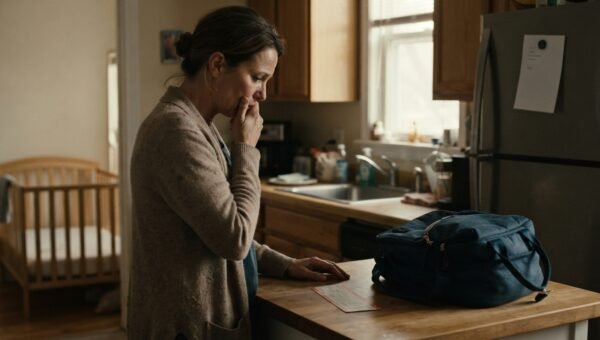
I stood by the stove watching her face turn gray while she tried to smile through the Sunday crowd. Mama was sixty-eight, raised four children on two acres of red dirt, and never took an aspirin unless her head felt split in two. For six months, since late March, I watched her press her small, calloused hand flat beneath her right ribs.
Every single time someone caught her doing it, she pulled her hand away like she had touched a hot skillet and apologized for making a fuss.
My brother Wayne lived three doors down on the family lane. He had taken over our late father’s small haulage truck and Mama’s daily checkbook three years ago, swearing he would manage her property taxes, her insurance, and her basic bills so she would never have to worry. His wife, Brenda, came up to the main house three times a week, mostly to borrow laundry detergent or see what leftovers Mama had in the fridge. Whenever Mama sat down midway through folding laundry because her side throbbed, Brenda would roll her eyes and say, “At your age, Mama, everybody’s got aches. You just sit around thinking about it too much.”
Wayne backed Brenda up every single time. “Old age ain’t for sissies, Ma,” he would tell her, digging into whatever pie she had baked. “You’re fine. Stop letting your mind run away with you.”
I lived twenty miles south in town, working fifty hours a week as a clerk at the county billing office. Every Sunday I came out to the house, and every Sunday I saw Mama looking thinner, her apron hanging loose around her waist, her knuckles whitening as she gripped the kitchen counter just to wait for the tea kettle to whistle.
Two weeks ago, on a Tuesday morning, I took an unpaid sick day. I told Wayne and Brenda nothing. If I had mentioned it, Wayne would have spent forty minutes on the phone arguing that Mama did not need a specialist and that town doctors just robbed old widows blind. Instead, I drove out to the lane at seven in the morning, helped Mama into my passenger seat, and drove her forty miles west to St. Jude Regional Clinic in the next county.
I had made the appointment under my own name and paid the two-hundred-dollar consultation fee in cash from my savings account. The physician was Dr. Robert Vance, an older internal medicine doctor who had known our family years ago before he moved his practice. He spent forty-five minutes examining Mama, feeling her abdomen, checking her blood pressure, and looking over her sparse medical history. When he pressed gently on her upper right quadrant, Mama let out a sharp gasp and tears sprang into her eyes.
Dr. Vance ordered blood work and an urgent ultrasound right there in the building. We waited in the small, quiet lobby for two hours while the lab ran the panels. When Dr. Vance called us back into his office, the door clicked shut behind us, and he did not sit down right away. He stood by the lightbox, looking at the black-and-white printouts and the lab sheets.
Then he placed the folder on his desk, set his pen down flat on the wood, and looked directly into Mama’s eyes.
“Mama Evelyn,” he said quietly, “how long have you been hiding this?”
Mama looked down at her lap. Her hands were trembling against her denim skirt. “It only started getting bad when the weather warmed up, Dr. Bob,” she whispered. “Just a dull ache. Wayne said it was just gallstones or gas from eating heavy.”
“It isn’t gas,” Dr. Vance said, leaning forward. “You have a severe, chronic blockage in your bile duct, and your gallbladder is dangerously inflamed and necrotic in spots. More importantly, your liver enzymes are through the roof. If we don’t get this operated on within forty-eight hours, you are looking at systemic sepsis. You could have collapsed any day.”
My breath caught in my throat. “She has medical insurance, Dr. Vance. Dad had a state pension policy with supplemental coverage that was supposed to continue for her life.”
Dr. Vance shook his head slowly. He picked up a computer printout from the folder. “The receptionist ran her insurance card before we took her back, Karen. Her supplemental policy lapsed ten months ago for non-payment. And her prescription drug coverage was canceled back in February. Did neither of you know that?”
I sat frozen in the vinyl chair. The room seemed to shrink. Wayne had been taking five hundred dollars cash from Mama’s checking account every month out of her widow benefit check, telling her he hand-delivered the checks to the policy office in town. Every single month, Mama handed him the signed withdrawal slip, trusting her firstborn son to keep her safe.
PART 2
I looked at Mama, and her face went completely pale. “Wayne takes care of that, Karen,” she said, her voice shaking so hard she could barely get the words past her lips. “He takes the envelope every first of the month. He told me the premiums went up in January.”
“Mama,” I said, trying to keep my voice calm so Dr. Vance wouldn’t see the rage boiling behind my eyes, “did you ever see a receipt?”
She shook her head. She looked like a child caught doing something wrong, shrinking back into the oversized cardigan she wore even in the late summer heat. Dr. Vance didn’t waste time with our family mess. He told us plain: Mama needed to be admitted to the regional hospital across the street that very afternoon. The surgery had to happen by Thursday morning at the latest, or the infection would spill into her bloodstream. He told me the hospital financial office would work out an emergency intake, but without that supplemental coverage active, the initial deposit and surgeon fees were going to land squarely on whoever signed the admission papers.
I signed them. I put my personal checking account and my emergency savings on the line right there at the admissions desk, authorizing an initial payment of eighteen hundred dollars just to clear the pre-op boarding and blood labs.
While Mama was being settled into room 314 on the third floor with an IV line running broad-spectrum antibiotics into her arm, I walked down to the hospital lobby with my phone. My hands were shaking so bad I dropped my purse twice on the tile floor. I pulled up my online banking, checked my balance, and then opened the public land records on the county clerk portal where I worked every day.
I knew how to search parcels. It took me four minutes.
Wayne hadn’t just stopped paying Mama’s insurance. Two years ago, he had convinced her to sign a quitclaim deed transferring the five acres behind her house into his name, claiming it was necessary to protect her from state estate recovery if she ever needed long-term care. But three months ago, in June, Wayne had taken out an eighty-five-thousand-dollar home equity loan against that very parcel using a commercial lender out of Little Rock.
I sat on a wooden bench outside the hospital gift shop, staring at the digital PDF of the mortgage document. On the secondary line, beneath Wayne’s sloppy signature, was a signature for Evelyn Miller. Mama didn’t know a thing about an eighty-five-thousand-dollar note. She had never been to Little Rock in her life, and she couldn’t drive past the county line without getting nervous.
I didn’t call Wayne. I didn’t send a furious text. I sat in Mama’s hospital room until seven that evening, holding her hand while she finally slept, freed from the sharpest edge of the pain by the hospital pain medication. When she was fully resting, I drove the forty miles back to our county, took the back road past Wayne’s place, and pulled into Mama’s empty gravel driveway.
The house smelled like Mama’s lavender sachets and old pine floorboards. In the back hallway closet, behind the extra quilts, sat Dad’s old metal lockbox. Mama always kept the spare key under the ceramic rooster on the top shelf. I unlocked it right there on the braided rug.
Inside were her check stubs, her tax receipts, and the utility bills. But jammed into the bottom, beneath an old church directory, was a stack of unopened mail from the Department of Veterans Affairs, the State Retiree Benefits Division, and Blue Cross. Every single envelope had Mama’s name on it. Every single envelope was marked FINAL NOTICE, LAPSE OF COVERAGE, or DEFAULT WARNING. Wayne hadn’t been mailing them. He had been taking them out of the mailbox down by the road, stuffing them into the bottom of the lockbox, and telling Mama that the mail was just junk flyers.
At the very bottom of the stack was a mechanic’s lien notice against Wayne’s haulage truck for twelve thousand dollars, dated two months ago, and three bank statements for an account in Wayne’s name that Mama’s monthly widow money had been deposited directly into via a change-of-payee form Mama had apparently signed with an “X” witnessed by Brenda.
Mama knew how to write her name. She had worked forty years as a school cafeteria manager. She had never signed anything with an “X” in her entire life.
PART 3
Thursday morning at seven, the surgical team took Mama down to the OR. The surgeon told me the procedure would take two to three hours because the inflammation was extensive. I sat in the surgical waiting room with a cup of burnt black coffee, my county legal folder resting on my knees.
At eight-thirty, my phone buzzed. It was Brenda.
“Karen, where is your mother?” Brenda asked, her voice high and sharp. “Wayne went up to the house to borrow her lawnmower and the screen door is locked, and her car is gone. Her neighbor Mrs. Gable said she saw your sedan pulling out on Tuesday and you never brought her back. Wayne is frantic. We have things to do today.”
“Mama is in surgery,” I said. My voice was completely flat.
There was a dead silence on the line. Then Brenda let out an annoyed huff. “Surgery for what? I told you she was just putting on for attention. You went and dragged her to some clinic, didn’t you? How much is that costing? You know Wayne handles her affairs. You had no right to make medical decisions without talking to her power of attorney.”
“Wayne isn’t her power of attorney, Brenda. He just told everybody he was. And she is at St. Jude Regional. Her gallbladder was gangrenous and her bile duct was completely blocked. The doctor said another forty-eight hours and she would have been dead in her bed.”
Brenda stuttered, then snapped, “Well, we’re coming down there right now. You had no business doing this behind our backs.”
They arrived at eleven. Wayne came stomping down the hallway in his grease-stained work boots and his ball cap, his face red and his jaw clenched tight. Brenda was right behind him, carrying a huge purse and looking around like she was ready to sue the hospital just for having bright lights.
“What the hell is this, Karen?” Wayne barked, keeping his voice in that low, threatening growl he had used since he was twenty. “You take Mama forty miles away, drop two thousand dollars on fancy doctors, and don’t even call her family? You think you run this show now?”
“Sit down, Wayne,” I said. I didn’t stand up. I stayed in the waiting room chair, the manila folder resting squarely in my lap.
“Don’t tell me to sit down! I’m her primary caregiver!” Wayne leaned over me, his face inches from mine. “Do you have any idea what kind of bills you’re running up? She has a budget. She can’t afford this town hospital nonsense!”
“She couldn’t afford it because you canceled her insurance,” I said.
Wayne blinked. His mouth stayed open for a second before he pulled back. “What are you talking about? Her insurance is fine. I pay it every month.”
“Her policy lapsed ten months ago, Wayne,” I said, opening the folder. I pulled out the notices I had taken from the lockbox. I pulled out the county deed showing the eighty-five-thousand-dollar lien. And then I pulled out the change-of-payee form with the forged “X” that Brenda had signed as an official witness.
Brenda’s face drained of color so fast she reached out to grab the armrest of an empty plastic chair.
“You went through our things,” Brenda whispered.
“I went through Mama’s lockbox in Mama’s house,” I said. “Where you hid forty-two notices from the state. You took Mama’s five hundred dollars every month for ten months and kept it. You forged her name on a deed in Little Rock to pull eighty-five thousand dollars out of the family land, and you used Mama’s pension to pay the interest on your repossession notice for the truck.”
Wayne stepped forward, his fists balling up. “That was family business! That money was invested in the hauling business so we could build an income for all of us! I was going to pay that policy back as soon as the gravel contract cleared next month! You don’t understand how business works, Karen!”
“I understand how a grand jury works,” I said. “I work in the county courthouse, Wayne. The district attorney’s office is two doors down from my desk. I showed these papers to Mark Reynolds this morning before I came up here for surgery. He used the word elder financial abuse. He used the word forgery. And he told me that if I didn’t file the formal affidavit, the state would do it anyway because the hospital financial office already flagged the non-payment as suspected abandonment.”
Wayne’s shoulders dropped two inches. His bluster vanished like smoke in a breeze. He looked at Brenda, but Brenda wouldn’t look back at him. She was staring at the floor, clutching her purse with both hands, realizing for the first time that her signature on that change-of-payee form wasn’t just a favor for her husband. It was a felony record waiting to happen.
“Karen,” Wayne said, his voice dropping to a harsh, desperate whisper. “We’re brother and sister. You can’t do this to me. I’ve got two kids at home. If they pull my truck or lock me up, Brenda and the girls lose the house.”
“You were going to let Mama die in that back bedroom,” I said, looking him dead in the face. “Every Sunday you sat at her table, ate her roast beef, and laughed while she held her side and cried in the pantry. You told her she was crazy. You told her she was old. You told her it was gas so she wouldn’t go to a doctor and find out you had stolen her insurance money.”
Before Wayne could answer, the double doors swung open and the surgeon, still in his blue scrubs, walked into the waiting room looking for Mama’s family.
ENDING
The surgeon looked at the three of us and addressed me directly. “She’s out of surgery. It was close, Miss Miller. The gallbladder had perforated slightly against the liver bed, but we got it cleaned out, placed a drainage tube, and cleared the blockage. She’s in recovery now. She’s going to be weak for several weeks, but she is going to survive.”
I covered my face with my hands and finally let the tears come. Wayne took a step toward the doctor, trying to play the concerned son, but I stood up and put myself directly between them.
“You need to leave, Wayne,” I said. “Both of you. Right now.”
“I have a right to see my mother,” Wayne muttered, but there was no fight left in his voice.
“You don’t have a right to anything on that property,” I told him. “I already contacted Adult Protective Services. There is a temporary protective order being served at your house this afternoon. You aren’t allowed within three hundred feet of Mama, her house, or her bank accounts until the court hears the financial abuse case.”
Brenda turned on her heel and walked toward the elevators without saying another word. Wayne lingered for five seconds, looking at me like he hated me more than anyone on earth, then turned and followed his wife down the long hallway.
Mama stayed in the hospital for six days. When she was coherent and the pain was finally managed, I sat by her bedside with a social worker and explained everything. I didn’t sugarcoat it, and I didn’t yell. I just laid out the papers and showed her the truth. She cried for two days, not from the surgical incisions, but from the realization that the boy she had protected and babied her entire life had valued an old diesel dump truck more than her heartbeat.
The state didn’t let Wayne walk away. With the evidence from the lockbox and the Little Rock lender, the prosecutor charged Wayne with felony exploitation of an elderly person and two counts of forgery. To avoid prison time, Wayne had to surrender the deed to the five-acre parcel back to Mama’s estate, liquidate his secondary equipment to repay thirty-four thousand dollars in direct stolen pension funds, and accept five years of strict probation. Brenda received two years of deferred adjudication for her role in witnessing the forged documents.
Within six months, Wayne had to sell his house on the lane to satisfy his debts. He and Brenda moved two counties over, into a rented double-wide near the state line. I haven’t heard his voice since the day he stood before the county judge and entered his guilty plea.
Mama moved into my spare bedroom in town. It took her four months to regain her strength, to stop reaching for her right ribs, and to walk without being terrified that the pain would come tearing back through her body. Last Sunday, we sat on my front porch shelling snap peas in the afternoon shade.
Mama stopped her hands for a moment, looked down the quiet street, and set her bowl on the wicker table.
“Karen,” she said softly, “all those months, I thought the Lord was just telling me my time was up, and I was being selfish for wanting to stay.”
I reached over, took her rough, tired hand in mine, and squeezed it tight. “Your time wasn’t up, Mama. You were just surrounded by people who didn’t care if you lived.”
She nodded once, wiped the corner of her eye with her apron, and picked up another pea pod. For the first time in two years, her hands weren’t shaking.