PART 1
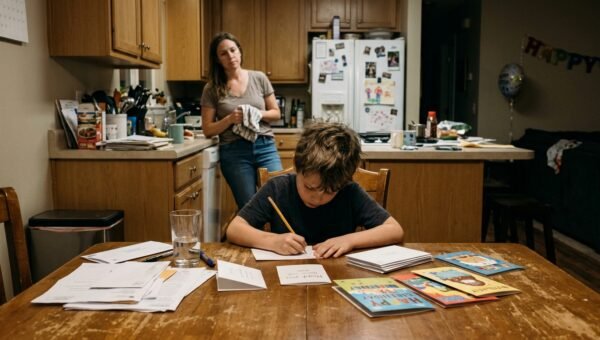
The list arrived at our kitchen table less than twenty-four hours before the party. My daughter-in-law, Tiffany, unfolded one sheet of paper and slid it toward my wife as casually as if she were handing over a grocery receipt.
“Mom, I just need you to cover the food,” Tiffany said, checking her manicure while our seven-year-old granddaughter, Chloe, played with a toy on our rug. “The caterer I wanted backed out, and Greg said you would know what to do.”
My wife, Evelyn, looked down at the paper through her reading glasses.
Her knuckles were already stiff from her morning gardening, swollen at the joints from thirty years of rheumatoid arthritis. The paper wasn’t a request for a couple of potato salads. It was a handwritten grid of thirty-eight separate items: smoked brisket sliders, three kinds of pasta salads, glazed pork tenderloin skewers, bacon-wrapped figs, mini quiches, stuffed mushrooms, four different pies, and two kinds of punch.
“Tiffany, honey,” Evelyn said softly, her voice hesitant. “Chloe’s party is tomorrow afternoon. Greg told me you invited seventy-five people from your side of the family and ours. That is a lot of cooking for one kitchen.”
“Well, you always say cooking is your love language,” Tiffany replied with a tight smile. She didn’t look up from her phone. “Greg said you make food for church suppers all the time. If it’s too much trouble, I guess Chloe just won’t have a proper birthday.”
That was the hook, and Tiffany knew exactly how deep it sank. Evelyn would walk through fire before she let Chloe feel unloved.
“I will make it work,” Evelyn said.
Tiffany left five minutes later, leaving the list on our counter. She didn’t offer grocery money. She didn’t offer to stay and chop an onion.
I spent four hundred and sixty dollars at the warehouse grocery store before noon. When I carried the seventh heavy cardboard box into our kitchen, Evelyn had already tied her faded blue apron around her waist. She had three cutting boards laid out across the island and our heavy stockpots sitting on the stove burners.
She didn’t sleep Thursday night. I stayed in the kitchen with her until three in the morning, slicing peppers, washing celery, and shredding sixteen pounds of sharp cheddar cheese until my own wrists ached. When I begged her to come to bed for a few hours, she just smiled, patted my forearm with a flour-dusted hand, and said the custard for the fruit tarts needed to set before sunrise.
Friday came and went in a blur of steam, roasting meat, and timer bells. Evelyn took a twenty-minute nap in her recliner at dawn, her swollen hands resting on a cold gel pack, before the timer on the brisket woke her up.
By Saturday at noon, our dining room looked like a banquet hall. Thirty-eight separate dishes filled every square inch of our long oak table and two folding tables I had set up along the wall. There were platters of warm skewers, silver chafing dishes kept hot with sternos, bowls of crisp greens, trays of delicate pastries, and a three-tiered strawberry shortcake that smelled like sugar and fresh cream.
Evelyn was exhausted. Her back was bent, and her ankles were puffy over her orthopedic shoes. Her fingertips were raw from heat and knife work. Yet as she adjusted the serving spoons and wiped down the edges of the ceramic bowls, she had a quiet, proud look on her face. She had done it for her granddaughter.
At one o’clock, the front door opened. Our son Greg walked in carrying bags of ice, followed by Tiffany and thirty of her relatives who had carpooled together.
Tiffany walked into the dining room. She wore a tailored linen jumpsuit and large sunglasses pushed up into her highlighted hair. She stopped at the edge of the dining room table, folded her arms, and surveyed the spread Evelyn had nearly killed herself to produce.
She didn’t say hello. She didn’t thank Evelyn. She didn’t hug her.
Tiffany wrinkled her nose, turned to her mother standing behind her, and raised her voice so everyone in the crowded hallway could hear.
“This is too simple,” Tiffany said loudly. “It looks like an old church potluck. I told everyone this was a catered event, not a cafeteria buffet. We can’t serve this to my family.”
Evelyn stood by the doorway, holding a fresh linen towel. The color drained from her face. She looked at Greg, waiting for her boy to say something. Greg just stared at his sneakers, shifting the melting ice bags in his arms, refusing to meet his mother’s eyes.
“Come on, everybody,” Tiffany announced, clapping her hands together. “Load back into your cars. We are taking the whole party down to Miller’s Prime Steakhouse on Fourth Street. It will take an extra twenty minutes, but at least Chloe will get a real celebration.”
People turned around and began walking out the front door, chatting about parking and steak. Greg hurried after his wife without looking back.
Evelyn didn’t cry. That was the part that broke something inside me. She just stood there, clutching that dish towel against her apron, staring at thirty-eight cooling dishes that had cost her two nights of sleep and every ounce of strength in her seventy-one-year-old body.
I didn’t yell. I didn’t chase Greg down the walkway. I pulled my phone from my pocket, stepped back, and quietly took one clear photograph of my wife standing alone beside the abandoned feast. Then I walked over to the kitchen counter and picked up my wallet.
PART 2
The house went dead silent after the last car door slammed out on the street.
The only sound left in our home was the faint hiss of the sterno cans under the chafing dishes and the ticking of the kitchen clock. Evelyn didn’t move for nearly two minutes. She reached out, straightened a silver spoon resting next to a bowl of warm potato salad, and then her hand began to tremble.
“I should have made the little sandwiches with the crusts cut off,” she whispered. Her voice was cracked and small. “Maybe that’s what she meant by church food.”
“Evelyn, stop,” I said, walking over to her and gently taking the dish towel from her fingers. “Look at this table. There is nothing wrong with this food. There is something wrong with that girl.”
“All this waste, Arthur,” she said, looking around the room. Her eyes were red-rimmed from forty-eight hours of smoke and lack of sleep. “Seventy-five people. We have enough food here to feed a battalion, and Chloe didn’t even get a slice of her cake.”
“Chloe didn’t make that choice,” I told her. “Her mother did.”
I sat Evelyn down in her favorite armchair in the living room, brought her a glass of cold water and two pain relievers for her joints, and pulled the footrest up. She leaned her head back against the cushion and closed her eyes, completely drained.
While she rested, I checked my wallet on the counter. The plastic sleeve behind my driver’s license was empty.
Two hours earlier, before the guests arrived, Greg had come into the kitchen looking stressed. He had asked if he could borrow my business credit card to pay for the folding chair rentals and five bags of party ice down at the convenience store. I had handed him the silver corporate card from my small plumbing contracting business, an account with an eight-thousand-dollar limit that I kept strictly for company supplies and emergency repairs.
Greg hadn’t returned the card before he walked out the door behind his wife.
I looked at the photograph on my phone. Evelyn looked tiny in the frame, framed by towering stacks of porcelain plates, silver chafing dishes, and platters of glazed pork and handmade pies. Her shoulders were sloped with sheer fatigue, her apron stained with berry juice and roasting pan grease.
I opened the family text group. It was an active thread with forty-two members, including Greg, Tiffany, Tiffany’s parents, her three sisters, her cousins, and our own side of the family.
For the last twenty minutes, the thread had been blowing up with excited messages. Tiffany had posted a picture of the cocktail menu at Miller’s Prime Steakhouse with the caption: “Upgraded Chloe’s special day! Only the best for our girl!” Her sister had replied with photos of appetizers arriving at a long white tablecloth table.
My stomach turned. Miller’s Prime was the most expensive dining room in our county. A single ribeye cost sixty-two dollars before tax and tip. For seventy-five people, appetizers, drinks, and steaks, that bill was going to run well north of four thousand dollars.
I knew my son’s finances. Greg was thirty-four years old, working an entry-level sales job at a freight logistics company, and carrying thirty thousand dollars in credit card debt that Evelyn and I had helped him consolidate two years prior. He didn’t have four thousand dollars in his checking account. Tiffany didn’t work.
They were planning to put Chloe’s entire restaurant party on my company card.
I stood in my kitchen and made my first phone call. It wasn’t to Greg. It was to the fraud and customer service department of my commercial card carrier.
PART 3
“Commercial accounts, this is Marcus,” the representative said after the automated prompts cleared.
“My name is Arthur Pendelton,” I said. “I am the sole owner and authorized signer on the business credit account ending in four-four-one-two.”
“Yes, Mr. Pendelton. How can I help you today?”
“I gave my card to an employee this morning for a twenty-dollar ice purchase,” I said evenly. “I have reason to believe an unauthorized charge for several thousand dollars is about to be attempted at Miller’s Prime Steakhouse on Fourth Street. I want an immediate freeze placed on that card. Do not authorize any transactions over fifty dollars.”
“I can do that right now, sir,” Marcus replied. “The card is locked for any transaction exceeding that limit effective immediately.”
“Thank you,” I said, and disconnected.
I stood there for a second, looking back at the dining room. Thirty-eight dishes. Evelyn had poured her heart, her pride, and her physical stamina into every single bowl.
I made my second phone call.
I dialed my lifelong friend, Pastor Thomas, who ran the outreach kitchen at the downtown veterans shelter three miles from our house. It was Saturday afternoon, the exact time they prepared evening meals for eighty-five men and women who had served this country and fallen on hard times.
“Thomas,” I said when he answered. “How many people are you feeding tonight?”
“We are expecting about eighty, Art,” Thomas said, his voice tired. “Budget has been tight this month. We were planning on beans and cornbread.”
“Get two of your young volunteers and your cargo van over to my driveway right now,” I told him. “I have smoked brisket, roasted pork skewers, three hot pastas, potatoes, quiches, fresh greens, and four homemade pies. It is hot, it is fresh, and it is ready to eat.”
Thomas went quiet on the line for three seconds. “Art, you can’t be serious. Where did you get that kind of food?”
“My wife made it,” I said. “And she made it with love. I just want people to eat it who know what that means.”
Thirty minutes later, Pastor Thomas and two sturdy young men backed their white van up to our garage. Evelyn had woken up by then. When she saw the pastor and the young men carrying the heavy silver trays and foil-wrapped dishes out to the van, she stood by the counter with tears in her eyes, but this time they were different tears.
Thomas took both of Evelyn’s sore hands in his own. “Evelyn, this is manna from heaven. You have no idea what this dinner will mean to our guys tonight.”
Evelyn wiped her face with her apron. “Make sure they eat the strawberry shortcake first, Thomas. The cream won’t hold if it sits too long.”
By four o’clock, our dining room tables were clean. Every scrap of food, every roll, and every pie had been packed securely into warm transport bins and driven to the shelter.
Then I sat down at our kitchen table, opened the family group chat, and uploaded the photo I had taken of Evelyn standing beside the empty, ignored feast.
Under the photo, I typed a short message:
“Evelyn stayed awake for forty-eight hours and cooked thirty-eight dishes from scratch so Chloe could have a wonderful birthday. Tiffany decided Evelyn’s hard work was too simple and looked like cheap church food. The food has been delivered to eighty veterans at the downtown shelter who were deeply grateful for her cooking. As for the dinner at Miller’s Prime: Greg, the business card in your wallet has been locked. You will need to pay for your seventy-five guests with your own money.”
I tapped send.
Ten minutes passed in absolute silence.
Then my phone began to vibrate across the laminate table. It didn’t stop.
ENDING
The first call came from Greg. I let it ring until it went to voicemail.
Thirty seconds later, Tiffany called. Her name flashed across my screen three times in five minutes. When I didn’t answer, she sent a text message in all capital letters:
“DAD PICK UP THE PHONE THIS IS NOT A JOKE THE BILL IS $3,840 AND OUR CARDS ARE DECLINING THEY WON’T LET US LEAVE.”
Next came a call from Tiffany’s mother, Brenda. I answered that one.
“Arthur, what on earth is wrong with you?” Brenda demanded, her voice shrill over the restaurant background noise. “You are embarrassing your son in front of my entire family! The manager is standing right by our table with security! Greg is sweating through his shirt! You need to unlock that card right now!”
“Brenda,” I said, keeping my voice quiet and steady. “Did you taste Evelyn’s food before you walked out of my house?”
There was a pause. Brenda cleared her throat. “Well, Tiffany said we were going to a restaurant.”
“You walked past thirty-eight homemade dishes without saying thank you to a woman who cannot close her hands today because of the work she did for your granddaughter,” I said. “Tiffany said my wife’s cooking was too cheap for you people. If you want a four-thousand-dollar steak dinner, you can pass the hat among your thirty relatives and pay for it. Don’t call this house again today.”
I hung up and blocked Brenda’s number.
Greg showed up at our front door at eight o’clock that evening. His tie was loose, his jacket was crumpled under his arm, and he looked sick to his stomach.
Tiffany wasn’t with him. He told us she had taken Chloe back to their apartment in tears after her father and two uncles had to split the restaurant tab on three separate credit cards, arguing loudly in the restaurant foyer while the staff watched.
Greg sat down at the kitchen table, the very same table where Tiffany had dropped that demanding list two days earlier. He dropped my silver business card on the wood.
“Dad,” Greg choked out, his eyes wet. “Why did you have to put that picture on the family chat? Tiffany’s cousins are texting her. Everyone is calling us selfish.”
I stood leaning against the kitchen counter, my arms crossed.
“Are you upset because of what you did, Greg? Or are you upset because people saw it?” I asked.
Greg looked down at his lap. He didn’t have an answer for that.
Evelyn came out of the bedroom wearing her warm housecoat. Her hands were wrapped in soft compression gloves to help with the swelling. She didn’t scold him. She didn’t yell. She just sat down in the chair next to our son and laid her gloved hand over his wrist.
“I love you, Gregory,” she said quietly. “And I love Chloe more than my own breath. But you let your wife treat your mother like an unpaid servant in her own home. You stood there with bags of ice and said nothing.”
A single tear rolled down Greg’s cheek. “I was just trying to keep the peace, Mom. Tiffany was stressed about the party.”
“Keeping the peace by letting your wife humiliate your mother is cowardice, son,” I told him. “You let her spend money we don’t have, and you let her throw Evelyn’s sacrifice into the dirt. That ends today.”
Greg stayed for an hour. He apologized four times, but the apologies felt heavy and clumsy, like clothes that didn’t fit him anymore. When he left, he knew things had changed.
The next morning was Sunday.
Pastor Thomas stopped by our house at nine in the morning on his way to church. He carried an envelope filled with thirty hand-written index cards from the men and women at the shelter. One of them, written in shaky pencil by an old Navy veteran named Harold, read: