PART 1
The appraisal packet sat on the kitchen island right next to a half-empty mug of cooling chamomile tea. I remember smoothing down the crisp paper cover with the palm of my hand, feeling a quiet sense of accomplishment that I had carried this old house through twenty-two years of winters, leaky gutters, and quiet evenings alone after Arthur passed.
At sixty-four, you start craving simplicity. My plan was modest and straightforward.
I would sell the colonial on Maple Street, clear the remaining twelve thousand left on the original mortgage, and use the equity to purchase a bright, single-level condominium thirty miles north, close enough to my volunteer work at the community library and right down the road from my son, Derek.
Derek had been the one to insist on handling the paperwork. He earned his MBA back in 2018 and spent his days working as a senior financial analyst for a regional logistics firm, so when he offered to streamline the lender communications and review the title deeds, I felt a deep, swelling pride. How lucky I was, I thought then, to have a boy who knew the language of banks and interest rates, sparing his aging mother the headaches of fine print.
The trouble started on a Tuesday afternoon in late September when the title company’s senior closer called my mobile phone directly.
Her voice was polite, professional, and entirely devoid of the warmth you expect when dealing with lifelong homeowners. She asked if I could verify my signature on the secondary equity line of credit executed forty-eight hours prior.
I sat down hard on the kitchen stool, staring out at the fading hydrangeas by the back patio. I told her there must be some terrible mistake, that I had signed nothing except the initial intent-to-sell disclosures. There was a brief, uncomfortable rustle of paper on the other end of the line before she spoke the words that turned my kitchen cold. She said the secondary lien of eighty-five thousand dollars had been electronically authorized through my son’s verified power of attorney portal, backed by a notarized amendment I had supposedly signed at his downtown office the previous Friday morning.
PART 2
I did not call Derek immediately. Instead, I drove down to the county records office in my sensible sedan, my hands gripping the steering wheel so tightly my knuckles ached.
The autumn air was sharp, but inside the municipal building, the fluorescent lights hummed with a stifling, bureaucratic heat.
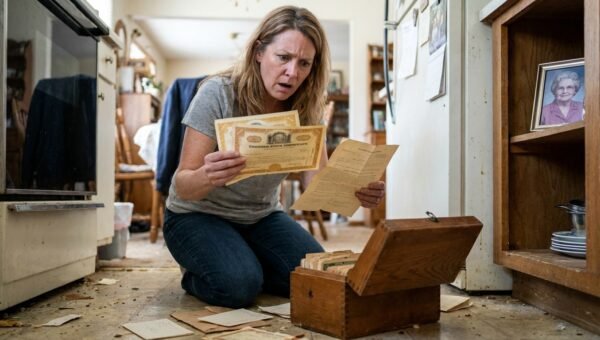
With the help of a kind clerk named Martha—who had known Arthur from their days at the rotary club—I pulled the public records for parcel 412-B. There it was in black and white: an eighty-five-thousand-dollar home equity line of credit drawn against my mortgage-free property, dated September eighteenth. Attached to the digital filing was a scanned copy of my driver’s license and a signature page that bore a stiff, unnatural imitation of my handwriting, right down to the looping cross on my capital letters.
My stomach churned as I drove to Derek’s suburban townhouse off Elmwood Avenue. The neighborhood was neat, full of manicured lawns and late-model SUVs in every driveway. When Derek opened his front door in a fleece vest and work trousers, holding a steaming mug of coffee, his welcoming smile evaporated the moment he saw my face.
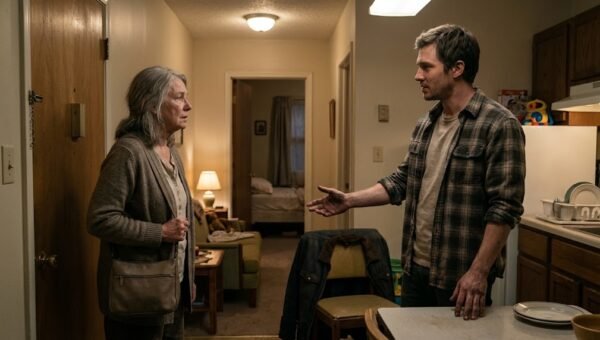
He tried to steer me toward the kitchen, murmuring about how we needed to sit down and look at the big picture, but I stood frozen in his entryway. I asked him, plain and quiet, what he had done to my house.
He didn’t deny it for long. After a heavy, miserable silence, he dropped onto the bottom step of his staircase and buried his face in his hands. The venture capital firm backing his private logistics startup had pulled out unexpectedly three weeks prior. He claimed his partners were facing bankruptcy, his personal accounts were already frozen, and he needed a bridge loan for just six months to close a major corporate contract that would save the business and pay the line of credit off before the bank ever sent me a formal statement. He looked up at me with red-rimmed eyes, pleading for my maternal grace, telling me he only used the house because he knew I wanted to move anyway and thought we could roll the debt into the final sale proceeds without me ever having to feel the pinch.
PART 3
The realization that my son had calculated my entire retirement down to an expendable asset hit me not with a burst of rage, but with a profound, hollow stillness. I looked at the man he had become, realizing he saw my lifetime of sacrifice not as a sanctuary, but as a financial cushion for his professional ambitions.
I told him calmly that he had forty-eight hours to contact his corporate attorney, reverse the loan draw, and clear my title, or I would walk down to the police precinct and file a formal report for document fraud and identity theft.
Derek jumped to his feet, his voice rising in panic and disbelief. He accused me of being cold-hearted, of valuing bricks and mortar over the future of her only child, shouting that a mother who truly loved her son would have volunteered the equity willingly if she had known the stakes. His wife, Sarah, emerged from the upstairs hallway looking pale and distressed, watching us with terrified eyes as she realized the full scope of what her husband had dragged their family into.
I walked out the front door without raising my voice, stepping back into the autumn afternoon. The air felt cleaner outside his house, though my chest felt tight and heavy. I drove straight to my attorney’s office on Main Street, bypassing family loyalty entirely to protect the roof over my head. My lawyer listened gravely, reviewed the fraudulent notarization stamp, and confirmed that we had immediate grounds to freeze the disbursement accounts before Derek could drain another penny.
ENDING
It has been three weeks since the legal notices were served. The bank has officially invalidated the fraudulent line of credit, and Derek’s startup went into receivership late last Tuesday. He has sent me three long, tearful text messages and an email detailing how his professional reputation is ruined, but I have not replied to any of them.
The ‘For Sale’ sign went up on my front lawn this morning, bright and clean against the green grass. This time, I hired an independent real estate agent recommended by my church group, and I keep the digital keys to my paperwork locked in a safe deposit box at the credit union downtown.
The condominium up north is still waiting for me, its small balcony overlooking a row of tall maples that are just beginning to turn gold. I am packing my boxes alone now, box by careful box, paying for every roll of tape and bubble wrap with my own money. It is quieter than I hoped it would be, but for the first time in months, the ground beneath my feet feels entirely my own.