PART 1
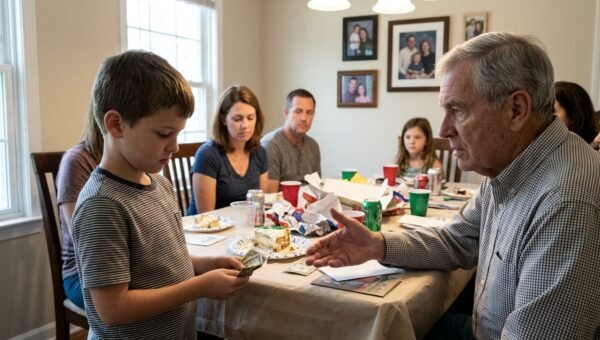
My mother told me I was too busy to look after her garden, so she handed my late father’s greenhouse over to my brother, Wayne.
She did it on a Sunday afternoon while Wayne was loading two bags of potting soil into his truck. I had just driven across town to drop off her weekly supplies. When I asked why she had not mentioned it to me first, she looked at the receipt on the counter and sighed.
“You have enough on your plate, Nora,” she said. “Wayne has time to keep it up. Besides, after how much you complained about that $300 in groceries last month, I didn’t think you wanted any more responsibilities out back.”
I stood by the kitchen sink and felt my face burn. I had not complained about buying her groceries. I had simply asked Wayne to chip in fifty dollars toward the bill, since he was living in her guest room rent-free and eating most of what was in the fridge. Wayne had told our mother that I was counting pennies against her, and she had held that grudge for four weeks.
Wayne took the brass keys off the hook by the back door that same afternoon.
The greenhouse was forty feet long, with double-pane glass and cedar benches my father had built by hand. He spent twenty years growing heirloom tomatoes, orchids, and winter greens in there.
When he died two years ago, standing near those raised beds was the only place where the house did not feel empty.
I swallowed the hurt and let Wayne have it. I told myself that family peace was worth more than a glass shed, even one my father loved. Wayne bought new fluorescent grow lamps, took out two rows of father’s benches to make space for a radio and a recliner, and changed the lock on the side door.
Three months later, Wayne called a local excavation contractor named Frank. Wayne wanted to tear out the gravel path along the north side and pour a concrete slab for a two-car carport right next to the glass wall.
Frank came out on a Tuesday morning with a yellow transit level and a clipboard. I happened to be at the house bringing mother her blood pressure medication. Wayne was sitting on the back steps with a mug of coffee, pointing toward the cedar trees.
Frank walked along the property line twice. He looked down at the city utility maps he had printed, then squinted across the grass toward the greenhouse.
“Wayne,” Frank called out, tapping the clipboard with his pen. “Who owns the lot past the old fence line?”
“My mom does,” Wayne said, waving his hand. “The whole two acres is the family place.”
“Not according to the county survey,” Frank said. “The main house sits on parcel twelve. This greenhouse, the shed, and the quarter-acre running back to the creek sit on parcel thirteen. It’s a completely separate tax parcel.”
Wayne stood up from the steps, frowning. “It’s all one yard. It’s been that way since seventy-nine.”
“The dirt doesn’t care how long the fence has been standing,” Frank said plainly. “Parcel thirteen has its own pin number. And the owner listed on the county plat isn’t your mother. It’s Nora.”
I walked down the porch steps. “What did you say, Frank?”
“Nora Miller,” Frank read from the title notes on his clipboard. “The parcel was deeded over in 1994. Did you forget you owned it?”
Wayne stared at me like I had stolen money directly from his wallet. My mother walked out onto the back porch, wiping her hands on an apron. The minute she saw Frank pointing toward the surveyor’s stake, the color left her cheeks.
PART 2
“That’s a clerical mistake,” my mother said before anyone else could speak. She came down the steps with unusual speed, her voice sharp and thin. “Frank, you pack up your transit. My husband bought all this ground together. Nora doesn’t own any of it.”
Frank did not argue. He was an independent contractor who worked by the hour, and he knew enough about small-town family disputes to stay out of the blast radius. He slipped his pen behind his ear, loaded his gear into his truck, and drove out the driveway without asking for a service fee.
“What is he talking about, Ma?” Wayne demanded, turning on her. “You told me the greenhouse was mine to clear out.”
“It is yours,” she insisted, refusing to look at me. “The county records get messed up all the time. Your father probably just looked into buying that strip for Nora when she graduated high school and never went through with it. You know how he was with paperwork.”
My father had been an accountant for thirty-four years. He kept every receipt, tax return, and warranty organized in heavy green folders inside a steel filing cabinet in the basement. He never forgot paperwork.
I drove home with my hands gripping the steering wheel tight. That evening, after my husband went to sleep, I drove back to my mother’s house with my own key. The house was dark. Wayne’s truck was gone, likely parked outside the tavern downtown.
I went down the cellar stairs, clicked on the bare light bulb, and opened the bottom drawer of the steel cabinet.
Behind the old water heater manuals and tax returns from the nineties, I found a manila folder marked with my father’s neat handwriting: *Nora – North Parcel.*
Inside was an original recorded deed from October 1994. My father had bought the quarter-acre parcel from our neighbor, Mr. Henderson, specifically so nobody would ever build a commercial garage behind our garden. The deed listed my father as the purchaser, transferring clear title to me on my seventeenth birthday.
Underneath the original deed was a second document: a county clerk’s recorded quitclaim form dated July 2003.
The 2003 document showed that I had supposedly signed the parcel over to my mother for the sum of ten dollars.
I held the paper under the basement bulb. In July 2003, I was twenty-six years old and living in Sendai, Japan, teaching English on a two-year contract through the state university. My passport had stamps proving I had not set foot on American soil between September 2002 and August 2004.
Yet there was my name on the signature line, scrawled in blue ballpoint ink. It looked like my signature, but slightly stiff, as if someone had placed a piece of tracing paper over an old high school graduation thank-you note and pressed down hard.
Beside the signature was a notary seal belonging to a woman named Evelyn Vance, who used to run the dry cleaner near the courthouse. Evelyn had been my mother’s bridge partner for thirty years.
The next morning at eight-thirty, I walked into the county recorder’s office downtown. The clerk behind the counter, a woman with silver glasses named Mrs. Gable, pulled up the digital archive on her monitor.
“Here it is,” Mrs. Gable said, leaning toward the screen. “Recorded July 14, 2003. Quitclaim deed transferring parcel thirteen from Nora Miller to Helen Miller.”
“Can you look at the grantor’s address on that filing?” I asked.
Mrs. Gable squinted. “It lists the local family address on Elm Street. But Nora, you were overseas back then, weren’t you? My daughter mentioned seeing your postcards at the church library.”
“I was in Japan,” I said. “I didn’t sign this.”
Mrs. Gable took off her glasses and let them hang from the beaded chain around her neck. “If you didn’t sign this, Nora, someone committed felony document fraud. And if you file an official challenge, the county attorney has to open a file.”
PART 3
I took certified copies of both deeds and drove straight to my mother’s house.
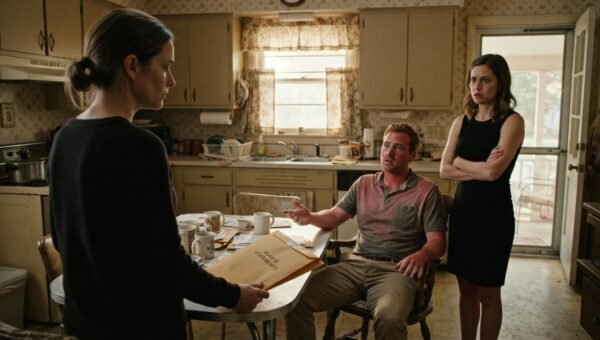
When I walked through the kitchen door, she was sitting at the table peeling apples into a ceramic bowl. Wayne was at the stove frying eggs. The smell of butter and cinnamon filled the room, just like it had when we were children.
I laid the two deeds on the oilcloth between her bowl and the salt shaker.
“Evelyn Vance notarized this while I was five thousand miles away in Sendai,” I said quietly.
My mother’s paring knife stopped halfway through a yellow skin. She did not look up at me.
Wayne turned from the stove, his spatula dripping grease onto the burner. “What is that?”
“It’s a forged quitclaim deed,” I told him. “Ma signed my name to parcel thirteen twenty-three years ago so she could control the greenhouse. She got Evelyn to stamp it without me ever being in the room.”
Wayne looked at our mother. “Is that true?”
My mother set the apple down. Her fingers were stained brown from the peelings. For the first time in my life, she looked small and stubborn instead of imposing.
“Your father wanted to put the greenhouse there,” she said, her voice shaking with old anger. “He told me he bought the ground for you, but then he spent twelve thousand dollars of our joint retirement savings putting up that glass building. He spent all his spare hours out there. He cared more about those plants than he did about our house.”
“So you stole the title from me?” I asked.
“I didn’t steal anything,” she snapped, looking directly at me now. “I protected our family property. Your father was talking about leaving that entire section to you alone in his will. If you owned the land under the greenhouse, you could have sold it right out from under us if you got married to someone who needed cash. I had to keep the land whole. Your father was a dreamer. Someone had to keep both feet on the ground.”
“You forged my name,” I said.
“If you go to the county clerk, they’ll drag Evelyn’s name into it,” she said, leaning forward. “Evelyn is eighty-two years old in an assisted living facility. Do you want to ruin an old woman’s final years over a patch of grass? If you tell the authorities, your daddy’s name will be dragged through the mud too. People will say he couldn’t even keep his own household in order.”
She leaned back, folding her hands over her apron, thinking she had closed the trap. She had used father’s memory to keep me quiet my entire adult life. She had used that same shame to make me pay for her prescriptions and her groceries while Wayne lived on her couch and pretended to be the responsible son.
Wayne looked down at the paper. Then he looked at the window that looked out on the cedar benches.
“You told me it was legally mine, Ma,” Wayne said, his voice flat. “You told me I could build the shop there.”
“You can,” she urged him. “Nora isn’t going to do anything. She’s your sister.”
“No,” Wayne said. He laid the spatula down on the stove and turned off the flame. “I’m not pouring concrete on stolen land. You lied to both of us.”
He walked out of the kitchen, went into the guest room, and slammed the door.
I picked up the 2003 deed. “I’m not going to put Evelyn Vance in jail, Ma. But I am going to the county clerk with an affidavit of forged conveyance. My lawyer will file the corrective deed by Friday. If you fight it, the whole story becomes public record in county court.”
My mother sat completely still. The silence in the room was not dramatic; it was just cold.
“You’re taking away your brother’s future,” she whispered.
“No,” I told her. “I’m taking back what my father gave me.”
ENDING
The corrective filing took three weeks to clear the register of deeds. My lawyer handled the paperwork through a quiet title petition, presenting my 2003 passport records and employment contracts alongside the fraudulent signature. My mother did not contest the petition.
Wayne moved out of the guest room before the first frost. He rented a small duplex on the south side of town and took a job at a lumber yard. We do not talk often, but the last time I saw him at the hardware store, he nodded to me without the old smirk on his face.
I hired a locksmith to change the deadbolt on the greenhouse door.
Inside, Wayne had left the radio unplugged on the dirt floor and the recliner covered in sawdust. The two rows of cedar benches my father had built were still leaning against the back glass wall where Wayne had stacked them.
I spent three Saturdays carrying the heavy cedar planks back to their original footings. I scrubbed the green moss off the glass with warm water and vinegar.
My mother still lives in the big house on parcel twelve. I make sure her propane tank is filled for the winter, and I pay an agency to deliver her groceries every Tuesday morning so there is no confusion about who owes what. We speak politely on holidays, but I do not go inside to sit at the kitchen table.
Yesterday, the first hard freeze settled over the county.
I walked out to the greenhouse at sunrise, turned on the small electric heater my father had installed thirty years ago, and checked the soil in the raised beds. The winter spinach was coming up in straight, dark green rows through the black loam. The deed sits in my safe at home, but standing among the cedar benches in the cold morning light, I did not need the paper to know whose ground I was standing on.