PART 1
My two brothers fought over our parents’ lake house for seven months after Mom passed. I stayed completely out of it because I lived three states away in Ohio and had no interest in owning a cabin five hours from my job. Mark claimed he deserved the deed because he had mowed the grass every summer. Greg insisted it should go to him because he lived twenty minutes away and had fixed the dock back in 2018.
They yelled at each other through text chains, hired separate probate lawyers, and traded accusations about who loved Mom more. I muted the family group chat and let them tear each other apart.
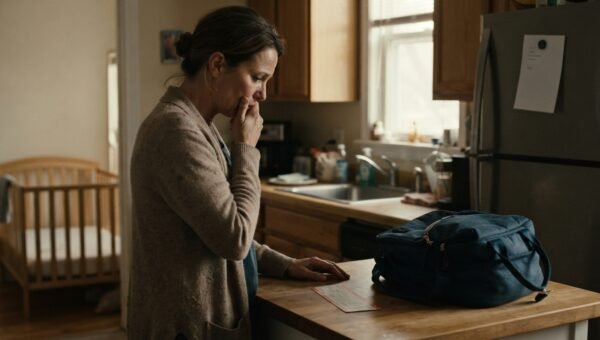
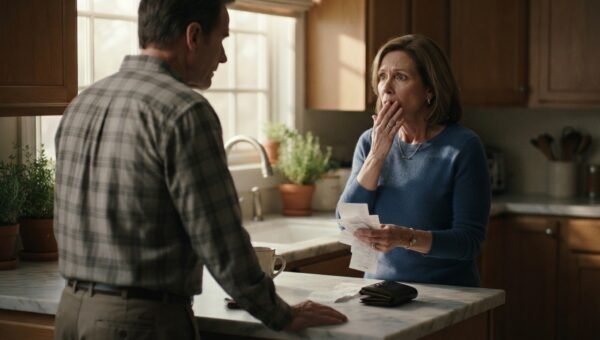
Then on a Tuesday morning in October, an investigator from the regional power company called my cell phone. She asked if I was the primary account holder for 412 Cedar Point Road. When I told her that was my late parents’ address, she informed me that the electric bill was twenty-six months past due, totaling $4,816.30, and that it had been transferred directly into my name and Social Security number three weeks after Mom’s funeral.
I told her she had the wrong person. She read off the last four digits of my Social Security number and the exact date the transfer had been requested online. The billing address listed my personal email, but with one letter transposed so the monthly shutoff notices had bounced into nowhere for two years.
The power had stayed on only because small minimum payments of sixty dollars had been made from a prepaid card every few months to avoid a total disconnect.
When I checked the utility file online with the customer service supervisor, there was a contact phone number attached to the work order. I dialed it from my kitchen table.
A man answered on the second ring. His voice was deep, steady, and completely unfamiliar.
“Hello?” he said.
“Who is this?” I asked. “Who is living at the Cedar Point house?”
He went quiet for three seconds. Then he spoke in a low, measured tone. “You need to talk to your brother before you come up here.”
The line went dead.
I didn’t call Mark, and I didn’t call Greg. I called a local locksmith in the county seat near the lake, paid a three-hundred-dollar emergency dispatch fee on my credit card, and got in my car. It was a four-hour drive through gray rain.
When I pulled into the gravel driveway behind the cabin, there were no cars in the yard. The blinds were shut tight, and dead oak leaves were piled knee-high against the porch steps. The locksmith arrived ten minutes later in a white van, picked the deadbolt open in less than two minutes, and handed me the new brass keys.
The house was cold and smelled like old coffee and cedar shavings. All the furniture our parents had owned was gone. The plaid sofa, the dining table Dad had built from barn wood, and Mom’s rocking chairs had been cleared out. The hardwood floors were bare, swept clean, with ring marks where trash cans had once sat.
The only thing left in the entire house was on the far wall of the living room.
Dozens of framed photographs were hung in tight, neat rows across the pine paneling.
Every single photo had been taken inside that house after Dad’s memorial service. And in every single shot, my brother Mark was standing shoulder-to-shoulder with the man from the utility account, smiling like they had known each other their entire lives.
PART 2
I walked up to the wall and touched the glass on the center frame.
The man in the pictures had dark hair touched with gray at the temples and a narrow jawline that made my throat tighten. He looked to be in his late forties, just a few years younger than me. He wasn’t a stranger. I had seen him once before, standing by the kitchen door at Dad’s memorial six years earlier. He had worn an ill-fitting black jacket, held an envelope in his hands, and slipped out the back entrance the moment Greg and I walked toward him to offer a guest booklet. Back then, I had assumed he was an old coworker from Dad’s days at the limestone quarry.
Now, looking at the wall, the truth was obvious in his eyes and the bridge of his nose. He had Dad’s exact face.
I pulled out my phone and took high-resolution pictures of every frame on that wall. There were photos of Mark and this man fixing the back deck together. There were pictures of two young boys, maybe eight and ten years old, opening Christmas gifts in front of our parents’ stone fireplace, with stockings hung from the mantle that read “Luke” and “Caleb.” The date stamp on the bottom corner of the holiday photo was from just ten months ago, right in the middle of the probate court dispute. While Mark had been filing motions claiming the property was vacant and deteriorating, a family had been living there full-time.
My phone rang in my hand. The caller ID showed the same local number I had called that morning.
I answered. “I’m standing in the living room.”
A heavy sigh came through the speaker. “I saw your car pull in on the security camera by the shed. I’m down at the boat landing. Give me five minutes.”
“Bring Mark,” I said.
“Mark doesn’t know you’re here yet,” the man said quietly. “My name is David. Let me come up and explain before you call the sheriff.”
Five minutes later, a beat-up blue pickup pulled into the gravel drive. David stepped out alone. He didn’t look angry. He looked exhausted, carrying a thick manila folder under his arm. He walked up the porch steps, wiped his boots carefully on the mat, and stopped in the doorway without stepping inside until I nodded.
“I’m Beth,” I said.
“I know who you are,” David replied. He set the folder on the kitchen counter. “Your father was my father, too. He had an entire life before he married your mother, and he spent thirty years pretending it never happened.”
PART 3
David pulled a stack of documents from the folder and laid them out on the bare counter.
There was an original birth certificate from 1978 listing our father, Robert Vance, as the father. Beside it was a notarized handwritten agreement signed by Dad in 1999, promising David thirty thousand dollars from his eventual estate to make up for decades of unpaid child support and silence. Dad had never put David into the official will. He had kept David a secret to protect his standing in town and his marriage to our mother.
“When Dad died, I came to the memorial to collect on that paper,” David said, pointing to the agreement. “Greg caught me in the kitchen, called me a liar and a grifter, and threatened to have me arrested if I ever contacted your mother. But Mark followed me out to the parking lot. Mark knew the truth because he’d found old checks in Dad’s desk years ago.”
“So Mark brought you here?” I asked.
“Mark made a deal with me,” David said, his voice dropping. “He told me Greg was trying to force a sale through probate to take all the cash for his business debts. Mark told me if I stayed quiet and didn’t file a paternity claim against the estate, he would let me and my boys live in the lake house rent-free until probate closed. He said he would buy Greg out for pennies on the dollar by claiming the house was abandoned and infested, and then he would deed half the property to me.”
“And the power bill?” I asked. “Why was my name on the account?”
David looked down at his boots. “Mark told me the utilities were covered under an old family trust account. He set it up online himself. I didn’t know he used your identity until the shutoff notice showed up with your name on it last week. I paid what I could on the prepaid card, but the heater broke last winter and the electric baseboards ran constantly. When I told Mark the balance had hit almost five thousand dollars, he told me to let it get cut off because the probate judge was inspecting the house next month anyway.”
The whole ugly picture was clear. Mark hadn’t been fighting Greg out of sentiment or fairness. He had used our father’s hidden son as leverage, stashed him in our parents’ home, and used my identity to shoulder the operating costs so his own finances would look clean to the court. He planned to starve Greg out, leave me with five thousand dollars in delinquent utility debt, and walk away with a waterfront property.
I picked up David’s paperwork, took out my phone, and called Mark on speaker.
He answered with his usual breezy confidence. “Hey, Beth. Good to hear from you. Have you talked to Greg? He’s still being impossible about the appraisal.”
“I’m at the lake house, Mark,” I said. “I’m standing in the kitchen with David, looking at twenty-four photos of you two on the wall, and holding an electric bill for $4,816.30 that you put under my Social Security number.”
The silence on the other end was absolute.
“Beth,” Mark stammered after several seconds. “Listen to me. Don’t do anything rash. You don’t know the whole story.”
“I know enough to file a police report for identity theft in ten minutes,” I said. “And I know enough to send these photos and David’s birth certificate directly to Greg’s probate attorney.”
“Don’t do that,” Mark begged, his voice dropping into panic. “If Greg sees that, he’ll demand the court force a public auction. We’ll lose the property completely.”
“You already lost it,” I told him. “Here is what happens today. You will wire $4,816.30 directly to the utility company within two hours, and you will text me the receipt. Then you and Greg are going to sign the deed over to an estate broker and split the sale three ways, with David’s thirty thousand dollar note paid off right off the top before any of us touches a nickel. If you refuse, I walk into the sheriff’s department right now.”
Mark tried to argue, but I hung up the phone.
ENDING
The wire transfer confirmation hit my email an hour and twenty minutes later. The power company cleared the balance in full, closed the fraudulent account in my name, and issued a formal letter confirming my credit file was clean.
Two days later, I met with Greg’s lawyer and Mark’s lawyer together in the county seat. When I placed the photos and Dad’s signed agreement on the conference table, all the yelling stopped. The brothers who had spent seven months screaming at each other over grass cutting and dock repairs suddenly had nothing to say. Facing the threat of an identity theft charge and a contested estate that would drag on for years, Mark signed the listing agreement without looking up from the table. Greg signed right after him, pale and quiet.
The lake house sold four months later for $340,000 to an out-of-state couple who planned to tear it down and build new.
Before the wrecking crew came in, I drove back out to the point one last time on a clear Saturday morning. The house was completely bare. David had already packed his boys’ things and moved into a rented duplex near town, using the thirty-thousand-dollar settlement to put down first and last months’ rent and buy a reliable car for his plumbing apprentice job.
He had taken down every photo from the living room wall, leaving only small finishing nails in the pine boards.
On the kitchen counter, he had left one thing behind: a small wooden key fob with Dad’s initials carved into the side, the one Dad had used for the old aluminum fishing boat. Attached to it was a short note written on yellow legal paper that said, “Thank you for being fair.”
I dropped the brass keys into the lockbox for the new owners, put Dad’s key fob in my coat pocket, and drove home to Ohio. I haven’t spoken to either of my brothers since the closing, and for the first time in my life, the quiet feels like peace.