PART 1
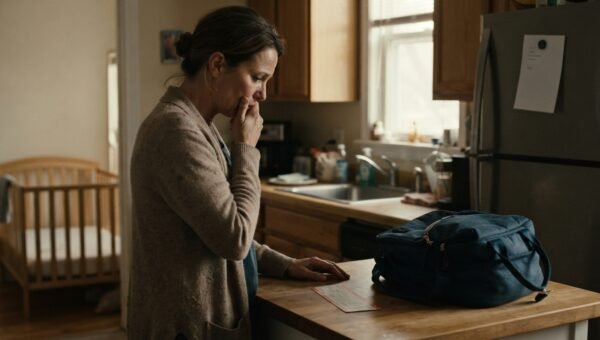
My son sat at my kitchen table and asked me to put my house up as collateral for his loan. The house his father and I paid off in 1994.
He is forty-six years old. His general contracting business was eighty thousand dollars underwater, and the local commercial lender told him flat out that he needed a co-signer with real equity before they would touch him.
“Mom, if you don’t do this, we lose our house and the kids will have to change schools,” he said.
Three grandbabies. Hailey is eleven, Tyler is eight, and little Chloe is only five.
I raised Mark to stand on his own two feet, and to his credit, he did for a very long time. But the commercial framing bids dried up six months ago, material costs spiked, and now he was drowning.
I live on nineteen hundred dollars a month from Social Security and my late husband Ray’s modest pension. That is it. If I sign that lien and Mark’s business goes under anyway, I am seventy-two years old and sleeping in a shelter. If I refuse to sign, I sit in my warm, paid-for living room and watch my grandchildren pack cardboard boxes on the curb.
I sat there with him for nearly an hour. I kept folding the same flour-sack dish towel until the fabric grew warm under my thumbs. Mark would not look directly at me. His eyes stayed glued to the sugar bowl, his knuckles white against his coffee mug.
“I’d never ask if there was any other way, Mom,” he whispered. “You know that. Six months of working capital to bridge the gap. That is all it is. Two commercial jobs are lined up for October. Once those checks clear, I pull your name right off the deed.”
I looked at his thinning hair and the dark circles bruised beneath his eyes. When Ray was alive, Ray handled the heavy paper. But Ray died eight years back, and I learned quickly that the world does not care about a widow’s sentimental feelings. Equity is just raw meat to a bank.
“Let me see the paperwork, Mark,” I told him quietly. “All of it. Bring me your company accounts, the loan agreement, and the subcontractor balances tomorrow morning.”
He looked up then, and relief washed across his face so fast it frightened me. “Thank you, Mom. You won’t regret this. I swear on Dad’s grave.”
He left behind a yellow manila folder containing the lender’s application. That night, I could not sleep. I walked through the rooms Ray and I built with our own savings. In 1978, we put three thousand dollars down on this quarter-acre lot. When Ray made the final mortgage payment at the county clerk’s window in August of 1994, we came home and drank cheap sparkling wine off the back porch. That paid-in-full deed was sitting inside my fireproof lockbox under the bed. It was not just wood and sheetrock. It was my safety, my quiet, and the only reason I could afford my blood pressure medicine without asking anybody for a dime.
The next morning at eight, Mark showed up, but he did not bring company books. He brought a portable printer, a blue ballpoint pen, and a notary authorization form from First State Commerce.
“The loan officer said we need the executed guarantee by noon today or the rate lock expires,” Mark said, pacing near the front door. “We do not have time to sit and audit invoices, Mom. If the rate jumps two points, the monthly note gets too high anyway.”
My stomach tightened into a knot. “Mark, I told you I wanted to see your numbers.”
“You don’t trust me?” His voice cracked, high and wounded. “After everything? I am trying to keep a roof over your grandkids’ heads, and you’re treating me like a stranger trying to swindle you.”
Before I could answer, my front screen door opened. It was my daughter-in-law, Sarah. She had dropped the two older kids at school and drove over with Chloe on her hip. Sarah looked hollow, her skin pale and drawn.
She did not say good morning. She looked at the papers on my table, then at Mark, and then straight at me.
“Mark,” Sarah said, her voice shaking with an anger she could barely contain, “did you tell your mother the truth about the eighty thousand dollars, or are you still lying to her like you lie to me?”
PART 2
The room went dead silent. Chloe reached out and tugged at Sarah’s earring, making a quiet baby sound that felt loud in the stillness.
“Sarah, go wait in the truck,” Mark snapped, his voice dropping into a harsh rasp. “We are handling business.”
“No, we are not,” Sarah said. She set Chloe down on the linoleum and pulled a thick white envelope out of her canvas tote bag. She slammed it down right on top of the bank’s application. “Look at it, Ruth. Look at what he is actually paying for.”
Mark lunged forward to grab the envelope, but I moved faster. My hands may have arthritis, but I snatched the paper before his fingers closed over it.
“Sit down, Mark,” I said. My voice was not loud, but it was the tone I had not used since he was sixteen years old. He stopped in his tracks, his jaw working, breathing hard through his nose.
I pulled out the contents. They were not unpaid invoices for lumber, steel studs, or drywall. They were bank printouts from a private account under an LLC name I had never heard of: M&S Capital Holdings. Attached to the bank statements were printed records from an offshore digital sports betting platform and a series of wire transfers sent directly from his business operating account.
Over the last fourteen months, Mark had not lost eighty thousand dollars to rising material prices. He had lost seventy-two thousand dollars betting on late-night professional games, chasing losses from an earlier debt, and running cash advances through high-interest business credit lines to cover his payroll.
The framing work had not dried up. The subcontractors had simply walked off the job sites three weeks ago because their checks bounced, and the general developer pulled the contracts from his company.
My hands began to shake so badly the papers rustled like dry leaves. “Mark… what is this?”
He did not look like a grown man anymore. He slumped against the refrigerator, his eyes wide and hollow. “It was just bad luck, Mom. I had a system. I was up thirty grand in November, and then the playoffs went sideways. I just needed to bridge until the spring. If I didn’t make payroll, the guys were going to report me to the labor board. I was trying to save the company.”
“You gambled our savings,” Sarah said, tears spilling down her cheeks without a sound. “He took the kids’ college funds two months ago. Now he wants your house so the loan sharks at the commercial firm do not garnish our joint checking.”
I looked down at the signature line on the First State Commerce guarantee form. Right there in black ink was my legal name, Ruth Ann Miller, and a blank line requiring a notary seal. The document gave the bank an immediate first-priority deed of trust against my home. If the debt defaulted for sixty days, the bank had the absolute legal right to conduct a non-judicial foreclosure on my front lawn.
Mark fell to his knees beside my chair. He grabbed my wrists, just like he used to do when he was a little boy with scraped knees.
“Mom, please,” he wept. “They are going to file a civil judgment against me by Friday. If they get the judgment, they will attach the shop and my trucks. I will never work in this county again. I will go to prison for payroll tax fraud. Please. I swear I will never place another bet. Just sign the house. It gives me three years to pay the bank back.”
I looked at my son’s face. I loved him with every breath left in my body. But looking past him, I saw little Chloe playing with the fringe on the kitchen rug, completely unaware that her father was asking her grandmother to walk off a financial cliff.
PART 3
I pulled my hands free from Mark’s grip.
“Get up off the floor, Mark,” I told him.
He scrambled up, his eyes desperately searching my face for the surrender he expected. I stood up, gathered every single sheet of the loan application, walked to the counter, and tore the paperwork cleanly in half. Then I tore it again. I dropped the pieces into the trash can under the sink.
“I am not signing,” I said.
The silence that followed was heavy and cold. Then the shift happened. His sorrow vanished, replaced by an ugly, frantic fury that turned his face red.
“You don’t give a damn about my kids!” he yelled, stepping toward me. “You care more about this rotting, thirty-year-old pile of bricks than your own blood! If we end up on the street, it is on your head, Mom. You did this to us!”
“Mark, stop it!” Sarah screamed, scooping Chloe off the floor.
“No, she needs to hear it!” Mark shouted, pointing a finger directly into my face. “You’re a selfish old woman hoarding a four-bedroom house while my family starves! Dad would be disgusted by you!”
That word hit me like a physical blow. Ray had worked forty-two years at the paper mill, pulling double shifts on holidays so this home would be paid clear before his lungs gave out. Ray had taught Mark how to swing a hammer, how to read a tape measure, and how to look a man in the eye.
“Your father worked until his fingers bled so no bank could ever put a boot on our neck,” I said. My voice did not waver. “He did not break his back for four decades so you could throw this land away on an internet screen. Get out of my house, Mark. Now.”
He stared at me, his chest heaving. When he realized I was not going to break, he turned, kicked the kitchen garbage can across the floor, and slammed the front door so hard the glass pane rattled in its frame. His truck engine roared in the driveway, gravel spraying against the fence as he tore down the road.
Sarah sank into the chair Mark had just left. She covered her face with her hands and sobbed until her shoulders hitched. Chloe sat on her lap, patting her mother’s wet cheek with her small hand.
I walked over to the counter, filled a glass with tap water, and set it down in front of Sarah. I sat beside her.
“How bad is it, Sarah?” I asked gently. “Tell me the whole truth. Not Mark’s version. Yours.”
Sarah drank the water with trembling hands. The story she told me over the next two hours was worse than the eighty-thousand-dollar figure Mark had given me. The total debt was over one hundred and forty thousand dollars once the delinquent payroll taxes, personal credit cards, and supplier liens were factored in. The bank was not offering him working capital; they were calling in a defaulted commercial line. If I had signed that deed of trust, the bank would have moved to seize my home within ninety days, because Mark had zero ability to service the twenty-eight-hundred-dollar monthly note.
Sarah had already spoken to an attorney in town. She knew what was coming. Foreclosure on their suburban home was inevitable within six months. The business was going into Chapter 7 liquidation.
“I cannot stay with him while he is like this, Ruth,” Sarah whispered, looking down at her wedding band. “He took food money. He took the kids’ dental insurance money. He needs treatment, but he swears he can fix it with one big win. I have to protect the children.”
“Yes,” I said, reaching over to squeeze her cold fingers. “You do.”
ENDING
That afternoon, I made three phone calls. The first was to my family lawyer, David Henderson, who had handled Ray’s estate. The second was to a certified locks technician. The third was to my pastor.
By five o’clock that evening, the deadbolts on my front and back doors were completely replaced, and my deed remained safely locked in my fireproof box. David confirmed what I already knew: co-signing would have stripped away my primary residence exemption under our state’s homestead laws, leaving me completely vulnerable to Mark’s creditors.
Two days later, Sarah packed up the children and their clothes. She did not move into a shelter, and the kids did not change schools.
I moved my guest room furniture into the basement and turned the two upstairs bedrooms into spaces for Hailey, Tyler, and Chloe. I turned the small den off the kitchen into a room for Sarah.
My monthly budget of nineteen hundred dollars could not pay off Mark’s debts, but it could buy groceries, milk, and bread for my grandchildren. Sarah took a job managing the front desk at a local medical clinic, making eighteen dollars an hour. She pays for the utilities and the children’s clothing, and I watch Chloe during the day until preschool starts.
Mark did not go to prison, but the reality he ran from finally caught him. His business assets were liquidated by the bankruptcy court. The trucks were towed, the tools were auctioned on the courthouse steps, and his credit was destroyed.
When he realized I would not budge and Sarah would not return until he got clean, he finally hit bottom. He is currently living in a rented room across town, working as an hourly trim carpenter for a former competitor who knows his trade skill but keeps him far away from the checkbook. He attends a recovery program three nights a week at the community center.
He comes to my house every Sunday afternoon. The house rules are strict: no talk about money, no staying past six o’clock, and he must leave his phone on the hall table so he is present with his children.
Last Sunday, I stood at the kitchen window washing the supper dishes with that same worn flour-sack towel. Outside on the lawn, Tyler was throwing a football to his dad while Chloe chased dandelion seeds through the grass Ray planted forty years ago.
Mark looked over at the window, caught my eye, and did not glare. He lowered his head and gave me a small, tired nod.
It broke my heart to say no to my own son. A mother’s instinct is always to throw her own body into the ditch so her child does not fall. But if I had given in to that instinct, there would be no safe house today. There would be no kitchen table for these children to do their homework on, no yard for them to run in, and no floor beneath our feet. Sometimes love is not reaching out your hand to pay the debt. Sometimes love is standing firm, protecting the ground you have, and keeping the door unlocked for when they finally decide to walk home.