PART 1
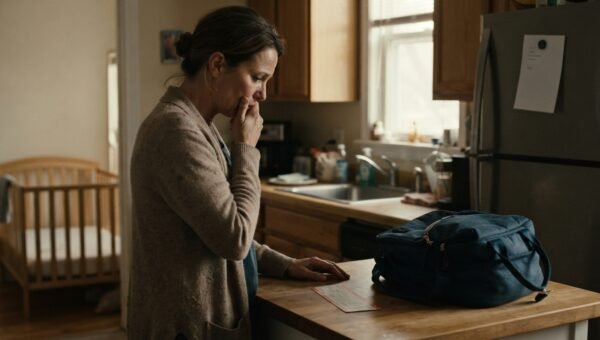
For six weeks, I sat at our kitchen table every evening listening to my husband, Brian, tell me that his seventy-eight-year-old mother was slipping further away.
Evelyn had taken a bad fall down the wooden steps of her garden cottage in late September. She shattered her left hip and suffered a concussion that required emergency orthopedic surgery and an extended stay at Meadowview Rehabilitation Center. I wanted to be by her side the very next morning.
Evelyn and I had been close for the twenty-three years I was married to Brian. When my own mother died of heart disease ten years ago, Evelyn was the one who came over every Tuesday to sit on my back porch, drink black coffee, and help me work through the grief. We traded crossword puzzles every single Sunday afternoon.
But the day after Evelyn was transferred to the rehabilitation wing, Brian came home with his shoulders slumped and his face tight with sorrow. He took my hands across the table and told me the doctor said Evelyn had developed severe post-operative delirium.
“She gets agitated whenever you are mentioned, Brenda,” Brian told me, his voice gentle and full of manufactured sadness. “The head nurse pulled me aside and said the confusion is focused on you. Evelyn thinks you are someone from her past who took her things. Seeing your face spikes her systolic blood pressure over one hundred and eighty.
The medical team advised that only direct blood relatives visit until the swelling around her brain resolves.”
I was devastated. It broke my heart to imagine this sweet, gentle woman being terrified of me. Every time I reached for my car keys to drive over anyway, Brian stopped me at the door. He told me that loving his mother meant respecting her medical limits. He promised he would visit her every single afternoon after his shift at the regional supply warehouse, check on her therapy, and bring back daily updates.
Whenever I dialed the direct telephone line to her recovery room on the third floor, the phone never rang more than once. It clicked, and Brian’s voice was always on the line. He told me he had forwarded the bedside room telephone to his personal cell phone so the sudden ringing would not startle his mother while she slept. He would give me a short, thirty-second summary of her physical therapy and promise to pass along my love.
Six weeks dragged by. My stomach stayed tied in knots.
Then came a rainy Tuesday morning in early November. Brian had left at dawn for an inventory run down in Cincinnati. He was scheduled to be out of town until late that night. I could not take the silence in my house any longer. Even if I had to stand out in the hallway and look through the small glass window of her room without stepping inside, I needed to see Evelyn with my own eyes.
I stopped at the corner pharmacy, bought two spiral-bound volumes of the Sunday New York Times large-print crosswords she loved, and drove to the facility.
I walked into Meadowview Rehabilitation Center, rode the elevator to the third floor, and found room 314. The door was half open.
Inside, Evelyn was sitting upright in a high-backed vinyl armchair near the window. Her gray hair was brushed neat, her glasses were perched on her nose, and she was calmly folding a warm flannel blanket across her lap. She did not look confused. She did not look delirious.
When my sneakers squeaked against the floor tile, she looked up toward the doorway.
The color rushed into her pale cheeks. She did not scream. Her blood pressure did not spike. Her slate-blue eyes went wide with pure, desperate relief.
She reached out with both hands, her fingers trembling as she grabbed my wrist with shocking strength. Her grip was tight, urgent, and fiercely awake.
“Brenda,” she choked out, her voice cracked and thin from weeks of tears. “Where have you been? Why did you abandon me here? I asked Brian every single afternoon why you never came. He told me you said you were too busy with your garden club to sit in a sickroom.”
I froze in the middle of the room, the two crossword books dropping from my numb fingers onto the linoleum floor.
My mouth opened, but no sound came out. She was not confused at all. She had been waiting for me every single day. And every word my husband had told me for forty-two days had been a calculated, deliberate lie.
PART 2
I dropped to my knees beside Evelyn’s chair, pulling her cold, paper-thin hands into mine. Tears spilled down her cheeks, soaking into the collar of her floral hospital gown.
“Evelyn, I never said that,” I whispered, my voice breaking into jagged pieces. “Brian told me you were suffering from post-operative dementia. He told me the doctors banned me because seeing my face threw you into panic attacks. I called your room every single night, but Brian answered every time. He told me he was screening your calls so you could rest.”
Evelyn stared at me through her wire-rimmed glasses, her jaw trembling with disbelief and horror.
“Dementia?” she gasped, her knuckles tightening around my fingers until they hurt. “I have a fractured pelvis and a healing hip socket, Brenda. My mind has been as clear as a bell from the moment I woke up from anesthesia. Brian told the floor nurses to take the bedside phone cord out of the wall jack two weeks ago. He told them incoming telemarketer calls were waking me up. I haven’t heard a phone ring in this room since October.”
She pulled a crumpled tissue from her sleeve and pressed it against her shaking mouth.
“Two weeks ago, Brian brought a strange young woman in a gray suit into this room,” Evelyn said, her voice dropping into a frightened whisper. “He told me she was a social worker processing my Medicare gap coverage. He held a clipboard in front of me and asked me to sign four separate pages. When I asked to put on my reading glasses so I could review what was written, Brian became furious. He said the notary had to leave for another appointment, snatched the clipboard away, and shoved me back down onto the pillows.”
Before I could ask another question, the privacy curtain rattled along its ceiling track.
A tall, middle-aged woman wearing a navy blazer and an official hospital badge walked into the room. Her badge read: *Diane Ross, Senior Patient Rights Advocate.*
She looked at me kneeling beside Evelyn’s chair, then glanced down at the crossword books resting on the floor. Her expression was solemn, cautious, and completely guarded.
“Excuse me, ma’am,” Diane Ross said, her tone polite but firm. “Are you Brenda Miller?”
“Yes, I am,” I said, standing up and wiping my eyes with the back of my hand. “I am Evelyn’s daughter-in-law.”
Diane Ross let out a slow, measured breath. She stepped back toward the doorway and gestured toward the hallway corridor.
“Mrs. Miller, would you please step into my office at the end of the hall for a few minutes? We have an administrative matter regarding patient security that needs immediate clarification.”
I squeezed Evelyn’s hand, promised her I would be right back, and followed the advocate down the quiet, carpeted hallway.
Diane’s office was small, windowless, and lined with filing cabinets. On her desk sat a thick red plastic binder marked with yellow audit tags. She pulled out a chair for me, closed the solid wooden door, and sat down behind her desk.
She opened the master visitor registry log for room 314 and turned the binder around so it faced me directly.
Across the top of the page, printed in bold administrative red ink, my full legal name had been crossed out with three heavy, violent strokes of a red marker.
Beside the red line, stamped with an official hospital restriction seal, was a handwritten notation: *Immediate visitor restriction. Deny entry at reception desk. Family restriction formally requested by spouse.*
“I don’t understand,” I stammered, my heart racing. “My husband told me the attending physician ordered this restriction for medical reasons.”
“The medical staff issued no such order, Mrs. Miller,” Diane said quietly. “Your husband, Brian, came to my office on the second day of his mother’s admission. He submitted a formal administrative grievance, claiming that you were emotionally unstable, that you had threatened his mother over an inheritance dispute, and that your presence posed a direct threat to the patient’s recovery.”
“That is an outright lie!” I cried out, the fury rising hot in my chest. “Evelyn and I have never had an argument in twenty-three years! I bought her those crosswords this morning! I loved that woman like my own mother!”
Diane did not look surprised. She opened a secondary manila file tucked inside the red binder.
“I suspected as much when I observed your interaction in the room just now,” Diane said, her voice dropping into a low, serious tone. “Three days ago, our billing department flagged an irregularity. A formal change of ownership affidavit and an expedited deed-transfer authorization were submitted to the county recorder’s office regarding Evelyn’s garden cottage on Sycamore Street. The document purported to convey Evelyn’s unencumbered real property into a private corporate holding.”
Diane leaned forward, pulled a single sheet of paper from the manila sleeve, and laid it flat under the fluorescent desk lamp.
“Attached to the property conveyance was an affidavit of legal conservatorship,” Diane said, looking directly into my eyes. “It was submitted under your husband’s name, but the required co-guarantor signature belongs to you, Mrs. Miller. The document claims that you personally witnessed Evelyn’s cognitive decline and consented to the liquidation of her estate.”
Diane tapped her pen against the signature line at the bottom of the page.
“Take a close look at this handwriting, Mrs. Miller,” Diane whispered. “Did you sign this document?”
PART 3
I stared down at the crisp white paper under the desk lamp.
The document was titled: *Affidavit of Family Conservatorship and Property Transfer.*
At the bottom of the legal bond paper were two signature lines. The first line bore Brian’s unmistakable, jagged scrawl. But it was the second line that made the blood freeze in my veins.
Printed across the line was my name: *Brenda Marie Miller.*
The ink was black, smooth ballpoint. The letters were rounded, careful, and tilted slightly to the right. At first glance, it looked eerily convincing. But on my legal signature, which I had used on every mortgage, tax return, and car title for thirty years, I never cross the second stem of the letter ‘M’ in Miller. The person who forged this document had drawn an elaborate double loop across the ‘M’ to make it look fancy.
It was not my signature.
And more horrifying than that, I knew whose handwriting it actually was.
For the past fourteen months, Brian had been employing a twenty-six-year-old administrative assistant at his logistics warehouse named Amanda. Whenever Brian brought home vendor invoices or holiday gift cards from his office, the accompanying notes were always written on matching pastel stationery in that exact, bubbly script with the rounded letters and the looped ‘M’.
Amanda was the young woman in the gray suit whom Evelyn had seen standing over her hospital bed with a clipboard.
“I never signed this,” I said, my voice trembling with a mixture of rage and terror. “This is not my handwriting. This belongs to my husband’s administrative assistant, Amanda Vance.”
Diane Ross did not blink. She pulled a digital recorder from her desk drawer, clicked the red record button, and laid it on the desk between us.
“Mrs. Miller,” Diane said, her voice turning completely professional and clinical. “You are stating on the record that your signature on this legal instrument was forged without your knowledge or consent?”
“Yes,” I answered clearly, looking straight into the advocate’s eyes. “I am stating that my husband forged my name on this document. What did he do with Evelyn’s cottage?”
Diane turned the page. Attached to the back of the affidavit was a certified commercial settlement statement from an escrow company in Dayton.
“Your husband executed a private cash sale on his mother’s cottage ten days ago,” Diane revealed, each word landing like a hammer blow on the desk. “The property has an estimated market value of two hundred and forty thousand dollars. Brian sold the parcel to an offshore commercial investment group for one hundred and sixty-five thousand dollars in liquid cash. The funds were wired directly into a newly formed LLC bank account yesterday afternoon.”
The full scope of his betrayal laid open before me.
Brian had not banned me from the hospital to protect his mother’s heart. He had banned me because he knew I would immediately notice that Evelyn’s mind was completely sharp. He knew that if I spoke to Evelyn for even five minutes, his entire scheme would collapse before the escrow wire cleared. He needed Evelyn isolated, cut off from phones, and kept behind locked hospital doors until he could steal the roof over her head and drain every penny of equity she had spent forty years building with her late husband.
“Where is the money right now?” I asked, my fingernails digging into the wooden arms of the chair.
“The escrow company completed the wire transfer at four o’clock yesterday,” Diane replied. “However, because our compliance office flagged the cognitive capacity discrepancy on Evelyn’s medical intake chart, we filed an emergency notice of fraudulent conveyance with the county recorder at eight o’clock this morning. But the liquid cash in that LLC account can still be moved if your husband accesses the online portal.”
Before Diane could finish her sentence, heavy, hurried footsteps echoed down the linoleum hallway outside the office.
The office door was pushed open with a violent shove.
Standing in the doorway was Brian. His rain jacket was unzipped, his work boots were damp from the highway, and his face was twisted in a mixture of frantic panic and boiling fury. He had evidently called the third-floor nursing station from his truck to check on his visitor restrictions, only to be told that his wife was on site.
“Brenda!” Brian shouted, stepping into the room, his eyes wild. “What are you doing here? I told you she was not stable! You had no right to come behind my back!”
I stood up from the chair. I did not flinch. I did not back away. The fear that had kept me trapped at my kitchen table for six weeks vanished, burned away by the sickening sight of the coward standing in front of me.
“Her mind is completely fine, Brian,” I said, my voice steady, cold, and clear as ice. “Evelyn is sitting in her chair waiting for her crossword puzzle. She remembers everything. She remembers the young woman in the gray suit. She remembers Amanda.”
The color drained from Brian’s face so fast that he looked like a corpse. His jaw dropped, his hands freezing at his sides.
“Brenda… wait,” he stammered, his arrogant bravado dissolving in a fraction of a second. “Let me explain. It isn’t what you think.”
“You sold your mother’s home for one hundred and sixty-five thousand dollars,” I said, pointing directly to the open file on Diane’s desk. “You forged my name on a conservatorship affidavit. You left your seventy-eight-year-old mother in this facility to rot while you and Amanda planned to take her money and run.”
Brian took a step backward toward the hallway, his hand reaching instinctively into his coat pocket for his cell phone.
“It was an investment opportunity, Brenda!” he pleaded desperately, his voice cracking into a high, shrill whine. “The warehouse is laying off forty people next month. I was trying to protect our family’s future! We can split the proceeds! We can take care of Mom in a private assisted living suite! Nobody has to get hurt!”
“Someone is already hurt, Brian,” a deep, authoritative voice boomed from the corridor behind him.
Two uniformed county sheriff’s deputies stepped around the doorframe. Behind them stood Detective Miller from the county elder abuse and financial crimes task force, holding an open leather badge case and an emergency asset-freeze warrant.
“Brian Miller,” Detective Miller said, placing a heavy hand on Brian’s shoulder. “Turn around and place your hands behind your back.”
ENDING
Brian tried to pull away, shouting that it was a private family matter, but the deputies were fast and merciless. In three seconds, Brian was pinned against the doorframe, his hands wrenched behind him, and the cold steel handcuffs clicked shut around his wrists.
Amanda Vance was arrested forty minutes later at the commercial warehouse in town. When the detectives searched her desk, they found two extra copies of the forged deed, a notary stamp she had stolen from a previous employer, and two one-way airline tickets to Cabo San Lucas booked for that coming Saturday. Brian had not planned to share a single dollar with me. He had planned to clean out the LLC account, board a flight with his assistant, and leave his mother in a state-run ward and his wife with a mountain of legal liability.
Because Diane Ross and the hospital compliance team acted with lightning speed, the county prosecutor secured an immediate emergency injunction freezing the commercial escrow account before Brian could execute a single withdrawal.
Every single penny of the one hundred and sixty-five thousand dollars was recovered and returned to an irrevocable trust established solely in Evelyn’s name. The county recorder formally vacated the fraudulent deed, restoring full, unencumbered ownership of the Sycamore Street cottage to Evelyn.
Brian was formally indicted by a county grand jury on four felony counts: grand theft by deception, forgery, identity fraud, and felony exploitation of an elderly dependent adult. Facing overwhelming physical evidence, including security footage from the rehabilitation facility and forensic handwriting analysis confirming Amanda’s hand on the forged instruments, both Brian and Amanda accepted plea agreements in late January.
The judge showed no leniency. Brian was sentenced to six years in a state correctional institution, while Amanda received three years for her role as an accessory and notary fraud.
I filed for divorce the day after Brian was transferred to the state penitentiary. The court awarded me our family home, which I promptly sold to put twenty-five miles between myself and the memories of twenty-three years of deceit.
Evelyn completed her physical therapy in mid-December. On the day she was discharged from Meadowview, I drove to the facility in my station wagon. I packed her clothes, loaded her walker into the trunk, and helped her into the front passenger seat.
We did not move her back to the Sycamore Street cottage right away. Instead, she moved into the sunny guest bedroom of my new single-story home on the south side of the county. Her hip is fully healed now, though she still uses a polished maple cane to walk out to the back patio on warm afternoons.
Every Sunday morning, the house smells of fresh coffee and cinnamon toast.
Evelyn sits at the round oak table by the window, the sun warming her shoulders, with the Sunday paper unfolded between us. She works the across clues, and I fill in the down clues.
Sometimes, she will stop, look across the table at me, and reach out to pat the back of my hand with her warm, soft fingers. We don’t talk about Brian. We don’t speak his name.
Some people believe that family is defined by blood and paper deeds. But as I look at the woman who calls me her true daughter, I know the truth: family is the person who refuses to walk away when the world tells you to abandon someone you love.