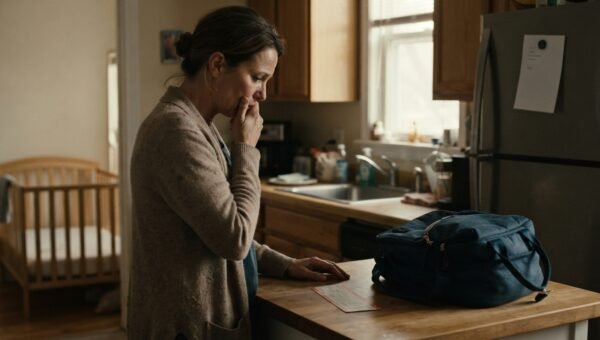
I noticed the corner of the envelope first because it was the only white thing on the dark walnut of our dining room table, sitting right where Arthur usually tossed his car keys after a round of golf.
It was 3:42 in the afternoon. My cheek still felt like someone was pressing a hot clothes iron against it, even after four hours of cold compresses, silver sulfadiazine cream, and a nurse named Brenda with a quiet, steady voice who kept telling me to keep my chin up while she took the third set of photographs for the county police file.
Brenda told me the swelling would look worse before it looked better. She was right about that, just like she was right when she handed me my phone back and told me I needed to make the call that mattered.
Arthur and his sister, Valerie, had left the house around nine that morning, slamming the side door so hard the framed watercolor of the Hudson River rattled against the drywall. They were certain I was broken. They were certain I would sit in that sterile emergency room cubicle for six hours, weeping into a paper-and-plastic kidney basin, waiting for my phone to ring with demands I had no energy to fight. Valerie had already priced out a two-week cruise to the Greek islands on her phone screen while we sat at the kitchen island over stale toast, her thumb scrolling past pictures of whitewashed villas while Arthur stood behind her, nodding like he owned the architecture.
“You’re making this much harder than it needs to be, Clara,” he had said, pouring himself another mug of black coffee from the pot I had brewed twenty minutes before he decided my face was worth less than Valerie’s credit card debt.
The coffee had still been spitting steam when he tipped the mug forward. I remember the exact weight of the ceramic against my forehead before the heat hit my skin, and then the way the kitchen tiles tilted sideways when I screamed.
“Either you obey this family,” he had said, stepping over my shoulder as I curled on the linoleum, “or you leave with nothing.”
I did not leave with nothing. I left with my purse, my car keys, and the quiet, terrible clarity of a woman who has finally stopped looking for excuses for the man she married.
When Arthur and Valerie pushed their way back through the side door three hours later, laughing about some joke they had shared in the driveway, the house did not smell like the coffee I used to brew at dawn.
It smelled like nothing at all. The refrigerator hummed from the kitchen, but the air in the hall was thin and stripped of every trace of us.
Valerie dropped her canvas tote bag onto the entryway bench. “Clara?” she called out, her voice bouncing off the high ceilings we had spent three months painting last summer. “Clara, if you’re hiding upstairs with an ice pack, your attorney isn’t going to save you. Arthur checked the trust documents twice. Spousal override is standard in this state after five years.”
She didn’t know about the seventh-year clause. My father had insisted on it when we signed the prenuptial back in nineteen-ninety-something, long before I ever met Arthur at the regional bank branch where I worked as a teller. My father had looked at Arthur across the mahogany desk in our lawyer’s office, smelled the ambition on him like cheap cologne, and made sure every single dollar of the nine million seven hundred thousand my mother left behind was buried so deep in an irrevocable bloodline trust that not even a judge with a sledgehammer could chip a corner off it.
Arthur walked into the dining room first, loosening his tie with one hand while reaching for the laptop bag he always left by the sideboard.
Then he stopped. His foot came down on the hardwood with a dull, heavy thud.
The wall safe behind the mahogany liquor cabinet was open. The heavy steel door swung wide on its greased hinges, revealing a dark, empty cavity where our passports, our backup hard drives, Arthur’s secondary checkbooks, and the titanium key fobs for my parents’ estate accounts had lived since the funeral.
“Valerie,” Arthur said. His voice didn’t sound like a man who owned anything anymore. It sounded thin, like dry paper tearing in the wind. “Valerie, look at the safe.”
She came around his shoulder, her sandals clicking against the floorboards before she froze too. The kitchen was bare of our small appliances. The copper pots my mother had handed down to me when I turned thirty were gone from the hanging rack above the island. The spare keys we kept in the ceramic bowl by the pantry were gone.
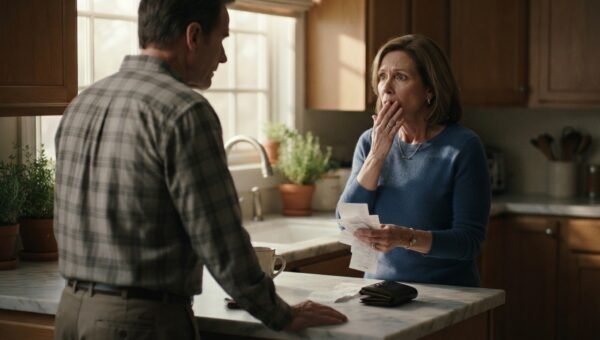
And there, right in the center of the dark wood table, sat the single white envelope with my name written in black ink by Marcus Vance, the attorney who had handled my parents’ estate since I was in braces.
Arthur walked toward the table as if he were walking across thin ice on the river in January, his shoes making a hollow sound in the empty room. He didn’t pick up the envelope right away. He stared at the corner where the red wax seal pressed down the flap with my father’s old signet ring.
“She wouldn’t,” Valerie whispered, her hands twitching at her sides. “She couldn’t do that without a court date. We have rights to the marital home equity, Arthur. Tell her she can’t just, “
“Shut up, Val,” Arthur said, his hand hovering over the paper. “Just shut up for one second.”
He picked it up. The paper was heavy, cotton-blend linen that didn’t bend when he lifted it. He tore the top with a thumb that had started to tremble around the knuckle, pulling out the folded sets of heavy white paper with the gold seal of the county court at the top of each page.
I watched them from the doorway of the pantry, where I stood with Marcus Vance and two deputy sheriffs from the county precinct. My face was wrapped in sterile gauze from my left jaw up to my temple, the skin underneath throbbing with a dull, rhythmic burn that kept me anchored to the exact second of the morning.
Arthur read the first page aloud without realizing he was doing it, his voice dropping an octave with every line.
“Temporary emergency protective order,” he muttered, his eyes darting across the text. “Exclusion from premises. Immediate freeze on joint commercial and residential credit lines pursuant to felony domestic assault documentation…”
He stopped on the second page. I could see the exact moment he hit the police report number and the certified copies of the photographs Brenda had taken in the ER, showing the scald pattern of the coffee grounds still embedded in my eyelashes.
“This is a mistake,” Arthur shouted, turning around so fast he nearly knocked over the chair. His face wasn’t pale; it was mottled, red around the cheekbones where the blood rushed up from his throat. “Clara! Where are you hiding? You know damn well you signed the secondary authorization form last November when we refinanced the garage. You can’t just lock me out of my own house!”
I stepped out from the pantry shadows then, letting my sneakers squeak against the clean floor where the Persian rug used to be before the movers rolled it up at noon.
Arthur blinked at me, his eyes dropping from my bandaged face down to the clipboard Marcus Vance held against his chest.
“Your house, Arthur?” I said. My voice sounded smaller than I wanted it to, raspy from the smoke of the kitchen toaster he had kicked over on his way out the door this morning, but it carried across the empty room just fine. “The deed was recorded in the trust’s name twenty-four hours after my mother’s funeral. You never signed the secondary rider. You just assumed I forgot to check the box.”
Valerie took a step toward me, her mouth open, her face tightening into that familiar, ugly look she got whenever she didn’t get her way at a restaurant or a family reunion. “You little liar,” she hissed, her fingers curling into fists. “You’ve been planning this behind our backs. You sat there taking our money while you were talking to your lawyer like a snake in the grass, “
“Valerie,” the taller deputy said, stepping forward with his hand resting casually on the black leather of his belt. “Why don’t you take a step back toward the front door. This is a private residence, and you’re not on the deed.”
“I am his sister!” she screamed, her voice cracking against the high ceiling. “She’s trying to steal everything we built together! Arthur, tell them to arrest her! Look at what she did to the house!”
Arthur didn’t look at his sister. He was staring at me with those small, flat eyes that used to watch me across the kitchen island while he figured out how much he could borrow against my dividend checks without me noticing the statements in the mail.
“You’re my wife,” he said, and for a second there was nothing in his voice except a strange, pathetic sort of confusion, like a child who had dropped a toy and couldn’t figure out why it didn’t bounce back up. “We’ve been together ten years, Clara. You can’t throw me out over a cup of coffee. It was an accident. My hand slipped.”
“Your hand slipped,” I repeated. I reached up with my left hand, my fingers brushing the edge of the gauze where the skin felt tight and hot. “That’s what you told the mirror when you practiced it on the way home, wasn’t it? You told yourself it was just an argument that got out of hand.”
Marcus Vance didn’t say a word. He just stepped forward, laid a fresh copy of the trust dissociation papers on the bare table beside the open envelope, and clicked his ballpoint pen once.
“Arthur Sterling,” the deputy said, his boots clicking twice as he closed the distance between them. “Turn around and put your hands behind your back. You’ve got an active warrant for felony aggravated assault with serious bodily injury out of the county district court.”
The color left Arthur’s face then, all at once, leaving him looking smaller than he ever had in the ten years we shared a bed. He looked down at the papers in his hand, then at the empty safe, and finally at me, standing by the pantry door with my bandage and my quiet voice.
“You’re leaving with nothing, Arthur,” I said, using his own words back to him like a clean linen sheet dropped over old furniture. “Just like you promised.”
They led him out through the side door at 3:52 in the afternoon. Valerie followed behind them, screaming something about lawyers and corruption until the second cruiser pulled up behind her Hyundai and an officer told her she could walk down the gravel drive or ride in the back with her brother.
When the red taillights finally turned the corner by the mailbox, the silence that came back into the house was different from the silence of the morning. It wasn’t the silence of fear or the silence of a woman waiting for a pot to boil. It was just space. Empty, clean space that belonged to nobody except the person who owned the walls.
I walked to the front window in the living room, where the sheer curtains had been taken down by the bonded movers three hours before. Outside, the maple trees by the driveway were dropping their first brown leaves into the damp grass, the wind rattling the branches against the eaves with the sharp, clean bite of an upstate October.
I reached into the pocket of my cardigan and pulled out my father’s old brass fountain pen, the one with the cracked cap he used to sign every deed he ever bought along the river. I didn’t open it. I just held it between my thumb and my index finger, feeling the cool weight of the metal against my palm while I watched the gravel settle in the drive.
My face still burned, but the skin underneath was healing already, clean and tight under the white wrap.