PART 1
My daughter-in-law Vanessa stood on my front porch two weeks ago, crossed her thin arms, and looked at me like I was a broken appliance.
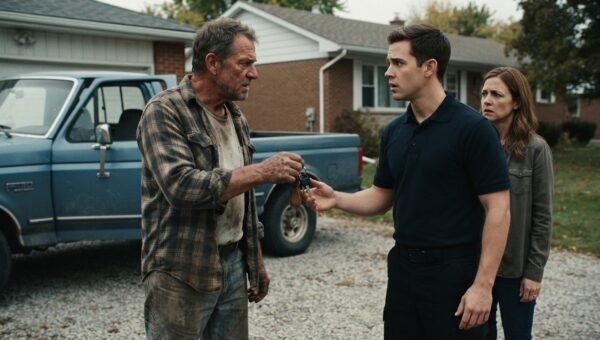
She did not step inside. She did not take off her sunglasses. She just looked past me into my tidy foyer and said, “Brenda, we are changing the pickup schedule. You can no longer pick up Leo from school. You are simply too old to be driving around with a child.”
I stood there in my socks, holding the storm door open. I am sixty-two years old. I work thirty hours a week managing accounts for an independent hardware supplier. I walk three miles every morning before breakfast. My driver’s license has zero points, my eyesight is sharp, and I have driven Leo home from Oak Creek Elementary three afternoons a week since he was in kindergarten.
“Vanessa,” I said, trying to keep my voice completely even. “I am sixty-two, not ninety-two. My driving record is spotless.”
“It is about reaction times,” she said smoothly, speaking in that calm, clinical tone she always used when she was delivering an order. “Modern traffic is aggressive. Scott and I talked it over. Leo is nine now, and his safety comes first. We hired an after-school transport service to bring him home. We need your house key back, too, just so there is no confusion about who is responsible for him between three and six.”
My son Scott had not called me. He had not come to look me in the eye. That hurt worse than the words she used, but I knew how Scott was. He had spent eight years trying to keep Vanessa happy, walking softly around her moods and her sudden rules. If Scott had agreed to this, it was because he was exhausted from fighting her.
I did not scream. I did not make a scene on my front porch for the neighbors to see. I took my spare key off the hook by the coat rack, dropped it into her palm, and said, “Tell Leo I love him.”
She slid the key into her designer purse, gave me a tight little nod, and walked down my driveway to her white SUV without looking back.
I spent the next two weeks feeling like a ghost. At three o’clock every weekday, my living room felt too quiet.
I missed the sound of Leo’s heavy sneakers kicking off by the front door, the crinkle of the string cheese wrappers, and the way he would sit at my kitchen island explaining every detail of his third-grade science projects. I called Scott twice. Both times, he kept the call under two minutes, saying work was crazy at the logistics firm and he would bring Leo over on Sunday. Sunday came and went without a word.
Then, on a rainy Thursday afternoon at three-forty, my cell phone rang while I was sitting at my desk finishing an invoice report.
The caller ID showed Oak Creek Elementary.
I answered immediately. “Hello?”
“Is this Brenda Miller?” a woman’s voice asked. It sounded strained and rushed.
“Yes, it is.”
“Mrs. Miller, this is Mrs. Gable, the front office secretary at Oak Creek. We have Leo here in the main office. The transport van never arrived, and school has been out for forty minutes.
We have tried both his mother and his father multiple times. His mother’s phone goes straight to voicemail, and his father is not answering his office line or his mobile. Leo told us you were his emergency contact.”
“Did Vanessa remove me from the card?” I asked, grabbing my car keys before I even stood up.
“There was a revised form submitted last week,” Mrs. Gable said cautiously. “Leo was very distressed, Mrs. Miller. He insisted you were the only one who would answer, and when we looked at the original district registration from August, your name and signature are still on file as an authorized guardian. He cannot stay here past four o’clock. Can you come?”
“I am eight minutes away,” I said. “Keep him right there.”
I did not stop for my umbrella. I ran to my Buick in the drizzle, my heart hammering against my ribs.
When I walked through the double security doors of the elementary school, the front office was nearly empty except for the principal’s assistant filing papers and Mrs. Gable at the counter.
Sitting on the low wooden bench against the wall was Leo.
His green canvas backpack was hugged tight against his chest like a shield. His knees were pulled up, and his baseball cap was pulled low over his forehead. When he heard the chime of the office door, he looked up.
My breath caught in my throat.
The left side of his face was red and puffy. A dark, ugly purple swelling ran from just beneath his cheekbone down toward the corner of his mouth.
I walked over to the bench, dropped to my knees on the linoleum, and gently put my hands on his shoulders. He was trembling so hard his teeth clicked.
“Leo,” I whispered, keeping my voice soft so I would not frighten him. “Honey, what happened to your cheek?”
He did not look at Mrs. Gable. He did not look at the principal’s closed office door. He kept his eyes locked on the carpet tiles between my knees, his lips pressed into a hard, trembling line.
“Did you fall on the playground, buddy?” I asked gently.
He shook his head once. A tiny, tight movement.
Mrs. Gable walked over with a clipboard. “He would not say anything to the nurse, Mrs. Miller. He arrived at school this morning with the mark already there. The homeroom teacher flagged it, and our guidance counselor spoke with him during lunch, but he insisted he bumped into a door frame at home before breakfast. We called both parents at eleven o’clock to ask about it. Neither returned our messages.”
I signed the release form with a steady hand, though my blood was boiling so hot my fingers felt numb. I took Leo’s heavy backpack in one hand, wrapped my other arm around his narrow shoulders, and led him out through the rain to my car.
I unlocked the passenger side, helped him in, and clicked the seatbelt over his chest. I climbed into the driver’s seat, turned on the heater, and let the warm air blow against the windshield to clear the fog.
Leo sat stiff as a board, staring straight ahead through the wiper blades.
“We are going to my house first,” I told him, putting the car into reverse. “I have ice packs in the freezer, and I will make you some warm broth, and then I am going to call your father.”
Leo turned his head toward me. His dark eyes were huge, filled with a panic that no nine-year-old child should ever carry.
“Grandma, please,” he said, his voice cracking into a high, frightened squeak. “Please don’t take me home yet. And don’t call Dad’s cell.”
I kept my foot firmly on the brake pedal. The car remained in park.
“Why, Leo?” I asked softly, reaching across the center console to cup his cold, trembling hand in mine. “What is going on in that house?”
He stared down at the scuffed rubber toes of his sneakers. He swallowed hard twice, took a ragged breath, and whispered, “Because Dad finally found what Mom has been hiding in the crawl space. He stayed home from work today, and they were screaming when I got on the bus. That’s how my face got hurt.”
PART 2
The rain beat down on the roof of the car. I stayed parked in the school pickup lane, the engine humming quietly.
“Leo,” I said, keeping my tone as gentle as humanly possible. “Did your dad hit you?”
“No,” Leo whispered immediately. He wiped his nose on the sleeve of his blue jacket. “Dad never hits. Dad was crying, Grandma. I’ve never seen Dad cry before. He had this big green plastic tub on the kitchen floor, and he was holding a bunch of papers, and Mom was trying to rip them out of his hands. Mom threw her heavy ceramic coffee mug at him, and it missed Dad and hit the door jamb, and the handle broke off and bounced right into my face while I was standing in the hall with my shoes on.”
A wave of cold nausea washed over me. “What did they do when that happened?”
“Mom screamed at me to get outside and run to the bus stop,” Leo said, his chin quivering. “She said if I told anyone at school, the police would come and take Dad away and it would be my fault. Dad tried to grab a wet towel for my cheek, but Mom locked the back door and pushed him back into the kitchen. Then the bus came. I sat in the back so nobody would look at me.”
I reached into my glove compartment, pulled out a clean pack of tissues, and gently pressed one against a small scrape near his temple.
“Nobody is taking your dad away because of you, Leo,” I told him firmly. “You did nothing wrong. Not one single thing. What was in that green tub?”
Leo looked out the rain-streaked window. “A bunch of gray metal boxes. And mail. Stacks and stacks of mail with red stamps on them. Mom kept them hidden under the floorboards behind the water heater in the basement. She told me two months ago that if I ever went down there, there were spiders that would bite me. But Dad went down there this morning to fix the pilot light because our shower was freezing cold.”
I knew right then that I was not driving Leo back to their house, and I was not taking him to my house without knowing what Scott was facing. If Vanessa was throwing ceramic mugs while Scott held hidden financial documents, things had crossed a line that could not be walked back.
I put the car in drive. “We are going to my house for fifteen minutes, Leo. You are going to get an ice pack on that cheek, and you are going to eat a peanut butter sandwich with a glass of milk. Then you are going to sit with my neighbor Mrs. Gable’s sister, Martha, right next door. And I am going to go find your dad.”
“Don’t let Mom yell at you, Grandma,” he muttered, resting his swollen cheek against the cool glass of the window.
“Nobody is yelling at me today,” I said.
Twenty minutes later, Leo was settled on Martha’s sofa with a cold compress wrapped in a clean dish towel, a sandwich on a paper plate, and the television tuned to a cartoon channel. Martha was a retired pediatric nurse who had lived next door to me for twenty-two years. She took one look at Leo’s cheek, looked at my face, and nodded without asking a single prying question.
“He stays right here until you walk back through that front door, Brenda,” Martha said quietly. “Nobody else picks him up. Not even his father.”
“Thank you, Martha,” I said.
I drove across town to the subdivision where Scott and Vanessa had bought a four-bedroom colonial five years ago. It was an expensive neighborhood with manicured lawns and wide driveways. As I turned onto their street, I saw Scott’s gray sedan parked crookedly in the driveway. Vanessa’s white SUV was parked behind it, blocking him in.
The front door of the house was closed, but the garage door was halfway open, stuck on its track.
I pulled up to the curb, turned off my ignition, and took my cell phone out of my purse. I slipped it into my coat pocket with the voice recorder turned on. After sixty-two years of living, I had learned that when dealing with people who lie for a living, you never walk into an ambush without paper or proof.
I walked up the concrete path. Before I even reached the porch, I could hear voices through the closed front window.
Vanessa was screaming. Her voice was shrill, breathless, and rapid-fire.
I didn’t knock. I turned the brass knob. It was unlocked.
I stepped into the front foyer. The air in the house smelled of burnt coffee and stale dust. To my right, the dining room table was buried under mountains of white envelopes, legal folders, and credit card notices. On the hardwood floor near the hallway lay the shattered pieces of a heavy ceramic mug, surrounded by dried brown coffee splatters and two droplets of dark red blood.
Scott was sitting on a kitchen chair pulled into the dining room, his head in his hands. His hair was messy, his dress shirt was untucked and wrinkled, and he looked like a man who had not slept in three weeks.
Vanessa was standing over him, waving a thick manila folder in his face.
“…you think you can just walk out?” she was shrieking. “You are on the deed, Scott! You signed the second mortgage! If you try to run to your mother, I will tell the court you were the one who authorized every single draw! I will take every penny of your salary before you ever see Leo again!”
“Vanessa,” I said from the archway.
PART 3
Vanessa spun around so fast her heels slipped slightly on the hardwood floor.
Her hair was pulled back in a messy knot. Her makeup was smeared, and the composed, superior woman who had stood on my porch two weeks ago was completely gone. She looked wild, cornered, and desperate.
“What are you doing here?” she spat, pointing a trembling finger at the door. “Get out of my house! You do not have permission to be here! This is private!”
Scott lifted his head. When he saw me, his face crumpled. He was thirty-eight years old, six feet tall, and right then he looked like the terrified eight-year-old boy who used to hide behind my legs when a thunderstorm hit our old house.
“Mom,” Scott whispered, his voice hoarse and broken. “Mom, where is Leo?”
“Leo is safe,” I said clearly, looking directly at my son. “He is at Martha’s house with an ice pack on his cheek. The school called me because his transport never showed up, your phones were turned off, and he had a bruised face from the mug Vanessa threw at your head this morning.”
Vanessa’s eyes widened. “That was an accident! He startled me! The mug slipped!”
“You threw it at his father while your nine-year-old child was standing in the doorway with his backpack on,” I said, keeping my feet planted and my voice flat. “And then you locked your husband in the kitchen and sent your injured child onto a school bus alone so nobody would see what you did.”
“You don’t know anything about this family!” Vanessa yelled, her chest heaving. “You sit over in your little mortgage-free house judging everyone! You don’t know what it costs to live out here! You don’t know the pressure we are under!”
“Then tell me, Vanessa,” I said, walking two steps forward and looking down at the mountain of paper covering the dining table. “What is all this?”
Scott reached out and grabbed a stack of notices. His hands were shaking violently.
“Mom,” Scott choked out. “She didn’t pay the mortgage. For eleven months. She was intercepting the mail at the curb before I got home from the warehouse. She forged my signature on a home equity line of credit last spring for ninety-two thousand dollars. It’s all gone.”
“It went into investments!” Vanessa shouted, lunging toward the table to grab the papers from him. “It was an automated trading syndicate! The returns were supposed to triple by October! The broker told me it was guaranteed!”
I looked at the top paper on the pile. It wasn’t a legitimate brokerage statement. It was a collection letter from an offshore entity, followed by a formal Notice of Default from their primary mortgage lender stamped in bold red ink. Beneath that was a final demand from an online installment lender charging thirty-six percent interest on a thirty-thousand-dollar personal loan taken out in Scott’s name.
The total debt spread across that mahogany dining table was over three hundred and forty thousand dollars, completely outside of their regular mortgage.
“You took out loans in my son’s name,” I said, staring directly into Vanessa’s eyes. “You drained their joint accounts, you mortgaged their home, and you gambled it on an internet scam.”
“I was trying to make us wealthy!” she screamed, her eyes filling with angry tears. “Scott is a middle manager! He was never going to make partner! We were never going to have a house on the lake! I had to take control of our future!”
“And what was the story about me being too old to drive Leo?” I asked. “Why did you ban me from picking him up two weeks ago?”
Scott let out a dry, ragged sob. He looked up at his wife with pure disgust.
“Tell her, Vanessa,” Scott said. “Tell my mother why you took her key and banned her from seeing our son.”
Vanessa stood frozen, her jaw working silently.
“Because the sheriff came to the house two weeks ago to serve the foreclosure summons,” Scott said, his voice cracking with rage. “Vanessa was in the driveway when he pulled up. She knew that if Mom picked Leo up on Tuesdays and Thursdays, Mom would see the certified letters piling up on the porch. Mom would notice the sheriff’s notices taped to the garage door. Mom would notice the utility shutoff warnings. She didn’t think Mom was too old to drive. She was terrified Mom would ask one single question and blow up her lie.”
The room went dead silent. The only sound was the refrigerator compressor kicking on in the kitchen and the steady drumming of the rain against the dining room glass.
I looked at Vanessa. She didn’t look remorseful. She looked furious that the curtain had been pulled down.
“We can still fix it,” Vanessa whispered, looking at Scott with desperate, wide eyes. “Scott, listen to me. Your mother has that four-bedroom house completely paid off. She has her retirement accounts from the supply company. If she co-signs a bridge loan, we can pay off the default before the auction next month. We can save the house. For Leo. Think about Leo!”
I felt a cold, clear stillness settle over my entire body.
“I am thinking about Leo,” I said. “Which is why my son and my grandson are leaving this house with me right now.”
“You can’t take him!” Vanessa shrieked, stepping between Scott and the front hallway. “I am his mother! If Scott leaves this house, I will call the police and report him for domestic assault! I will tell them he hit me and threw that mug at Leo!”
I reached into my coat pocket, pulled out my cell phone, and held up the screen. The red recording dot was pulsing steadily.
“I have been recording since I walked through that door,” I said, my voice dropping into a quiet, lethal calm. “I have you admitting that the mug was thrown by you. I have you admitting you forged his signature on the home equity line. I have you threatening to file a false police report. And Leo has already given a statement to the school counselor, the principal, and my neighbor Martha, who documented every inch of that bruise on his face.”
Vanessa stared at the glowing phone screen. The air left her lungs in a long, shuddering gasp. Her shoulders slumped, and she slowly backed away from the hallway until her back hit the living room archway.
“Scott,” I said. “Go upstairs. Pack three bags. Clothes for you, clothes for Leo, his schoolbooks, and every legal document you can carry. We are leaving.”
Scott stood up. For the first time in eight years, he did not look at Vanessa for permission. He walked past her into the stairwell and took the steps two at a time.
ENDING
We left that house twenty minutes later. Vanessa stayed in the darkened kitchen, sitting on the floor by the pantry, staring at the empty spaces where her filing boxes had been. She did not follow us out to the driveway.
Scott loaded two duffel bags and a plastic laundry basket full of Leo’s favorite books into the trunk of my Buick. When he climbed into the passenger seat beside me, he broke down completely, burying his face in his hands while the car rolled down the street.
I didn’t offer empty platitudes. I drove straight back to my neighborhood, pulled into my driveway, and walked Scott through Martha’s front door.
When Leo saw his father walk into Martha’s living room, he dropped his comic book, ran across the rug, and threw his arms around Scott’s waist. Scott dropped to his knees right there on Martha’s entryway rug, pulled that little boy tight against his chest, and wept into his hair, apologizing over and over for not seeing what was happening.
That night was the beginning of a long, exhausting climb, but we did not do it in the dark.
The next morning at eight-thirty, I walked into the county family courthouse with Scott and an experienced family law attorney named David Keller, whom I had known for fifteen years through my work at the hardware supply firm. We filed for an emergency ex parte custody order and an immediate protective order based on the physical injury to Leo and the audio recording of Vanessa’s threats.
The judge reviewed the school’s incident report, the photos of Leo’s cheek, and the transcript of the recording. By noon, Scott had temporary sole physical custody of Leo, and Vanessa was served with a formal order prohibiting her from approaching Leo’s school or my home.
The financial mess was devastating, but it was survivable because Scott stopped hiding.
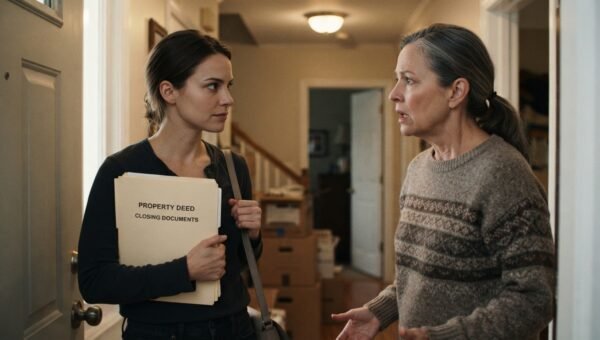
The colonial house could not be saved. With over four hundred thousand dollars in combined mortgage debt, liens, and default penalties, David Keller advised Scott to surrender the property through a structured deed-in-lieu of foreclosure. The house went back to the bank in late May.
Vanessa moved into a small one-bedroom rental apartment forty miles north near her sister. Her sister tried calling me once, claiming that I had destroyed a young family over money troubles.
I did not argue with her. I simply forwarded the audio file from the dining room and the photograph of Leo’s swollen cheek taken under the bright lights of the school office. She never texted or called me back.
When the criminal investigation into the forged signatures began, the county prosecutor offered Vanessa a deferred prosecution agreement tied to full financial restitution and mandatory mental health treatment, largely because Scott did not want his son to watch his mother serve prison time. The forensic audit showed she had lost over two hundred and eighty thousand dollars to an organized online investment syndicate operating out of Eastern Europe. Not a single penny of that money was ever recovered.
Scott and Leo moved into my house permanently that summer.
We turned my upstairs sewing room into Leo’s bedroom. We painted the walls navy blue, put up shelves for his baseball trophies and Lego sets, and set up a sturdy wooden desk near the window so he could do his homework in the afternoon sun. Scott took a second shift job doing dispatch coordination three nights a week to chip away at the personal debts that were legally under his name, working with a credit counseling service to rebuild his life dollar by dollar.
It was not an easy year. There were nights when Scott sat at my kitchen table with his spreadsheets, looking completely overwhelmed by the mountain he had to climb. There were afternoons when Leo was quiet and withdrawn, needing to sit close to his dad on the porch swing just to feel safe.
But there were no more screaming matches. There were no more hidden plastic bins under the floorboards, no certified letters intercepted at the mailbox, and no lies told to keep up appearances in an expensive subdivision.
Yesterday afternoon at three o’clock, I drove my Buick into the pickup lane at Oak Creek Elementary.
The autumn leaves were turning bright orange and yellow along the sidewalk. The school bell rang, and a minute later, the double doors pushed open and a crowd of children poured out into the crisp October air.
Leo came running down the concrete walk, his green backpack bouncing against his shoulders, his baseball cap turned backward. His cheek had healed months ago, leaving no trace of the bruise that had broken my heart on that rainy Thursday.
He opened the passenger door, threw his backpack onto the floorboard, and climbed in with a wide, bright grin.
“Grandma,” he said, clicking his seatbelt into place before I even asked. “Can we stop for those little apple cider donuts at the corner market before we go home?”
“Only if you get two for your dad,” I told him, shifting the car into drive.
Leo laughed and leaned back against the headrest, looking out at the sunny trees as we pulled away from the curb.
I checked my rearview mirror, checked both blind spots, and drove my grandson home.