I used to think my boys just had terrible luck with their immune systems. That is the lie I told myself for eighteen months, anyway, because the alternative was too ugly to look at straight.
Every single time Toby and Leo came back from a weekend at Martha’s place, they came home wheezing. Runny noses, hacking coughs that rattled their little chests, and low-grade fevers that took three days of steam showers and Pedialyte to knock down.
My husband, Mark, always brushed it off with that tired old line he learned at his mother’s knee.
“She raised three of us in that drafty old farmhouse without a single trip to the pediatrician, Clara,” Mark would tell me while I was scrubbing yet another set of vomit-stained sheets on a Sunday night. “Boys get sick. They’re building character. Ma just has old-school ways of hardening them up.”
I hated that phrase. Hardening them up. My boys were six and eight years old, not fence posts. But Martha lived in this isolated brick house out past the county line where the cell service died and the wind came howling off the cornfields, and Mark had this blind spot for her that you could drive a combine through. She baked cinnamon rolls, she knit heavy wool sweaters that smelled like mothballs and stale cedar, and she played the part of the lonely, devoted matriarch so well that even I doubted my own gut half the time.
Until a Tuesday in late October.
The morning started like any other frantic drop-off. Toby had a soccer scrimmage at noon, Leo had a dentist follow-up on Wednesday, and Mark and I had a mountain of paperwork to clear out at our joint office in town. Martha had called on Sunday night insisting she needed her boys fix. That is what she always called it, her fix. She needed a weekend with her grandsons to keep her blood pressure down, or so she claimed.
I loaded the boys into the back of the station wagon along with their oversized duffel bag packed with flannel pajamas, extra socks, and their favorite blue blankets. Martha lived forty-five minutes away down a stretch of blacktop that barely saw a county plow, so the drive always ate up a chunk of the morning. When we pulled up to her gravel drive, Martha was already standing on the porch in her navy cardigan, her silver hair pinned back tight enough to lift her eyebrows.
“Look at my little men,” she called out before we even cut the engine, her voice thin and sweet like warm milk.
She whisked them inside before I could even pop the trunk, feeding them hot oatmeal and fussing over their jackets while I kissed their foreheads and promised to pick them up Thursday evening. I hopped back into the driver’s seat, feeling that familiar knot of guilt loosen in my stomach. Maybe I was just a paranoid mother. Maybe Mark was right, and kids just caught whatever bugs were floating around old country houses.
I drove down the lane, hit the main highway, and set my cruise control for fifty-five. The sky was that flat, bruised gray that usually meant rain before noon. I reached down to turn up the radio, and my hand brushed against a heavy nylon strap on the passenger floorboard.
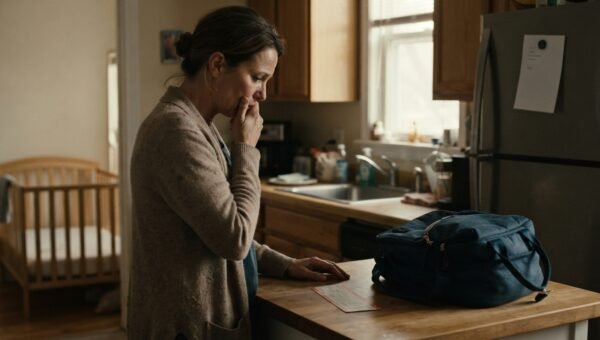
I looked down. Their duffel bag was still wedged between the front console and the passenger seat.
All their warm clothes, their spare inhaler for Toby’s mild seasonal allergies, their toothbrushes, and those blue blankets were sitting right beside me. Martha didn’t have a single extra shirt for them, and the temperature outside was dropping fast as a cold front rolled down from Minnesota.
I muttered a curse, tapped my turn signal, and pulled a messy U-turn across the empty asphalt.
The drive back felt twice as long. My chest felt tight for reasons I couldn’t quite name yet, a low-grade hum of dread that had nothing to do with forgotten socks. By the time I turned my tires back onto Martha’s gravel drive, forty-five minutes had vanished. The station wagon’s tires crunched loud against the limestone.
I killed the engine and grabbed the duffel bag by its strap. The house looked dead quiet. Usually, when Martha had the boys, you could hear them shouting or running around the yard, but today there was nothing. Not a sound. Just the wind rattling the dry corn stalks in the field across the road.
I walked up the concrete steps. The front screen door was unlatched, swinging open a couple of inches in the draft. I pushed it open and stepped into the dim hallway.
“Martha?” I called out, shaking my keys in my hand. “Hey, it’s just me. I left their bag in the car.”
No answer. The air inside the house felt heavy, but as I walked past the parlor toward the back of the house, the temperature plunged. It was like walking into a meat locker. I stopped dead on the braided rug by the pantry, rubbing my bare arms as goosebumps erupted across my skin.
A sharp, medicinal smell cut through the old-house musk of floor wax and damp wood. It smelled like menthol and wintergreen oil, biting and acrid.
I followed the chill down the narrow rear hallway toward the sunroom, a glass-walled add-on Martha used for starting tomato seedlings in the spring. The door to the sunroom was pulled shut, but a thin strip of light showed underneath.
I pushed the door open without knocking.
I did not freeze. I did not lose my breath. My brain simply stopped working for three full seconds while I tried to process the geometry of what my eyes were seeing.
The casement windows along the back wall of the sunroom were cranked wide open, letting in a howling, freezing gale of October air. On the bare wooden floorboards, stripped down to their cotton undershirts and thin cotton briefs, were Toby and Leo. They were shivering so hard their teeth were visibly chattering, their skin mottled purple and gray, curled into tight fetal balls on thin woven mats.
And standing right over them was Martha.
She had a gray plastic bucket of slush-ice water sitting on a stool beside her. As I watched, she wrung out a thick linen cloth, picked it up dripping wet, and pressed it flat down againstLeo’s bare chest. The boy let out a thin, choking gasp that sounded like an animal caught in a fence wire, his little frame convulsing as the freezing water hit his skin.
“There now,” Martha muttered, her voice smooth and sickeningly tender as she reached for a heavy glass jar on the stool. “Just building up the constitution. Mama’s little soldiers don’t catch drafts if grandmother hardens them first.”
Something snapped inside my ribs. I dropped the duffel bag and crossed that freezing room in two strides, my hands locking onto Martha’s shoulders and shoving her back so hard she stumbled against the windowsill and knocked her bucket over. Water sloshed across the bare floorboards, soaking into the cracks.
“What are you doing?” I screamed, my voice cracking into a raw shriek that shook the windowpanes. “What the hell are you doing to my children?”
Martha didn’t even flinch. She just straightened her cardigan with trembling, pale fingers, her eyes dead and bright behind her wire-rimmed glasses. “You coddle them, Clara. You soften them until they rot. I am making them strong like their father.”
I didn’t answer her. I dropped to my knees on those splintered boards, tearing off my own wool coat and wrapping Toby in it while Leo buried his face in my neck, crying so hard he couldn’t catch his breath. Their skin felt like river stones in January. On the stool beside the overturned bucket sat the glass jar Martha had been reaching for, filled with a dark, oily brew smelling of turpentine and wintergreen.
I grabbed the jar, scooped up both boys in my arms, and backed out of that freezing room without looking at her again. “If you ever come near them again,” I told her, my voice dropping down to a flat, venomous whisper, “I won’t just call the police. I’ll finish what you started.”
We didn’t go home. I drove straight to the county hospital forty minutes away, heater blasting on high while the boys huddled in the back seat wrapped in every blanket I had. The intake doctor took one look at their blue lips, listened to the harsh, rattling wheeze in Toby’s bronchial tubes, and immediately called for warm IV fluids and a full pediatric workup for acute thermal shock and chemical skin irritation.
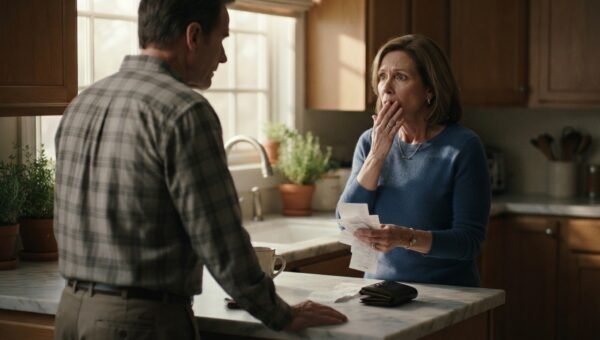
When Mark walked through the emergency room doors two hours later, his face was the color of wet cement. He didn’t say a word when I handed him the printed intake summary from the attending physician, or when I placed the jar of wintergreen-laced elderberry tonic right on the stainless-steel examination table between us.
“They told me,” Mark whispered, his hands shaking as he stared down at the medical report confirming borderline hypothermia and deliberate respiratory stress. “Toby told me about the cold room. He said she did it every time.”
“She didn’t want them strong, Mark,” I said, my voice dead calm as I pulled the blanket higher around Leo’s sleeping shoulders. “She wanted them sick. She needed them sick so she could play the savior.”
Mark sat down in the plastic hospital chair, buried his face in his large, calloused hands, and wept for twenty minutes straight.
It took three days of heavy antibiotics to clear the fluid from Toby’s lungs, and the state child welfare worker we spoke with took our formal statement on Wednesday morning, ensuring Martha would never spend another unsupervised minute with any minor. Mark drove out to his mother’s house alone that afternoon to collect her keys and tell her that her grandchildren were dead to her, his voice hard as iron when he locked her front door behind him for the very last time.
Now, six months later, the chest colds are gone, replaced by the normal, noisy chaos of two healthy boys growing up the way they were meant to. I watch them from the kitchen doorway as they race across our living room rug in thick woolen socks, their cheeks glowing pink and warm under the afternoon sun, laughing without a single wheeze in their chests. The heavy deadbolt on our front door remains firmly turned, sealing out the cold room and everything that lived inside it forever.