PART 1
The sterile smell of the hospital consultation room always made my stomach tighten, but that Tuesday morning, the anxiety was different. My sister, Chloe, had been diagnosed with acute myeloid leukemia six months earlier. After rounds of chemotherapy failed to put her into remission, her hematologist told the family that a bone marrow transplant was her only remaining chance at survival. As the only sibling, I was tested first.
I sat alone in the small, windowless office waiting for Dr. Sterling to return with my tissue typing results. The clinic was quiet, save for the hum of the ventilation system and the distant chime of the paging system. I had spent the last two weeks preparing myself mentally for the physical discomfort of the harvest procedure, feeling a quiet sense of duty. Despite our rocky relationship over the years, Chloe was my sister, and if I could save her life, I would endure whatever was necessary.
Dr. Sterling pushed the door open and stepped inside, holding a thick manila file. He did not look at me with the usual encouraging smile doctors reserve for compatible donors. Instead, his expression was tight, cautious, and troubled. He closed the door firmly behind him and sat down at the desk.
Everything alright with the match, Doctor? I asked, shifting uncomfortably in the plastic chair. Is my cell count too low?
Dr. Sterling placed the file on the desk and leaned forward, resting his hands together. Martha, I need to share something unusual with you, and I want you to listen very carefully. We ran the human leukocyte antigen tests twice because the initial mismatch was so definitive. Your genetic markers and Chloe’s do not align as full siblings. In fact, they do not even indicate a half-sibling relationship. Genetically speaking, you share zero familial DNA.
The words hung in the air, cold and absurd. I let out a short, bewildered laugh, expecting him to crack a smile and reveal it was some sort of preliminary screening joke.
That is impossible, I said, shaking my head. We grew up in the same house. We have the same mother and the same father. Look at our family albums.
Dr. Sterling did not smile. He slid a single printed lab report across the desk toward me.
The numbers and percentage tables meant little to my untrained eyes, but the bold conclusion at the bottom leaped out: Exclusion of Sibling Relationship.
I stared at the paper, a cold numbness spreading through my chest. If I was not Chloe’s sister, then who was I? And why had my parents raised me as part of a family where I apparently did not belong?
Before I could process the shock, Dr. Sterling added another piece of information that made my blood run cold.
There is something else, Martha. When we received the discordant results, my office followed standard protocol to verify patient identity. Your sister’s file contains a signed patient request form dated three days before your appointment. She specifically requested that our lab run a secondary genetic verification between her sample and yours to test sibling concordance before you were even notified.
Chloe already knew. She had known before she asked me to risk my health to save her life.
PART 2
I left the hospital in a daze, the Los Angeles traffic blurring past my windshield as I drove straight to my parents’ house in Pasadena. My hands shook on the steering wheel. For thirty-two years, I had been the designated outsider in my family—the quiet, studious one who never quite fit the mold of my outgoing, golden-child sister. Whenever I felt like an alien in my own home, my mother had always blamed it on my introverted personality. Now, I knew the truth was much darker.
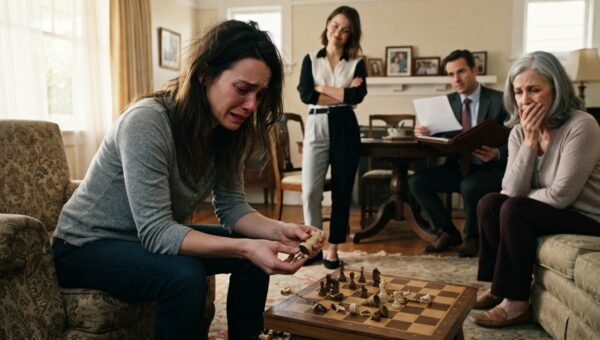
When I unlocked the front door, the house was unusually quiet. I found my parents sitting in the formal living room. My father was staring out the window at the empty patio, while my mother was standing near the hallway closet with her hand resting on the handle of a large leather suitcase.
They looked up as I walked in, and the guilty, panicked look on my mother’s face confirmed everything Dr. Sterling had implied.
You knew, didn’t you? I said, my voice shaking as I dropped the hospital file onto the coffee table. You both knew all along.
My father turned slowly, his face aged by a sudden, heavy exhaustion. He did not deny it. He rubbed his temples with a trembling hand and looked down at the carpet.
Martha, sit down, please, my father muttered, his voice weak. It is not as simple as you think.
Simple? I shouted, the shock finally giving way to a white-hot fury. My sister needs a bone marrow transplant, she lies to my face, tricks me into coming to the clinic, and you sit here acting like this is just a family misunderstanding? Who am I, Dad? If I am not your daughter, whose child am I?
My mother let out a sharp, defensive sob, pulling her suitcase a fraction of an inch closer. We raised you as our own! We gave you a home, an education, everything! You should be thanking us instead of barging in here demanding answers when your sister is fighting for her life in a hospital bed!
Your sister doesn’t even want my marrow, Mom, she wanted to confirm I wasn’t related to her so she wouldn’t have to carry a stranger’s cells, if she had a choice, but desperate times forced her hand until the lab results proved the truth! I yelled.
My father held up a hand, trying to quiet the rising panic. Stop it, both of you. Brenda, put the bag down. Running away isn’t going to fix this. It’s time she saw the file.
PART 3
My mother glared at my father with absolute betrayal, but she released the handle of the suitcase and sank heavily into the armchair. My father walked over to the antique secretary desk in the corner, unlocked a small wooden drawer with a brass key worn smooth by time, and pulled out a yellowed manila envelope tied with faded cotton string.
He carried it back to the coffee table and laid it beside my hospital report.
This arrived forty-eight hours ago, before you even left the clinic, my father said softly. A courier delivered it from the Department of Vital Records in Austin, Texas. It was flagged by an independent social worker who was auditing old closed adoption and foster files from the early nineteen-nineties.
My fingers trembled as I untied the string and pulled out a single, official state document bearing a raised state seal. It was a certified birth certificate, decades old, detailing the birth of a female infant in a county hospital in Texas.
I looked at the typed lines, reading the names of the birth parents listed at the top. They were names I had never seen before in my life. But my eyes immediately locked onto the middle section of the page, where a glaring administrative anomaly stood out against the aged paper.
One line had been typed over with heavy mechanical typewriter ink, the characters pressed so hard into the fiber of the paper that they had left a deep, physical indentation. Someone had tried to permanently obscure the original entry.
I held the paper up to the natural light coming through the living room window, squinting to read the faint, shadowed letters pressed beneath the heavy correction tape and ink overlay.
Beneath the typed-over surname was a different name entirely—the maiden name of my mother’s estranged sister, Aunt Sarah, who had mysteriously vanished from family gatherings thirty years ago following a bitter legal dispute over family property in the Midwest.
My breath caught in my throat. I looked from my father to my mother, whose eyes were now fixed on the floor in absolute shame.
Aunt Sarah, I whispered, the realization crashing over me like an icy wave. She wasn’t just a distant relative we never saw. She was my mother. And you didn’t adopt me legally, did you? You took me.
My father closed his eyes and nodded slowly. Sarah passed away in a car accident when you were just an infant. She had no one, and she was living in a chaotic situation. Your mother and I wanted a second child, and things were… complicated with the legal system back then. We brought you across state lines, had a local attorney file fraudulent delayed birth records, and pretended you were ours. We swore we would take it to our graves.
ENDING
The silence that followed was suffocating. The ticking of the grandfather clock in the hallway sounded like a hammer striking iron. All the years of feeling like an outsider, of wondering why I never quite fit into my mother’s tight, conditional circle of affection, suddenly snapped into sharp, agonizing focus. I wasn’t just the second child. I was a secret kept under lock and key, raised by people who viewed me more as an obligation than a daughter.
I looked down at the forged birth certificate in my hand, then at the hospital report detailing Chloe’s desperate, calculated attempt to keep our secret buried even while asking for my life-saving cells.
You asked me to donate my marrow to save Chloe, I said, my voice dropping into a cold, steady quiet that made both of my parents flinch. You expected me to risk my body for a family built entirely on a foundation of theft and lies.
Martha, please, my mother whimpered, reaching out a trembling hand toward my arm. We loved you. We raised you like our own flesh and blood. Family is about who is there for you.
Family is about truth, Mom, I replied, stepping back out of her reach. And there is nothing left here for me.
I picked up the original hospital report and slid it back into my bag, leaving the forged birth certificate lying open on the coffee table where it belonged. I turned my back on them without another word, walking out the front door into the warm afternoon sunlight.
As I climbed into my car, my side still aching slightly from the emotional whiplash of the day, I knew my life would never be the same. Chloe still needed a donor to survive, but she would have to find one elsewhere. My debt to this household was paid in full, and for the first time in my life, I was finally driving away toward a future that belonged entirely to me.