PART 1
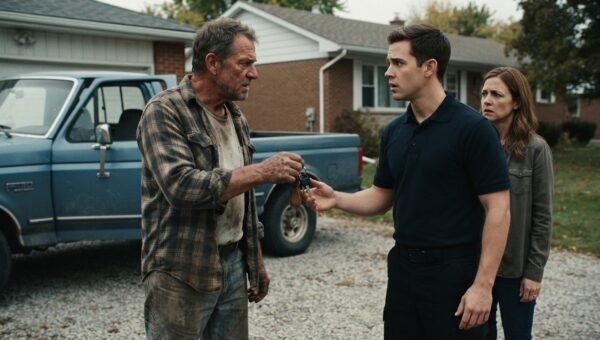
The paper tore like a gunshot. “You’re letting your sister die,” my mother screamed, mascara running down her face as she ripped my medical records in half. My father stood right beside her, arms crossed like a stone wall, his jaw tight. “You’re a selfish mistake, Harper. Always have been.”
Twenty-eight years of family gatherings, of sitting at the kids’ table long after I was grown, of watching my younger sister Madison soak up every drop of praise, and this was the grand finale.
Dr. Caldwell, the transplant surgeon, had his pen frozen mid-signature, watching them tear into me like wolves.
According to them, I was the worst kind of monster. Madison was twenty-five, beautiful, vibrant, and failing fast from liver failure caused by an autoimmune complication. I was supposed to roll up my sleeve, go under the knife, and carve out half my liver so she could keep living her golden life.
Except the preliminary genetic testing did not just check tissue compatibility. It dug into deep hereditary markers. And the look on Dr. Caldwell’s face when he pulled up the genetic sequence on his monitor told me something was profoundly wrong. He looked at my parents, then at me, and asked for a private word outside the examination room.
My mother lunged forward, trying to block the door. “She doesn’t need to hear anything! Just schedule the surgery! Cut her open and take what Madison needs!”
Dr. Caldwell’s voice was ice cold. “Mrs. Hayes, medical protocol requires me to discuss genetic markers directly with the patient. If you interfere, I security will escort you out.”
Out in the sterile hallway, away from my father’s heavy glare and my mother’s sobbing performance, Dr. Caldwell slid a folder across his desk. He tapped a printed pedigree chart.
“Harper,” he said softly, choosing his words with agonizing care. “Your tissue type is compatible with Madison, yes. But your genetic markers do not match the parental lineage on file. In simple terms, based on your DNA structure, neither Robert nor Martha Hayes is your biological parent.”
The hospital room walls seemed to tilt sideways. The fluorescent lights buzzed overhead, sounding like a swarm of angry bees. For twenty-eight years, I had believed I was the adopted-feeling black sheep of the family. The plain, quiet daughter who didn’t inherit my mother’s sharp features or Madison’s effortless charm.
But being adopted meant I still belonged to a family. This meant something entirely different. It meant I was a stranger they had kept around for a reason.
PART 2
I stared at Dr. Caldwell’s desk, my hands trembling as I traced the edge of the folder. “Are you telling me there’s been a mix-up at the hospital?”
“Mix-ups happen,” Dr. Caldwell said gently. “Sometimes infants are switched at birth. But given the specific genetic markers and the extreme hostility your mother showed just now when genetic profiling was mentioned, I suspect this was no accident. She reacted like someone whose secret was being dragged into the harsh light of day.”
When I walked back into the examination room, the atmosphere had shifted from rage to calculated panic. My mother was pacing, dabbing her eyes with a crumpled tissue, while my father leaned against the wall, staring at the floor.
“Are you done with your little private chat?” my mother snapped, her voice trembling with synthetic fury. “Madison is waiting at home on oxygen, Harper. Every hour you waste playing victim is another hour closer to her funeral.”
“We need to talk about my birth certificate,” I said, my voice remarkably steady compared to the storm raging inside my chest.
My father’s head snapped up. “What did you say?”
“You heard me. Dr. Caldwell explained the genetic panel. I am not your biological daughter.”
The silence in the room became absolute. You could hear the distant hum of the hospital ventilation system. My mother stopped pacing dead in her tracks. All the color drained from her face, leaving her looking old and withered beneath her makeup. My father pushed off the wall, stepping forward as if he wanted to physically intimidate me into silence, but Dr. Caldwell stepped between us.
“We are done here for today,” Dr. Caldwell announced, his tone authoritative. “Harper, you are under no obligation to proceed with any medical procedure until you are fully informed and comfortable.”
I grabbed my bag, turned my back on the people who had raised me, and walked out of the hospital into the blinding afternoon sun. I didn’t go home. I drove straight to a local legal office I found on my phone, needing answers that went deeper than medical charts.
PART 3
The private investigator and family attorney I hired took three weeks to unearth the truth, and every single page of their findings felt like a physical blow.
My mother had given birth at St. Jude’s Memorial Hospital in Chicago twenty-eight years ago. Looking through birth logs and archived local records, my lawyer discovered a parallel file. A young woman named Claire Vance had given birth to a baby girl on the exact same day, in the same wing, just two hours before my mother.
Claire Vance was nineteen, unmarried, and tragically passed away in a car accident six months later. But before that, she had filed a desperate petition with local social services claiming her infant daughter had vanished from the hospital nursery during a brief administrative shift change, and that hospital staff had covered it up to avoid a massive negligence lawsuit.
My parents had been in the room next door. Their baby, born with a rare congenital heart defect at the time, had been sickly. Hospital administrators, terrified of a scandal, had quietly orchestrated a swap, giving Claire Vance’s healthy newborn daughter to my ambitious, well-connected parents, and placing the fragile, ailing infant—who miraculously recovered months later under specialized care—into the system or back into the dynamic. Wait—no. The reality was darker.
My parents had known. My father’s brother was a senior administrator at that very hospital. They hadn’t just adopted me; they had taken me to replace a child they feared they would lose, or worse, they had taken me because Claire Vance was alone and vulnerable with no one to fight for her.
Worse still, looking through old family documents I managed to retrieve from my childhood home while my parents were out attending a charity gala, I found a locked metal box in the back of my father’s closet. Inside were legal papers, hospital settlement receipts from the 1990s, and a handwritten journal belonging to my mother.
In that journal, she wrote about me like I was a piece of rented equipment. “The Vance girl is quiet, stays out of the way, but she’ll be useful insurance if Madison ever needs blood or tissue matching down the road. We keep her close, but she’ll never be a real Hayes.”
Insurance. That was all I had ever been. A biological spare parts kit walking around under their roof.
ENDING
The confrontation happened on a rainy Tuesday evening. I didn’t call ahead. I walked right up to the front door of the Hayes household, unlocked it with the spare key I still carried, and stepped into the foyer.
Madison was sitting on the living room sofa wrapped in a blanket, looking pale and fragile, while my parents sat nearby reading the evening paper. When they saw me standing in the doorway, all three of them froze.
“Harper?” my mother gasped, standing up. “Where have you been? Madison has been crying for days. The transplant committee is breathing down our necks.”
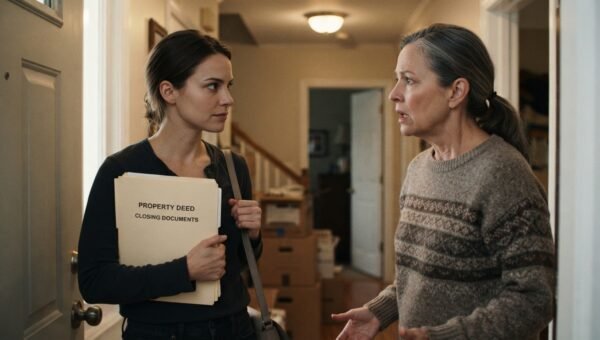
I didn’t yell. I didn’t cry. I simply reached into my leather tote bag, pulled out the thick folder containing the hospital archives, the DNA sequencing reports, and photocopies of my mother’s journal, and dropped them heavily onto the glass coffee table right in front of them.
“I know about St. Jude’s Hospital,” I said quietly, the sound cutting through the quiet room like a knife. “I know about Claire Vance. I know I was never your daughter. And I know I was kept around purely as medical insurance for Madison.”
My father turned chalk-white, sinking slowly into his armchair. My mother stared at the documents, her lips parting in silent horror as she realized the game was entirely up.
“Harper, please, let us explain,” she stammered, her voice cracking as she reached out a trembling hand. “We raised you. We gave you a home, an education, a life—”
“You kept me as a captive asset,” I interrupted, my voice steady and cold. “And you can tell the transplant surgeons not to call me again. I wouldn’t give Madison a single drop of my blood if her life depended on it.”
I turned around, opened the front door, and stepped out into the rain. For the first time in twenty-eight years, I took a deep breath of the night air, knowing for certain who I was, and walking completely away from the people who had tried to own me.