PART 1
When my husband David said he wanted a trial separation, he packed one suitcase and left our apartment without taking the framed photograph of our wedding. I thought that meant there was still hope. I stood by the front window of our third floor apartment watching his sedan pull away from the curb, my hand resting against the cool glass, convinced this was just a temporary cooling off period after months of quiet tension.
We had been married for twelve years, sharing routines, grocery lists, and quiet Sunday mornings over coffee. I assumed a few weeks apart would help us reset, not end everything we built together.
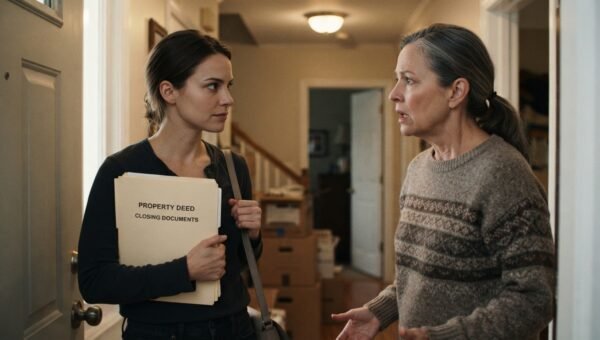
A week later, his mother arrived with a locksmith and said he had asked her to collect his half of everything. I was sitting at the kitchen table going over my part time bookkeeping invoices when the sudden, harsh rattling of keys at the front door made me drop my pen. Before I could stand up, the door swung open and Margaret walked in, her face set in that cold, unyielding expression I had learned to dread over the years. Right behind her was a broad shouldered man in a heavy tool belt, holding a drill and a ring of spare cylinders. Margaret did not even look at me as she stepped onto our entryway rug, dropping her leather handbag onto the small wooden bench by the door like she owned the entire building.
You do not need to pack anything for him, I said, my voice shaking slightly as I stood up from the table. David can come get his own clothes when we talk face to face.
David is busy sorting out his life, Martha, and he asked me to make sure his interests are protected, Margaret replied, her voice sharp and dry. She gestured toward the locksmith, who was already peering down the narrow hallway toward the master bedroom. Get started on the locks for the front door and the back balcony, she told him, pulling a crisp twenty dollar bill from her purse to wave in his direction.
She tried to take the coffee maker, my grandmother’s chair, and the box where I kept our son’s birth certificate. I stepped in front of the kitchen counter, blocking her path to the espresso machine that my sister had gifted us for our tenth anniversary.
That machine had nothing to do with David, and neither did the small, high backed cherry wood armchair that sat by the bookshelf, which had belonged to my mother’s mother and smelled faintly of old lavender and beeswax. Margaret dismissed my protests with a flick of her hand, claiming that everything acquired during a marriage belonged to the partnership pool, regardless of who inherited it or who paid for it. When she reached for the silver lockbox on the top shelf of the bedroom closet, the one containing birth certificates, my old social security card, and the deeds to my small pre-marriage savings account, something inside me snapped. I grabbed her wrist, my fingers tightening around her sleeve, and told her she was stepping over a line she would never be able to cross back over.
PART 2
Margaret yanked her arm back with a sharp gasp, glaring at me as if I had struck her.
She gathered her coat around her shoulders, muttered something about consulting a real attorney instead of dealing with an ungrateful woman, and swept out of the apartment with the locksmith trailing behind her. They left the front door slightly ajar, letting a cold draft sweep down the hallway and stir the papers on my kitchen table. I stood alone in the silence for a long time, listening to the hum of the refrigerator and trying to steady my breathing. My hands were still shaking as I walked over to shut and deadbolt the door manually, realizing that David had not just walked away to think. He had orchestrated a targeted sweep of our home while I was vulnerable, using his mother as an enforcer to clear out assets before I even understood what was happening.
That afternoon, I began pulling every financial document out of our filing cabinet, spreading bank statements, tax returns, and insurance forms across the dining table. For three hours, I traced numbers and cross referenced deposits with our joint checking account, looking for the quiet leaks that might explain why David had suddenly grown so distant and evasive over the past six months. That was when I noticed the pattern. Large, recurring transfers had been leaving our primary account every second Tuesday of the month, routed through an intermediary routing number I did not recognize. The total amount missing was staggering, cutting deep into the emergency fund we had set aside for our retirement years. When I tried to log into our shared online investment portal to check the balance of our mutual holdings, an error message flashed across the screen stating that my user credentials had been revoked by the primary account holder. David had locked me out of our financial life entirely, leaving me with a checking balance that would barely cover next month’s grocery bill and rent.
PART 3
The following morning, our downstairs neighbor delivered a security envelope. Leo, who lived on the second floor and worked as a retired postal inspector, knocked gently on my door around nine o’clock. He was holding a heavy brown manila envelope addressed to my married name in bold, typed lettering, but the return address listed a downtown legal courier service rather than a personal sender.
This was dropped off with the building superintendent by mistake yesterday afternoon, Leo said, handing me the package with a sympathetic look in his eyes. He said someone in a gray suit asked if apartment three b was still occupied by David and Martha Vance. I didn’t like the look of it, Martha, so I wanted to bring it up to you directly.
I thanked Leo, closed the door, and carried the envelope to the kitchen table, using a butter knife to tear open the thick paper flap. Inside was a document my husband had signed when we moved in. It was a notarized assignment of lease and property interest dated three years prior, naming a commercial holding company as the primary beneficiary of our apartment lease and any associated security deposits. But that was not the most alarming paper in the stack. Glancing further down, I found a copy of a mortgage modification agreement on a commercial warehouse property across town, bearing my forged signature beside David’s, pledging our apartment equity as collateral for a business loan I had never agreed to take out.
I read the first paragraph, then checked the date on our marriage license. My breath caught in my throat as the cold reality of the timeline settled over me. The signature on the commercial loan document was dated two weeks before our wedding anniversary, executed while I was away visiting my ailing sister in Ohio. David had not only been draining our savings for a failing business venture; he had impersonated my consent and forged my signature on high risk commercial debt using our domestic life as his collateral. The trial separation was never about saving our marriage or figuring out our feelings. It was a calculated staging maneuver designed to clear me out of the apartment before the bank foreclosure notices started arriving at our address.
ENDING
I did not call David. Instead, I picked up my phone and dialed the direct number for the local police fraud division, asking to speak with an investigator regarding corporate identity theft and asset falsification. While the dispatcher transferred my call, I walked over to the front window and watched the morning traffic move steadily down the street, feeling a strange, cold clarity wash over every nerve in my body. When the detective came on the line, I did not cry or stammer. I opened my folder of bank statements, held up the forged loan papers Leo had delivered, and began reading the account numbers out loud. David thought he could quietly dismantle my entire life while hiding behind his mother and a manufactured separation, but by the time he tried to collect the rest of his belongings, the only thing waiting for him at the apartment would be a pair of badge numbers and an arrest warrant with his name on it.