PART 1
On my seventy-first birthday, my son and daughter-in-law handed me a twelve-day chore chart, left their children with me, and flew to Greece. They did not even leave a cake.
My son, Greg, stood in my hallway with his expensive leather travel bag slung over his shoulder, checking his watch while Chloe stood beside him tapping at her phone. They had arrived at six in the morning, waking me up before the sun was even fully up.
I had thought, foolishly perhaps, that they might be stopping by to wish me a happy birthday, or maybe bring a cup of coffee and a pastry from the bakery down the street. Instead, Greg handed me a laminated sheet of paper with columns, check-boxes, and strict time slots for every single hour of the next twelve days.
“We color-coded the kids’ schedules, Mom,” Greg said, his tone brisk and businesslike, as if he were briefing a subordinate at his corporate office. “Leo has soccer practice on Tuesday and Thursday at four, and Maya needs gluten-free snacks every afternoon at three. Don’t give her regular crackers because Chloe will know. Also, the lawn service comes on Wednesday, so make sure the side gate is unlocked by eight in the morning. We really appreciate you doing this. A resort in Santorini is exactly what Chloe and I need after the stress of the last six months.”
I looked down at the laminated sheet. My seventy-first birthday. I had spent the last week scrubbing my spare bathrooms, washing extra sheets, and stocking my refrigerator with organic produce because Chloe sent a grocery list three pages long. They didn’t say happy birthday. They didn’t offer a hug that lingered for more than a second. They just dropped nine-year-old Leo and seven-year-old Maya into my entryway like luggage, kissed their cheeks with half-hearted pecks, and walked out the front door toward an awaiting rideshare.
“Have a safe flight,” I managed to say, my voice sounding thin even to my own ears.
The door clicked shut. Silence filled the house, broken only by the hum of the refrigerator and the heavy thud of little feet upstairs as Leo and Maya woke up and began arguing over who got the top bunk.
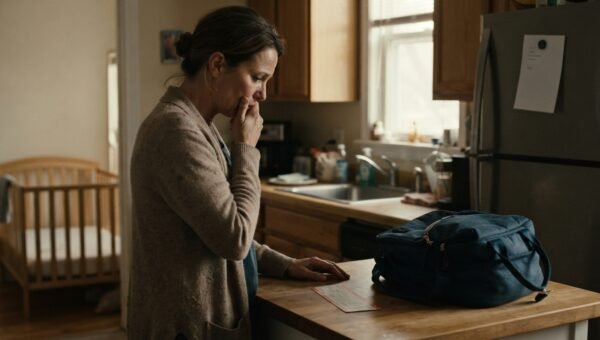
I sat down at my kitchen table, looking at the blank kitchen counter where no cake sat.
No candles. No card. Just a ceramic mug I had washed three times because Chloe hated water spots. For a long time, I just sat there letting the quiet settle in. I was seventy-one. My knees ached when the weather turned damp, and my lower back protested after twenty minutes of bending over a garden bed. Yet here I was, signed up for twelve grueling days of parenting children whose parents treated me less like a mother and more like an unpaid facility manager.
By evening, once the children were finally asleep after a chaotic dinner of gluten-free chicken nuggets and broccoli, I sat at Greg’s old wooden desk in the guest room to check my email. Greg had left his tablet logged into the household printer network earlier that morning when he was rushing to print out boarding passes. A notification pinged on the corner of the screen—a sync from a shared cloud folder.
I didn’t mean to pry. Truly, I didn’t. But the preview text on the notification stopped my breath cold. It was a PDF document with my name in the subject line, sent by Chloe to Greg’s personal email account just two nights ago.
Subject: Timeline for Margaret’s transition and property liquidation.
My fingers trembled as I clicked it open. The document was a detailed, cold-blooded plan written in bullet points. It outlined how, as soon as Greg and Chloe returned from Greece, they would stage an intervention regarding my “failing cognitive abilities and home maintenance struggles.” It noted that my house, which my late husband Arthur and I had bought forty years ago and paid off brick by agonizing brick, had appreciated significantly in value. The text explicitly discussed how quickly they could list the property and clear out my belongings once I was safely moved into a budget-friendly assisted living facility thirty miles out of town.
One sentence made the room spin around me: “Once we initiate the transfer of power, the house is essentially ours anyway, since Arthur left everything to Greg in his final verbal wishes.”
A cold sweat broke out across my shoulders. Arthur never had verbal wishes about giving the house exclusively to Greg. Arthur loved both of our children, but he knew Greg’s sense of entitlement, and he knew how hard I had worked as a school librarian to help pay the mortgage while raising them.
PART 2
I barely slept that night. Every time I closed my eyes, I saw those bullet points floating in the dark. They had already mapped out my eviction. They had calculated my life down to a square footage price and a monthly room rate at an impersonal facility where I would rot away while they spent the proceeds on vacations and home renovations.
By seven in the morning, I had arranged for a neighbor down the street, a retired nurse named Brenda, to watch Leo and Maya for an hour under the guise of an “emergency dental appointment.” Brenda was kind and happy to do it, handing out cereal bowls while I grabbed my purse and my car keys.
I drove straight to the county title company downtown. The morning air was crisp, but my hands were burning hot on the steering wheel. I parked in the municipal lot and walked through the heavy glass doors of the records office just as the staff was turning on the lights.
A middle-aged clerk with wire-rimmed glasses and a tired expression looked up from her desk. “Morning. Can I help you find something?”
“My name is Margaret Hayes,” I said, placing my driver’s license on the glass counter. “I need to check the deed on my property. My husband Arthur Hayes passed away three years ago, and I need to see what filings have been made recently.”
The clerk, whose name tag read Sandra, typed my name and address into her computer terminal. Her eyebrows drew together, a faint frown forming on her lips. She clicked through several screens, scrolling down with a rhythmic tapping of her fingernail on the desk.
“Mrs. Hayes,” Sandra said slowly, looking up from the monitor. “You might want to come around the partition and look at this screen with me. Someone filed an expedited quitclaim deed transfer request on this parcel just four days ago.”
My heart hammered against my ribs. “Four days ago? Who?”
“It lists you as the grantor transferring full title ownership to Gregory Hayes and Chloe Hayes, with rights of survivorship,” Sandra said, pointing a finger at the glowing monitor. “The notarization was processed through an out-of-county agency. But there is a slight procedural anomaly that flagged it in our system for review.”
“What anomaly?” I asked, my voice dropping to a whisper.
“The signature on file matches your name, but the designated witness listed on the document is a registered notary whose license was suspended last month for fraudulent document filings,” Sandra explained, pulling a paper file from a tray beside her. “Furthermore, the witness who brought it in and signed as an adult relative observer is a man named Thomas Miller. Do you know a Thomas Miller?”
“That is my daughter-in-law’s brother,” I said, a wave of nausea washing over me. Chloe’s brother Tommy, a man who couldn’t hold down a job for more than three months and had spent a year dealing with legal trouble in another state. They had forged my signature or tricked me into signing a blank paper during one of their routine Sunday dinners when they shoved papers in front of me claiming they were tax exemptions or insurance waivers.
Sandra shook her head sympathetically. “People try this more often than you’d think, Mrs. Hayes. If you want to contest this right now, we can flag the file as fraudulent, launch an immediate internal inquiry, and block any further movement. But wait—let me pull up the original master deed from when your husband passed. There is something else in the historical chain of title that your family might not have checked before trying this stunt.”
PART 3
Sandra pulled a heavy physical folder from a metal filing cabinet behind her desk. It smelled of old paper and dust. She slid a yellowed document across the counter toward me. It was an older deed, stamped and recorded by Arthur himself fifteen years before he died, long before Greg and Chloe ever hatched their schemes.
I adjusted my glasses and read the neat, block lettering that my husband had typed out on his old typewriter.
“What is this?” I asked, staring at the names.
“When your husband recorded this secondary survivorship deed back in two thousand and eleven,” Sandra said, tapping the paper, “he didn’t leave the house to Greg. In fact, Greg’s name is entirely absent from this instrument. Your husband placed this property into an irrevocable conditional trust with specific provisions.”
I scanned down the page. There it was, written in black and white, legally binding and filed with the county clerk’s office. Arthur had anticipated this exact kind of greed. He knew how Greg operated, and he knew how Chloe manipulated him.
“The property,” Sandra read aloud, tracing the legal jargon with her pen, “was transferred directly to the two grandchildren, Leo Hayes and Maya Hayes, as primary beneficiaries upon your passing or voluntary relinquishment. However, it includes a strict forfeiture clause.”
My breath caught. “A forfeiture clause?”
“Yes, Mrs. Hayes. Listen to this condition: *’The transfer to the beneficiaries is contingent upon the absolute preservation of the primary residence for the sole use and benefit of Margaret Hayes during her natural life. Any attempt by the beneficiaries, their spouses, or designated proxies to evict, coerce, reassign, sell, or relocate Margaret Hayes against her expressed written consent prior to her passing shall immediately trigger an automatic revocation of all trust benefits, reverting full, unencumbered ownership permanently to the municipal historic preservation fund and barring all direct heirs from any claim to the estate.’*”
I sat back in my chair, the words echoing in the quiet office. Greg and Chloe thought they were being clever. They thought the house was theirs to sell, that they could sweep me away to a cheap room and pocket hundreds of thousands of dollars in equity. But in their rush to steal my home behind my back, they had violated the core condition of the trust by drafting a formal timeline to evict me and sell the property while I was still alive and well.
By putting their illegal eviction plan into writing and filing fraudulent transfer paperwork, they had legally triggered the forfeiture clause. The house no longer belonged to me to lose, and it certainly didn’t belong to them to sell. It was protected by a wall of ironclad law that Arthur had built fifteen years ago to keep vultures away from my door.
“Can they touch this?” I asked Sandra, my voice steadying as a cold, fierce calm took over my chest.
“Not a chance,” Sandra said with a faint, grim smile. “In fact, by filing that fraudulent quitclaim deed while simultaneously generating a written eviction schedule, they have exposed themselves to federal wire fraud and forgery charges. Do you want to press charges, Mrs. Hayes?”
ENDING
I looked down at the chore chart still sitting in my purse—the twelve-day list of demands written by people who thought they owned me, who left me on my birthday without a slice of cake or a word of genuine love.
“Let’s do more than press charges,” I told Sandra, pulling out my phone. “Let’s send a copy of these documents to their hotel in Santorini.”
It took three days for the panic to set in.
On Wednesday afternoon, my phone rang while I was sitting on the front porch drinking iced tea while Leo and Maya played quietly with chalk on the driveway. It was Greg, his voice frantic, breathless, and cracking with absolute terror. He was calling from a lobby phone in Greece, screaming about frozen bank accounts, blocked credit cards, and an urgent message from a local detective regarding fraudulent deed filings and trust violations.
“Mom! Mom, you have to help us!” Greg sobbed down the line, the sound of Santorini wind replaced by the sterile hum of a police precinct waiting room. “Chloe and I went to use our travel card and it was declined. Then the airline told us our return tickets were flagged because the local authorities are looking into us for property fraud! Mom, what is going on? Did someone hack our computer?”
I didn’t yell. I didn’t cry. I simply looked out across the manicured lawn that Arthur had planted for me forty years ago.
“You left me a chore chart on my birthday, Greg,” I said softly, my voice calm and steady. “And you forgot to buy a cake. But more importantly, you forgot to read the paperwork your father filed fifteen years ago.”
Silence stretched over the international line, heavy and suffocating.
“What… what paperwork?” Greg whispered, the color draining from his voice as reality finally crashed down around him.
“The paperwork that proves this house was never yours to sell,” I replied. “And the paperwork that just ensured you and Chloe won’t be coming back here to live, either. Enjoy the rest of your vacation in Greece, Gregory. You’re going to need all the sun you can get before you face a judge.”
I hung up the phone, placed it face down on the porch table, and walked back down the steps to hand Maya a piece of pink sidewalk chalk. For the first time in three years, the house felt entirely, beautifully mine.