PART 1
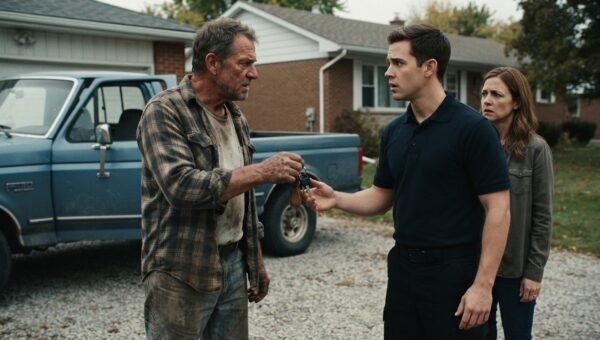
When my father broke his hip two years after Mom passed away, the house changed. It stopped feeling like the quiet place where we used to gather for Sunday pot roast and started feeling like a medical ward. We set up the hospital bed in the dining room because he could not manage the stairs anymore. My older brother, Arthur, and I agreed to split the caregiving. Arthur moved into the small back room, and I drove over every morning at seven to help with breakfast, medication, and the sponge baths that always left Dad looking away in quiet shame.
Arthur always seemed so eager to take the evening and night shifts. He would look at me with tired, drooping eyes and say, Go home and get some sleep, sis. I have got the night watch handled. I used to thank God for him. I thought he was just being a good son, stepping up because he had always been the golden boy of the family, the one Dad had praised for his business degree even when his ventures never seemed to pan out.
The first time I saw the bruise, it was a dark, purple thumbprint fading into yellowish green on the inside of Dad’s left bicep. When I asked about it while buttoning his flannel shirt, Arthur walked into the kitchen and said, He rolled out of bed around three in the morning. Tried to reach for his urinal without calling me. Caught his arm right on the bedrail.
I believed him. Why wouldn’t I? Arthur looked stressed, his hair unwashed, his shoulders heavy with the burden of old-age care. But two days later, while I was helping Dad soak his feet in a warm basin, I noticed something else. There were deep, distinct bruises shaped like fingers completely encircling his right wrist. They were not the scattered bruises of a clumsy fall. They looked like someone had grabbed him hard enough to crush bone, holding him in place with brutal force.
When I looked up into Dad’s cloudy blue eyes, he pulled his hand away so fast the water splashed across the linoleum. He would not look at me for the rest of the morning. He just stared at the floral wallpaper, mumbling about how clumsy he had become in his old age. But his voice sounded thin and terrified, nothing like the proud man who used to run a hardware store for thirty years.
That was the night the doubt took root in my chest. Arthur always insisted on being alone with Dad during the late hours, and he always made sure I left by seven in the evening. Dad was terrified of the old detached garage in the backyard. Whenever Arthur wheeled him anywhere near the side door that led out to the yard, Dad would start shaking, his breathing turning shallow and fast. He would whisper, No, Artie, not tonight, please, and Arthur would snap at him, stop being difficult, Dad, we need to check the lawnmower gas or put away the tools.
I knew something was wrong. So, on a Thursday afternoon when Arthur went down to the local diner for his afternoon coffee and scratch-off tickets, I drove to the hardware store and bought a small, battery-powered security camera disguised as a common black charging brick. I hid it on the high shelf of the garage, tucked right behind a row of empty paint cans, pointing straight at the heavy wooden workbench and the floor-to-ceiling metal supply cabinet that Arthur had recently fitted with a brand-new padlock.
PART 2
The waiting was the hardest part. For forty-eight hours, every time I looked at Arthur across the kitchen table as he buttered his toast, my stomach churned. He looked completely normal, complaining about the price of beef and asking if I could pick up more adult briefs from the pharmacy. I kept telling myself the footage would prove nothing. I kept praying that my camera would show an empty garage, or perhaps just Arthur doing some late-night DIY projects.
Saturday night, I waited until midnight, parked three blocks away in my sedan with the heater running low. I pulled up the live feed on my phone, my fingers trembling so badly I dropped the device twice onto the passenger seat. The infrared lens cast a ghostly green glow over the cluttered garage.
For the first hour, nothing moved. Just the faint shadow of the old workbench and the glint of the padlock on the metal cabinet. Then, at 1:15 AM, the side door creaked open.
My breath caught in my throat. I leaned forward, pressing my face close to the screen.
It was Arthur, pushing Dad in his wheelchair. But the sight that met my eyes made my heart stop. Dad was not slumped over or groaning in pain like he always did when he was weak. He was sitting straight up in the chair, his posture rigid and alert. And then, slowly, agonizingly, Dad gripped the armrests, pushed his weight onto his feet, and stood up entirely on his own.
I stared at the screen, blinking hard in the dark car. My father had not been able to stand without a walker for six months. The physical therapists had said his hip was too degraded, his muscles too withered. Yet there he was, standing upright on the concrete floor, leaning against the heavy wooden workbench.
Arthur unlocked the padlock on the metal cabinet with a small brass key from his keyring and pulled the heavy door open. Inside, stacked in neat, banded bricks wrapped in bank paper, were hundreds of thousands of dollars in cash. Not loose bills, but thick stacks of hundred-dollar bills that looked like they had just come from a vault.
Dad reached inside with trembling hands, pulled out two thick bundles of the cash, and handed them directly to Arthur. Arthur took them eagerly, stuffing them into the deep pockets of his canvas jacket with a wide, satisfied grin.
Then, something happened that sent a cold shiver straight down my spine. Dad stopped, turned his head directly toward the high shelf where my hidden camera sat, and stared right into the lens. He did not look surprised. He looked resigned, tired, and deeply sad. Slowly, deliberately, Dad raised one weathered finger to his lips, making the universal gesture for silence. Shh.
The feed cut out a second later as the battery died. I sat alone in the dark car, the engine humming softly, tears hot and fast streaming down my cheeks. My father was not being abused by a monster. He was protecting one.
PART 3
I did not sleep that night. I sat at my kitchen table with the kitchen light off, watching the gray light of dawn creep across the laminate countertops. By eight in the morning, I heard Arthur’s car pull into the driveway. He walked through the back door whistling softly, holding a carton of milk and a Sunday paper like nothing was wrong.
Where were you last night around one in the morning, Arthur? I asked. My voice did not shake. It was flat, cold, and heavy as iron.
He stopped by the counter, the milk carton hovering an inch above the table. His smile flickered and died. What are you talking about, sis? I was sleeping in the back room.
I pulled my tablet from my bag, propped it up on the kitchen table, and hit play on the downloaded garage footage. The green glow filled the quiet kitchen. Arthur watched himself unlock the cabinet. He watched Dad stand up without assistance. He watched Dad hand over the cash and look straight at the camera.
Arthur’s face drained of every drop of color. He slammed his hand down on the table, making the sugar bowl rattle. You had no right snooping around out there! You ruined everything!
Where did that money come from, Arthur? I screamed, finally letting all the terror and betrayal break through my voice. That is half a million dollars in cash! Dad’s hardware store savings account was closed three years ago! What have you been doing? Who are you hiding money from?
Arthur laughed, a harsh, frantic sound. You think I am the criminal here? You think I am stealing from the old man? Open your eyes, little sister. Dad is not some helpless victim. Ask him. Go on, walk into that dining room right now and ask him whose fingerprints are really on that cash before you point that sanctimonious finger at me.
Before I could answer, before I could demand he pack his bags and leave the house forever, the heavy front door swung open.
Two uniformed police officers stepped into the hallway, their heavy boots loud on the hardwood. Behind them stood Detective Vance from the local precinct, holding a folded warrant and looking grim.
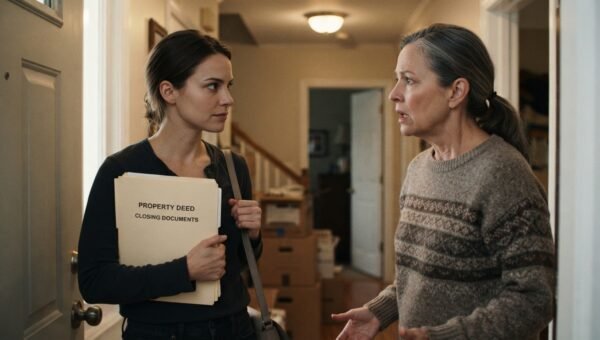
Mrs. Miller? Detective Vance asked, stepping into the kitchen and looking between Arthur and me. We received an anonymous tip regarding large-scale money laundering and extortion tied to the old Miller Hardware accounts. We need to search the premises, starting with the detached garage.
ENDING
Arthur did not even try to run. He just slumped against the refrigerator, crossed his arms, and muttered, Go ahead. Tell her, Dad. Tell them all.
It took the police three hours to comb through the garage cabinet. They pulled out eight separate bundles of cash totaling six hundred and twenty thousand dollars, along with ledgers dating back twenty years. But the most shocking discovery came not from the money, but from the man sitting in the hospital bed in the dining room.
When Detective Vance questioned my father, the fragile, trembling old man I had been wiping down and feeding for two years vanished. Dad sat up straight, looked the detective dead in the eye, and confessed to everything without a shred of remorse.
It turned out the hardware store had never been as legitimate as we thought. Back in the nineties, when the mafia-tied construction syndicates were buying up half the county, my father had acted as a local drop point for cash cleanings, burying the dirty money in commercial real estate deals and keeping a massive cash reserve hidden away where the IRS and local banks would never find it. Arthur had not been beating him; the bruises were from a physical struggle over the keys two weeks ago when Dad refused to hand over the final stash to pay off Arthur’s mounting debts from a failed online business venture.
Arthur was arrested on charges of extortion and conspiracy, led out of the house in handcuffs while the neighbors watched from behind their sheer curtains, whispering behind cupped hands.
The house is too quiet now. The hospital bed is gone, the dining room has been cleared, and the police have seized every last dollar from the garage cabinet, leaving the old workbench bare and scarred. I visit Dad twice a week at the county detention facility where he is being held pending trial. He sits across from me in a gray jumpsuit, looking smaller than he ever did in his hospital bed. He never apologizes for the lies, or for dragging us into a world of hidden crimes we never knew existed. He just asks about the weather, and whether I remembered to bring him the crossword puzzles he likes. I bring them every time, but I never stay long. Some secrets are too heavy to carry, and once you see what lies beneath the floorboards, you can never look at the people you love the same way again.