PART 1
The Sunday my daughter Brenda called to ask if eight-year-old Mabel could stay with me for June and July, I was standing in my kitchen looking over my monthly budget.
“She’s not really my granddaughter, Brenda,” I told her, holding the phone against my shoulder while I penciled in my fixed expenses. “You’ve only been married to Kevin for two years. Her mother’s family ought to be taking turns with her, or Kevin’s mother.”
Brenda let out a tired sigh over the line. “Kevin’s mother, Arlene, had her for May, Mom. Kevin says Arlene is exhausted and can’t do the rest of the summer. Brenda and Kevin are both working ten-hour shifts at the distribution plant right now, and day camp for eight weeks costs money we just don’t have.”
“Well, an extra mouth in this house isn’t free,” I said. My retirement pension from the county clerk’s office is $2,100 a month, and every dollar has a job. “Groceries are up. Feeding a growing kid three meals a day and snacks will run me at least $300 across those two months. Are you and Kevin sending that over?”
Brenda hesitated, then muttered that Kevin would wire me the $300 by Friday.
I agreed, but I was resentful. I spent that whole week feeling put upon. I bought cheap cereal, marked down peanut butter, and told myself I was doing Kevin a favor he probably wouldn’t appreciate.
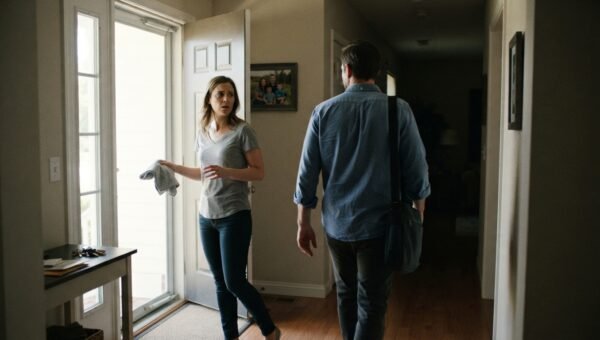
When Kevin dropped Mabel off that following Sunday, he didn’t even come up the walkway. He carried one faded duffel bag to the porch, kissed the top of the girl’s head, said, “Be good for Mrs. Martha,” and hurried back down to his truck.
Mabel stood on my welcome mat wearing a yellow sundress that looked two sizes too small and worn canvas sneakers without socks. She was thin, with pale brown hair pulled back in a rubber band so tight her eyebrows lifted slightly. She held a red plastic lunchbox by the handle and looked straight down at my floorboards.
“You can come inside, Mabel,” I said, keeping my tone practical. “Your room is the spare bedroom down the hall.”
She stepped over the threshold, but she didn’t take off her shoes until I told her to. In fact, she didn’t say a single word for almost three days.
During that first week, Mabel behaved like a ghost living under my roof. If I told her breakfast was ready, she came to the kitchen, ate two pieces of toast with no butter, and wiped her plate completely clean with a paper napkin. If I turned on the television, she sat on the edge of the ottoman, her knees pressed together, watching the screen without smiling or shifting.
She never asked for juice. She never asked to go to the park down the street. When I put a fresh bowl of cherries on the coffee table on Wednesday afternoon, she stared at them for twenty minutes without touching one.
“You can have some cherries, child,” I said from my armchair, turning a page of my crossword book. “They’re washed.”
She flinched slightly, pulled her hands into her lap, and whispered, “Thank you, ma’am, but I’m fine.”
By Saturday evening, the heat had settled heavy over the yard. I made a pot of macaroni and stewed tomatoes, putting a generous scoop onto her plate.
She ate slowly, cutting each bite small with her fork. The quiet in the dining room felt heavy and unnatural. I kept thinking about how easy it would have been if Brenda had just left me alone with my garden and my quiet evenings, instead of saddling me with a quiet child who acted like she expected to be scolded every time she took a breath.
After dinner, I ran a bath for her. When she finished, she came into the living room in an oversized gray t-shirt that reached her knees. I was sitting on the sofa folding tea towels from the dryer.
Mabel didn’t sit down. She stopped two feet from the coffee table, her small toes curling into the blue braided rug. Her hands were clasped in front of her stomach.
“Mrs. Martha?” she asked.
“Yes, Mabel?” I smoothed the corner of a towel.
Her eyes were fixed on the kitchen clock above the refrigerator. She swallowed hard, her chest hitching once before the words came out.
“Is there a limit to how long I can stay?” she asked.
I stopped folding. “What do you mean, a limit? Your dad and Brenda are picking you up the first week of August, right before school starts.”
She shook her head, her chin trembling. “No. I mean… like right now. In this room. Is there a timer?”
The room went completely still. I set the towel down on the pile. “Why would there be a timer for sitting in a living room, Mabel?”
She looked at me then, her lower lip caught between her teeth. Big tears pooled in the corners of her eyes, spilling over her thin cheeks before she could wipe them away.
“Grandma Arlene had a kitchen timer,” she sobbed, her voice breaking into small, ragged gasps. “She kept it on the counter by the bread box. I got forty-five minutes after lunch to sit on the rug, and when the bell dinged, I had to take my blanket out to the garage until supper. She said extra people don’t get to crowd the good furniture all day.”
A sick, heavy heat rose up the back of my neck. I looked at the little girl standing on my braided rug, shaking in an old t-shirt, terrified that my kitchen clock was going to ring and banish her to the driveway.
“Come here,” I said, holding out my arms.
She didn’t run, but she took three quick, stumbling steps and buried her face against my shoulder. Her small arms gripped my neck with a strength that surprised me. I held her against my chest, feeling every rib through her thin shirt, feeling the hot shame of my own pettiness over $300 and grocery bills burning in my throat.
“Nobody is setting a timer in this house,” I told her, pressing my cheek against her hair. “You belong in this living room just as much as I do. You can sit here until the sun comes up if you want to.”
She cried until her shirt was damp against my shoulder. Then she pulled back slightly, her eyes swollen, and looked toward the hallway as if someone were hiding in the shadows.
She leaned in close to my ear and whispered, “She warned me that if I told anyone, Daddy would have to give up the car.”
PART 2
I kept my arm around Mabel’s shoulders, my mind racing over what she had just said. Kevin drove a blue 2018 Ford pickup that he took enormous pride in, polishing the chrome rims in the driveway every Sunday.
“What does your daddy’s truck have to do with Grandma Arlene’s garage?” I asked softly, keeping my voice as gentle as I could.
Mabel pulled the sleeve of her shirt down over her knuckles. “Grandma Arlene told Daddy that if she had to keep me in May, he had to sign the truck paper over to her so he wouldn’t skip out on paying her back for the roof. And she told me that if I complained or cried to Brenda, she’d take the keys and Daddy couldn’t drive to his job, and then we’d have no money at all.”
She looked up at me with dead-serious eyes. An eight-year-old child should not know the word collateral, but she understood exactly what a threat meant.
“Did you stay in the garage the whole afternoon, Mabel?”
She nodded once, looking down at her bare feet. “There was an old lawn chair out there. When it got hot, I sat on the concrete near the corner because it was cooler. She put a plastic jug of water out on the workbench for me. She told me kids from town had too much germs to be tracking through her hall.”
I had known Arlene Vance casually for fifteen years. She sang in the choir at First Baptist, wore matching pastel suits on Easter, and made lemon bars for the church bake sales. When Kevin married Brenda, Arlene had sat on the groom’s side with a sour look on her face, but I had written it off as ordinary mother-in-law jealousy. I had never imagined that woman locking a little girl in an uninsulated cinderblock garage in the middle of a ninety-degree May afternoon.
I put Mabel to bed that night with an extra quilt and left the hall light on. She fell asleep holding an old stuffed bear I had kept in the cedar chest since Brenda was small.
I didn’t sleep. I sat at my kitchen table with a cup of black coffee, watching the headlights sweep across my ceiling as late cars passed on the highway. I felt sick about the way I had greeted this child. When Brenda had asked me to take her, my first instinct had been to guard my quiet, my routine, and my pocketbook. I had complained about $300 in groceries for a little girl who had spent the previous month sitting on oil-stained concrete waiting for a dinner bell to ring.
At seven o’clock on Monday morning, I didn’t call Brenda. If Kevin was under Arlene’s thumb about money, calling Brenda would only start a fight between husband and wife before I had the facts straight. Instead, I drove Mabel to the grocery store. I bought fresh peaches, bacon, chocolate ice cream, and two coloring books. At the checkout counter, when the total came to $112, I handed over my debit card without blinking.
While Mabel sat at my kitchen table coloring a picture of a sea turtle, I called Kevin directly.
“Kevin, it’s Martha,” I said when he answered. The background noise on his end sounded like heavy machinery.
“Oh, morning, Martha. Everything okay with Mabel? I sent that $300 through the bank app on Friday, did it clear?”
“The money cleared, Kevin,” I said. “Mabel is fine. But I need you to come by my house this afternoon after your shift. Alone.”
He paused. “Is something wrong? Did she act up?”
“She didn’t act up. She told me about May. She told me about the kitchen timer, and she told me about your truck title.”
The silence on the other end lasted so long I thought the line had disconnected. When he finally spoke, his voice was cracked and thin. “Martha, please don’t say anything to Brenda. She’s got enough stress at the plant. She’ll walk out on me.”
“You be here at four-thirty, Kevin,” I said, and hung up.
Kevin arrived at twenty past four. He parked at the curb, walked up my concrete steps with his head down, and took his work boots off at the screen door without me asking. He looked hollowed out. He was twenty-nine years old, with calloused hands and dust from the distribution center clinging to his jeans.
I had already walked Mabel over to Mrs. Gable’s house next door so she could play with Mrs. Gable’s granddaughter on the backyard swing set.
“Sit down,” I told him, pointing to the kitchen chair.
He sat, resting his forearms on the laminate table. “Martha, my mom… she’s got a way of making things seem impossible. Last winter, the roof on my house leaked into the bedroom closet. I didn’t have the three thousand dollars to fix it. My mom paid the roofer, but she made me sign the title of the Ford over to her as a lien. Then, when Brenda and I had to take mandatory overtime for May and June, my mom said she’d watch Mabel, but she charged me four hundred dollars for the month. Then she told me Mabel was a nuisance and made her stay out back.”
“Out back?” I leaned against the counter, folding my arms. “She put an eight-year-old child in an unventilated garage with a jug of tap water, Kevin. And then she told that baby that if she uttered a word, her father would lose his truck and his job.”
Kevin put his face in his hands. His shoulders shook, but he didn’t make a sound. “I didn’t know about the garage until the last week of May. When I came to pick Mabel up early one Tuesday because the line broke at work, I found her out there sitting on a bag of fertilizer. When I confronted my mom, she told me that if I didn’t like her rules, I could pay her the thirty-four hundred dollars I owed her right then and there, or she’d take the truck to the title office on Friday.”
“So you brought Mabel to me,” I said, “and you let your daughter carry that secret around like a loaded gun.”
“I was ashamed,” he whispered into his hands. “Brenda thinks I’m handling our debts. She thinks my mom is just eccentric. If Brenda knows my mom treated Mabel like garbage because of money I owed, Brenda will never forgive me for leaving her there. And she shouldn’t.”
I looked at him. I had wanted to tear into him, to yell at him for being cowardly and weak. But looking at the grease under his fingernails and the pure misery in his eyes, I saw a boy who had been bullied by his mother his entire life, backed into a corner by debt, making terrible choices out of panic.
“Where is the title to your truck right now?” I asked.
“In my mother’s safe,” Kevin said. “She’s got a signed bill of sale I gave her as security. She told me if I don’t give her another six hundred dollars by the end of July, she’s filing the transfer.”
I walked over to the desk by my telephone, opened the top drawer, and pulled out my savings passbook. For twelve years, since my husband passed, I had tucked away fifty dollars here, a hundred dollars there, keeping an emergency cushion in the county credit union. There was $4,200 in that account. It was my safety net for a new water heater or dental work.
I set the passbook on the table in front of him.
“We are going to your mother’s house right now,” I said.
PART 3
Kevin stared at the passbook, then at me. “Martha, no. I can’t take your savings. That’s not right.”
“You aren’t taking anything,” I said, my voice steady. “This is a loan. We are going to the credit union first to get a cashier’s check for thirty-four hundred dollars made out to Arlene Vance. You will sign a simple promissory note to me for fifty dollars a month, zero interest, starting in September. And then you are going to get your truck title back, and you are going to tell your mother she is finished with that child.”
Kevin swallowed hard, his eyes glassy. “She’ll raise hell, Martha. She’ll tell everybody at church that Brenda’s family is meddling.”
“Let her,” I said. “I’ve lived in this county for sixty-two years. There isn’t a deacon at First Baptist who doesn’t know who I am.”
We drove in my Buick to the credit union branch on Main Street. The teller, a woman named Clara who went to school with my daughter, gave me the cashier’s check in a crisp white envelope. From there, Kevin directed me out toward the north end of the county, past the old textile mill, to Arlene’s neat brick ranch-style house. The lawn was cut sharp as a razor, lined with red begonias.
Arlene answered the door wearing an embroidered linen apron over a floral dress. When she saw me standing on the porch beside Kevin, her smile vanished like a wiped chalkboard.
“Martha,” she said, resting one hand on the aluminum storm door. “What a surprise. Kevin, I thought you were working second shift today.”
“He took personal time, Arlene,” I said, stepping forward so the screen door couldn’t be shut. “We’re coming in.”
She hesitated, her jaw tightening, but she unlatched the screen and stepped back into the foyer. The smell of cinnamon potpourri was suffocatingly thick. The living room looked like a museum exhibit: pristine cream carpet, plastic runners over the high-traffic areas, and glass figurines lined up on the mantel.
“I don’t appreciate people dropping in uninvited,” Arlene said, crossing her arms over her chest.
“I don’t appreciate an eight-year-old child being terrified of a kitchen timer,” I replied, keeping my voice level.
Arlene’s face stiffened. Her eyes darted toward Kevin, full of cold disgust. “I see you’ve been running your mouth, Kevin. Just like your father used to. After everything I did for you.”
“Mabel told me, Arlene,” I said, taking the cashier’s check from my purse. “Kevin didn’t have to say a word. That little girl shook in my living room on Saturday because she thought she had forty-five minutes before she had to sit in the dirt by your lawnmower.”
“That garage is clean,” Arlene snapped, her voice rising an octave, abandoning the sweet choir-lady facade. “She has dirty habits. She tracks things in. She was sitting on my sofa with bare feet. I took her in when nobody else would, and Kevin knows the arrangement. I have a right to protect my home, and I have a right to be paid what I am owed.”
“Here is what you are owed,” I said. I laid the white envelope on the polished cherrywood hall table between her porcelain birds.
Arlene looked down at the envelope. “What is this?”
“Thirty-four hundred dollars. Cashier’s check. It pays the balance on Kevin’s roof in full,” I said. “Now open your safe and give him his truck title and that signed paper.”
Arlene stood completely still. Her hands stayed locked across her chest. “This is family business, Martha. You have no legal standing to come into my home and demand anything.”
“You’re right,” I said. “I don’t have legal standing over your roof. But I know Sheriff Miller. His wife and I have been on the library board together for twenty years. If Kevin doesn’t have that title in his hand in five minutes, we are driving straight to the county annex. I will file an elder neglect report against you for child endangerment, and I will personally make sure the Department of Social Services inspects that cinderblock garage before sundown.”
Arlene glared at me. A red flush crept up from the collar of her dress to her ears. She knew as well as I did that the county wouldn’t send her to jail, but she knew what an investigation would do to her standing in this town. The ladies at the auxiliary, the choir director, the neighbors who admired her clean flower beds: the moment Social Services parked an official car in her driveway, her reputation was finished.
Without another word, Arlene turned on her heel and walked down the hallway to her back bedroom.
The house was so quiet we could hear the grandfather clock ticking in the corner of the dining room. Kevin stood by the front door, his knuckles white against his sides, his breath coming in short, uneven puffs. He looked at me, and I shook my head slightly, telling him to stay quiet.
Two minutes later, Arlene marched back into the foyer. She held the blue certificate of title and a single folded sheet of notebook paper. She threw them onto the hall table next to the cashier’s check.
“Take them,” she said, her voice trembling with rage. “And don’t either of you ever set foot on my property again. When that girl needs someone to watch her because you two can’t afford your own lives, don’t look my way.”
“We won’t, Arlene,” I said.
Kevin picked up the title and the paper, tore the notebook paper in half, and stuffed both into his back pocket. He didn’t look at his mother. He opened the screen door and held it for me.
As I stepped onto the porch, I turned back to look at her through the screen. “That little girl isn’t dirty, Arlene. But your house certainly is.”
We walked down the steps into the afternoon heat. When we reached my car, Kevin leaned against the hood, put both hands over his face, and let out a long, shuddering breath.
“Come on,” I told him, unlocking the driver’s side door. “Mabel is waiting at Mrs. Gable’s, and Brenda is going to be home from work in an hour. We have things to settle.”
ENDING
We sat around Brenda and Kevin’s kitchen table that night with a pot of beef stew I had brought from my house.
Kevin told Brenda the truth. He didn’t sugarcoat it, and he didn’t hide behind excuses. He told her about the roofer’s loan, the truck title, the four hundred dollars Arlene had demanded, and what Mabel had endured in that garage. Brenda cried hard, furious tears, slamming her hand down on the table and looking at Kevin like she wanted to tear him apart for not telling her sooner.
“How could you let her stay there?” Brenda wept, her voice raw. “How could you leave my stepdaughter in a garage, Kevin?”
“Because I was a coward,” Kevin said, his eyes bloodshot. “I was terrified of losing the truck, and I was terrified of losing you if you saw what a failure I was with money. I let my mother run over me like she’s done my whole life.”
Brenda looked at me across the table. Her eyes were red, but the anger in them had softened into a deep, painful exhaustion. “You paid it, Mom?”
“I paid it,” I said. “And Kevin is paying me back fifty dollars every month out of his check. Not a penny less, and not a day late. But the truck is his, the roof is cleared, and Arlene Vance is never having that child unsupervised again.”
Brenda got up from the table, walked around behind Kevin’s chair, and rested her hand on the back of his neck. It wasn’t full forgiveness. It was going to take months, maybe years, for the trust between them to mend properly. But they were still standing in the same room, looking at the mess together instead of hiding from it.
Mabel stayed with me for the rest of June and all of July.
The change didn’t happen overnight. For the first two weeks, she still walked softly down the hallway, and she still asked permission before getting a glass of water from the tap. But little by little, the ghost disappeared.
I bought a big box of sidewalk chalk, and she covered my entire front walkway with bright yellow suns, green trees, and crooked houses. She ate her weight in fresh Georgia peaches, leaving the sticky pits in small paper cups on the counter. When the afternoon sun hit its hottest peak at two o’clock, we didn’t go near the garage. We sat in the living room with the air conditioner humming, eating raspberry popsicles while she showed me how she could fold paper napkins into little boats.
One afternoon toward the end of July, about a week before she was set to start third grade, I was sitting on my sofa folding laundry.
Mabel came running in from the kitchen with a half-eaten peanut butter sandwich in one hand and her drawing pad in the other. She kicked off her canvas sneakers, dropped her sandwich onto a paper plate on the coffee table, and climbed right up onto the sofa beside me, tucking her bare feet under the blue throw blanket.
She didn’t ask what time it was. She didn’t look at the kitchen clock.
“Look, Grandma Martha,” she said, holding up a drawing of two stick figures standing in front of a red brick house with smoke curling out of the chimney. “I made the roof blue like your car.”
I looked down at the crooked crayon lines, and then at her small, peach-stained fingers resting easy against the sofa cushions.
“It’s beautiful, sweetheart,” I told her, sliding an arm around her shoulder and pulling her close. “Put it right on the refrigerator where everyone can see it.”