PART 1
When you reach fifty-four, you think you have a decent radar for nonsense. You think by the time you have raised two children into adulthood, worked thirty years as an administrative clerk for the county school board, and survived a quiet, exhausting divorce, nobody can easily trick you. But loneliness makes you overlook small, sour things. It makes you tell yourself that someone is just frugal, or just stressed, or just old-fashioned in an awkward way.
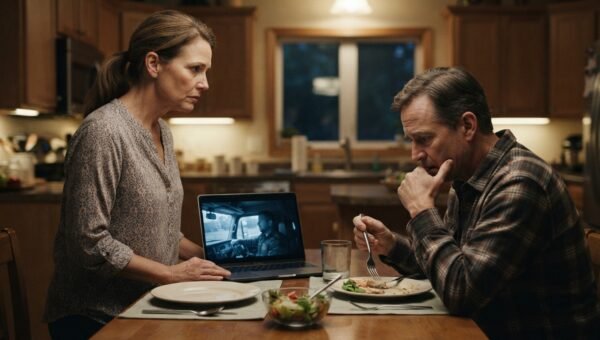
I had been seeing Paul for seven months. He was fifty-seven, divorced, and ran a small residential painting business that seemed to run him into the ground more than it made him money. From the beginning, there was always a strange tension whenever money came up. If we went to the local diner for Saturday breakfast, he would reach for the check, glance at the total, and then tap his breast pocket with a sudden frown, claiming he had left his reading glasses in the truck. I would just smile, lay down a twenty-dollar bill, and tell him not to worry about it. If we picked up takeout, he would say he had cash for the tip while I ran my card for the food.
It was never huge amounts, but it was constant. Yet whenever he talked about his future, he spoke in grand terms. He talked about expanding his crew, buying a lake house, and taking trips to Sedona.
Two weeks before Valentine’s Day, Paul started insisting that we go to The Copper Hearth. The Copper Hearth was the kind of place on the north side of town with valet parking, white tablecloths, and no prices printed on the nightly specials.
I told him plain and simple that we did not need to do that. “Paul, I’m just as happy with a pot roast at home, or getting a booth at the Italian place downtown,” I told him over the phone. “Everything at The Copper Hearth is marked up for the holiday. It’s ridiculous.”
“No, Brenda, we deserve something first-class,” he argued. He sounded almost offended that I suggested keeping it simple. “I want to show you how much I care. We are dressing up, and we are doing it right. Let me take care of it.”
He used those exact words: Let me take care of it.
So on Valentine’s night, I put on my navy wrap dress, the silver drop earrings my daughter had given me for Christmas, and my good black heels.
Paul picked me up in his clean work truck. He wore a gray suit jacket that smelled a little bit like cedar and mothballs, but he had shaved carefully and bought a single red carnation that he handed to me when I opened my front door. For a moment, sitting in his passenger seat on the drive across town, I felt like a foolish, hopeful girl again. I thought maybe I had misjudged him. Maybe he really did want to give me a memorable, generous evening.
The dining room was packed with couples. We were led to a corner booth with a little lamp that gave off warm, low light.
That was when Paul’s mood shifted. From the second the young server gave us our menus, Paul began ordering like a man trying to prove something to the entire room. He waved away the house wine and ordered a seventy-dollar bottle of Cabernet without asking what I liked.
When the server explained the specials, Paul ordered the dry-aged ribeye with truffle butter for himself, and when I tried to order a simple chicken piccata, he spoke right over me.
“She will have the sea bass,” Paul told the server with a confident wave of his hand. “And bring us the crab cakes to start. We are celebrating.”
I tried to keep my smile in place, but my stomach felt uneasy. “Paul, that is far too much food,” I whispered once the server walked away.
“Enjoy yourself for once, Brenda,” he said, adjusting his cuffs. “Stop counting pennies. Tonight is about living a little.”
We ate. The food was rich, but the conversation was stiff. Paul spent most of the meal talking about how his business was poised for an incredible year, how his competitors were lazy, and how women these days rarely appreciated a real provider. Every time he spoke, I felt further away from him.
Then came the end of the meal. The server cleared our plates and set a dark leather booklet in the center of the table.
Paul reached for it, opened it, and I watched his expression turn entirely cold. The color drained right out of his cheeks. He stared at the receipt for a solid thirty seconds without saying a word.
The total was three hundred and eighty dollars.
Slowly, Paul slid the leather folder across the white linen until it tapped against my water glass. He looked directly into my eyes.
“We will do half and half,” he said. His voice was flat, with no hint of the smooth charm he had used all evening. “One-ninety each. Throw your card in there.”
The room seemed to go dead quiet around me. I looked at the bill, then looked back up at his face.
“Paul,” I said, keeping my voice very calm, “you specifically asked me here. You chose the restaurant after I told you it was too expensive. You ordered a seventy-dollar bottle of wine and changed my order to the most expensive fish on the menu. You told me you were taking care of tonight.”
“This was a mutual dinner, Brenda,” he snapped, leaning forward. His jaw was clenched so hard the muscles jumped. “We are two adults in a modern relationship. If you expect a man to fund your lavish lifestyle while you just sit there, you have another thing coming. A decent partner pulls her weight.”
A lavish lifestyle. I worked forty hours a week in a school district basement office, and I drove a 2014 Honda Civic with a dent in the bumper.
“I am not paying half of this bill, Paul,” I told him. My voice did not shake. “I did not want to come here. I did not order that wine. If you want, I will put down forty dollars in cash for what my dinner would have cost at the diner, but I am not handing you one hundred and ninety dollars.”
Paul stared at me with pure venom in his eyes. He did not say another syllable.
He reached into his pocket, took out his wallet, and slapped down four crisp hundred-dollar bills. He did not ask for change. He did not look at me again. He stood up from the booth, buttoned his jacket with tight, violent motions, and walked straight out through the main foyer toward the front doors.
He left me sitting alone in a crowded room on Valentine’s Day, with a half-full glass of water and four hundred-dollar bills sitting on the table.
I sat there for two minutes, breathing slowly, willing the hot tears not to spill over my eyelashes. I was not crying because I was heartbroken. I was crying from the sheer humiliation of sitting alone in a room full of happy couples while people at the neighboring tables quietly looked away, pretending they had not seen him walk out on me.
I began gathering my purse from the booth seat, wondering how long it would take an Uber to get out here, when our waitress stepped up to the table.
She was a slender young woman with her hair pulled back in a neat bun. Her name tag read Maria. She was holding a small silver tray, and her eyes were wide with deep concern.
She leaned down close so the neighboring tables could not hear her.
“Ma’am?” she said quietly. “I am so sorry to bother you, but I have to tell you something. He left you a message.”
She slipped a folded white slip of paper out of her apron pocket and held it out to me.
My stomach tightened into a knot. I reached out, my fingers trembling slightly as I took the folded paper from her hand.
I opened it under the low light of the table lamp. It was written on the back of a register receipt in Paul’s messy, rushed handwriting:
“I arrived tonight intending to do one thing, but after what happened, I see who you really are. You ruined this for both of us.”
PART 2
I stared at the scribbled handwriting until the letters blurred.
Maria pulled the four hundred-dollar bills from the leather folder, but she did not leave the table. Instead, she stepped a little closer, glancing over her shoulder toward the hostess stand to make sure the floor manager was not watching.
“Ma’am,” Maria whispered, her voice tight with urgency. “That is not all. He did not drop that note on the table. He gave it to the hostess on his way out the door and told her to bring it to you. But that was not what he said when he first came in tonight.”
I looked up from the receipt, my throat dry. “What do you mean?”
“He came in thirty minutes before your reservation,” Maria told me. “Around five-thirty. I was polishing glassware at the service station right behind the hostess desk. He was talking to our head manager, Greg. He told Greg he was planning to propose tonight. He asked Greg to have our pastry chef put a velvet box on a dessert platter with chocolate strawberries around eight o’clock.”
My breath caught hard in my chest.
“A proposal?” I whispered.
“Yes,” Maria said. Her eyes were sharp, full of that quiet solidarity working women have when they see another woman getting mistreated. “He asked if the dessert platter could be complimentary since he was spending so much money. Greg told him no, the special arrangement was thirty-five dollars. Your boyfriend got annoyed, but he handed over a small black velvet box anyway. It had a gold ribbon around it.”
Maria leaned in even closer. “When he walked out just now, he stopped at the front desk, snatched that box back from Greg, and threw that receipt at the girl. He said, ‘Cancel it. She showed her true colors.'”
I sat completely frozen in the booth.
If this had happened ten years ago, I might have panicked. I might have felt a wave of crushing guilt, believing that my stubbornness over a dinner bill had just destroyed an engagement, that I had ruined my own chance at marriage because I refused to split three hundred and eighty dollars.
But I looked at the note in my hand again.
*I arrived tonight intending to do one thing, but after what happened, I see who you really are.*
It was a punishment. It was written to make me run after him into the parking lot. It was calculated to make me beg for his forgiveness, offer my credit card, and spend the rest of the night crying and apologizing for standing up for myself.
“Did you see the box?” I asked Maria.
“Greg put it in the safe behind the desk when he took it,” Maria said. “He only brought it out when your boyfriend demanded it back. But when he shoved it in his coat pocket, I saw the top of it. It did not have a jeweler’s name on it. It had a little white sticker on the bottom.”
I picked up my purse, slid my phone out, and ordered a ride home.
While I waited ten minutes for the car to arrive, I did not cry. The initial sting of embarrassment was gone, replaced by a cold, settling clarity. I left Maria a twenty-dollar cash tip from my purse on top of the change from Paul’s money, thanked her, and walked out the front doors with my head held high.
The ride home took twenty minutes. My small house on Maple Street was dark and quiet. I unlocked the front door, kicked off those painful black heels, and hung my navy dress in the closet. I put on my flannel pajama pants and an old fleece sweater, sat down on the edge of my bed, and stared at my phone on the nightstand.
At 9:45 p.m., the phone lit up.
It was a text from Paul.
“I hope you are sitting at home thinking about your choices. You threw away an entire future over ninety dollars. I had everything planned. I guess your pride is worth more than a ring.”
He did not know that Maria had told me about the dessert. He did not know that I already knew his game. He thought he was dropping an emotional bomb on me from the comfort of his living room.
I did not reply. I plugged the phone into the wall, turned it face down, and went to bed.
The next morning was Saturday. At eight o’clock, someone knocked hard on my front door.
I looked through the peephole. It was Paul. He was standing on my porch with his hands in his pockets, his hair unbrushed, wearing his work jacket.
I unlocked the deadbolt and opened the door, but I left the storm door latched between us.
PART 3
Paul looked through the glass, his eyes bloodshot, looking like a man who had stayed up all night expecting a desperate phone call that never arrived.
“Brenda,” he said, trying to sound patient and weary. “Let me come in. We need to talk about what happened.”
“There is nothing to talk about, Paul,” I said through the screen. “You made your feelings very clear at the table.”
He let out a heavy sigh, running a hand over his face. “I lost my temper. I admit that. The bill was higher than I thought it would be, and when you refused to help, it felt like a slap in the face. But you don’t know what I had planned for us.”
He reached into his jacket pocket and pulled out a small black velvet box.
He held it up so I could see it through the glass.
“I was going to ask you to marry me, Brenda,” he said, his voice dropping into that rehearsed, dramatic tone he used when he was pitching painting contracts. “I had the manager ready to bring this out with dessert. I was ready to give you my life, my name, everything. And you ruined the whole night because you didn’t want to chip in on dinner.”
He stood there, waiting for the crumble. He waited for me to unlatch the door, burst into tears, and bury my face in his chest.
I looked at the black box in his hand. On the bottom corner, right where Maria had seen it, was a tiny white price sticker that had been peeled halfway off, leaving behind a sticky gray rectangle of glue.
“Where did you buy that, Paul?” I asked.
He blinked, taken aback by the question. “What does that matter? It’s a diamond. I bought it because I love you.”
“Did you buy it at a jeweler in town?” I asked again. “Did you buy it new?”
Paul’s jaw tightened. “I found it at an estate sale through an associate of mine. It’s a vintage cut. It’s worth over three thousand dollars.”
“Turn the box around,” I said.
He hesitated, then slowly turned the box. The underside still had the faint purple ink of a local pawnshop stamp on the velvet: *B&B Pawn – As Is.*
I knew that pawnshop. It was on Route 4, right next to the lumber yard where Paul bought his drop cloths and primer.
“Paul,” I said, looking him dead in the eye. “You did not buy that ring to propose to me because you love me. You bought that ring because you needed a wife to cosign your business loan.”
His mouth opened, then snapped shut. A deep, ugly red crept up from his collar into his cheeks.
Three weeks earlier, Paul had left a folder on my kitchen table while we were eating lunch. It was an application for a seventy-five-thousand-dollar small business line of credit from the local credit union. When I had flipped it closed to hand it back to him, I had seen the rejection notice tucked inside. The bank required a co-applicant with verified W-2 income and a credit score over seven hundred and twenty. Paul had a score of five hundred and eighty and three years of sporadic tax returns.
At the time, he had laughed it off, saying the bank was just being overly cautious and that he was looking into other options.
I had not connected the dots then. But standing in my doorway, looking at the cheap pawnshop box and remembering how desperately he had talked about expanding his crew and buying equipment, every single piece clicked into place.
“You wanted to get engaged so you could move into my house and have me sign on that credit line,” I said, my voice completely steady. “And you couldn’t even afford the Valentine’s dinner you used to set the stage. You expected me to pay for half of the very trap you were setting for me.”
“You are out of your mind,” Paul hissed, dropping the soft, pleading voice entirely. The charm peeled away like cheap wallpaper. “You are an ungrateful, suspicious woman. Nobody else is going to look twice at a fifty-four-year-old school clerk living in a box of a house. I was doing you a favor, Brenda. I was offering you a real life.”
“Then you can offer it to someone else,” I said.
I did not yell. I did not insult him. I simply reached out, took hold of the interior wooden door, and closed it firmly in his face.
I turned the brass deadbolt with a solid, final click.
ENDING
Through the wood, I heard Paul swear loudly. He kicked the bottom of the storm door, muttered something bitter under his breath, and then his heavy work boots stomped down my porch steps. A few seconds later, his truck engine roared to life, tires crunching over the gravel driveway as he sped away.
I stood in my quiet hallway for a long time.
My heart was beating in my ears, but I did not feel afraid, and I did not feel sad. What I felt was an overwhelming, physical sense of relief. It felt as if a heavy, suffocating wool blanket had been lifted off my chest.
If I had caved at that dinner table—if I had handed over my debit card out of fear of making a scene or fear of losing him—I would have walked straight into that engagement. I would have believed his sweet words over that pawnshop ring. Within six months, my clean credit, my modest house that I had worked so hard to pay off, and my pension would have been tied to a man who saw me as nothing more than a financial lifeline.
On Monday afternoon, after my shift at the school board office ended, I drove back over to the north side of town.
I walked into The Copper Hearth just as the dinner shift was beginning to prep. Maria was at the front station, rolling silverware into cloth napkins.
When she saw me walk through the doors in my sensible winter coat and flat shoes, she stopped and gave me a cautious, questioning look.
“Hello, Maria,” I said, walking up to her table.
“Hello, ma’am,” she said softly. “Are you alright?”
“I am better than alright,” I told her.
I reached into my bag and pulled out a small bakery box from the local Dutch bakery near my office. Inside were a dozen fresh almond pastries. Alongside it, I handed her an envelope with fifty dollars cash and a simple thank-you card.
“You didn’t have to tell me what you saw on Friday night,” I told her. “You could have just minded your business and let me walk away feeling like I was the crazy one. But you spoke up. You saved me from making a terrible mistake.”
Maria’s eyes softened, and a warm, genuine smile spread across her face. She took the bakery box and shook her head. “Women have to look out for each other, ma’am. I could tell just by looking at you that you didn’t belong with a man who operates like that.”
We talked for five minutes, just two women sharing a moment of honest understanding in a quiet restaurant, before the evening rush began.
When I walked back out to my car, the cold February air felt fresh and clean in my lungs. My life was simple. My bank account was modest. My house was small, and my evenings were mostly quiet. But everything under my roof belonged to me, earned by my own hands, unencumbered by lies.
I turned the key in the ignition, put the car in reverse, and drove home to my own peaceful life.