PART 1
At 3:26 on a Thursday afternoon, my phone vibrated against the metal desk in my secure office at Joint Base Langley-Eustis. Cell phones were strictly monitored inside our facility, but I had a hardship exception filed with my commander because I was a solo parent. My six-year-old daughter, Sadie, was my entire world.
When I glanced down and saw the caller ID for her elementary school, my stomach dropped.
“Captain Mercer, this is Mrs. Gable,” the voice said, sounding frantic over the rushing sound of wind and heavy rain. “I am standing under the overhang by the bus loop with Sadie.
The school doors are locked for the staff development meeting, and your parents never arrived. Everyone else is gone. Sadie is soaked clean through.”
A cold panic seized my chest. “What do you mean she is soaked? My father was supposed to pick her up in the car line at 3:00 sharp.”
“The buses left at 3:10,” Mrs. Gable said, her voice shaking with barely controlled anger. “The administration locked the main entry at 3:15. I found Sadie standing on the curb beside the parent pickup gate. She had no umbrella, Captain Mercer. Her little blue coat is completely waterlogged, and her blonde hair is plastered to her face. She was shivering so hard she could barely tell me her name. I have her in my front seat with the heater running right now.”
Outside my office window, the November coastal storm was tearing sheets of gray water across the airfield.
The temperature had plummeted into the low forties. A child left out in that weather would develop hypothermia within half an hour.
“I am leaving right now,” I said. “I am twenty minutes out.”
I grabbed my coat, notified my shift supervisor, and practically ran across the wet asphalt to my truck. My hands were shaking so hard I could barely slide the key into the ignition.
For the past three years, my parents, Donald and Eleanor, had lived rent-free in a three-bedroom ranch house in Newport News that I owned outright. I bought the property in 2021 after my mother complained that their modest pension could not keep up with inflation. Not only did I give them a roof over their heads, but I also paid their property taxes, homeowner insurance, high-speed internet, municipal water, electric bills, and even the lease on a brand-new Chevrolet Traverse. My monthly bank statements showed that I had poured $381,640 of my own military savings and deployment pay into their living expenses, home renovations, and lifestyle over the last five years.
I never asked them for a single dime. All I asked in return was one simple duty: pick Sadie up from school at 3:00 PM on weekdays, keep her until my shift ended at 5:00 PM, and make sure she was safe.
My sister, Kendra, lived eight miles away. She was thirty-two, unemployed, and had three unruly boys aged four, seven, and nine. Kendra never contributed a penny toward our parents, but she constantly demanded their time, their attention, and my money. Whenever Kendra wanted a weekend trip or an afternoon at the nail salon, my parents dropped everything to cater to her sons. Yet I never imagined they would put my daughter in physical danger.
I sped through the rain-slicked streets of Newport News, my windshield wipers fighting a losing battle against the downpour. When I pulled into the deserted school loop, Mrs. Gable’s silver sedan was idling near the curb with its hazard lights flashing.
I threw my truck into park and jumped out into the freezing storm.
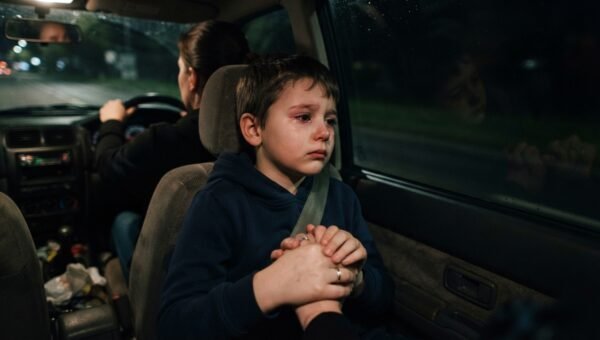
As soon as I opened the passenger door of Mrs. Gable’s car, Sadie let out a tiny sob. Her pale face was blotchy, her lips were faintly blue, and her saturated blue canvas coat was dripping onto the floor mat. She threw her little arms around my neck, clinging to my uniform with a desperate grip.
“Daddy,” she cried into my shoulder. “Grandpa saw me. He looked right at me, but he drove away.”
PART 2
Those seven words hit me like an artillery shell.
I wrapped my dry fleece jacket around Sadie, pulling her tightly against my chest. Her skin was ice-cold. Mrs. Gable handed me Sadie’s saturated pink backpack, her expression grim and tight.
“Captain Mercer, you need to know this,” Mrs. Gable said quietly, leaning across the console. “I didn’t just find her standing here. When I walked out to my car at 3:15, I saw your father’s Traverse pulling away from the curb. He didn’t park. He stopped near the crosswalk, rolled down the passenger window, and then accelerated out onto the main boulevard. Sadie was running after the car in the rain, screaming for him.”
A hot, suffocating rage rose in my throat, choking out the cold air.
“Thank you, Mrs. Gable,” I managed to say, my voice trembling with restraint. “Thank you for staying with her. I will handle this.”
I carried Sadie to my truck, buckled her into her booster seat, turned the cab heat to maximum, and wrapped two emergency blankets around her small frame. She buried her face in the blanket, still trembling from the chill.
I climbed into the driver’s seat and pulled out my phone. I dialed my father’s cell. It rang four times before clicking over to voicemail. I dialed my mother. She picked up on the second ring, the background noise filled with screaming kids, television blaring, and laughter.
“Marcus?” she said, her tone breezy and distracted. “What’s going on?”
“Where are you, Eleanor?” I asked. I did not call her Mom. The word tasted like poison.
“Oh, we’re over at Kendra’s house,” she said casually. “Kendra got discount tickets to the indoor water park up in Williamsburg for the boys, so your father and I had to rush over to pack their overnight bags. Why? Did your shift end early?”
“Where is Sadie?” I asked, my knuckles turning white against the steering wheel.
A brief, uneasy silence fell over the line. Then my mother sighed, an irritated, dismissive sound that made my jaw ache.
“Well, Donald drove by the school, Marcus, but Kendra’s boys were already in the back two rows with all their pool gear and inflatable rafts. There was simply no room in the Traverse for Sadie’s booster seat. Donald said the school has plenty of teachers inside anyway. We figured you could just pick her up on your way home from the base.”
I could not breathe for two full seconds. “You left a six-year-old child standing on a curb in a forty-degree rainstorm because your car was full of pool toys?”
“Do not take that tone with me, Marcus,” she snapped back instantly, her voice rising in defensive indignation. “Kendra’s boys have had a very stressful week with their school testing. They needed this trip. Sadie is fine. You military people always overreact to a little bad weather. Just go get her.”
“I already have her,” I said, my voice dead and quiet. “And you have made the biggest mistake of your lives.”
I hung up before she could utter another word.
I took Sadie home to our house, ran a warm bath, made her chicken soup, and sat by her bed until she finally fell asleep under three heavy quilts, holding her stuffed rabbit. Only when her breathing turned slow and steady did I walk down to my home office.
I opened my laptop and pulled up my personal accounting software. I pulled five years of records.
Between the down payment and full mortgage payoff on the Newport News ranch house, the property tax payments, the home insurance premiums, the power and water utilities, the two replacement HVAC units, the $640 monthly car note on the Traverse, and the direct debit cards I funded for their groceries, the exact total stared back at me in black and white: $381,640.
I had sacrificed promotions that would have moved me away from Virginia. I had lived frugally in a modest base-adjacent townhouse. I had poured my blood and sweat into ensuring my elderly parents had total financial dignity in their retirement. And in return, my father looked through a rain-streaked car window at his own granddaughter, decided three inflatable water tubes and Kendra’s spoiled children were more important, and drove off into the storm.
I opened my banking portal. With steady fingers, I began canceling every automated authorization.
PART 3
The first thing I did was cancel the direct debit for the 2024 Chevrolet Traverse. The vehicle was titled in my name; my father was merely a registered driver on my commercial policy. I logged into the auto finance portal, paid off the remaining loan balance from my primary savings, and downloaded the clean electronic title. Then I called an auto transport and recovery service based in Hampton.
“I need a vehicle retrieved from a residential address in Newport News tomorrow morning at 8:00 AM,” I told the dispatcher. “I have the clear title, the registration, and the spare key.”
Next, I opened the municipal utility accounts. I submitted disconnect requests for the water, electric, and gas services at the ranch house, scheduled for the following Friday. I canceled the private homeowner insurance policy and the high-speed fiber internet package.
Finally, I drafted a certified legal notice of eviction. Under Virginia landlord-tenant statutes, an owner must give thirty days of written notice to month-to-month non-paying occupants. I printed three copies, signed them before a digital notary, and scheduled a private process server for Saturday morning.
By 9:00 PM, I had completely severed their access to my finances.
The storm cleared overnight. Friday morning brought crisp, sunny skies and fifty-degree air. Sadie woke up with a slight cough, so I took an authorized family care day to stay home with her. We made pancakes, watched cartoons, and colored pictures at the kitchen table.
At 8:45 AM, my phone began ringing.
It was my father. I let it go to voicemail. Two minutes later, he called again. Then my mother called three times in rapid succession. Finally, Kendra started blowing up my phone with text messages in all capital letters.
*MARCUS WHAT DID YOU DO TO DAD’S CAR A FLATBED IS TOWING IT OUT OF THE DRIVEWAY RIGHT NOW PICK UP THE PHONE YOU PSYCHOPATH.*
I walked into the living room, picked up my phone, and tapped the speaker button on my father’s sixth call.
“Marcus!” my father roared through the tiny speaker, his voice cracking with outrage. “There is a tow truck in our driveway hooking up the Traverse! The driver claims he is acting on your orders! Tell this idiot to unhook my car before I call the police!”
“Call them, Donald,” I said evenly. “The car is titled to Captain Marcus Mercer. The insurance is in my name. The registration is in my name. The vehicle is being delivered to CarMax in Richmond this afternoon to be liquidated.”
There was a stunned, choking pause on the other end. My father sounded like he had been struck in the solar plexus.
“Are you insane?” he sputtered. “How am I supposed to drive your mother to her doctor? How are we supposed to take Kendra’s boys to their soccer games tomorrow?”
“You can take the city bus,” I answered. “Or Kendra can drive you in that beat-up minivan she refuses to put gas in.”
“Marcus Edward Mercer!” my mother’s voice shrieked from the background, having snatched the receiver from my father. “You cannot do this to your family! We made an honest mistake yesterday! We thought the school would keep Sadie inside! You are punishing your own flesh and blood over an hour in the rain!”
“An hour in the rain,” I repeated, my voice dropping to a dangerous whisper. “You drove by your six-year-old granddaughter. You rolled down the window, saw her standing on a curb in a forty-degree torrential downpour, and you stepped on the gas because your car was full of pool rafts. Mrs. Gable watched her run after your car, Eleanor. She was shivering so hard her lips were blue.”
“She didn’t get hurt!” Eleanor screamed back, completely devoid of remorse. “Kids get wet! It builds character! You are acting like a petulant child because your sister needed a favor! We have sacrificed our golden years to stay in this town for you!”
“You sacrificed nothing,” I said. “You lived in my house for three years without paying a single utility bill. You drove my car. You spent $381,640 of my money. You had one job: protect my daughter for two hours a day. You failed that job yesterday. Your free ride is officially over.”
“What are you talking about?” my mother demanded, panic finally creeping into the edges of her voice.
“The water, power, and gas will be shut off next Friday,” I said clearly. “A process server is arriving at your door tomorrow morning with a thirty-day notice to vacate the property. On December 15th, a local real estate agency is listing the house for sale. Pack your bags, Eleanor. Move in with Kendra.”
“You can’t throw your own parents out on the street!” she wailed. “We have rights! We have lived here three years!”
“You have thirty days of rights,” I replied. “Use them to find an apartment you can afford on your pension.”
I ended the call and blocked both of their numbers.
ENDING
The next thirty days were an ugly, desperate siege, but I held the perimeter without flinching.
Kendra tried driving over to my townhouse on Saturday afternoon to stage a dramatic scene on my front lawn. I didn’t even open the door. I walked to the window, showed her my phone screen displaying the non-emergency dispatch number for the local police department, and pointed toward the street. She screamed obscenities at my siding, kicked my flower bed, and sped away.
On Monday, I hired an off-duty security guard to escort Sadie from her classroom to the after-school care center located right inside her elementary school. The district program cost $420 a month. It was staffed by certified, background-checked professionals who provided hot snacks, supervised homework, and kept the doors locked until I arrived in person to show my military ID. It was the best money I ever spent.
When my parents realized I was not going to back down, they tried appealing to my extended family. My aunts and uncles from Ohio started calling, lecturing me about filial duty and honoring my father and mother.
I didn’t argue with any of them. I simply sent them a shared digital folder containing three files: the written statement from Mrs. Gable detailing how Donald drove away while Sadie chased the car, the time-stamped weather bureau report showing forty-two degrees and two inches of rainfall, and the five-year financial ledger showing the $381,640 I had provided for their upkeep.
Every single relative stopped calling. Not one of them offered to take my parents in or pay their electric bills.
By the first week of December, the reality of their situation finally crushed Donald and Eleanor’s arrogance. With their car gone and their utilities scheduled for final termination, they had no legal or financial leverage left. They spent three days packing their belongings into a rented moving truck that Kendra’s boyfriend drove.
They moved into Kendra’s cramped, two-bedroom rental on the rough side of Hampton. My parents had to share the basement bedroom, sleeping on twin mattresses, surrounded by their grandchildren’s clutter and Kendra’s constant chaos. Their modest state pensions, which had previously been pure spending money while I paid their living expenses, now had to stretch to cover Kendra’s overdue rent, groceries, and utility bills. For the first time in their lives, they were forced to live within their actual means.
On December 18th, my real estate agent listed the Newport News ranch house. The local housing market was strong, and because I had maintained the property meticulously, we received four offers over asking price within forty-eight hours. The sale closed in late January, putting $415,000 in liquid capital directly into a dedicated college trust fund for Sadie.
Four months later, in the spring, Sadie and I were sitting on the wooden back porch of our townhouse, planting purple petunias in small ceramic pots. The afternoon sun was warm, and she was laughing, her hands covered in dark potting soil, her bright blonde hair tied back in a neat ponytail.
She looked up at me, wiped a smudge of dirt from her nose, and smiled.
“Daddy, are we safe here?” she asked out of nowhere, her innocent eyes studying mine.
I set down my trowel, pulled her into my lap, and kissed the top of her head.
“You are always safe with me, Sadie,” I told her, holding her close against my chest. “Nobody will ever leave you behind again. I promise you that.”
Looking out over our quiet backyard, I felt an overwhelming sense of peace. I had spent years believing that family meant tolerating neglect, funding entitlement, and excusing cruelty under the guise of duty. Cutting off my parents cost me their approval, but their approval had been bought with my money and paid for with my daughter’s safety.
Walking away from them didn’t break our family. It saved the only part of it that truly mattered.