PART 1
The garden center out on Route 4 was running a spring clearance on dark pine mulch, three dollars a bag if you took ten or more. My little sedan could carry three bags in the trunk before the rear bumper started dragging over the driveway lip. Marshall had left his maroon F-150 parked under the side carport when he went into town with his fishing buddy, Carl, to look at a used boat motor.
Marshall and I had been married thirty-four years come this October. He was sixty-two, retired three years from the county road department, and kept that truck cleaner than most people keep their kitchen counters. He had left the keys sitting right where he always left them, in the chipped ceramic bowl beside our coffee maker.
I carried my canvas gardening gloves out to the driveway around one o’clock. The cab smelled of cedar air freshener and wintergreen mints. I backed down our drive, took the five-mile run out to the nursery, and had the young man in the yard load twelve bags flat across the bed.
When I pulled back into our gravel driveway at quarter to two, I wanted to double-check the truck registration date. Marshall had mentioned the week before that our county tags were due by the end of May, and I had our checkbook inside on the desk.
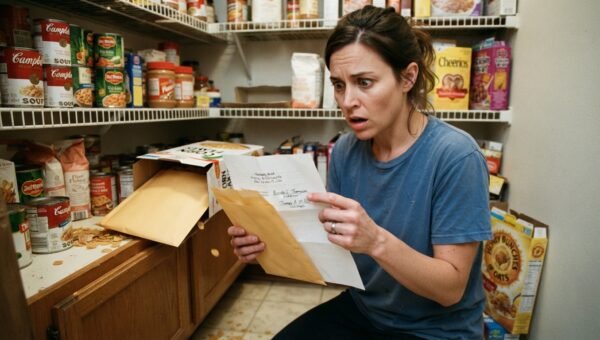
I reached across the console and yanked the glove box handle.
It stuck, the way it always did when the plastic latch caught on the inner lip. I set my heel against the passenger carpet, grabbed the release tab with both hands, and gave it one sharp, hard pull.
The plastic catch gave way with a loud crack. The little drop door fell down against my shins, dumping an avalanche of folded service records, tire pressure gauges, and napkins onto the rubber floor mat.
Right on top of my shoe landed a stiff, yellow slip of carbon paper, folded in thirds.
I picked it up to tuck it back with the insurance card. Printed across the top in faded red dot-matrix letters was the business header: *B&L Collateral and Loan, 412 East Depot Street.*
My eyes went straight to the item description typed in the middle box: *One ladies platinum band, three round-cut diamonds, approx 1.4 ctw, heirloom setting.*
Below it, stamped in blue ink: *Principal advanced: $300.00 cash.*
Dated October 18 of last year.
My breath stopped right in my throat.
It was my grandmother’s ring.
My grandmother, Clara, had worn those three stones on her left hand for fifty-one years before passing them to my mother, who gave them to me when I turned forty.
Last autumn, the second week of October, I took the ring off my finger to scrub the oven and wax the kitchen floorboards before our daughter, Karen, came home for Sunday dinner. I set it inside the blue porcelain teacup on the windowsill above the sink.
Two days later, the cup was empty.
I tore that house apart for three weeks. I pulled the stove away from the wall. I took the chrome trap off the sink drain with a pipe wrench and dug through the sludge with a flashlight. I went through the outdoor trash bins three separate times in the freezing rain.
Marshall had held me on the living room sofa while I cried until my ribs ached. He stroked my hair, kissed the top of my head, and told me to let it go.
“Things don’t just vanish into thin air, Nora,” he had said, his voice so gentle and steady. “You probably mislaid it in an apron pocket or swept it out the back door by mistake.
It will turn up when we least expect it. Stop making yourself sick over a piece of metal.”
Now here was the pawn ticket, nine months old, showing three hundred dollars paid out on the very week I was on my knees searching the linoleum.
My hands shook so hard the yellow paper rustled like dry leaves. I reached down to gather the rest of the papers off the floor mat, and my fingers brushed against a flat piece of hard white plastic tucked inside a small paper sleeve.
I pulled it out.
It was an electronic keycard. Printed across the front in faded green lettering was: *Cardinal Inn, Room 118, Route 9.*
The Cardinal Inn was a low, cinder-block motel forty miles west of our house, right past the county line where the old paper mill used to sit. The kind of place with peeling paint, gravel parking stalls, and curtains that stayed shut at noon.
I sat there in the cab with the midday sun beating through the windshield, the mulch smell drifting through the back glass, holding thirty-four years of my life in my lap.
I picked up my cell phone. My fingers hit the numbers for the motel on Route 9.
The phone rang four times before a man answered with a heavy, indifferent grunt. “Cardinal, front desk.”
“Hello,” I said. I had to clear my throat twice to make the words sound solid. “My husband left his white keycard on the dresser, and I need to verify our billing record for Room 118. It is under the name Marshall Vance.”
I heard the dull tap of computer keys over the line, followed by the squeak of an office chair.
“Vance,” the clerk muttered. He paused for a moment. “Yeah, I see him here in the weekend ledger. Every other Saturday since March, ma’am. Same room. He usually comes with…”
PART 2
The clerk stopped talking right in the middle of his sentence.
I heard a sudden shift in the air over the receiver, like a man realizing he had just stepped onto thin ice.
“Ma’am?” he asked, his voice dropping into a tight, guarded tone. “Who did you say was calling?”
“I am Mrs. Vance,” I said. I kept my voice as smooth and even as fresh asphalt. “Who does he usually come with, sir?”
The man cleared his throat. A file drawer slid shut in the background. “Look, lady, I just work the day desk on weekends. I don’t keep tabs on guests’ personal company. The room is registered under Marshall Vance, paid fifty-five dollars cash at check-in every two weeks, no credit card on file. If there is a dispute about the bill, you need to speak with the manager on Monday morning.”
“Does he have the room reserved for today?” I asked.
A long pause hung over the line.
“He checks in between three and four in the afternoon,” the clerk said, his voice barely above a mumble. “Same as always. Now I have customers at the counter, ma’am.”
The line clicked dead.
I looked at the digital clock on the dashboard. It was 2:04 p.m.
Marshall had left the house at ten this morning with Carl, saying they were driving over to Shelbyville to look at a twelve-foot aluminum jon boat and an old Johnson outboard motor. He had told me he would probably be home around six or six-thirty, depending on how much jawing Carl did with the seller.
Every other Saturday since March.
I sat in the passenger seat and let my mind run backward across the last three months.
In March, Marshall started taking on weekend odd jobs. He told me Carl’s brother-in-law had a small engine repair shop out toward the county line that needed help rebuilding carburetors on riding mowers. Every two weeks like clockwork, Marshall would pull on his clean gray work trousers, pack a thermos of hot coffee, and kiss my cheek at the back door.
“Just trying to build up a little cushion for our anniversary trip to the Smokies, Nora,” he had said back in April, setting a crumpled forty-dollar bill on the microwave to cover our Sunday groceries.
I had made his sandwiches. I had washed his greasy shop rags in hot bleach water. I had bragged to my sister on the telephone that at sixty-two years old, Marshall was still the hardest working man in the county.
I looked down at the yellow pawn slip again.
*B&L Collateral and Loan, 412 East Depot Street.*
East Depot Street was in town, only twelve blocks from our courthouse square.
I picked up the keycard and the pawn ticket, slipped both of them deep into the zippered side pocket of my leather purse, and put the truck manuals back into the broken glove box. I closed the passenger door quietly, carried my gardening gloves into the house, washed my face with cold tap water, and picked up my car keys.
I did not touch the twelve bags of mulch sitting in the bed of the truck.
I drove my sedan straight down to East Depot Street.
B&L Collateral and Loan sat wedged between a bait shop and a closed laundromat, behind heavy steel security bars painted dull silver. A little brass bell jangled when I pushed the heavy glass door open.
Behind a high partition of scratched bullet-resistant acrylic sat an older man in a short-sleeved plaid shirt, looking through a jeweler’s loupe at a pocket watch.
I walked up to the metal tray under the glass, took the yellow slip from my purse, and pushed it through the opening.
“Afternoon,” I said. “I am here about this loan ticket.”
The man picked up the paper, adjusted his reading glasses, and glanced down at the faded numbers.
“Marshall Vance,” he read aloud. He looked up at me over the rims of his glasses. “You his wife?”
“I am Nora Vance,” I said. “That ring belonged to my grandmother. I want to know if it is still here.”
The man turned to a row of small steel lockboxes bolted against the back wall. He punched a four-digit code into a digital keypad, pulled out a small cloth envelope marked with the number 1048, and emptied the contents onto a black velvet inspection pad on his counter.
There it was.
The three round diamonds caught the fluorescent light, the platinum prongs slightly worn at the edges, exactly as they had looked on my grandmother’s hand every Sunday morning at church.
A sharp, hot pain cut straight through my ribs, but I did not cry.
“The loan expired in January, ma’am,” the pawn broker said, tapping the velvet pad with his fingernail. “By law, it became shop property after ninety days without interest payment. But Marshall came in here the first week of February, paid sixty dollars to renew the ticket, and told me he was getting the money together to pull it out before summer. Said it was an heirloom he couldn’t afford to lose.”
“Did he tell you why he needed the three hundred dollars in October?” I asked.
The broker gave a dry, tired shrug. “People don’t give their life stories at a pawn counter, Mrs. Vance. But I remember that day because he came in here with a woman. Younger gal with dark curly hair and a green suede jacket. She stood right over by that rack of power tools while he took the cash. When he took the envelope, he handed her two hundred of it right there on the floor.”
“What did she look like?” I asked.
“Thirties, maybe early forties,” he said. “Talked loud. Had a silver ring in her nose. Kept telling him they needed to hurry before the state liquor store closed.”
I reached into my purse, pulled out my checkbook, and set my driver’s license on the metal tray.
“What is the total balance to redeem that ring right now, including fees?”
The man tapped a few keys on an old adding machine. “Three hundred principal, ninety dollars accumulated interest, twenty-dollar processing fee. Four hundred and ten dollars total.”
I wrote the check for four hundred and ten dollars, signed my name with a steady hand, and took my grandmother’s ring.
I did not put it on my finger. I dropped it into the front pocket of my purse beside the white plastic motel key, walked back to my car, and turned the ignition.
It was 2:48 p.m.
PART 3
The drive out to the Cardinal Inn took thirty-five minutes along the old state highway.
The road wound past timber cuts, abandoned tobacco barns, and overgrown fence lines. The sky was turning a hazy, washed-out white, the humidity rising off the asphalt like steam.
I pulled into the gravel lot of the motel at twenty past three.
The Cardinal Inn was a single-story row of twelve concrete units painted the color of wet cardboard, with flat tar roofs and metal doors painted dark brown. Room 118 was three doors down from the manager’s office, facing a narrow strip of gravel bordered by tall pine trees.
Parked in the bay directly in front of Room 118 was a rusted silver Chevrolet Cavalier with a cracked rear taillight and county tags from two jurisdictions over.
Beside the front bumper of that car sat Marshall’s maroon Ford truck.
The engine hood was still ticking from the highway heat. The twelve bags of pine mulch were still sitting neatly stacked in the back of the bed, exactly where the nursery boy had loaded them two hours ago.
Carl hadn’t bought a boat motor. Marshall had never gone to Shelbyville. He had simply dropped Carl off, driven back to our house, hitched up his truck while I was inside checking papers, and headed straight out Route 9 with my garden mulch in the back.
I pulled my sedan into the gravel spot two stalls down, killed the engine, and took my purse off the passenger seat.
My legs felt surprisingly light when I stepped out onto the gravel. When you spend months feeling a dull, creeping dread that you can’t put your finger on, finding the absolute truth feels almost like a relief. The ground stops moving under your feet.
I walked up the concrete walkway to the brown metal door marked with brass numbers: 118.
The curtains on the double window were pulled completely shut, but the wall unit air conditioner was humming with a dull, rattling vibration that shook the aluminum frame.
I reached into my bag, pulled out the white plastic keycard, and slid it into the electronic slot above the brass door handle.
A tiny green light flickered on with a quiet electronic click.
I turned the knob and pushed the door open.
The room smelled of stale cigarette smoke, damp carpet, and cheap floral air freshener. The curtains blocked out almost all the afternoon light, leaving the room in a dim, grayish gloom lit only by the glare of a muted television screen mounted on the wall.
Marshall was sitting on the edge of the unmade king bed in his socks and undershirt, unbuckling his belt.
Standing by the small bathroom vanity, leaning toward the mirror with an eyeliner pencil, was a woman with dyed black hair that fell in rough waves over a faded green suede jacket. She looked maybe thirty-eight years old, thin, with hollow cheeks and a tiny silver hoop through the side of her right nostril.
When the deadbolt clicked and the door swung wide, Marshall froze.
His belt stayed looped through his fingers. He turned his head toward the door, squinting against the bright daylight pouring in from the parking lot.
“Who the hell…” he started, his voice thick with annoyance.
Then his eyes found my face.
The color did not just leave his cheeks; it looked as if every drop of blood in his body dropped straight down into the floorboards. His jaw went slack, his hands dropping away from his trousers like he had touched hot iron.
“Nora?” he whispered.
The woman at the mirror turned around fast, dropping her black cosmetic pencil into the white porcelain sink with a sharp clatter.
“Marshall, what is this?” she demanded, her voice shrill and gravelly. “Who is this?”
I did not step all the way into the room. I stood right on the threshold, holding the heavy metal door open with my left arm so the afternoon sun cut a long, clean rectangle of light across the dirty carpet, right across Marshall’s bare feet.
“Hello, Marshall,” I said.
My voice was so low and steady it surprised even me.
“Nora, wait… Nora, God, please,” Marshall stammered, scrambling to stand up from the mattress. He grabbed his denim work shirt off the bedside chair, trying to pull it over his chest with shaking hands. “This isn’t… you don’t understand what this is…”
“I understand three hundred dollars, Marshall,” I said.
The woman in the green jacket stepped back toward the bathroom door, her arms crossing over her chest, her eyes darting between Marshall and the open parking lot.
“I found the pawn ticket in your glove box when the latch broke,” I told him, looking straight into his eyes. “B&L Collateral and Loan on East Depot. Dated October eighteenth.”
Marshall stopped pulling at his shirt. His arms stayed caught in the cotton sleeves, his face twisting into an expression so pathetic and guilty it made thirty-four years of shared meals look like a cheap show.
“The ring,” he breathed, barely audible over the rattling air conditioner.
“My grandmother’s ring,” I said. “The one you watched me search the floorboards for on my hands and knees until my knees bled. The one you held me on the couch for while I cried, telling me to stop torturing myself because it was just a piece of metal.”
“Nora, I had debts,” he croaked, taking one stumbling step toward me, his hands held out open. “I had a card from that trip to Tunica with Carl last summer… I got in deep, and I couldn’t tell you. I was going to buy it back! I swear to you on our grandchildren’s lives, Nora, I was going to get it out before our anniversary!”
“I already got it out,” I said.
ENDING
I reached into my pocket, took out the three-stone platinum ring, and slipped it onto the third finger of my left hand right in front of him.
The stones caught the daylight from the doorway, cold and clean.
“I paid four hundred and ten dollars out of our checking account forty minutes ago,” I said. “And the pawnbroker remembered this woman standing by the power tool rack when you handed her two hundred dollars in cash.”
The woman in the suede jacket grabbed her purse off the laminate dresser, pushed past Marshall without looking at him, and squeezed through the gap between my shoulder and the door frame into the sunlight.
“I’m out of this,” she muttered, practically running toward her silver Cavalier. “You deal with your own mess, Marshall.”
Marshall did not even turn his head to watch her leave. He dropped down onto his knees on the motel carpet, right at the foot of the bed, his face buried in his hands, his broad back heaving as he started to sob like a child caught in a lie.
“Nora, please,” he wept into his palms. “Thirty-four years. You can’t just throw thirty-four years into the dirt over this. We built a home. We have Karen and the grandbabies. I’ll go to the pastor with you tonight. I’ll give you every dime of my pension check. Just let me come home.”
I looked down at the top of his head. His hair was thinning at the crown, silver around the ears, the exact same head that had rested on the pillow beside me for twelve thousand nights.
There was no rage left in me. Just a cold, clean hollow where my trust used to live.
“You are not coming home, Marshall,” I told him.
He looked up, his face red and wet, his eyes bloodshot. “Nora, where am I supposed to go?”
“You have your truck,” I said. “And you have Room 118 until tomorrow morning at eleven. The clerk said you paid cash through Sunday.”
“Nora, don’t do this,” he begged, reaching out toward the hem of my trousers.
I stepped back out onto the gravel walkway, out of his reach.
“Our daughter Karen is coming over to the house tomorrow after church,” I said. “She is bringing her husband, Tom, with his flatbed trailer. We are going to pack every stitch of your clothes, your fishing tackle, and your tools into plastic totes and leave them stacked under the carport. If you come onto the property before Monday morning, I will have Sheriff Dalton meet you at the cattle gate.”
“Sheriff Dalton?” he gasped, his voice cracking. “You’re calling the law on me?”
“You stole my mother’s heirloom out of our house and pawned it to pay for hotel rooms on Route 9, Marshall,” I said. “You should thank God I am only calling a moving trailer.”
I pulled the white plastic keycard from my pocket, dropped it onto the gravel at his doorstep, and turned my back on Room 118.
Behind me, the Cavalier engine sputtered to life and backed out of the lot with a spray of loose stones. Marshall was calling my name from the doorway, his voice cracking against the hum of the air conditioners, but I did not turn around to look.
I climbed into my sedan, locked the doors, and put the car in reverse.
The drive back to the house was quiet. The road was empty, the late afternoon sun hanging low through the pines, throwing long shadows across the fields.
When I pulled back into our driveway, the house looked exactly the same as it had when I left it three hours earlier. The brick chimney, the white porch railing, the hanging baskets of red geraniums I had watered this morning.
I walked around to the side of the carport, pulled on my thick leather work gloves, and walked over to the bed of Marshall’s abandoned truck.
One by one, I carried all twelve bags of dark pine mulch across the grass to the garden beds along the fence. My lower back burned with every heavy lift, and the cedar bark stained the front of my canvas apron dark brown, but I did not stop until every last bag was split open and raked smooth around the roots of my grandmother’s hydrangeas.
When the bed was empty, I took the truck keys out of the ignition, carried them inside, and dropped them into the trash can under the sink.
Then I washed my hands with warm lemon soap, sat down at the kitchen table with a cold glass of tap water, and looked down at my left hand.
The diamonds were clean. The house was quiet. And for the first time in thirty-four years, the air inside my walls belonged to nobody but me.