PART 1
The garden center on Old Mill Road had dark shredded hardwood mulch on sale for three dollars a bag if you bought ten or more. My station wagon could carry four bags at best before the rear bumper began scraping on the driveway dip. Marshall had left his Ford F-150 parked under the carport when he went into town with his friend Dennis to look at a boat trailer.
Marshall had owned that red truck for nine years. He kept the cab spotless, running a little hand vacuum over the floor mats every Sunday afternoon while the radio played ball games in the garage. He had left his keys sitting in the wooden bowl by the refrigerator, the brass ring hooked over the edge the way he always left it.
I carried my canvas gardening gloves and my leather purse out to the truck at two o’clock. The cab smelled like peppermint lozenges and clean upholstery. I started the engine, backed down our gravel drive, and made the four-mile trip to the nursery. Two boys in orange vests stacked twelve heavy bags into the bed, lining them up neatly against the tailgate.
When I pulled back into our driveway at quarter to three, the garden hose was resting across the grass by the hydrangea bed. I wanted to turn the truck around so the tailgate faced the flower beds directly.
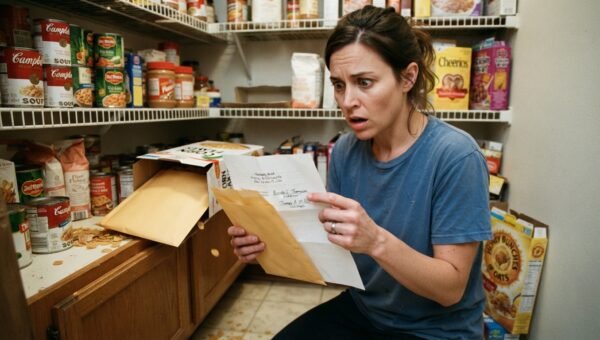
Before I shifted into reverse, I decided to pull the insurance card from the glove box to verify the registration date, since Marshall had mentioned renewing our tags before the end of the month.
The glove box latch was always temperamental. It had a stiff plastic handle that caught on the inner strike plate. I pulled it once, and it did not budge. I set my thumb against the dash, took a firmer grip with my fingers, and yanked hard.
The latch gave way with a sharp plastic snap. The little door dropped open entirely, spilling a handful of folded tire receipts and an old tire gauge onto the passenger floor mat.
Stuck behind the plastic hinge on the right side was a small black velvet pouch.
I reached down and tugged it free from the metal bracket. The velvet was dusty around the seams. Inside was a heavy, platinum three-stone diamond ring.
It was my ring.
My stomach dropped straight through my shoes.
My mother had given me that ring on my fiftieth birthday, four years before she passed away in the county hospice wing. The stones had belonged to my grandmother. Last November, while stripping wax off the kitchen linoleum before Thanksgiving dinner, I took the ring off and set it on the ceramic dish by the sink. Two days later, it was gone.
I had torn that kitchen apart. I took the trap off the drain pipe with a pipe wrench. I pulled the stove away from the wall. I cried until my eyes were swollen shut. Marshall held me by the shoulders in the living room and told me to stop torturing myself.
“Things don’t just vanish into thin air, Nora,” he had said, rubbing my back while I sat at the table. “You probably mislaid it in a pocket or dropped it in the garden compost.
It will turn up when we least expect it. Stop making yourself sick over an old piece of metal.”
Now here it was, tucked behind the hinge of his glove box nine months later.
I dumped the rest of the glove box contents onto the passenger seat to see what else had been jammed back there. Beneath a stack of truck service invoices from the Ford dealership lay a flat piece of blue plastic with a brass key attached to a round split ring.
The white lettering was stamped directly into the plastic:
Room 118
Cardinal Inn
Route 9, Greenfield
The Cardinal Inn was an old motor court forty minutes west of our house, right past the grain elevators near the county line. It sat behind a row of pine trees with an asphalt lot that had not been paved since the late nineties.
I sat in the passenger seat with the truck idling. The air conditioning was blowing cold on my face, but my hands were freezing cold. Marshall and I had been married for thirty-four years. We had two grown children living in Richmond, three grandchildren, and a joint savings account that we had built dollar by dollar since 1990.
I picked up my cell phone, looked up the main desk number for the Cardinal Inn on Route 9, and dialed the seven digits.
A man answered on the second ring with a tired, nasal voice. “Cardinal Inn, desk.”
“Hello,” I said, keeping my voice as flat and level as if I were ordering topsoil over the counter. “My husband left a blue room key on the counter, and I need to check on our upcoming reservation. It is for Room 118, under the name Marshall Vance.”
I heard the dull clatter of plastic keys on a desk, followed by the clicking of a computer keyboard.
“Vance,” the clerk repeated. He paused for five seconds. “Yes, ma’am. He is booked for this coming Saturday at two o’clock. Every other Saturday since March, ma’am. Same room. He usually comes with…”
PART 2
The clerk stopped himself mid-sentence, the realization clearly hitting him through the receiver.
“Ma’am?” he asked, his voice dropping an octave. “Who did you say was calling?”
“I am Mrs. Vance,” I said. My throat felt like it was lined with dry sand, but my words stayed steady. “What does he usually come with, sir?”
The man cleared his throat twice. A chair squeaked on linoleum in the background. “Look, lady, I just work the day desk on weekends. I don’t get into people’s private business. The keycard is logged in the system under Marshall Vance, paid in cash every two weeks with a fifty-dollar room deposit. That is all I am allowed to tell you over the phone.”
“Does he pay with hundred-dollar bills or twenties?” I asked.
The clerk gave a quiet, exasperated sigh. “Always two fifties. Look, ma’am, I have customers checking in. If you want to cancel the hold for the fourteenth, I need forty-eight hours notice.”
“Keep the hold,” I said. “Do not change a thing on that log.”
I hung up before he could answer.
I sat in the truck cab for another five minutes, staring at the twelve bags of mulch sitting in the bed. The engine hummed through the frame. The dashboard clock clicked over to 3:08 p.m. Dennis usually dropped Marshall off around four o’clock after they looked at whatever junk boat Dennis was thinking about buying.
I did not put the ring back in the velvet pouch. I slipped the ring onto my left ring finger. It fit exactly as it had for twenty-two years, cold platinum warming against my skin.
I picked up the blue plastic motel tag with the brass key and slipped it into the zippered interior pocket of my handbag. I gathered the dealership receipts, the tire gauge, and the manuals, stacked them neatly, and put them back into the glove box. The latch refused to catch properly because the plastic tab had snapped, so I left it hanging open an inch, exactly as it was.
Then I shifted the truck into reverse, backed up to the hydrangea beds, cut the engine, and unloaded all twelve bags of mulch by myself.
My lower back burned with every bag I dropped onto the grass, but the physical work kept my mind from spinning into panic. Thirty-four years of marriage do not disappear in an instant; they turn into an inventory of every hour you ever spent trusting someone.
Every other Saturday since March.
I pulled off my gardening gloves, walked into the kitchen, washed my hands with lemon soap, and pulled our wall calendar down from beside the pantry door.
In March, Marshall had started helping his widowed sister, Clara, clean out her rental duplex in Greenfield after her tenant broke the lease and skipped out on rent. Greenfield was forty miles west. The Cardinal Inn was on the eastern edge of Greenfield, right off the highway bypass.
Marshall had left the house at noon every two weeks on a Saturday, wearing his old work jeans and work boots, carrying a thermos of coffee I had made for him. He always returned around five in the afternoon, complaining about how dusty Clara’s baseboards were, how the yard needed mowing, and how hard it was for Clara to manage that property on her own since my brother-in-law died.
Every two weeks, I had kissed him on the cheek when he walked through the kitchen door, handed him a cold glass of sweet tea, and thanked him for being such a good brother to Clara.
I took the ring off my finger, laid it flat on the calendar square for the coming Saturday, and stared at it until I heard the sound of Dennis’s truck tires crunching on the gravel outside.
PART 3
Marshall came through the back screen door at ten minutes past four. He had on his khaki ball cap and his faded denim shirt. He smelled like road dust and spearmint gum.
“Hey, Nora,” he called out, hanging his truck keys back on the brass hook by the refrigerator. “Did you get that dirt for your flower beds?”
“I got twelve bags,” I said from the kitchen counter. I was slicing red potatoes into a pot of cold water for dinner. “Unloaded them by the fence.”
“You should have left them for me,” he said, opening the refrigerator door to pull out the pitcher of tea. “Dennis said the trailer had too much dry rot on the axle, so we passed on it. I could have lifted those bags in five minutes.”
“I needed the exercise,” I said. I did not turn around to look at him. “Your glove box latch broke when I reached in to look for the registration paper.”
I heard the pitcher stop midway to the counter. The refrigerator door stayed open for three seconds before the rubber seal clicked shut.
“The latch broke?” his voice had a slight hitch in it.
“The plastic catch snapped right off,” I said, keeping my knife moving through the potatoes with steady, rhythmic thumps against the wooden cutting board. “Everything spilled out onto the floor mat. I gathered the papers and put them back.”
I turned around then, holding the small paring knife in my right hand.
Marshall was standing by the kitchen island. His face had gone pale around the nostrils, his eyes darting toward the entryway where his keys were hanging. He looked at my hands first, his gaze dropping straight to my fingers to see if I was wearing the ring.
My hands were bare. The platinum ring was sitting safely inside the zippered pocket of my purse in the living room.
“Did you… did you find everything all right?” he asked. His tone was casual, but his jaw was working on one side, a nervous habit he had carried since his days running the shipping dock at the carton plant.
“Found the registration,” I lied smoothly. “It doesn’t expire until October. You have plenty of time.”
Marshall let out a short, quiet breath and took a long drink from his glass. “Good. Good. I’ll take a look at that latch on Sunday. Plastic gets brittle in the heat.”
He walked out of the kitchen toward the master bedroom to change his shirt.
The moment his footsteps crossed the hallway floorboards, I picked up my phone and dialed his sister Clara.
Clara answered on the third ring. “Hello, Nora. How are you doing?”
“I’m fine, Clara,” I said, keeping my voice light. “I was just looking at the calendar. Marshall was planning to come out to your duplex this coming Saturday to finish that back porch painting, but Dennis mentioned something about needing him for an estate sale. Have you two already finished up that rental unit?”
There was a pause on the line. I heard Clara’s television playing in the background.
“Rental unit?” Clara asked, sounding confused. “Nora, what rental unit are you talking about?”
“The one on Maple Street,” I said. “The one you’ve been cleaning out since spring.”
“Nora, I sold that property two years ago to a young couple from Charlottesville,” Clara said plainly. “I don’t own any rentals in Greenfield anymore. Marshall hasn’t been out to my house since Easter Sunday when you both came for ham.”
My hand tightened on the receiver until the plastic creaked.
“I must have gotten the dates mixed up with Dennis’s place,” I said, my voice barely above a whisper. “Don’t mind me, Clara. My head has been full of garden chores all afternoon.”
“You work too hard in that heat, honey,” Clara said. “Take a rest.”
I hung up the phone.
I did not confront Marshall that evening. We ate dinner at six o’clock. We had pot roast, boiled potatoes, and green beans from our garden. Marshall talked about the high price of used boat trailers and asked if we needed to call the roofer about the gutter on the north corner of the garage.
I looked across the table at the man I had shared a bed with for twelve thousand four hundred nights. He looked older, his hair completely white at the temples, his hands scarred from decades of yard work and tools. He looked like an honest man. He had the calm, easy manner of someone who had never stolen a dollar in his life.
Yet he had stolen his wife’s mother’s ring, stuffed it behind a dashboard hinge, and spent six months paying cash for a motor court room on Route 9 while telling me he was sweeping floors for his widowed sister.
I nodded at his comments about the gutters. I passed him the bread basket. I cleared the table and loaded the dishwasher while he watched the six-thirty local news.
When he went to sleep at ten o’clock, his breathing heavy and regular beside me, I got out of bed, took my car keys from the hook, and drove into town to the all-night supermarket.
I bought a small digital voice recorder with four gigabytes of memory and a magnetic mount, the kind used for recording office memos. Then I drove back to the house, walked out to the carport in my slippers, and reached under the driver’s seat of the red truck.
I slid the recorder between the seat springs and the steel adjustment rail, pointing the microphone upward toward the center console. Then I walked back inside, lay down on the edge of the mattress, and waited for Saturday.
ENDING
Saturday morning arrived clear and dry.
Marshall was up by seven, drinking his coffee in the kitchen while reading the county weekly paper. He was whistling through his teeth, an old hymn from church.
At eleven o’clock, he came into the utility room where I was folding a load of white bath towels. He had on a fresh gray polo shirt, clean denim trousers, and his good leather walking shoes.
“I’m heading out to Clara’s now, Nora,” he said, leaning down to kiss my cheek. “She needs help moving some old furniture down to the curb before the city bulk trash pickup on Monday. I’ll probably be home around five or five-thirty.”
“Don’t strain your back,” I said, setting a folded towel on the stack. “I know how heavy that old oak stuff can be.”
“I’ll take it easy,” he said.
He walked out to the truck. I heard the engine turn over, the gravel rattle under the tires, and then the quiet hum of his truck fading down the road toward the highway.
I did not follow him. I did not get in my station wagon and drive forty miles down Route 9 to stand in an asphalt parking lot outside Room 118 like a woman in a television movie. I did not need to see who got out of a car or what clothes they were wearing.
I walked into our home office, opened the steel filing cabinet where we kept thirty-four years of tax returns, deeds, and bank records, and pulled every folder that bore both of our names.
I spent four hours at the kitchen table with a notebook and a calculator.
Our primary checking held eight thousand four hundred dollars.
Our money market account at the agricultural credit union held one hundred and forty-two thousand dollars.
The house and our eight acres were completely paid off, with the deed held in joint tenancy with right of survivorship.
Marshall’s state transportation pension paid three thousand four hundred dollars a month, deposited automatically on the first of every month.
At three-thirty, I walked into the local branch of the agricultural credit union in town. Because both of our names were on the money market account as joint owners with independent signature authority, the teller did not blink when I requested a cashier’s check for seventy-one thousand dollars, made payable directly to Nora Vance.
“Closing out the account, Mrs. Vance?” she asked with a friendly smile.
“Just moving my portion into a private certificate of deposit for estate planning,” I replied.
I deposited the cashier’s check into a new, individual account in my name only at the commercial bank across the town square. Then I drove back to the house, placed my new passbook in my handbag, and sat down at the kitchen table.
Marshall walked through the screen door at twenty minutes past five.
He looked flushed and smelled of peppermint and fresh hotel soap. His polo shirt was neatly tucked into his belt.
“Hot one today,” he said, reaching for his keys to hang them on the hook. “Clara had three heavy bureaus on that second floor. Nearly took my knees out on the stairs.”
“Sit down, Marshall,” I said.
My voice was very quiet, but it stopped his hand mid-air.
He turned around slowly.
I had cleared the kitchen table completely. In the center of the dark wood sat three items:
First was the platinum three-stone diamond ring, polished clean with a soft rag.
Second was the blue plastic room key stamped with Room 118, Cardinal Inn.
Third was a manila folder containing the bank withdrawal slip for seventy-one thousand dollars and a business card for Arthur Sterling, the senior divorce attorney whose office sat on the second floor above the town pharmacy.
Marshall’s face went from pale to gray, the color draining out of his cheeks until he looked like a corpse standing in his own kitchen.
His eyes fixed on the blue room key. He did not touch the counter. He did not reach for his tea.
“Nora,” he whispered. His voice had no air behind it. “What is this?”
“That is my mother’s ring, which you stole out of our kitchen nine months ago so you could keep it somewhere safe until you figured out how to give it to her without raising questions,” I said. “And that is the key to the room you have been paying fifty dollars cash for every other Saturday since March.”
“It’s not what you think,” he started, his hands coming up in front of his chest like a man trying to stop a truck. “Nora, listen to me. It was a mistake. It started as an accident after that convention in Roanoke last fall—”
“I don’t care where it started,” I interrupted.
I did not shout. I did not cry. After thirty-four years, the total absence of tears seemed to frighten him more than any screaming match could have.
“I called Clara on Wednesday,” I told him. “She sold that duplex two years ago, Marshall. You have spent six months lying to my face every single morning while I made your lunch and washed your socks. You let me crawl around on my hands and knees in this kitchen crying over my mother’s ring, telling me I was losing my mind, while you kept it locked in your truck.”
Marshall sank into the wooden chair opposite me. He put his head in his hands, his broad shoulders shaking.
“It’s Linda,” he choked out into his palms. “Linda from the regional district office. She was having trouble with her husband, and we started talking, and it just got out of hand. I was going to end it. I swear on our children’s lives, Nora, today was the last time. I was going to tell her it was over today.”
“You told the desk clerk you would be back on the fourteenth,” I said, holding his gaze until he had to look away. “Don’t bother swearing on our children. You lost the right to use their names in