PART 1
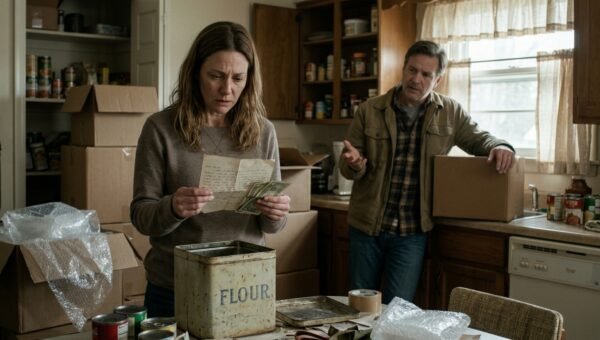
My forty-six-year-old son, Michael, sat at my round oak kitchen table, stirring a cup of instant coffee he had barely touched. It was a cold Tuesday morning in late October, the kind where the dampness seeps right through the storm windows. Between us lay a four-page loan application from First Heritage Bank, neatly clipped into a blue folder.
Michael looked tired. He had dark circles under his eyes, gray creeping into his temples, and his work boots were scuffed down to the raw leather.
He had run Vance Construction for fourteen years, doing commercial framing and residential additions across the county. But over the last two years, lumber costs had climbed, subcontractors had walked off job sites, and two commercial developers had delayed their payments for months.
Now, his contracting business was eighty thousand dollars in high-interest debt, his credit line was maxed out, and the bank was demanding a co-signer with unencumbered real property before they would issue an emergency consolidation loan.
He looked across the table at me and asked me to pledge my home as collateral.
My house is a modest three-bedroom brick ranch on Orchard Lane. My late husband, Donald, and I bought it in 1968 for twenty-two thousand dollars. Donald worked thirty-four years as a machinist at the county ball-bearing plant, taking double shifts every winter so we could knock down the mortgage early. We made our very last payment to the bank in September of 1994, burning the cancelled note right in our backyard grill with Michael and his sister standing by the patio.
Since Donald died five years ago, this roof has been my only real shelter.
I live on nineteen hundred dollars a month from Social Security and a small survivor pension. My utility bills take four hundred, my prescription co-pays take two hundred, and the rest goes to groceries, property taxes, and keeping Donald’s old pickup running. I do not have twenty thousand dollars in a savings account. I do not have a mutual fund. If a bank took this house, I would have nowhere on this earth to go.
“Mom, otherwise we lose everything,” Michael whispered, his hands trembling slightly as he set the spoon down on the floral placemat. “The commercial supplier put a lien on my equipment yard yesterday. If I cannot show the bank an approved asset guarantee by Friday noon, they will freeze our operating accounts. We will lose the house on Elm Street, and the kids must switch schools.
Tommy will lose his speech therapy program, and Chloe will have to leave all her friends.”
My chest tightened until I could barely draw a full breath. Tommy was nine, born with a cleft palate, and he had worked with the same district speech specialist since kindergarten. Chloe was fourteen, an honor student who played clarinet in the school band. The thought of them being uprooted, forced into a crowded apartment two towns over because their father could not pay his suppliers, broke my heart in two.
I stood by the counter, folding a faded blue-and-white dish towel over and over until the edges were pressed completely flat. At seventy-two, signing that paper could cost me the only thing Donald left behind; refusing might mean watching my grandchildren suffer.
Michael leaned forward, looking up at me with tears pooling in the corners of his eyes, and whispered, “I wouldn’t ask unless there was no other way.
I have two commercial framing contracts starting in March. The bank officer promised me that once those first draws clear, we can substitute the company receivables and remove your deed entirely.”
I looked down at the dish towel, then at my son’s desperate face. I told him I needed twenty-four hours to think it through before I put my pen to paper.
PART 2
Michael left the blue folder on the kitchen table and kissed my cheek before walking out to his truck. Through the sheer curtains, I watched him pull down the gravel drive, his brake lights glowing red against the wet pavement.
The silence inside the house was suffocating. I sat back down at the table, pulled my reading glasses from my sweater pocket, and began reading the small print on the bank documents. Donald had always handled the financial paperwork, but he made sure I sat beside him at the desk so I would understand how deeds and notes worked.
On page three, under the heading “Collateral Valuation and Priority of Lien,” the paperwork did not just mention an eighty-thousand-dollar consolidation. It was an open-ended commercial line of credit secured by a deed of trust against 414 Orchard Lane, with an adjustable rate that could climb as high as twelve percent. If Michael defaulted on a single quarterly balloon payment, the bank held the absolute legal right to initiate non-judicial foreclosure within ninety days, bypassing any probate protections.
My stomach dropped into a cold knot. A fixed loan was one thing; an open credit line meant the debt could expand while I sat in my rocking chair having no say in the matter.
I picked up the landline phone on the wall and called my daughter, Sarah. Sarah is four years younger than Michael, working as an administrative clerk at the county clerk’s office in town. She has always been practical, keeping her head clear when family arguments start.
When I told her what Michael had brought to my kitchen table, she stayed quiet for nearly ten seconds.
“Mom, do not sign a single page,” Sarah said, her voice dropping into a firm, low tone. “Stay right where you are. I have an hour for lunch starting at noon. I am coming over to look at those papers.”
Sarah arrived at twelve fifteen, carrying a manila folder from her office. She hung her damp coat on the hall rack, sat in the chair Michael had occupied two hours earlier, and spread the bank papers out next to her legal pad.
“Michael called me two weeks ago,” Sarah said, looking at me with a pained expression. “He asked if my husband and I could take out a second mortgage on our house to loan him thirty thousand dollars. He told us the exact same story about Tommy’s speech therapy and the kids switching schools. When we told him our debt-to-income ratio couldn’t handle it, he stopped answering my text messages.”
“He was desperate, Sarah,” I said, trying to defend him even as my voice shook. “He has forty employees depending on him.”
“Mom, look at this,” Sarah replied. She pulled three printed documents from her own folder and slid them across the table.
They were public court dockets from the county civil division, filed over the past six months.
Vance Construction had not just fallen behind on eighty thousand dollars to a lumber yard. Two former suppliers had already obtained personal civil judgments against Michael personally, totaling one hundred and forty thousand dollars. More alarming was a tax lien from the state Department of Revenue for thirty-two thousand dollars in unpaid payroll withholding taxes.
“If you put your house up as collateral for this new bank,” Sarah explained, tapping her finger on the docket sheet, “those existing judgment creditors can attach secondary claims against the property’s surplus equity the minute your deed is encumbered. Michael’s credit rating is already ruined. The bank isn’t asking for a co-signer to help him; they are asking for a co-signer because they know he is going to fail, and your house is the only clean asset they can liquidate to recover their money.”
I felt the room spin. The son I raised, the boy who had helped Donald stack firewood behind the garage every autumn, had looked me in the eye and concealed nearly two hundred thousand dollars in additional debts while asking me to risk my shelter.
PART 3
Sarah sat with me until one o’clock, helping me write down the exact questions I needed answered. She offered to come back after her shift ended at five, but I told her no. This was a conversation a mother had to have with her son directly, face-to-face, without lawyers or siblings in the room.
At five thirty, headlights swept across the living room ceiling. Michael’s truck doors slammed, and he came through the back screen door, shaking cold rain from his canvas work jacket. He was smiling, carrying a brown paper bakery bag from the corner shop.
“I brought those cinnamon pastries you like, Mom,” he said, setting the bag on the counter. He took off his boots by the mat, walked over to the table, and glanced at the blue folder. “Did you have a chance to look it over? I called the loan officer on my way from the job site. He said if we drop the notarized deed off tomorrow morning by nine, they can have the underwriting cleared before the weekend.”
I sat in my wooden armchair, my hands resting calmly on the table beside Sarah’s printed court records.
“Sit down, Michael,” I said softly.
He sensed the change in the room immediately. His smile faded, his shoulders went tense, and he slowly pulled out a chair and sat.
“What’s wrong?” he asked. “Did Sarah call you?”
“I called Sarah,” I replied. “And then Sarah brought me the public records from the courthouse.”
I pushed the civil judgment papers and the state payroll tax notice across the table toward him.
Michael’s eyes darted across the black text, and all the color drained from his face. His jaw worked silently for a moment, his fingers curling into tight fists on his lap.
“That’s just commercial maneuvering, Mom,” he said, his voice rising in defensive frustration. “Those suppliers breached their delivery dates. My attorney is fighting those claims. That’s why I need the bank line, to consolidate everything and settle those nuisance suits.”
“You told me you owed eighty thousand dollars, Michael,” I said, looking straight into his eyes. “You didn’t tell me about the state tax liens. You didn’t tell me about the two personal judgments against your name. And you didn’t tell me that the bank loan was an open line of credit that would let them seize this house within ninety days of a missed payment.”
“I was going to handle the payments!” he yelled, slamming his open palm against the tabletop. The coffee cups in the drying rack rattled. “I have never missed a mortgage payment on my own house in twelve years! Do you really think I would let a bank take your roof? Do you think so little of your own son?”
“Your father and I worked thirty years to pay off this house, Michael,” I said, keeping my voice quiet and level, refusing to match his shouting. “Donald worked double shifts in the winter cold with grease in his skin so we would never have to answer to a banker again. You are asking me to give away thirty years of your father’s labor to plug a hole in a boat that is already sinking.”
“If you don’t sign, I lose the business, Mom!” Michael cried, standing up and pacing between the stove and the refrigerator, his hands in his hair. “Do you hear me? Everything I built since I was thirty years old is gone! Your grandchildren will have to leave their school! We will have to put our house on the market at a loss! Is that what you want? To protect four brick walls while your own family drowns?”
“I love you, Michael,” I said, feeling the tears finally slide down my cheeks, hot and bitter. “And I love Tommy and Chloe with everything inside me. But I will not sign this paper. I cannot save your company by making myself homeless.”
Michael stopped pacing. He looked down at me, his face twisted into an expression of cold, bitter resentment that I had never seen on him before.
“Fine,” he hissed, grabbing his wet jacket from the chair. “I hope you enjoy sitting alone in this museum. Because if we lose our house on Elm Street, you will not have to worry about the grandkids visiting you here on weekends.”
He grabbed the blue folder from the table, let the screen door slam hard behind him, and drove away into the dark.
ENDING
The house was cold that night, but I did not turn the thermostat up. I sat at the kitchen table until midnight, holding Donald’s worn gold wedding band between my fingers, listening to the rain rattle against the glass. The silence felt heavy, like a house after a funeral, but under the grief, there was a steady, quiet ground beneath my feet. I still owned the floor I was walking on.
The consequences came quickly, just as the courthouse records had warned.
On Friday afternoon, the bank declined Michael’s emergency loan without the secondary collateral. Two weeks later, the commercial suppliers executed their judgments, freezing his corporate accounts. Vance Construction formally ceased operations in December.
Michael did not go to prison, and the sky did not fall. He had to hire a bankruptcy attorney, file for Chapter 7 corporate liquidation, and sell off his three heavy excavators, his commercial flatbed trailers, and his equipment yard to satisfy the state tax claims and secured bank notes.
The house on Elm Street was heavily mortgaged, so Michael and his wife, Jennifer, decided to sell it voluntarily before the bank could intervene. They walked away with twelve thousand dollars in remaining equity.
They did not end up on the street. In January, they rented a clean, three-bedroom duplex four miles away in the south district. Because it was located within the same municipal county zone, the school board granted an administrative variance: Tommy remained with his speech therapy specialist, and Chloe stayed in her school band, riding the morning bus with her classmates just as she had done all autumn.
The catastrophe Michael had threatened across my kitchen table turned out to be the loss of his pride, his commercial vanity, and his luxury pickup truck.
For five months, Michael did not speak to me. He did not call on Thanksgiving, and on Christmas Eve, Jennifer brought Tommy and Chloe by my house for an hour while Michael waited in the idling car at the end of the driveway. It hurt worse than any physical pain I have ever known. I sat in my armchair, watching Tommy show me his spelling notebook, wondering if my stubbornness had permanently severed the bond with my only son.
The turnaround began in April.
Michael had taken a job as a senior site supervisor for a large commercial builder out of Roanoke. He was earning an honest, steady wage of sixty-five thousand dollars a year, with full medical benefits for the children, fixed forty-hour weeks, and no payroll taxes or equipment loans keeping him awake at three in the morning.
On a bright Sunday afternoon, two days before Donald’s birthday, a dark blue sedan pulled into my gravel driveway.
Michael got out alone. He walked up the porch steps with his hands in his pockets, wearing clean jeans and a plain gray sweatshirt.
I opened the screen door and stood on the threshold.
“Mom,” he said quietly, looking down at the wooden boards of the porch. “Do you have any of that black coffee left?”
I stepped aside and let him into the kitchen.
We sat at the round oak table, the afternoon sun warming the linoleum floor. He drank his coffee with two sugars, just like his father used to do, and told me about his new supervisor position. He told me he was sleeping eight hours a night for the first time in ten years. He told me Tommy had placed second in his school reading fair.
He looked around the kitchen, his eyes lingering on the framed photographs of his father on the mantel, then looked down at his cup.
“If you had signed that note, Mom,” Michael said, his voice thick and rough, “the bank would have taken this house in February. When the supplier liens hit, they swept everything. I would have dragged you down to the bottom of the river with me.”
“I know, Michael,” I said softly.
He reached across the table, took my wrinkled hand in his rough, calloused fingers, and squeezed it tight.
“I’m sorry,” he whispered. “I was terrified, and I tried to make you carry my failures. You were the only one in the family who had the sense to stand your ground.”
A mother’s instinct is always to throw herself in front of the train to shield her children from pain. But sometimes, the hardest and most loving thing an aging parent can do is refuse to be the sacrifice. If I had signed that paper out of fear and guilt, we would have lost Donald’s legacy, lost my shelter, and saved nothing at all.
Now, on Friday afternoons, the gravel pops outside my window, and Tommy and Chloe come running through the screen door, dropping their backpacks on the hall bench and asking for homemade oatmeal cookies. The house is warm, the roof is solid, and the deed in my metal lockbox still belongs to the two people who paid for every single brick with an honest lifetime of work.