Why did I let the word temporary keep me paying for a house I partly owned?
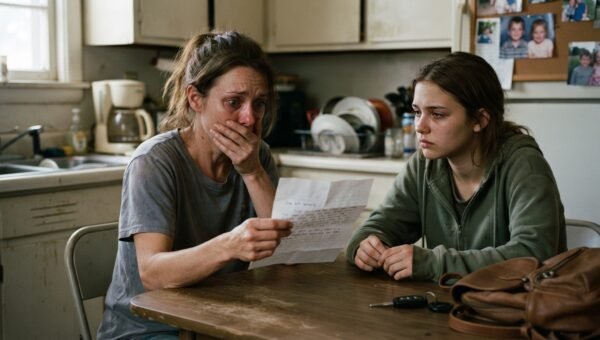
Mom was at the kitchen table beside the chipped sugar bowl and a stack of damp coats, sorting labels from a delivery of used baby furniture. Rain tapped the windows. Beyond them, the tidal lock was filling with the afternoon tide. I was peeling a price sticker off a dresser drawer when she said, “Vanessa needs your room. You can move your things to the utility room.”
I looked up. “You want me to sleep next to the furnace?”
“It’s only until we get everything settled.”
Vanessa lifted a crib rail and held it against the doorway to see if it would fit. “It’ll fit,” she said. Then she looked at me. “Honestly, Claire, you act like every inconvenience is a personal tragedy.”
Mom didn’t correct her. She smoothed a folded blanket across the table.
“And I have three days?” I asked.
“By Friday,” Mom said. “We need time to make the nursery.”
I set down the sticker. “I bought a house.”
Vanessa lowered the crib rail. “You bought a house?”
“For four hundred and fifty thousand dollars,” I said. “I’m moving in soon.”
Mom’s mouth tightened. I placed a closed folder beside the repair invoice. That folder held the answer to a question I’d been afraid to ask for four years.
Four years earlier, after Dad died, Mom told me the house was in trouble.
“We’re behind,” she said. “I don’t know how we’re going to keep it.”
I was still grieving, and I wanted to be useful. I paid the power bill. I bought groceries when the fridge was mostly mustard and a jar of pickles. When the outside steps started pulling away from the house, I paid to have them replaced because Mom said she couldn’t afford the repair and someone could get hurt.
Temporary, she called it. Just until things settled down.
I believed her. Not every time, maybe, but enough times to keep paying.
At the table, Mom tapped the folder with one finger. “You’ve been planning this and never told us?”
“I didn’t think you needed to approve it.”
“This is my house,” she said. “I decide how the rooms are used.”
I kept my voice level. “Then what document says you own it outright?”
Her hand stopped over the baby blanket. Vanessa gave a short laugh.
“You’re really going to turn this into some legal thing because I need a nursery?”
“I’m asking a question.”
Mom picked up a tiny sock and folded it in half. “You’ve always been so ungrateful.”
That used to make me explain myself. I’d list the bills I covered, the groceries I bought, the steps I paid for. I’d speak faster and faster, like if I showed enough receipts she might finally say, You’re right. I’m sorry.
This time I watched her avoid the folder.
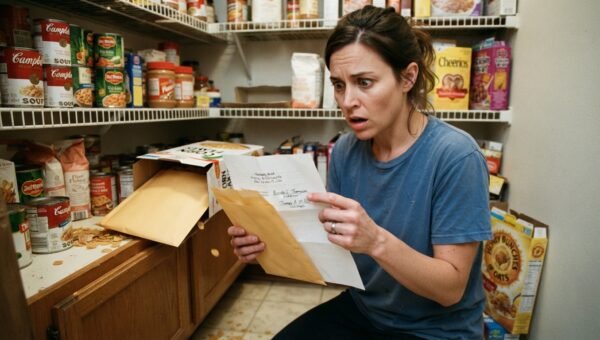
A few weeks earlier, I’d been looking through Dad’s old file boxes for a copy of the deed. I found a tin box in the attic with papers inside, including a bank authorization tied to the $186,000 in his estate. The signature on it was supposed to be Dad’s.
It wasn’t.
I knew his handwriting from years of birthday cards and notes he left on the counter.
He had a careful, steady way of making the letter A. The signature on that page leaned the other way. The pen pressed hard at the start, then dragged across the paper.
I don’t know why I remember the pressure so clearly. Maybe because I’d seen Mom write grocery lists on the back of envelopes for years, pressing so hard the writing showed through three pages. The signature looked like hers. I told myself I could be wrong. Then I noticed the transfer date and the amount, and I stopped telling myself anything.
I took the records to the county office. I sat at a counter under a clock that ran four minutes fast and asked for the property history. The clerk looked up the deed and printed a certified copy. My name was on it. Fifty percent ownership, recorded after Dad died.
The probate ledger showed the bequest. The bank record showed the $186,000 transfer. The date matched the mortgage payoff receipt. Mom had used the money to clear the balance without telling me, and the records also showed money going to cover Vanessa’s overdue accounts. Dad had left money meant to protect me. Mom had made it disappear, then spent years telling me we were barely managing.
I went back to the house with copies, not guesses.
Now, in the kitchen, Mom said, “I did what I had to do.”
I opened the folder.
The first sheet was the certified deed. I slid it across the table. The paper caught against the sugar bowl, so I moved the bowl out of the way.
Mom didn’t touch the page.
“What is that?” Vanessa asked.
“County records,” I said. “The deed.”
Mom looked down. Her mouth moved once before she said anything. “Your father wanted us to be taken care of.”
“He wanted the house paid off and half of it in my name.”
“You don’t understand what was going on then.”
“Then explain the signature.”
I put the bank authorization beside the deed. The page had Mom’s name on the account records. The signature on Dad’s release form had the same tight slant as her grocery notes. I laid the wire record next to it, then the probate distribution ledger.
The three papers sat between the baby socks and the repair invoice.
Mom’s fingers curled around the edge of the table. “I was keeping this family together.”
I stared at her. “You told me the house was going to be taken from us.”
“I had bills. Vanessa had bills. I was trying to keep the mortgage from hanging over us.”
“The mortgage was paid off with Dad’s money.”
“I didn’t know what else to do.”
“You could’ve told me I owned half the house.”
She looked toward Vanessa. “I was going to.”
“When?” I asked. “After I paid for another set of steps?”
Vanessa set the crib rail down. It made a dull knock against the floor. “Mom, what is she talking about?”
I didn’t want to make Vanessa into the person who’d done this. She hadn’t seen the records. But she’d been happy to take my room, and she’d never asked why I was the one paying for food or why Mom kept saying the lights might get shut off.
“Dad left $186,000,” I said. “Mom signed his name on the bank release. She used the money to pay off the mortgage and cover your overdue accounts.”
Vanessa looked at Mom. “You said we were still paying on the house.”
Mom didn’t answer.
“So Claire was paying the bills?” Vanessa asked.
“I helped,” I said. “I paid the power bills. I paid for the new steps. I bought groceries. I thought we needed it.”
Vanessa’s voice got smaller. “I didn’t know.”
“I know you didn’t.”
Mom pushed the deed back toward me. “You can’t just come in here and wave papers around.”
“I’m not waving them. They’re certified copies.”
“You’re my daughter.”
“I am. I’m also a co-owner.”
That was the part I’d never been allowed to say out loud. For four years I’d worked extra hours, saved what I could, and tried not to spend money on myself because Mom made every bill sound like a family emergency. I’d bought my own house two months before, after putting down a deposit and closing on it. I hadn’t told them because I knew the news would become a reason I should pay more, not a reason to leave.
Mom saw the folder and understood I’d found more than one old paper.
“Are you going to have me arrested?” she asked.
I took a breath. “I’m not filing a criminal complaint today. Dad wouldn’t have wanted this to turn into that.”
Her shoulders loosened a little, and I hated that I noticed.
“But I’m done paying your bills.”
“You can’t leave us like this.”
“You told me I had until Friday to move into a room beside the furnace.”
“That’s temporary.”
“I’ve heard that before.”
The word sat there between us. Vanessa rubbed her thumb along the crib rail. She didn’t ask me for the bedroom again.
I told Mom I’d be moving my things on my own schedule. I’d cancel the utility and service accounts in my name. If she wanted to change or sell anything about the house, she’d have to deal with me as a co-owner. I wasn’t giving up my share, and I wasn’t moving into the utility room.
Mom said, “You’re really going to leave us with all of this?”
I looked at the repair invoice under the folder. “You’ve had four years to tell me the truth.”
The next few days were mostly boxes and phone calls. I called the electric company, the internet provider, and the service people whose accounts were tied to my credit. I removed my name and gave Mom notice so she could put the bills where they belonged. She didn’t call to ask me to reconsider. She sent one text saying I was making things hard on everyone.
I packed my high-school room myself. I took Dad’s old tools, his cards, and the small things I’d kept because I thought I was still supposed to live there. I didn’t take the baby furniture. Vanessa could have it.
When I carried the last box out, rain had stopped. I looked once toward the tidal lock, then shut the car door. Mom and Vanessa would have to figure out the bills and the house without me covering the gap. If Mom wanted to keep the property, we’d have to talk about my half like adults, not like I was a tenant she could move when she needed a nursery.
I drove to my new house and put my key in the lock. The floor inside was clean hardwood, and afternoon light reached across it. I stepped in, closed the door behind me, and set the key on the bare counter.