PART 1
In the summer of 1998, when I was seventeen, babysitting in our small corner of western Pennsylvania paid three dollars an hour if you were lucky. Most families had you watch rowdy kids while they went to the diner, and at the end of the night, they handed you crumpled dollar bills fished out of an old coffee can.
Then a flyer appeared on the noticeboard at our local library. A family that had just leased a secluded ranch-style house on the wooded edge of our township needed a weekend evening sitter for four-year-old twins, a boy and a girl named Ethan and Clara.
When I went over for the interview, the house felt oddly quiet. The heavy forest blocked out nearly all the road noise, and the living room windows were covered by thick, dark curtains that were drawn tight even in the middle of a sunny afternoon. The father introduced himself simply as David, and his wife went by Evelyn. Neither offered a last name, and there was no landline telephone on the kitchen wall.
They did not ask me about high school, my family, or my hobbies. David sat across the glass kitchen table with his arms folded, his pale blue eyes focused intently on my face. He asked three things: was I capable of keeping my mouth shut about their home, did I have reliable transportation that would not break down, and could I follow precise schedules without making phone calls to friends.
When I answered yes, David opened a leather clip, pulled out a fifty-dollar bill, and laid it flat on the glass between us.
“We value privacy above everything, Megan,” he told me, his voice low, steady, and devoid of warmth. “We work in private wealth consulting, which requires quiet.
You will keep the twins inside, you will keep the back and front deadbolts turned, and you will not answer the door for anyone. If you do that, you will make fifteen dollars an hour in cash. Always left on the counter before we step out.”
Fifteen dollars an hour to a seventeen-year-old in 1998 was staggering. I took the job without hesitating.
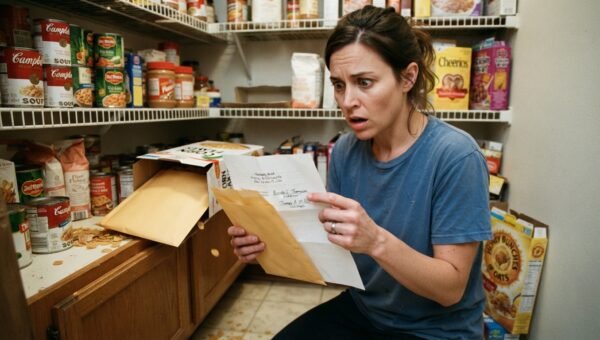
For six weeks, I went there every Friday and Saturday evening. The money was always on the counter, crisp and folded neatly. But the house never felt normal. There were no photographs on the walls, no children’s finger paintings taped to the refrigerator, and no mail sitting on the entryway table. The pantry was stocked entirely with bulk non-perishables and canned goods, as though they were living out of a supply depot.
Ethan and Clara were quiet, docile children. They rarely giggled or played roughly. Whenever a car drove past on the distant township road, both children would freeze, look at each other, and drop their toys.
They called David and Evelyn “Father” and “Mother,” but there were never bedtime stories, hugs, or gentle words when the couple walked out the door. It felt more like a barracks than a family home.
Then came the second Friday in August.
The heat had been suffocating all day. When David and Evelyn came down the hallway at six o’clock, they were dressed entirely in dark travel clothes. David carried a heavy black canvas duffel bag that strained at the seams, and Evelyn clutched a hard-sided briefcase against her chest.
David laid three one-hundred-dollar bills on the kitchen island.
“We have a closing in Pittsburgh,” David said, his voice clipped and hurried. “We will be back before midnight. Put the children down by eight sharp. Double-lock the utility door behind us and do not touch the curtains.”
“Yes, sir,” I said, putting the bills into my pocket.
They walked out through the garage, and their dark sedan pulled down the long gravel driveway without headlights until it turned onto the main road.
I gave the twins their soup, played a quiet game of cards on the living room carpet, and tucked them into their twin beds upstairs by eight o’clock. Both of them fell asleep almost immediately, clutching their small blankets.
I went back down to the kitchen, finished my algebra homework, and waited.
Eleven o’clock came and went. Then midnight.
By one in the morning, the house was dead silent except for the buzzing of the refrigerator.
By two o’clock, my stomach began to knot. David and Evelyn were never late. They were meticulous to the point of obsession. In six weeks, they had never returned a minute past midnight.
Three o’clock passed, then four in the morning. Outside the drawn curtains, the woods were pitch black. I began to panic, wondering if they had been killed in a wreck on Route 22. There was no house phone for me to call the state police or a hospital, and I was terrified to leave two toddlers alone to walk the two miles home in the dark.
Desperate for any sound or news, I clicked on the small television set in the corner of the living room.
The screen hummed, and the local news affiliate feed popped into view.
Across the bottom ran a bright red graphic: SPECIAL BULLETIN – ARMED FUGITIVE PURSUIT.
The anchor looked pale and somber. Behind his right shoulder were two photographs that made the blood freeze in my veins.
It was David and Evelyn.
“State and federal authorities have launched a massive manhunt across three counties,” the reporter said urgently. “The suspects, operating under several aliases including David and Evelyn Cross, fled a joint federal task force raid late yesterday evening in connection with a multi-state financial fraud and illegal adoption syndicate.”
My heart pounded so hard against my ribs I could barely breathe. I looked up at the ceiling, right toward the bedroom where the twins were sleeping.
Every bizarre detail of the last six weeks suddenly made horrible, sickening sense: the cash, the lack of pictures, the strict isolation, the paranoia about the windows.
Then the reporter looked directly into the camera and delivered the rest of the report.
“Investigators stress that the suspects are traveling heavily armed, and that two four-year-old children kept at an undisclosed location are in immediate, critical danger. Authorities believe the suspects intend to destroy their staging sites to eliminate all physical evidence before fleeing the jurisdiction.”
PART 2
The television screen cast flickering blue light across the dark living room, but the room felt completely hollowed out.
Eliminate all physical evidence.
The anchor was not talking about paper files or shredded documents. He was talking about this house, and he was talking about the children upstairs.
The news anchor went on:
“A high-speed pursuit on Interstate 79 ended thirty minutes ago when the suspects’ vehicle forced its way through a secondary roadblock near Washington County. One officer was injured before the vehicle escaped into the rural back roads. Troopers warn the public that the suspects are desperate, armed with tactical weapons, and believed to be returning to a safehouse in our viewing area.”
Returning here.
I hit the power button on the television, plunging the living room into absolute blackness. The silence was instantly terrifying. Every creak of the roof sounded like footsteps, and the wind outside the glass sounded like tires on stone.
If they had broken through a roadblock thirty minutes ago, they were only miles away. They knew the federal dragnet was collapsing around them. They were not coming back to pack luggage. They were coming back to clear their tracks.
I took off my sneakers, leaving them on the rug so my footsteps would be silent on the hardwood. I moved up the staircase on my toes, staying close to the wall where the risers would not groan.
I slipped into the twins’ bedroom. The room was warm and smelled of cedar and laundry soap. Ethan was curled on his stomach, and Clara had her hand tucked under her cheek.
“Ethan,” I whispered, kneeling between their beds. I pressed my hand gently to his shoulder. “Clara, wake up. Wake up right now.”
Ethan stirred, his eyes opening wide in the dim light. “Megan? Is Father back?”
“No, honey,” I said, keeping my voice entirely smooth and calm, though my hands were shaking violently. “We have to play a quiet game. We have to be as silent as little mice. Put your shoes on. Don’t turn on any lights, okay?”
Clara sat up, rubbing her eyes, immediately sensing the tension in the room. Her chin began to tremble. “Is it time to hide?”
The question turned my blood to ice. These four-year-olds already knew what hiding meant.
“Yes, sweetheart,” I said, slipping her canvas shoes onto her feet. “It’s time to play the hiding game. Put on your jackets. We are going out the back way.”
I grabbed their lightweight windbreakers from the closet. I did not take bags, and I left my purse and the three hundred dollars sitting on the kitchen counter below.
I took Ethan’s hand in my right and Clara’s in my left. We moved down the back staircase, avoiding the open entryway and the front windows, heading toward the utility mudroom that led to the attached garage and the small back patio.
Just as my foot touched the linoleum of the laundry room, the sharp, violent crunch of gravel exploded from the driveway outside.
Twin beams of headlights swept across the high transom windows, painting the kitchen ceiling in harsh, shifting white light. An engine sputtered, backfired with a sharp crack, and died.
A heavy car door slammed shut.
David had arrived.
PART 3
The sound of boots hit the front concrete steps.
I pulled Ethan and Clara back into the dark recess between the industrial water heater and the metal shelving unit in the utility room. Clara let out a tiny, frightened gasp, and I pressed my fingers gently against her lips, pulling both children hard against my knees.
Through the narrow frosted glass pane of the utility door, I could see two figures moving along the exterior walkway.
David was holding a heavy steel pry bar in one hand and a dark container in the other. Evelyn was right behind him, her voice a sharp, jagged hiss that carried right through the door frame.
“The state police have the highway junctions blocked, David! They know the vehicle description! We have ten minutes before the local deputies trace the registration!”
“The registration is under a fake shell company,” David snapped, his voice thick with raw fury. “They don’t have the house address yet. We douse the living room, pop the gas line on the range, and drop a flare. The structure will be leveled in twenty minutes. Go check the bedrooms. Get the bags from the closet.”
“What about the sitter?” Evelyn whispered. “Her car was parked near the tree line.”
“If she’s here, she goes with the house,” David growled. “No witnesses.”
The front door deadbolt clicked open with a loud metallic snap. The heavy wooden door banged against the hallway baseboard.
There was no way out through the front of the house, and the driveway was blocked by their car. The only exit was the patio door right in front of us, but stepping onto the open patio would put us in plain view of the side windows.
Then I remembered the utility room floor.
Two weeks earlier, while looking for a mop, I had moved a pile of heavy rubber floor mats and found an old rectangular crawlspace hatch cut into the plywood subfloor, built to access the plumbing lines under the addition.
I dropped to my knees, slid the rubber mats back, and hooked my fingers into the iron ring of the hatch.
The wooden door lifted with a quiet groan, releasing the smell of damp earth, rust, and cold limestone.
“Climb down,” I whispered directly into Ethan’s ear. “Catch your sister. Not a single sound, Ethan. Stand on the gravel.”
I lowered Ethan through the opening, feeling his small sneakers find purchase on the dirt two feet below. I lowered Clara down beside him. She was crying silently, her eyes huge in the gloom.
Above our heads, heavy boots stomped into the kitchen.
“They aren’t in the kitchen!” Evelyn’s voice shrieked from the hallway. “The TV is warm, David! Someone was watching the news!”
I swung my legs into the hole, pulled the wooden hatch back down over my head, and held it flush with the framing just as heavy footsteps walked into the laundry room directly above me.
Dust and dried bits of insulation sifted down through the floorboards onto my face.
“Check the bedrooms!” David shouted from above. “Hurry up! I’m opening the propane valve!”
The smell of rotten eggs, the heavy odor of escaping gas, began to drift down through the floor vents almost immediately.
I dropped onto my belly in the damp dirt. The crawlspace was barely