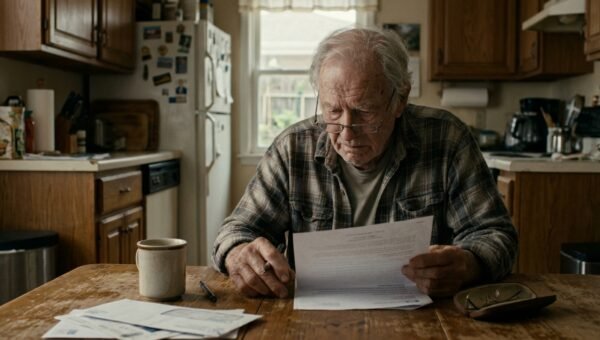
My hand was still on the damp carton when Arthur looked up and saw my wrist.
Rain tapped the windows above his bookshop. I’d brought a stack of wet boxes in from the storage room because a leak had soaked part of them, and I was trying to sort the books that might still be saved. The cardboard had gone soft at the corners. I remember that because it kept folding against my fingers.
Arthur’s eyes moved from my wrist to the fading mark near my collar. He didn’t ask me to sit down right away. He just looked at me, and I knew he’d seen enough.
“Emily, what happened?”
I tried to answer. Nothing came out. I sat in the chair across from him and pressed my sleeve over my wrist like that could make it less real.
“Vivian did it,” I finally said. “Dad was there. He heard her.”
Arthur lowered himself into the chair opposite me. He didn’t touch me or tell me I was overreacting. That mattered more than I knew how to explain then.
I was twenty-three. My mother, Claire, had been gone almost two years, and I was living in the house she’d left behind with my father, Richard, and his new wife, Vivian. I still had some of Mom’s old things in my room, but I didn’t feel like I belonged in the house anymore.
I was careful about what I said and where I stood. I even tried to be quiet when I opened the refrigerator.
Arthur asked what had been going on. So I told him, though I left things out at first. I said Vivian called me useless in front of relatives, then smiled when I looked hurt. I said she’d grab my arm or shove me aside when we were alone, then tell me not to make a scene. I didn’t mention every time. I couldn’t keep track of those.
The worst part was that Richard was usually close enough to hear. Vivian told him I was unstable, that I bruised myself and blamed her. After a while, he looked at me like I was one more thing he had to manage.
“He believed her?” Arthur asked.
“He said I was making things harder for everyone.”
Three days before I came to the shop, Vivian accused me of taking cash from the desk in her bedroom.
I hadn’t been in there. I said so, and she grabbed my wrist and twisted until I cried out. Richard came in while I was pulling away.
“Apologize to Vivian,” he said.
I did. Not because I’d taken anything. I wanted them both to stop looking at me.
I felt ashamed telling Arthur that, which is ridiculous. I know. But I’d been trying to keep peace for so long that it felt like a job I had failed at.
Arthur sat still while the rain tapped the glass. Then he offered me the spare room upstairs.
“You can stay here.”
“She’ll come after me,” I said.
“Are you afraid of what she’ll do?”
“Yes.”
He nodded as if that answer was enough. Then he got up and unlocked a narrow cabinet built into the study wall. He told me he needed to check the trust records before promising anything else.
I thought he meant the house, or maybe a way to keep Vivian from calling the police and saying I’d stolen something.
Inside the cabinet were ledgers, folders, and a thick packet in my mother’s handwriting. Arthur put it on the desk. The flap still had Claire’s signature across it.
“I’ve kept this sealed until I had reason to open it,” he said.
I watched him break the seal. My hands had started shaking again, so I held them together under the table.
The page inside named me sole beneficiary. I read the words, then read them again. I didn’t know what they meant in any real way. Arthur opened a ledger beside the packet and ran his finger down one entry. There was a transfer against property Mom had left behind. The name beside it was Richard’s.
“It means someone may have been moving what was yours,” Arthur said.
I couldn’t look away from Dad’s name. I had expected to see Vivian’s. I don’t know why. Maybe I still thought she was the one doing things while he stood by. It was easier than admitting he had signed something.
Arthur checked the routing number on the transfer slip against the account records in the folder. The money hadn’t gone into an account shared by Richard and Vivian. It had gone into an account under Vivian’s maiden name, hers alone.
I knew what her maiden name was from an old Christmas card. I’d never once thought about it being useful.
Arthur settled me in the spare room above the shop. The blanket smelled faintly of the cedar blocks he kept in the storage cupboard, and the old floorboard by the door made a small click when I stepped on it. I slept badly, but I did sleep. Nobody came down the hall to ask what I’d done wrong.
The next morning, I woke and listened for footsteps outside my door. There weren’t any. I felt silly for listening, but I still did it.
Downstairs, Arthur had made coffee. He showed me a handwritten letter Mom had attached to the trust terms. The letter wasn’t long. She’d written that she loved me and wanted me to have a safe home, but she’d also written about Richard’s spending. She worried he could be talked into putting the house at risk.
I didn’t know she’d been worried about that. She’d never said it to me. I was angry with her for about half a minute, then ashamed of being angry. She was gone, and she’d still found a way to leave me something I could use.
Arthur called Mr. Henderson, the family’s longtime estate attorney. He’d helped Claire and Arthur put the trust together. He said there had been a withdrawal draft on file four months earlier. It had gone through without Arthur’s signature because someone had submitted a waiver of notice that Arthur said he’d never signed.
Mr. Henderson asked us to come to his office. We went that morning. Arthur had the ledger and transfer slip with him, and I carried Mom’s letter in my bag. The office smelled like the powdery paper in the old books at the shop. I remember that part, though I can’t tell you what I wore.
Mr. Henderson explained what the trust did, but he did it slowly. Mom had put the home’s equity and her personal estate into a trust for me. Arthur was the trustee. Richard had signed papers to draw against the house without Arthur’s approval, saying there was an emergency home repair. The funds had gone straight to Vivian’s private account.
There were no emergency repairs. I knew that much. The kitchen faucet still dripped in the same place it had for years.
Mr. Henderson said the withdrawal had been made possible by the false waiver. He could freeze the account while the bank traced the money and began the process of recovering it. He also explained that the trust had a clause meant for exactly this kind of thing. I heard him say it, but he didn’t show me the page yet.
Arthur asked if Richard had a right to keep living in the house after what he’d done. Mr. Henderson said the deed was plain. If Richard encumbered the property without the trustee’s written approval, his right to live there ended and title passed to me.
I kept thinking about how many times Vivian had told me I didn’t need to cling to Mom’s things. She’d taken charge of the cedar chest and the papers inside, and I wasn’t allowed to open it. She’d acted like I was greedy for wanting to know what belonged to my own mother.
When Richard called that afternoon, I almost answered the way I always did. I could feel the old routine starting before I picked up. He told me I needed to pack my things and come home. He said I was causing family drama and that Vivian was upset.
I said I wasn’t coming back.
He went quiet. Then he told me not to make this harder than it had to be.
I said I’d already made my choice. After I hung up, I sat at the small kitchen table upstairs and stared at the coffee ring Arthur had left there. I kept thinking that I’d just refused my father. It sounded much bolder than it felt.
The next morning, Richard came to the shop alone. Arthur let him into the study but stayed beside the door. Richard didn’t look at me at first. He said he wanted me to come home, that there was no reason for lawyers and strangers to get involved.
I asked him why he’d signed the transfer.
He said Vivian had told him the house needed repairs. He said she handled the bills and knew what needed to be done. He wasn’t shouting. That almost made it worse. He sounded like a man who’d already decided there was nothing to see.
Arthur set the bank slip on the desk and turned it toward him. The account number was there, along with Vivian’s maiden name.
Richard looked at it for a long time. He tried to say that maybe the account was used for household expenses. He said Vivian had always been good with money.
I showed him my wrist. I’d taken the sleeve off before he arrived, but I hadn’t planned what I’d say. I just wanted him to see what he’d kept asking me to hide.
“She did this,” I said. “You saw her.”
His eyes went to the bruises and then down to the desk. He didn’t deny it. He didn’t say he was sorry, either. He asked me why I’d waited so long to tell him.
I had told him. I’d told him in pieces, in the kitchen, in the hallway, while he was checking his phone. I’d told him, and he’d decided it was easier to believe her. I said that, but quietly. I didn’t want him to turn my voice into the problem.
Then I handed him the formal audit notice Mr. Henderson had prepared. I didn’t feel strong. I felt sick and tired. But I held on to the paper and didn’t take it back.
That afternoon, Vivian came to the shop. She came in fast and loud, as if the noise itself would make the room hers. She said Arthur was meddling in her marriage and filling my head with lies. She said I was unstable and that she could have me declared unable to handle my own affairs.
I’d heard versions of that threat before. Usually Richard was there, and I would try to make her stop by agreeing with something. This time I stayed near the desk.
Arthur didn’t raise his voice. He placed the trust deed and the bank records on the desk. Mr. Henderson was there too. He’d come to explain the legal notice and make sure the next steps were handled properly.
Vivian reached for the papers. Arthur kept his hand on them.
The original deed was there, not a copy. The clause was written in the section Mom had signed and initialed. Mr. Henderson read it out loud. Any attempt by Richard to encumber the house without Arthur’s written approval ended Richard’s right to occupy it. The title and possession vested in me at once.
That was the page Vivian couldn’t talk her way around.
She said it was a mistake. Then she said Richard had only signed because she told him it was for repairs. Then she said Arthur had no right to use it against them. She moved between those answers so fast I couldn’t keep up.
Richard read the page himself. His finger stopped at the part that said his right to live in the house had ended. He looked up at me, but I couldn’t tell what he wanted me to do for him.
I didn’t rescue him from the truth.
Arthur set the bank routing slip beside the deed. Vivian’s account number matched. The waiver that had let the money move wasn’t Arthur’s signature. Mr. Henderson said the bank had frozen the account pending the review, and that the tracing showed the funds had gone to Vivian’s account, not to any repair company.
Vivian stopped arguing about the account. She said she could return the money. Mr. Henderson told her the bank was handling that now, and the records would be sent to the proper people. He didn’t threaten her or make a show of it. He just kept his hand on the papers.
I told her I wanted Mom’s cedar chest returned, along with everything inside it. I knew two pieces of Mom’s jewelry had been pawned. I said that too. The rest needed to come back intact, and if it didn’t, Mr. Henderson would include it in the audit.
Vivian started to say I couldn’t make demands in my father’s house.
I looked at the deed on the desk. “It’s my house now.”
I said they had thirty days to leave. I didn’t say it to punish my father. I said it because I needed a date I could hold on to, something clear that didn’t depend on his mood or Vivian’s next story.
Richard looked older than he had the day before. I wanted him to say he was sorry. He didn’t. He kept looking at the papers as if they might change if he read them again.
Arthur stayed with me while Mr. Henderson filed the notices. Because of the bruises and the threats, I also went through the steps to keep Richard and Vivian from contacting me directly while the case was handled. The bank kept the funds frozen during the review.
They moved into an apartment before the thirty days were up. The cedar chest came back to Arthur’s shop with the lock still on it. The silver pendant was inside, unbroken. Two other pieces were missing, the ones that had been pawned, and their return became part of the claim.
Richard and Vivian were no longer allowed to come to the shop or call me directly. I stayed with Arthur while I started figuring out what it meant to own the house and not be ready to live in it. That part took longer than the paperwork.
One rainy afternoon, I sat by the window in Arthur’s study with Mom’s silver pendant in my hand. The mark on my wrist had faded. My breath came in without me checking whether someone was in the hall.
The pendant rested against my collarbone, where Vivian’s fingers had bruised me. Outside, the street was quiet. I sat there and let it be quiet.