PART 1
The heavy canvas flap of the transport truck swung open into the cold pine air of Camp Huntsville, Texas, on December 15, 1944. My boots hit the packed earth, and the gravel crunched under my weight. I braced myself for the whips, the shouting guards, and the gray concrete cells our officers back in Normandy had sworn would await any captured German woman.
Instead, the first thing that reached me was not an order or a rifle butt.
It was the rich, unmistakable smell of beef stew simmered with carrots, onions, and bay leaves drifting from a wooden mess hall across the yard.
I stood there shivering in an oversized coat that did not belong to me, gripping the thin arm of my friend Liesel. We were two of forty German auxiliary women captured during the chaotic retreat across France weeks earlier. By the time the Americans loaded us onto the rail cars and finally onto these trucks, we had survived on little more than stale crusts of dark bread and canteen water that tasted of rust and zinc. My stomach had cramped into a tight, hollow knot two days before. Leaning against Liesel’s shaking shoulder, I felt the tight knot of fear that had kept me upright begin to unravel.
“Klara,” Liesel whispered under her breath, her voice barely carrying past the lapel of my coat. “Look at the tables. There are no bars on the windows.”
She was right. The wooden barracks looked like ordinary workhouses, built hastily from rough yellow pine, but the glass panes caught the low Texas winter sun without iron grates or mesh. A tall American sergeant wearing an olive wool coat walked down the line of trucks. He held a clipboard under one arm, but his pistol stayed snapped in its holster at his hip. He did not yell. He did not pull anyone down by the hair. He counted us with a flat pencil, moving his lips quietly as he tallied forty women, then nodded toward the open door of the mess hall.
“Inside,” he said in English, making an easy sweeping motion with his hand. “Come on. Warm up.”
We shuffled forward like ghosts. None of us spoke, terrified that any sound might break whatever strange truce this was. We had been told for five years that the Americans were savage, undisciplined brutes who showed no quarter to prisoners of war.
Every newspaper clipping on our garrison bulletin boards had painted them as merciless conquerors.
When we stepped across the threshold, the warmth of an iron woodstove hit my face like a blanket. Long wooden tables stood in rows, set with tin plates, real metal forks, and deep bowls. Behind a long zinc counter stood two American cooks wearing white aprons over their uniforms. One of them, a man with graying hair at his temples, dipped a ladle into a steaming cauldron and poured thick, brown stew into a bowl, handing it forward with a piece of white bread that looked like cake.
Liesel stopped dead in front of me. Her hand tightened on my sleeve until her knuckles went white. “It is poison,” she muttered, her eyes wide with panic. “They want to weaken us first.”
I looked at the bowl the cook was holding out. Steam rose from tender chunks of real beef, whole orange carrots, and rich gravy.
The cook did not sneer. He just held the tin bowl steady, waiting for her to take it, looking tired rather than cruel. My hunger was so deep it made my throat ache. I reached around Liesel, took the warm tin bowl in both hands, and accepted whatever fate came with it.
PART 2
The metal of the bowl warmed my numb fingers before I even took a bite. I broke off a corner of the white bread. In Germany, we had not seen white flour in four years. Everything had been sawdust and rye stretched thin by rations. I dipped the bread into the gravy and put it into my mouth. It tasted of real butter, salt, and broth. Tears sprang to my eyes instantly, not from sorrow, but from the shock of my own body realizing it was being fed.
Liesel watched me carefully, waiting for me to choke or collapse. When I took a second bite, she grabbed her own bowl with both hands and began eating so fast the gray-haired cook had to hold up a gentle hand.
“Easy, miss,” he murmured in slow, calm English. “Nobody is taking it from you.”
That was the first crack in the wall of lies we had lived inside. For the first two weeks in Huntsville, we waited every single morning for the cruelty to begin. We expected forced labor in freezing rain, roll calls that lasted hours in the mud, or interrogations designed to break our bones.
Instead, our routine was quiet and almost dull. We were assigned to mend uniforms, wash linens, and clean our own quarters. The guards outside the wire walked their posts with rifles slung over their shoulders, rarely looking into the yard. When the wind blew across the Texas scrubland, it carried the smell of dry grass and woodsmoke, not cordite.
Yet the fear did not disappear. It simply changed shape. We had been taught that the Reich was invincible, that our sacrifices in France were part of an orderly, noble defense, and that our families back home were safe under the protection of Berlin. But if the Americans were not monsters, what did that make everything we had been told?
By mid-January, the camp began receiving mail sacks from the Red Cross. Every afternoon, an American officer named Lieutenant Miller, who spoke stiff, formal German, would stand on a wooden crate near the supply shed and call out names. A letter meant someone was still alive in Hamburg, Dresden, or Munich. A missing letter meant silence.
On January 22, my name was finally called.
I stepped forward to take the gray envelope from Lieutenant Miller. The paper was thin, stamped three times by military censors, with heavy black ink lines crossing out half the sentences. It was from my mother in Stuttgart.
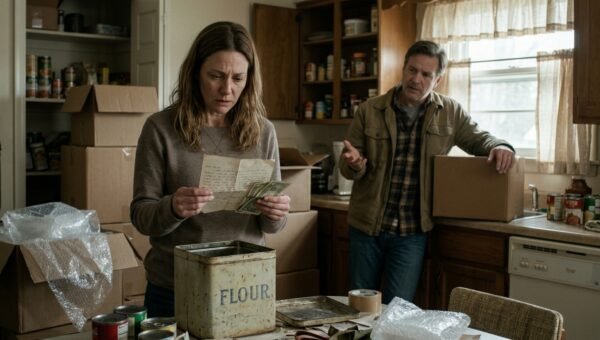
I sat down on the edge of my cot, my hands shaking as I smoothed the creases. My eyes skipped past the blacked-out lines to the few sentences that remained intact. My father’s machine shop was rubble. The street we grew up on was gone. But at the very bottom, in her cramped, hurried script, she had managed to write a sentence the censor had somehow overlooked: “Do not come back here, Klara. There is nothing left to defend, only ash and old men.”
PART 3
The paper shook in my fingers until Liesel sat down beside me, placing her hand over mine.
“Is your brother safe?” she asked quietly.
“She did not mention Hans,” I said. My voice sounded thin and foreign to my own ears. “She said the street is gone.”
That evening, I could not sit in the mess hall. I took a single ration biscuit and walked out to the small gravel area behind the laundry shed. The Texas sky was vast and indigo, completely unlike the narrow, cloud-choked valleys of the Black Forest. In the distance, beyond the wire perimeter, the pine trees stood dark and indifferent to the war destroying Europe five thousand miles away.
Sergeant Evans, the tall guard with the wool coat, was leaning against the wooden railing near the supply dock, smoking a cigarette. He saw me standing by the fence and pushed himself off the rail. I immediately stiffened, pulling my arms to my sides the way we had been trained to stand for officers.
He stopped five paces away, took a drag from his cigarette, and pointed toward the paper still clutched in my left hand.
“Bad news from home?” he asked.
I knew only a handful of English words from school, but the tone of his voice needed no translation. It was the same tired tone my father used when a customer could not pay for repairs.
“Stuttgart,” I said simply. “Boom. Kaputt.”
Sergeant Evans looked down at the ground for a second, tapping the ash from his cigarette onto the gravel with the toe of his boot. He reached into his coat pocket and pulled out a worn leather wallet. He flipped it open and held it out toward me.
Under the clear celluloid sleeve was a small black-and-white photograph of a young woman standing on a porch with two small children, a boy and a girl, holding wooden toys.
“Ohio,” he said softly. “My brother went down in the Pacific six months ago. My mother writes me letters just like yours.”
I looked at the woman in the photograph, with her plain cotton dress and her hands resting on the children’s shoulders. She had the same worried look in her eyes that my mother had worn every day since 1939. There was no hatred in the sergeant’s face. There was only the dull, heavy exhaustion of an ordinary man caught in the same machine that had chewed up my own family.
“I am sorry,” I whispered, finding the words carefully.
He looked at me, gave a slow nod, and closed the wallet, slipping it back into his pocket. “It will be over soon,” he said, turning back toward his post. “Just stay alive, miss.”
ENDING
The war in Europe ended four months later, in May of 1945. When the news came over the loudspeaker in the camp yard, there were no cheers. A few of the women wept quietly against the wooden barracks walls, terrified of what they would find when they were sent back across the ocean.
We stayed in Huntsville until the repatriation ships were organized in the spring of 1946. By the time our departure day arrived, the rough barracks had become a strange kind of sanctuary. We had planted small rows of beans along the foundation, and the Texas red dirt had worked its way into the seams of my boots so deeply it could never be scrubbed out.
On the morning we boarded the trucks to Galveston, Sergeant Evans was standing by the gate, checking our names off his clipboard one final time. When I reached the tailgate, he did not say goodbye, but he handed me a small brown paper bag.
Inside was a piece of white bread, an apple, and the silver cap from an ordinary tin of Texas peaches.
I rode all the way to the coast with that silver cap pressed tight into the palm of my hand. Back in Germany, I found Stuttgart just as my mother had described: hills of brick, streets with no names, and a silence so deep it felt like the earth itself had stopped breathing. My brother Hans never returned from the eastern front.
I lived through the rebuilding, through the hard years of reconstruction, and eventually raised two daughters in a small flat overlooking the rebuilt neck of the river. Whenever someone in my neighborhood spoke bitterly about the Americans, or whenever old memories tried to convince me that the world was divided neatly into monsters and heroes, I would think back to the pine trees of Huntsville.
I never forgot the smell of that warm beef stew on a freezing December afternoon. It was the moment I learned that cruelty is easy to teach, but simple human decency can tear down five years of lies in a single bowl.