PART 1
Three years ago, Lily needed $92,000 upfront before the surgical team in Boston would schedule the trial procedure that could have saved her life.
I sat at my parents’ dining room table with my bank records, two maxed-out credit card statements, and the estimate sheet on Boston Children’s letterhead. My hands were shaking so badly I had to press my palms flat against the varnished oak just to keep from knocking over the iced tea my mother had poured.
“We don’t have it, Nora,” my father said, not even looking down at the numbers. He took off his reading glasses and folded them slowly. “You know how tight things are. If we had that kind of cash sitting around, of course we’d give it to you. But we just don’t have it.”
My mother touched my wrist, her voice soft and full of practiced sorrow. “We’re praying every night, honey. God has a plan for our sweet girl. You have to put your trust in the Lord, not just doctors.”
I left their house believing them. I sold my car and bought a twelve-year-old Corolla. I took out a second lien on my small two-bedroom house. I worked double shifts at the clinic, pulling sixty hours a week while my sister-in-law watched Lily during the day. But we couldn’t raise the $92,000 in time. Lily’s body gave out on a Tuesday morning in November, two weeks shy of her eighth birthday.
Her small fingers went cold in mine while the monitors flatlined, and the hospital social worker had to peel me off the bed sheets.
Twenty-three days after we buried my daughter, my brother Daniel invited the entire family over for a Sunday barbecue.
He didn’t host it at the modest rental apartment he shared with his wife. He sent out a pin drop for a newly built, four-bedroom colonial in an upscale subdivision twenty miles outside Cleveland. When I pulled up in my dented Corolla, there were balloons tied to the mailbox.
Daniel met me in the driveway with a beer in his hand, grinning ear to ear. “Come check out the basement, Nora! Dad helped me put in a wet bar.”
Inside the kitchen, my mother was arranging cold cuts on a marble island. On the counter sat the settlement paperwork from the title company, left wide open next to a basket of housewarming muffins.
I glanced at the buyer settlement statement. The cash from buyer line showed an exact wire transfer from my father’s investment account: $140,000 down payment, clear as day, stamped two weeks before Lily passed away.
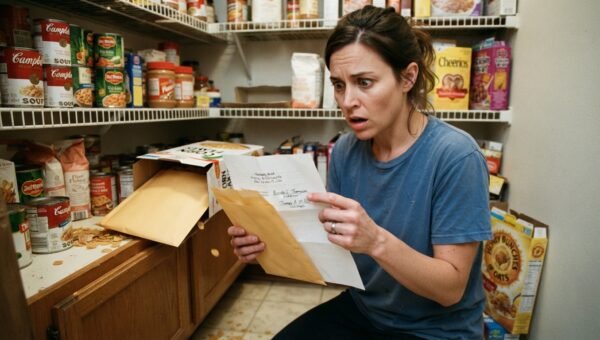
When I confronted my father by the pantry, his face darkened with irritation.
“Daniel has his whole future ahead of him,” he whispered harshly, grabbing my arm to pull me away from the other guests. “He has a career. A family to build. That clinic in Boston was an experimental long shot and you know it. We weren’t going to throw our life savings into a hole for false hope.”
I walked out of that house and never spoke to any of them again. I changed my phone number, blocked them on every platform, and moved across town so I would never run into them at the grocery store.
For three years, that silence was my only peace.
Then, two nights ago, my phone rang at work. It was the night charge nurse at Cleveland Clinic calling down to my outpatient unit.
Daniel had been brought into the emergency department in acute end-stage renal failure, complications from an untreated autoimmune flare. His kidneys were failing fast, dialysis wasn’t stabilizing him, and he needed an immediate directed donor match.
The hospital lights illuminated the third-floor hallway as the smell of harsh floor disinfectant stung my throat. I stood outside the waiting room doors with my purse gripped against my ribs.
My mother spotted me from across the room. Her hair was unwashed, her cardigan mismatched, and when she threw herself against my chest, she was sobbing so hard she could barely breathe.
“Nora, thank God,” she wept, her fingers clutching my jacket sleeves. “The doctors said siblings have the highest match rate. Please. He’s your brother. He’s going to die if you don’t get tested tonight.”
PART 2
The waiting room chairs were the stiff vinyl kind that squeaked whenever someone shifted weight. Across the room, Daniel’s wife was sitting with her head in her hands, her eyes swollen and red, while my father stood near the water cooler staring at the floor.
“Nora, please,” my mother pleaded, her grip tightening on my coat. “The transplant team is already here. Dr. Bennett said they can draw your blood right now and rush the crossmatch. You could be prepped by tomorrow morning.”
I looked down at her hands. The gold charm bracelet she wore jingled against my buttons. It was the same bracelet she wore at Daniel’s housewarming three years ago, the one with the little silver angel charm she had added for Lily after the funeral.
“Where is his paperwork?” I asked. My voice sounded flat, even to my own ears.
“What?” my mother asked, wiping her cheek with the back of her wrist. “What paperwork?”
“His medical records. If he’s in acute failure, someone had to sign the emergency intake.”
My father walked over then, his steps slow and heavy. In three years, his hair had turned entirely silver, and his shoulders curved inward. He looked like an old man whose pride was finally running out of room to hide.
“I signed them, Nora,” he said quietly. “His creatinine is over twelve. His potassium won’t stay down. The doctor said he might not make it through the week without an organ. We called you because you’re his only sibling. We didn’t know what else to do.”
“You found my number,” I said.
“We called your clinic,” he admitted. “We begged the front desk to transfer us to your extension.”
The door to the consultation room swung open, and Dr. Bennett stepped out. He had a clipboard tucked under his arm and tired eyes behind thin wire frames. He looked between my parents and then stopped at me, noticing the employee badge hanging from my lanyard.
“You must be Nora,” Dr. Bennett said, extending a hand. “I’m the surgical fellow on call with the transplant team tonight. Your parents said you were on your way. If you’re willing to be screened, we need to take you back to the lab immediately. We’re running out of time to get ahead of the toxicity.”
“Can I see him first?” I asked.
Dr. Bennett hesitated. “He’s sedated right now, but you can step inside for a minute. Then we really need to get the labs started.”
He led me through the double doors into the intensive care bay. Daniel looked smaller than I remembered. His skin had a dull, yellowish gray cast, and his face was puffy from fluid retention. Tubes snaked out from his neck and arms, connected to bags of saline and medication pumps that hummed a steady, mechanical rhythm.
This was the boy who had toasted his new granite countertops while my child was dying in a pediatric ward three hundred miles away. This was the son whose future was worth $140,000, while my daughter’s life was deemed a bad investment.
My mother slipped into the room behind me, hovering near the foot of the bed. “Look at him, Nora. He has two little boys at home now. They need their father. You can save him. God brought you here tonight for a reason.”
I turned away from the bed. On the small plastic side table lay Daniel’s personal effects in a clear plastic hospital bag: his wallet, his wedding band, and his car keys. On the keyring was a metal fob with the name of his subdivision stamped on the back.
Dr. Bennett came back into the room holding a sterile blood collection kit and a clipboard with the initial consent forms.
“Nora, if you’re ready, we can do the preliminary draw right here,” the doctor said, clicking his pen. “We’ll run the tissue typing and the panel reactive antibodies overnight.”
PART 3
The room was so quiet that the only sound was the rhythmic hiss of Daniel’s oxygen line and the low hum of the IV pumps.
My mother took a step toward me, her eyes wide with desperate expectation. “Roll up your sleeve, honey. Please. Just let him take the blood.”
My father stood in the doorway, his hands trembling at his sides, watching me with an expression I had never seen on his face before: sheer, helpless terror.
I looked at Dr. Bennett. Then I looked at the consent clipboard in his hands.
“I won’t be signing that,” I said.
My mother let out a sharp gasp, like someone had struck her across the face. “Nora! What are you saying? He’s your brother!”
“Three years ago, Lily needed $92,000 for a clinical trial in Boston,” I said, keeping my voice level and clear. “I sat at your kitchen table and begged you for help. You told me you had nothing. You told me you were praying for her.”
“That was different!” my mother cried, tears spilling over her lashes. “That was money, Nora! We didn’t know if that treatment would even work!”
“You had $140,000 in cash,” I said. “You wired it to Daniel’s title company twenty-three days later so he could have a four-bedroom house with a wet bar in the basement. You decided my eight-year-old child was a bad bet, but his mortgage was an investment.”
My father stepped into the room, his voice cracking. “Nora, that was our mistake. Blame me. Punish me. Don’t let your brother die for something I did.”
“Daniel knew,” I said, pointing at the bed. “He took the keys. He stood in that driveway with a beer in his hand and showed me the basement while my daughter’s clothes were still sitting in laundry baskets in her bedroom. He knew exactly where that down payment came from. He didn’t care.”
“He was young, Nora!” my mother sobbed, grabbing at my elbow. “He wasn’t thinking! You’re his sister! How can you stand there and watch him die?”
I pulled my arm out of her grip, stepped back, and picked up my purse from the visitor’s chair.
“I’m not watching him die,” I said. “I’m just giving him the exact same thing you gave Lily.”
I looked directly at Dr. Bennett. The doctor was standing frozen by the counter, the unopened needle package still resting between his fingers. His mouth parted slightly as he looked from my mother’s tear-streaked face to my father’s bowed head, taking in the full weight of what had just been laid out in that room.
“So that’s a…?” Dr. Bennett started, his voice trailing off as he stared at me.
“That’s a no,” I said. “Put him on the national registry. Let him wait his turn like everybody else.”
ENDING
I walked out of the intensive care unit and down the long, fluorescent hallway. Behind me, my mother’s screams echoed off the tile walls, followed by the muffled sound of hospital security being called to calm her down. I didn’t turn around. I didn’t speed up. I walked out through the automatic glass doors into the cold Cleveland night air.
Daniel didn’t die that week.
Two days later, the hospital managed to stabilize him with emergency peritoneal dialysis. Because his condition was critical, he was placed on the national deceased-donor transplant list. From what an old mutual acquaintance told me months later, my parents ended up taking out a massive reverse mortgage on their own house to pay for his ongoing home dialysis treatments, specialized in-home nursing, and the mountain of out-of-pocket medical bills that insurance refused to cover. The four-bedroom house Daniel loved so much had to be sold at a loss the following spring to keep them from going into bankruptcy.
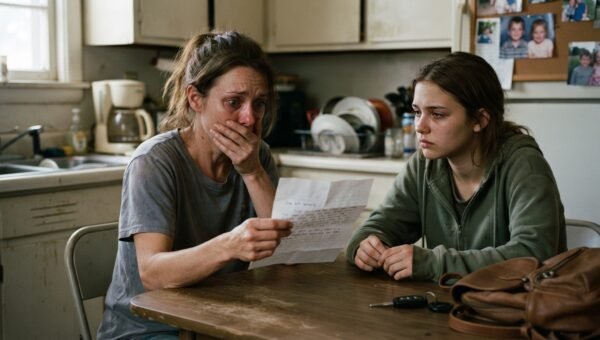
My father sent me three handwritten letters over the next year. I never opened them. I kept them in a small metal box in my closet, right next to the Boston Children’s estimate sheet and the prayer card from Lily’s service.
Sometimes, late at night, I sit on my front porch and think about that hospital room. People think anger is loud, but the truth is, real grief is quiet. It strips away all the obligations you thought you owed to people who never valued you in the first place.
Yesterday was Lily’s birthday. I drove out to the cemetery in the afternoon with a bunch of yellow daisies, the ones she used to pick from the cracks in our old driveway. I cleared the dry autumn leaves away from her small stone, set the flowers down, and sat in the grass until the sun went down.
For the first time in three years, my chest didn’t feel tight when I breathed. I had given everything I owned to save my daughter, and I had nothing left to give away to the people who let her go.