PART 1
I stood in the bakery aisle at King Soopers on December twenty-fourth with a ribbon-tied chocolate fudge cake in my right hand and a warm apple pie in my left. My phone was pressed between my ear and my shoulder while cart wheels squeaked past me on the linoleum floor. The store was packed with last-minute shoppers grabbing rolls and butter, but I had a clear schedule. My drive out to my parents’ ranch style house in Littleton was supposed to start at five o’clock.
I shifted the cake box to my wrist and smiled into the phone. “Mom, quick question before I hit the checkout line. Would you prefer chocolate cake or apple pie tonight?”
The line went completely dead. Not disconnected, just hollow and still, the way a room goes when someone drops a glass and nobody wants to move first.
“Mom? You still there?”
She cleared her throat, but her voice came out thin. “Oh… we celebrated yesterday.”
I laughed out loud. I actually leaned against the display case and chuckled because my mother had always been terrible at teasing. “Very funny. I’ve got the ham in a cooler in the trunk and the whole casserole prepped. What time do you want me over?”
Before she could answer, there was a violent scuffle over the speaker, the sound of cloth scraping against the microphone, and my father’s heavy breathing took over. He did not ease into it.
“Christmas was better without you,” he said. His voice was flat, loud, and harsh enough that the woman picking up dinner rolls two feet away glanced up at me. “We had Donna, Greg, and the kids here last night. We opened everything. We had dinner. Nobody was walking on eggshells, and nobody had to pretend. Don’t come out here today, Rachel. We’re done.”
The call clicked off.
I stayed completely still in the middle of the grocery aisle. The fluorescent lights hummed overhead. A woman in a red winter coat apologized as her cart bumped my heel, but I barely felt it. My thumb hovered over the screen, ready to redial, but my fingers would not obey. My father did not bluff, and he never apologized.
For four years, every single December had followed the exact same script. My younger sister Donna, who lived thirty minutes away and never paid for a thing, was the golden child.
I was the responsible oldest daughter, the one who worked fifty hours a week managing commercial property leases and wrote the checks that kept my parents from losing their home.
Ten months earlier, when my father’s small engine repair shop finally went under, the bank had served them with a notice of default. They owed thirty-two thousand dollars in back payments and second-mortgage arrears, and the foreclosure sale was six weeks away. Donna had cried, hugged them, and told them she was praying for them. Then she drove back to her subdivision in a leased SUV.
I was the one who went to the bank. I took out a sixty-thousand-dollar home equity loan against my own paid-off townhouse, cleared their arrears, and bought out the deed under an agreement where I took legal ownership of the property while they held a life estate contingent on them covering the basic property taxes and maintenance.
To help them even more, I paid their property tax bill myself every November. I had paid eleven thousand four hundred dollars just six weeks ago so they wouldn’t have a lien placed on the parcel.
And now, my father had taken the phone from my mother to tell me Christmas was better without me.
I looked down at the chocolate cake in my hands. The bakery box had a clear plastic window showing the thick dark frosting and red sugar holly leaves. Near the customer service desk by the exit, a young woman was kneeling on the salt-stained mat, trying to zip up the faded coat of a little girl who could not have been older than five. The mother’s face was worn out, pale, and tight with the specific kind of exhaustion that comes from counting quarters. The little girl was staring at the bakery display with wide, quiet eyes.
I walked over to them.
“Excuse me,” I said, keeping my voice very level. “The bakery boxed this up for me by mistake, and they won’t take it back once it leaves the counter. Would you two like to have it?”
The mother hesitated, looking at me with that immediate guard people put up when they are struggling. “We can’t pay you for that, ma’am.”
“You don’t have to pay a dime,” I said. I set the cake box gently in the little girl’s mittens. “Merry Christmas.”
The little girl looked up at her mother, who let out a slow, trembling breath and nodded. “Say thank you, sweetie.”
“Thank you,” the girl whispered, hugging the box against her chest.
“You’re very welcome,” I said.
I walked out into the cold Colorado air without buying the apple pie. The parking lot was slushy and gray under an overcast sky. I got into my sedan, shut the door, and locked it. I did not cry. When someone slaps you with the truth after years of carrying them on your back, tears feel like a waste of energy.
Instead, I sat in the driver’s seat and looked at the glove compartment. Inside was the large manila envelope I had picked up from my title attorney’s office on Friday morning. It contained their biggest holiday gift: a formal deed transfer and full debt forgiveness agreement that would have signed the house back into their names outright, free and clear of the fifty-four thousand dollars in remaining principal they technically owed me.
I pulled the envelope out, set it on the passenger seat, and started the engine.
PART 2
I drove the thirty-five minutes back to my townhouse in Centennial instead of heading west toward Littleton. The snow had started to fall in tiny, granular pellets that rattled against the windshield.
Inside my quiet house, the dining room table was still set with four place settings, red cloth napkins, and the silver flatware my grandmother had left me. I walked straight past it into my home office, took off my winter coat, and sat down at my desk.
I opened the manila envelope. The legal documents had been drawn up by Arthur Vance, an attorney I had worked with for eight years on commercial lease contracts. The top document was a Quitclaim Deed, transferring the property at 418 Elmwood Drive back to Arthur and Helen Miller as joint tenants. Underneath it was a formal Promissory Note Release and Satisfaction of Mortgage, wiping out every dollar they owed me under our private financing agreement.
I had spent two months putting it together. I thought handing them the unencumbered deed on Christmas Eve would finally give my father his pride back. I thought it would stop the bitter, cutting comments about how I was “the landlord” now. I thought it would make them look at me the way they looked at Donna, who never brought anything to their table except compliments and laundry she needed Mom to wash.
I picked up my desk pen, slid the quitclaim deed into the center drawer, and pulled out my laptop.
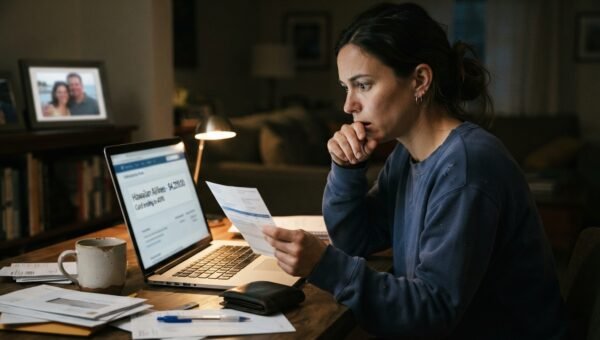
I logged into my online banking portal. Every month on the twenty-sixth, an automated transfer of two thousand two hundred dollars left my checking account to service the primary loan I had taken out against my townhouse to clear their original default. On top of that, I paid their homeowner’s insurance policy, their water district fee, and their natural gas bill through my primary bill-pay center. They had stopped contributing their agreed-upon four hundred dollars a month back in August, claiming my father’s heart medication had gone up in price. I had let it slide.
I looked at the transaction history. Over the last four years, between the original bailout, the property taxes, the insurance, and the monthly subsidies, I had spent ninety-two thousand four hundred dollars keeping my parents in that house.
While I was looking at the screen, my phone buzzed on the blotter. It was a text notification from Donna’s Instagram account. I rarely checked social media, but my phone was set to alert me when immediate family posted.
I opened the app.
There was a photo album posted twelve hours earlier, late on the evening of December twenty-third. In the first picture, my parents’ living room was packed. My father was sitting in his green recliner wearing a new wool sweater, smiling broadly with a bottle of beer in his hand. Donna, her husband Greg, their three children, and Donna’s in-laws were all gathered around a mountain of opened wrapping paper. In the center of the coffee table was a roast prime rib.
The caption written by Donna read: “The annual Miller Christmas dinner! So blessed to have a quiet, peaceful family holiday without the usual bossy tension. Best Christmas in ten years. Just the people who truly love us.”
I zoomed in on the background. Resting on the counter behind Donna was a set of four brand-new commercial snow tires with the receipt taped to the cardboard wrap. My father had told me three weeks ago that his truck was unsafe to drive in the winter and that he couldn’t afford tires because his pension check had been delayed. I had sent him eight hundred dollars through Zelle the very next morning.
They hadn’t celebrated early by accident. They hadn’t run out of room. They had deliberately planned an entire holiday dinner twenty-four hours before our scheduled family evening specifically to exclude me, invite Donna’s in-laws, and enjoy the food and gifts bought with the cash I had sent them.
My hands did not shake. That was the strangest part of it. When you spend years trying to earn love from people who only view you as an unpaid utility company, the moment you finally stop trying feels like someone opening a heavy door in a stuffy room.
I clicked on my bill-pay portal.
I canceled the recurring payment of two thousand two hundred dollars scheduled for December twenty-sixth. Then I canceled the automated payment for the Elmwood Drive homeowner’s insurance policy, which was due on January fifth. Next, I removed my debit card from the regional water district account and the Xcel Energy account tied to their address.
Finally, I opened my personal files and pulled out the original contract we had signed in Arthur Vance’s office four years ago. It was a clear, legally binding Life Estate with Maintenance Covenants. Clause 8 explicitly stated that if the life tenants failed to maintain independent liability insurance or allowed the property to default on municipal assessments, the life estate was subject to immediate administrative revocation by the deed holder upon thirty days written notice.
I drafted a short, formal letter.
“Dear Arthur and Helen,
Per your statement on December twenty-fourth that our family relationship has concluded, I am immediately transitioning 418 Elmwood Drive to standard commercial terms. All financial subsidies provided by me, including insurance, utilities, and debt coverage, have been terminated as of today.
You have thirty days to secure independent property insurance and assume direct payment of the municipal liens. If you cannot refinance the remaining balance of fifty-four thousand dollars to buy the title outright by January thirty-first, the property will be listed for sale on the open market per Clause 8 of our recorded agreement.”
I signed it. I made two copies. Then I scanned it and sent it directly to Arthur Vance’s office email with a note asking him to serve it formally on December twenty-sixth.
PART 3
At precisely three-fifteen that afternoon, three hours after my father hung up on me, my cell phone rang.
The screen lit up with my mother’s name.
I picked it up on the fourth ring. “Hello, Helen.”
Her breath hitched. She never liked it when I called her by her first name. “Rachel? Oh, thank God you picked up. Your father didn’t mean it. You know how he gets when his back is acting up. He was just tired, honey.”
“He sounded very clear to me,” I said evenly. “He said Christmas was better without me and told me not to come.”
“He was just blowing off steam because the kids were running around all morning!” she pleaded, her voice rising in pitch. “We want you to come out. Donna just left to go to her mother-in-law’s, and we have plenty of ham left. Please, Rachel. Just drive out.”
“I saw the photos on Instagram, Mom.”
Silence fell over the line again. It was the second time that day she went mute, but this time I could hear her fingers tapping nervously against her kitchen counter.
“That wasn’t Donna’s fault,” she stammered. “Greg’s parents could only make it yesterday, so we just had a little dinner. We were still going to see you today.”
“With the tires I bought Dad sitting on the counter?”
“Rachel, please—”
“I don’t care about the dinner anymore, Mom. But you should know that I was sitting in my office when Donna posted those pictures. I was looking at the paperwork that Arthur Vance drew up.”
Her voice went from nervous to pure panic in a fraction of a second. “What paperwork? Rachel, what did you do?”
“I had the deed transfer ready. I was bringing the paperwork to your house tonight in a gift box. I was going to forgive the fifty-four thousand dollars and sign the house back over to you and Dad so you could own it free and clear.”
She gasped. “You… you had the deed?”
“I did. And then Dad told me Christmas was better without me, and I realized something. You don’t want me in your family. You just want the roof over your head, and you want Donna to get the credit for being a loving daughter while I pay the bills.”
“Rachel, no! Don’t do this! Don’t touch the house, please! We’re your parents!” she screamed into the phone. I could hear my father in the background asking who she was yelling at, his voice booming until she shrieked at him to shut up. “Rachel, please, begging you, don’t touch the house! Where are we going to go? We can’t qualify for a bank loan! You know Dad’s credit is ruined!”
“You should have thought about where you were going to live before you treated me like a stranger who only exists to write checks,” I said.
My father must have ripped the phone from her hand because his voice cracked through the receiver like iron. “Rachel, you listen to me! That is our house! My father built that garage! You can’t throw your own family out in the street over a hurt feeling! We raised you!”
“I bought that house at a sheriff’s auction four years ago, Dad. I hold the sole warranty deed. The only reason you’ve been sleeping under that roof is because I paid sixty thousand dollars out of my own retirement savings and carried the notes every month while Donna brought you cookies.”
“You’re a cold, spiteful girl,” he snarled. “You always were.”
“Maybe I am,” I said, looking down at the empty quitclaim deed on my desk. “Smiling at my paperwork right now, I know it’s too late. The subsidies are stopped. The insurance is canceled. Arthur Vance is serving you the formal notice on the twenty-sixth.”
“You wouldn’t dare,” he whispered.
“Merry Christmas, Dad.”
I hung up the phone and turned the ringer off.
ENDING
The house in Littleton didn’t go to the sheriff’s sale, because Donna’s husband Greg suddenly found out that family pride had a price tag.
When Arthur Vance served the thirty-day cure notice on December twenty-sixth, my parents ran straight to Donna’s house, assuming their favorite daughter would handle it. But Greg was an accountant. When he realized that my legal claim was ironclad and that the property would be placed on the open market if they didn’t act, he had to make a choice. If the house sold, my parents would have to move into Donna’s finished basement, occupying the space Greg used for his home theater and golf simulator.
Two weeks later, Greg co-signed a hard-money private mortgage to buy me out.
It was messy, expensive, and carried an eight percent interest rate, but on January twenty-eighth, Arthur Vance’s escrow account received a wire transfer for fifty-four thousand two hundred dollars, representing the exact principal and legal fees owed to me. I signed the deed over to the new lender’s trust, handed over the keys I still carried on my ring, and closed the file.
Donna blocked me on every platform the day the wire cleared. My mother tried calling once in March, leaving a tearful voicemail asking if I would pay for Dad’s hearing aid batteries, but I didn’t call back. I saved the voicemail to a backup drive, deleted it from my phone, and kept walking.
By May, I used the fifty-four thousand dollars to pay down the remaining balance on my own townhouse mortgage, leaving me completely debt-free at fifty-two years old.
The following Christmas, I didn’t go to King Soopers on Christmas Eve. I didn’t buy a ham, and I didn’t look at bakery cakes.
Instead, I booked a small cabin outside of Breckenridge for four days. On the afternoon of the twenty-fourth, I put on my wool socks, made a pot of coffee, and sat by the window watching the snow drift over the blue spruce trees on the ridge. There was no shouting over the phone. There were no place settings waiting for people who secretly resented me for keeping them afloat.
On the small side table next to my armchair sat a clean, empty legal folder with my own paid-in-full deed inside. I took a sip of hot coffee, listened to the quiet fire crackling in the hearth, and enjoyed the best Christmas I had ever known.