PART 1
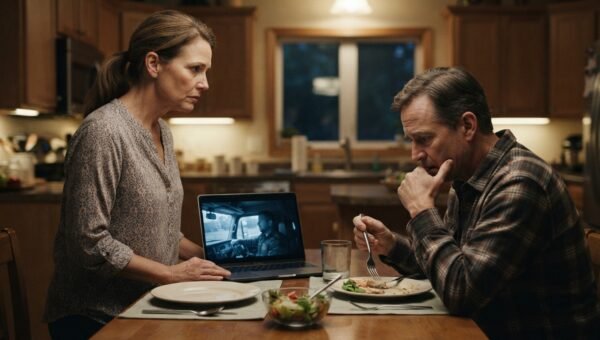
My daughter Elise and I run a small school-bus company, and on Tuesday she asked me to sign an inspection form saying the wheelchair lift on Bus 12 had passed its check. A student had been left waiting in the rain because the lift stopped halfway up the ramp that morning.
Elise put the form on the dispatch desk between us. “The district wants it by noon,” she said. “If we miss the deadline, they can pull the route.”
I looked at the box marked LIFT SECURE AND OPERATIONAL. The line beside it was blank. “Did you inspect it?”
“I checked it last week.”
“That is not what this form says.”
Her jaw tightened. “The bus has to be back on the road tomorrow. We have three drivers out, and if the district takes the route, we lose four jobs. I cannot put another family through that.”
My husband, Tom, had started the company thirty years ago with one used thirty-six passenger bus and a promise to get children to school safely. When he died four years back, Elise took over dispatch and maintenance scheduling while I stayed behind the wheel. She was good at both. She had also spent the past year trying to keep the business from sinking under high fuel costs and a forty-thousand-dollar overdue bank loan.
I understood the pressure. I still could not sign.
The driver, Mr. Cole, had called me from the roadside that morning at seven-fifteen. He said the lift platform had dropped two inches, then jammed.
He had helped the student, a middle schooler named Maya, back into her chair and kept the bus warm while a second vehicle came. No one was hurt, but Maya’s father had called the school district before breakfast.
“Did you order the replacement pins?” I asked.
Elise looked down at the form. “They are on the way.”
I went to the parts cabinet in the back corner of the garage. The metal drawer for lift hardware was pulled open, and the empty plastic packet from a replacement pin sat on top of the grease manuals. The packet was dated three weeks earlier. I found the matching invoice in the office basket: two pivot pins, billed at eighty-six dollars and paid for out of company funds, with a note in Elise’s handwriting that said “Bus 12.”
The pins were not in the cabinet, and Bus 12 still had its old ones.
I took the bus keys from the wall rack and walked out to the yard.
The gravel was cold and wet from the rain. Bus 12 was parked beside the chain-link fence, its yellow lift folded against the side door. I did not touch the mechanism. I took photographs on my phone of the worn, grooved pin and the inspection sticker, then called the lift company that had supplied the parts.
The woman who answered confirmed the order had been delivered to our office three weeks ago. She also checked her computer screen and told me the parts had been marked as installed on our commercial service account the following day.
When I came back inside the dispatch trailer, Elise was waiting beside the desk, her coat still zipped to her chin.
“You called them?” she asked.
“I needed to know what happened to the parts.”
She sat down hard on the metal folding chair. For a second she looked like the teenager who used to sit on that same radiator cover, waiting for her father to get home from an afternoon run.
Then she looked up and admitted she had taken the pins to pay the mechanic who repaired her personal car after the transmission failed. She had traded the parts to cover his labor and planned to replace them before the next formal state inspection.
“Why didn’t you tell me?” I asked.
“Because you would have made me report it, and we would have lost the route,” she said. She pressed the heels of her hands against her eyes. “I was going to put the money back.”
I told her the route was already at risk. Maya’s father had called the district. The district had Mr. Cole’s incident report. A signed paper with today’s date would not erase any of that.
She said her mechanic had not yet installed the pins in his own project truck. She could drive over, get them back that afternoon, and put them in Bus 12 before dawn. If we told the district right now, she warned, they might suspend the vehicle immediately, and the missed runs would cause us to default on our loan payment on Friday. If we just waited, she said, the bus would be fixed by morning and nobody would ever need to know about a paperwork delay.
I picked up the landline, dialed the school district transportation director, and reported the wheelchair lift on Bus 12 as mechanically unsafe. I told him the replacement parts had been bought but never installed, and that the inspection form for the day remained unsigned.
The director said he was coming to our yard himself before deciding whether to pull the contract.
Elise stared at me as I hung up, grabbed her keys off the counter, and walked out the door without another word.
PART 2
The yard was dead quiet after Elise slammed the door of her sedan and pulled out onto the county highway.
I stood by the dispatch window for a minute, watching the gravel settle where her tires had spun. The wall clock read ten minutes to eleven. Our afternoon routes started at two-thirty.
I could have called her cell, but I knew what she would say. She would tell me I was throwing away thirty years of her father’s hard work for the sake of two eighty-dollar pieces of steel. She did not see the difference between keeping a business afloat and rolling the dice on whether an eighth-grade girl in a motorized chair dropped another two inches onto concrete.
I sat down at the dispatch desk, pulled the daily route book toward me, and started dialing.
I had twenty-four children assigned to Bus 12 for the afternoon run, including Maya. I called our other three drivers, who were already on their midday breaks. I split the run between Bus 4 and Bus 9. It meant some students would get home forty minutes late, and it meant Mr. Cole would have to run double duty on an empty stomach, but every single child would be on a bus with a certified lift and a clear maintenance log.
Then I called the parents.
I called Maya’s house first. Her mother, Sarah, answered on the second ring. Her voice was cautious, tight with the kind of worry special-needs parents carry around every hour of the day.
“Mrs. Miller,” Sarah said. “The school called us earlier. They said the lift stalled out.”
“It did, Sarah,” I said. “The platform slipped about two inches and caught on the safety latch. Maya was not hurt, and Mr. Cole stayed with her, but the bus should not have been on the street this morning. I took Bus 12 out of service twenty minutes ago. Maya will be on Bus 9 this afternoon with Mr. Henderson. It will get her to your driveway by three-forty. I will be riding along in the jump seat myself to make sure the ramp sits level on your curb.”
There was a silence on the line so long I thought the call had dropped.
“Thank you for telling me the straight truth,” Sarah said softly. “The district office tried to tell my husband it was just a dead battery.”
“It was not a battery,” I said. “And I am not going to put your daughter on that ramp again until an outside certified technician signs the state tag.”
I spent the next hour calling the other twenty-three families. Most were grateful for the heads-up. Two fathers were angry about the forty-minute delay, and I took the brunt of it without arguing. When you run school buses, parents are not paying for your excuses. They are trusting you with the only thing in their lives that cannot be replaced.
At twelve-thirty, the service truck from the commercial lift company turned into our lot. The mechanic, a man named Dave who had serviced our fleet since Tom was alive, climbed down with a toolbox.
“Heard you had an issue on Twelve,” Dave said, wiping his grease-stained hands on a rag.
“The lower pivot pin is grooved,” I told him, walking him over to the rear door of the bus. “I need you to pull the housing, check the hydraulic lines, and give me a full written inspection before this vehicle turns a wheel.”
Dave looked at the lift mechanism, shined his flashlight into the hinge pocket, and whistled through his teeth. “You are lucky it caught on the subframe. That pin is worn down nearly past the shoulder. Who signed off on this during the ninety-day check?”
“That is what I am sorting out right now,” I said.
Dave went to work. I went back inside the dispatch trailer to make a pot of coffee and wait for the district.
At one-fifteen, the front door rattled open. I expected Elise. Instead, Maya’s father, Marcus Vance, walked into the office. He was wearing his work boots and a dark canvas jacket, holding a folded sheet of white paper in his fist.
“Mrs. Miller,” he said. He did not yell, but his voice shook with pure fury. “I want to see the maintenance log for Twelve.”
“I have the mechanic outside right now, Marcus,” I said, gesturing toward the window. “You are welcome to talk to him.”
“I do not care about the mechanic outside,” Marcus said. He stepped up to the counter and smoothed out the paper he was holding. It was a printed scan of an official state inspection sheet, transmitted by email from the district office twenty minutes earlier. “The district director just emailed this to me. He said your company turned it in at noon. He said the lift was inspected, cleared, and signed off this morning.”
I looked down at the paper.
In the box marked LIFT SECURE AND OPERATIONAL, there was a neat black checkmark. And on the contractor certification line, written in dark blue ballpoint ink, was my name.
Martha Miller.
The letters were slanted slightly to the right, exactly the way I write them, with the bottom loop of the ‘M’ tucked neatly against the line.
PART 3
I stared at that blue line on the paper.
I had spent my entire adult life writing that signature on fuel slips, payroll checks, bank notes, and report cards. It looked like mine. But I had not held a blue ballpoint pen all morning. The pen on my desk was a black gel marker, and the inspection form I had refused to sign had been sitting on my blotter when I called the district.
I turned around. My desk blotter was clean. The original form Elise had pushed across the wood was gone.
Before I could say a word to Marcus, a county sedan crunched over the gravel outside and parked beside Dave’s service truck. Ray Thornton, the district transportation director, walked through the door carrying a thin manila folder.
Ray had worked with my husband for fifteen years. He had known Elise since she was six years old, running around the bus yard in yellow rubber boots. He nodded at Marcus, then looked at me.
“Martha,” Ray said, setting his folder on the counter. “We have a problem. Marcus came to my office an hour ago demanding an immediate safety audit. I told him we had already received your clearance sheet by email at eleven-forty. But then my assistant noticed the time stamp on your phone call from ten-thirty, where you told me the bus was grounded.”
Ray opened the folder. Inside was the actual physical form.
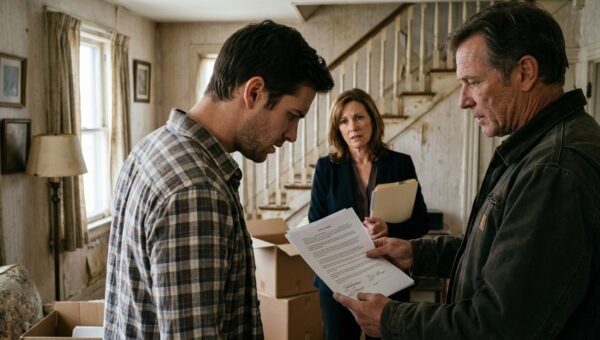
“Elise brought this to my office in person forty minutes ago,” Ray said. “She handed it to my clerk and said you had signed it after you found the spare pins in the back room and that the bus was certified for the afternoon run. Martha, I need you to tell me right now, in front of this parent. Did you inspect this lift, and did you sign this document?”
The door behind him opened again.
Elise walked in. She was carrying a cardboard parts box under her arm. When she saw Ray and Marcus standing at the counter, her steps slowed, and her hand tightened against the cardboard until the flaps bent.
“Elise,” Ray said, turning toward her. “Your mother and I were just discussing this signature.”
She looked at me. Her eyes were wide, and I saw the sheer panic she had been hiding behind her business voice all morning. She had driven to her mechanic’s shop, retrieved the stolen parts, dropped off the paper at the district office to save the contract before the noon deadline, and raced back here thinking she could install them with Dave before anyone noticed the timeline.
“Mom,” Elise said, her voice dropping to a whisper. “Please. We have the loan payment on Friday. If they void the contract, the bank takes the yard.”
It was the central wound that had been eating at us since Tom died. She thought saving the company meant doing whatever it took to keep the doors open. She thought loyalty to her father’s memory was measured in bank balances and kept contracts.
I looked at Marcus Vance. Marcus was an electrician. He worked with his hands, he paid his bills, and he put his daughter on our bus every morning trusting that we cared whether she lived or died.
“I did not sign that form,” I said clearly.
The room went completely silent.
“Martha,” Ray said, leaning forward. “Think about what you are saying. If this signature is not yours, this is a falsified state transit filing. That is a class three felony. It pulls your operating authority today.”
“I know what it means,” I said. “I did not sign it. I refused to sign it at nine o’clock this morning because the pins were not in the vehicle. The lift is broken. Dave is out in the yard right now pulling the mechanism apart. My daughter took those parts three weeks ago to settle a personal bill, and she signed my name on that paper forty minutes ago to keep you from canceling our contract.”
Elise made a small, broken sound in the back of her throat. The cardboard box in her arms slipped, hitting the linoleum floor with a hollow thud. Two heavy steel pivot pins rolled across the tile and came to a stop against the baseboard.
“Mom,” she whispered. Tears were running freely down her cheeks now. “How could you do that? You just destroyed everything Dad built.”
“No, Elise,” I said, looking her straight in the eye. “Your dad built a company that carried kids safely. You are the one who turned it into a lie to pay for a car repair.”
Ray did not raise his voice. He took a slow breath, closed his manila folder, and picked up the paper with my forged name on it.
“Marcus,” Ray said to the father. “I am canceling Bus 12’s route clearance effective right now. The district will provide emergency van service for Maya starting tomorrow morning until this is resolved. I suggest you go home and wait for my formal report.”
Marcus looked at Elise, then looked at me. He did not say anything harsh. He just said, “Thank you for not lying to me, Mrs. Miller,” and walked out into the rain.
Ray turned back to Elise. “I have to report the forged filing to the school board and the state DOT inspector this afternoon. Because Martha self-reported the mechanical failure before the noon deadline, I am not pulling your other four routes today. But Elise, you are barred from entering district property, and you are removed from dispatch authority on any county-funded route effective immediately. If I see your name on another compliance sheet, the entire company is done.”
Ray picked up his folder, gave me a sorrowful look, and walked out the door.
ENDING
The yard was empty by five o’clock.
Dave had finished replacing the pins on Bus 12, but the vehicle was tagged with a red out-of-service band on the steering wheel, pending a formal state reinspection scheduled for the following Tuesday.
Elise had packed her personal things into two plastic crates while the drivers were out on their afternoon runs. She did not yell, and she did not ask me to reconsider. The anger had burned out of her, replaced by a cold, heavy exhaustion that made her look older than her thirty-two years.
She set her office keys on the dispatch counter right beside the black gel pen.
“The bank loan is due on the first,” she said, looking at the floor. “Without the revenue from the Twelve run, you will be short about eighteen hundred dollars on the principal.”
“I have my savings from Tom’s life insurance,” I told her. “I will pay the difference out of my own account.”
“You were keeping that for your retirement.”
“I am keeping the company honest,” I said. “There is no point in having a retirement if I have to look at myself in the mirror knowing I let you forge my name over a broken wheelchair ramp.”
She wiped her face with the sleeve of her sweater. “I thought I was helping you, Mom. Everything was falling apart, and the bank was calling every Tuesday, and I just… I could not bear to lose the only thing Dad left us.”
“Your father did not leave us six yellow buses, Elise,” I said gently. “He left us a reputation. You forgot the difference.”
She picked up her crates, walked out to her car, and drove away. She did not come home for dinner, and she did not call that night.
The next morning, I was at the yard at five-fifteen.
The air was sharp and clear, the rain finally gone. I walked the line of buses with my flashlight, checking the tire pressures, the emergency exit buzzers, and the fluid levels myself, just like Tom and I used to do back in nineteen ninety-four when we only had one route out on the ridge.
At six-thirty, Mr. Cole and the other drivers showed up with their thermoses. I handed them their clipboards and told them the truth: Elise was taking time away from the business, Bus 12 was down until the state inspector cleared it, and I would be driving Bus 4 on the morning run.
None of them asked questions. They knew the hours were going to be hard, but they saw the red tag on Twelve, and they knew why it was there.
At seven-fifteen, I pulled Bus 4 up to Maya Vance’s house. Her father was standing at the end of the paved driveway, holding an umbrella over his daughter while they waited for the county van.
When he saw me behind the wheel of Bus 4, he did not wave, but he took off his work cap, nodded to me once through the windshield, and touched his daughter’s shoulder to point out the bus.
I pulled the air brake, picked up my black pen, and signed the pre-trip log on the steering wheel clipboard with my own name.