PART 1
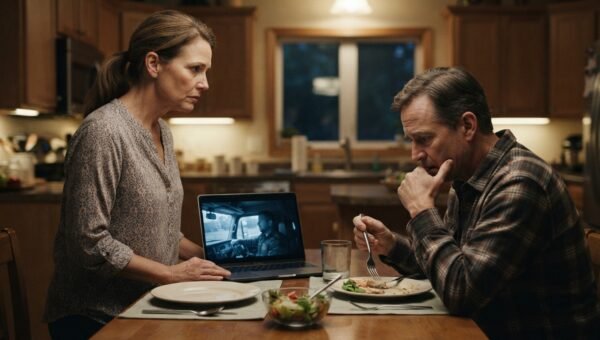
My oldest daughter, Karen, stopped inviting me to her children’s birthday parties three years ago after I refused to give her $20,000 for a kitchen remodel.
She stood right on my back porch that Saturday morning, her car engine still idling in the driveway, and told me I had chosen money over family. I had thirty-eight thousand dollars left in my savings account after my husband passed, and I was working twenty hours a week at the community college library to pay my own property taxes.
I told her I simply did not have twenty thousand dollars to hand out. Karen did not scream. She just looked at my kitchen cabinets, which were forty years old with chipped paint near the handles, and said, “You never supported my choices anyway.” Then she got into her car and drove away.
After that day, the invitations stopped. No Thanksgiving calls. No school plays. When my grandson Toby turned ten, I bought him a Lego kit and sent it by registered mail. The postal tracking said it was delivered to their front porch, but nobody ever texted to say thank you. When my granddaughter Chloe turned twelve, I mailed a card with a thirty-dollar gift card inside. The check I used to buy the money order cleared my bank, but the silence stayed absolute.
I tried not to complain to our mutual friends in town. When women at church asked how Karen and the kids were doing, I just said they were busy with sports and school.
It felt shameful to admit that my own daughter had locked me out of her life over quartz countertops and custom pull-out drawers. But I kept writing the cards. Every birthday, every Christmas, I sat at my small dining table, wrote a note telling each child what I remembered about their year, slipped in a gift card or a crisp bill, and dropped it in the blue postal box outside the grocery store. I did not want them to grow up thinking their grandmother forgot they existed.
Last Tuesday was my sixty-fifth birthday. I spent the morning shelving reference books at the library, came home, and made myself a cup of tea. Nobody from Karen’s house called. By seven in the evening, the street outside was quiet and dark. I was rinsing my tea mug in the sink when a loud knock came at the front door.
I turned on the porch light. Standing there on the concrete stoop was Chloe.
She was fourteen now, taller than the last time I had seen her in person, wearing an oversized winter jacket with a heavy school backpack slung over one shoulder. On the porch floor beside her feet sat two brown paper grocery bags, crammed full.
“Chloe?” I said, unlocking the deadbolt. “Honey, what are you doing here?”
She stepped inside before I could even open the door all the way. She looked behind her at the dark street, then pulled the door shut and pushed the lock into place. Her hands were red from the cold.
“Mom thinks I’m at an overnight sleepover with Harper,” she said. Her voice was shaking, but she was not crying. “Harper’s mom dropped me off at the corner of your street. She thinks my uncle lives here.”
“Does your mother know you’re in town?”
“No,” Chloe said. She reached into her jacket pocket and pulled out a thick white bank envelope. My name was written across the front in my own handwriting.
She handed it to me. The paper was creased and slightly smudged.
I looked inside. There were eight envelopes packed tightly together. Every single one was a birthday card I had mailed over the last three years to Chloe and Toby. The colorful envelopes were postmarked, stamped, and completely sealed. Not one had ever been opened.
“Chloe,” I whispered. “Where did you get these?”
“Mom told us you stopped loving us after Grandpa died,” Chloe said, staring directly at me. “She told Toby you cared more about your bank account than seeing us grow up. Then yesterday, I was looking for extra wrapping paper in the basement storage room under the stairs, and I found these hidden under a pile of old winter coats.”
PART 2
I took the envelope to the kitchen table. My hands were shaking so hard I had to set it flat against the wood before I could pull out the individual cards.
They were all there. The blue envelope with the baseball sticker I had sent for Toby’s eleventh birthday. The pastel card with the butterfly I bought for Chloe when she turned thirteen. Every single one had the canceled stamp in the upper corner and my return address neatly written in black ink. The seals were completely intact, the adhesive dry and firm.
“Did you open any of them?” I asked.
“No,” Chloe said. She sat down on the edge of the chair opposite me, keeping her coat zipped. “When I saw the handwriting, I recognized it from the recipe book you gave me when I was little. I looked at the postmarks. You sent them on our actual birthdays. Every single year.”
She reached down and pulled the two grocery bags closer to her boots.
“There was more,” she said.
She started pulling items out of the bags. It was like watching three years of my life being unpacked onto the table. The Lego set I had mailed for Toby, still in its original cardboard shipping box, though the tape had been cut open on one side. The silver charm bracelet I had mailed for Chloe’s confirmation. The fleece throw blanket I had sent two Christmases ago. Everything was untouched, tag still attached to the blanket, dust clinging to the clear plastic wrap on the jewelry box.
“She kept them in cardboard boxes behind the furnace,” Chloe said quietly. “She told us you never sent anything. Last year, when Toby cried because he thought you didn’t care about his championship game, she told him you were a bitter woman who was punishing us because she asked for help.”
The room was completely quiet except for the hum of the refrigerator. I looked at my granddaughter. She was fourteen, but sitting there under the bright kitchen light, she looked exhausted, like a child carrying an adult’s secret.
“Why did you bring them here tonight, Chloe?”
“Because today is your birthday,” she said. “I remembered the date. And Mom told Dad at dinner last night that she was going to drive out to the county dump this weekend to clear out the basement storage before they put the house on the market.”
That caught my attention. “Put the house on the market?”
“Dad lost his management job in August,” Chloe said. Her voice dropped lower. “They haven’t told Toby yet. They’ve been fighting every night behind closed doors. Mom took out a second loan last year to finish the kitchen, and now the bank keeps sending letters with red warnings on them. I heard Dad tell her she ruined them because she had to have things look perfect.”
The puzzle pieces did not click together with a crash. They just settled into a grim, ordinary reality. Karen had not cut me off simply out of wounded pride. She had cut me off because she needed a villain to explain why she could not have the life she wanted, and she needed her children to believe the villain was me. If the children believed I was selfish, they would never ask why Grandma was not at their games, and they would never ask why their mother was borrowing money they could not afford to repay.
“Chloe,” I said, leaning forward. “You cannot stay here tonight. Your mother will call Harper’s parents sooner or later.”
“I know,” she said. “I don’t want to get Harper in trouble. But I wasn’t going to let Mom throw these away. I needed to know if you actually wrote them.”
“I wrote every single word,” I told her.
I picked up the first card from the pile, the one for her twelfth birthday. I took the butter knife from the counter, slid it under the paper flap, and slit the envelope open. Inside was a handwritten note about how proud I was of her science project, along with the thirty-dollar gift card to the bookstore.
I handed the card to her. Chloe took it, looked at the ink on the page, and pressed the paper against her chest.
Then my landline on the wall began to ring.
PART 3
The caller ID showed Karen’s cell phone number.
I looked at Chloe. She drew in a quick breath and pulled her backpack off her shoulder.
“Answer it,” she whispered. “Harper’s mom probably texted her.”
I picked up the receiver and pressed it to my ear. “Hello, Karen.”
“Is Chloe with you?” Karen’s voice was sharp, high-pitched, and strained in a way I had not heard in years. There was traffic noise behind her. She was driving.
“She is sitting at my kitchen table,” I said evenly. “She is safe. She is having a glass of milk.”
“Keep her there,” Karen snapped. “Do not touch her things. I am twenty minutes away.”
The line went dead.
I hung up the phone. Chloe looked at me with wide eyes. “Is she mad?”
“She is scared,” I said. “And she is embarrassed.”
I spent the next twenty minutes making two mugs of hot chocolate. We did not open the rest of the cards. We just stacked them neatly in chronological order in the center of the table, flanked by the Lego box, the jewelry case, and the fleece blanket.
When Karen’s headlights swept across my living room curtains, Chloe did not move. We heard the car door slam outside, followed by hurried footsteps on the porch. The front door did not open because I had left the deadbolt locked. Karen pounded three times on the wood.
I walked to the front, unlocked the door, and pulled it open.
Karen stood on the stoop, her winter coat unbuttoned, her hair pulled back in a messy clip. She looked thin in the face, the lines around her mouth deeper than I remembered. She pushed past me into the hallway, heading straight for the kitchen.
“Chloe, get your backpack right now,” Karen said, her voice trembling with anger. “You lied to me. You used Harper to sneak out here.”
Chloe did not stand up. She pointed at the kitchen table.
Karen stopped walking. Her eyes dropped to the center of the table.
She saw the stack of white envelopes. She saw the opened twelfth-birthday card lying beside the butter knife. She saw the two brown grocery bags with the shipping labels still clearly bearing my name and her address.
The anger seemed to drain out of her shoulders, leaving her looking small and hollow. She did not yell. She did not offer an excuse.
“You went through the basement,” Karen said to Chloe, barely above a whisper.
“You hid them,” Chloe said. She stood up then, taller than her mother now. “You told me Grandma didn’t care about us. You told Toby she hated us because she loved her money. You kept them by the furnace for three years.”
Karen looked at me. Her eyes were rimmed with red. “You don’t understand what it was like,” she said to me, her voice breaking. “Mark was already getting his hours cut back then. We were drowning. Everybody on our street was updating their homes, and we were falling apart. I asked you for help. You had money sitting in the bank from Dad’s life insurance, and you told me no. You made me feel like garbage.”
“I had thirty-eight thousand dollars between me and the rest of my life, Karen,” I said, keeping my voice low and steady. “I was sixty-two years old. If I had given you twenty thousand dollars, I would have lost this house within five years. That money was not play money. It was my survival.”
“You could have helped,” she said, but there was no strength behind the words.
“And you could have told your children the truth,” I said, pointing at the cards. “You took three years of their childhood away from me. You let your son cry because he thought his grandmother abandoned him, just so you didn’t have to admit that you made a bad financial decision. That wasn’t about the remodel, Karen. That was cruelty.”
Karen covered her face with both hands. Her shoulders shook, but she did not make a sound.
Chloe picked up her backpack, walked around the table, and put her arms around her mother. She did not say it was okay. She just held her. Karen leaned against her daughter, weeping quietly in the middle of my kitchen.
ENDING
We sat at that table until nearly midnight.
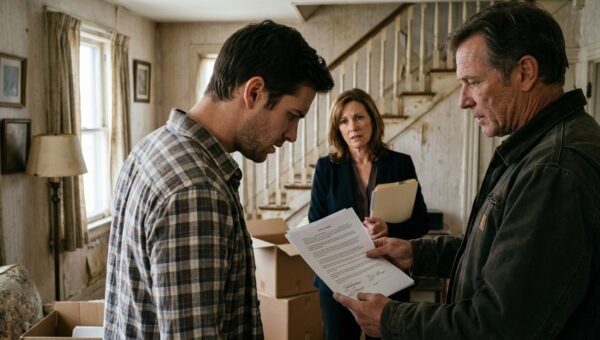
Karen did not ask for money, and I did not offer any. The reality of their situation was worse than I had realized. Mark’s severance had run out, the second mortgage had ballooned, and they were thirty days away from a formal default notice on their home. The granite counters and new cabinets Karen had insisted on had not saved their marriage, and they certainly had not saved their credit. They were going to have to sell the house at a loss and move into a three-bedroom rental on the south side of town.
I listened to her explain the numbers. I did not scold her, and I did not tell her I had warned her. The debt was real, the consequences were already arriving, and no lecture from me was going to make the bank balance change.
When Karen finally stood up to leave, Chloe picked up the two grocery bags.
“Leave the cards with Grandma for now,” Karen said, her voice rough and tired. “We’ll… we need to talk to Toby first. Together.”
I walked them out to the driveway. The night air was biting and crisp. Before Karen got into the front seat, she stopped with her hand on the car door. She looked back at me, her face pale under the streetlight.
“I’m sorry, Mom,” she said. It was not a grand apology, and it did not undo three years of silence, but it was the first honest sentence she had spoken to me since her father died.
“Drive carefully,” I told her. “Call me when you get home.”
The next evening, my phone rang at six o’clock. It was Toby. His voice was cracked with the awkward pitch of an eleven-year-old boy. He told me his mom had sat him down and given him the Lego set, along with the three birthday cards that belonged to him. He asked if I could help him build the starship over the weekend if his dad drove him over on Saturday morning.
I told him I would have the kitchen table cleared off and ready.
After I hung up, I walked into the dining room. The stack of unopened cards was gone, but the little silver charm bracelet remained on the table, sitting right beside my opened tea mug. I picked up the small silver butterfly charm between my thumb and forefinger. It was cool against my skin.
For three years, I had thought the distance between my family and me was made of stone. It turned out it was only made of shame and paper, and the paper had finally been burned away. I set the bracelet down, walked into the kitchen, and started making a grocery list for Saturday morning breakfast.