PART 1
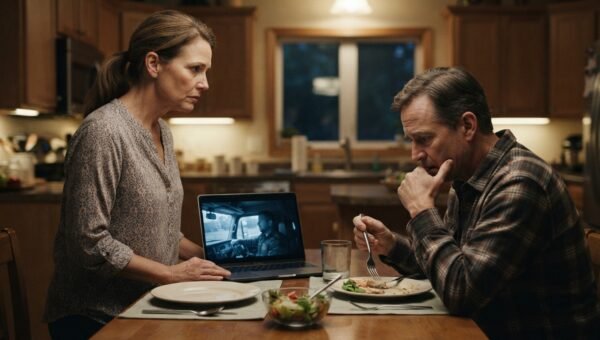
My sister Elaine told me Mom’s savings were almost gone, then asked me to help convince her to move into a cheaper room. Mom was sitting beside us in her blue cardigan, listening carefully, while Elaine spoke as if she weren’t there.
Mom was seventy-nine and recovering from a stroke. She could understand everything, but some words came slowly. Elaine and I had taken turns visiting for months.
I handled appointments and groceries; Elaine handled the bills. We were both named financial agents, and Mom had chosen that arrangement because she trusted us equally.
I trusted Elaine, too. She’d been the one who stayed overnight at the hospital while I drove home to feed my husband after his surgery. When she said the account had dropped below ten thousand dollars, I felt fear first, not suspicion.
“How much is the monthly care bill?” I asked.
“More than Mom can manage,” Elaine said. “The numbers are right there.” She pushed a printed summary toward me. It listed the balance, but not the transactions.
Mom tapped the arm of her chair. “Blue book,” she said.
Elaine smiled too quickly. “She means her old address book. It’s not important.”
Mom shook her head. “Blue. Book.”
I remembered the small blue ledger she’d kept beside the kitchen phone for years. It held birthdays, appliance repairs, and every check she wrote.
I went back to her house that afternoon to look for it. The ledger was in a kitchen drawer under a stack of takeout menus, its cloth cover frayed at the corners.
The last pages were filled in Elaine’s neat handwriting. The entries were labeled “roof,” “insurance,” and “heating.” Each had a check number beside it. I called Mom’s bank from the kitchen and asked for copies of the checks, using the co-agent paperwork we’d filed months earlier.
The first check was for Elaine’s mortgage company. The next went to her homeowners’ insurer. There were seven altogether, totaling just over twenty-six thousand dollars.
I sat at Mom’s table with the blue ledger open in front of me. I remembered Elaine telling us last winter that she’d picked up extra shifts at the dental office. She’d said she was embarrassed about money, then changed the subject. I’d let her.
When I called, she didn’t deny it.
“I was going to put it back,” she said. “The furnace broke, and then Mark’s hours got cut.
The bank sent a notice. I thought I could keep the house until he was working again.”
“You used Mom’s money without asking her.”
“I used it to keep her granddaughter from losing her home.” Her voice cracked. “I was trying to protect everyone.”
That was the part that made it hard. Elaine wasn’t buying jewelry or taking vacations. She was trying to hold together a life that had come apart faster than she could manage. But the care bill was real, and Mom had a right to know what was happening to her money.
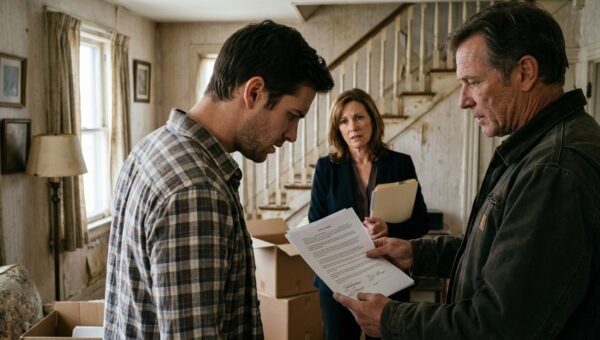
I asked Elaine to meet me at Mom’s the next morning. I brought the ledger and the check copies. Elaine came with a typed repayment plan, offering to start with two hundred dollars a month. She also brought a form asking me to approve a move to the cheaper room.
Mom listened while I laid out the checks one by one. Elaine cried once, then wiped her face and explained about Mark’s hours and the furnace.
Mom didn’t interrupt. When Elaine finished, she looked at me as if I were supposed to say something that would make it all settle back into place.
I told her I would call the bank and ask them to pause any more payments to outside accounts. I said I’d also help Elaine work out a repayment schedule, but I wouldn’t sign the room-change form until Mom had a chance to decide for herself.
Elaine stared at me. “If you freeze the account, the care home could call me about the bill. They’ll think I stole from her.”
“You did take money without permission,” I said. “I’m still your sister. I’m not pretending it didn’t happen.”
Mom reached for the ledger. Her hand shook, but she turned to the last page and pointed to a line I hadn’t noticed. Beside a check number, she’d written: “Elaine—ask me before.”
“I knew about one,” Mom said slowly. “Not all.”
Elaine covered her mouth. I felt the old urge to protect her, the same one that had made me stay quiet when she asked for help with the bills. Then Mom looked directly at me.
“Call the bank,” she said. “But first, ask me what I want to do about the house.”
PART 2
The bank officer on the phone was polite, but firm. Because both Elaine and I held active power of attorney status, freezing electronic outflows required either a joint signature or a formal notice of dispute filed in writing. I couldn’t just lock Elaine out with a quick phone call.
I drove back to the care home that afternoon with a fresh notepad and copies of the bank statements I had printed at the library. Mom was sitting by the window, watching the parking lot where the autumn leaves were swirling against the curb.
“She called me,” Mom said before I even pulled out my chair.
“Elaine?”
“Crying. Said you were punishing her family.” Mom looked at her hands, the skin thin and spotted with age. “I told her she should have called me before the furnace broke. I keep a reserve. She knew that.”
“She told me she was afraid you’d say no,” I said.
“Of course I would have said no to twenty-six thousand all at once. That’s half my remaining nest egg.” Mom sighed, a dry, papery sound. “But I would have lent her part of it. We could have written an agreement. Doing it behind my back makes me feel like a stranger in my own life.”
That hit harder than any anger. We spent the next hour going through the remaining bank statements line by line, marking every legitimate care home fee and prescription cost against what was left. The balance wasn’t under ten thousand dollars as Elaine had claimed; it sat at slightly over fourteen thousand. There was still a cushion, but it was thinning fast, and the care facility had already sent notice of next year’s rate increase.
When Elaine arrived for her evening visit, she brought a plastic container of homemade chicken soup, the kind Mom liked. She set it on the bedside table and stood by the door, her coat still zipped, looking like a guest who expected to be asked to leave.
“I talked to the bank attorney through my work,” Elaine said quietly. “He said if we formalize the repayment as a personal loan with a notarized schedule, it keeps everything legal. We don’t need to involve probate or anything messy.”
“We aren’t talking about probate yet, Elaine,” I said, closing the folder of bank statements. “We’re talking about transparency.”
“I’m trying to fix it.” Elaine’s voice rose a fraction, tight and defensive. “What do you want me to do? Sell the house? In this market? With Mark’s knee injury?”
“I want you to step back from managing the account,” I said.
The room went completely still except for the hum of the wall heater. Elaine looked from me to Mom, her eyes wide with betrayal. “You’re taking her authority away from me? After everything I’ve done while you were working full-time?”
PART 3
The confrontation didn’t end with shouting. In a care home with thin walls and doors that stayed half-open, you learn to keep your voice down even when your chest is burning.
Mom broke the silence. She didn’t look angry; she looked tired, the way she had right after the stroke when she first tried to stand on her own legs and realized how weak her knees were.
“Elaine,” Mom said, her voice steady enough to command the room. “Bring me my checkbook from the bottom drawer.”
“Mom, it’s fine, we don’t need—”
“Bring the book.”
Elaine went stiff, her jaw working before she walked over to the small bureau, pulled out the worn leather pouch, and laid it across Mom’s knees.
Mom opened it with fingers that didn’t quite obey her mind. She turned past the blank checks to the back pages where she logged every loan she had ever given to our older brother back when he was starting his garage, and the small amounts she’d handed to Elaine for college books thirty years ago.
“I gave you four thousand when you bought the station wagon,” Mom said, tracing a faded line of ink. “You paid me back forty dollars a month until it was zero. That’s how we did it.”
“That was different,” Elaine whispered. “We weren’t facing foreclosure.”
“It’s the same,” Mom said. “When you take without asking, you take my choice away. I’m old, Elaine. My choices are all I have left.”
She slid the checkbook toward me. “Take her off the bank signature card tomorrow. Leave mine and yours. And Elaine, you keep the soup, but go home. I want to sleep.”
Elaine didn’t argue further. She picked up her coat, gave Mom a stiff, brief hug that Mom accepted with closed eyes, and walked out down the linoleum hallway. The door clicked shut behind her with a dull sound.
I stayed for another hour, helping Mom adjust her pillows and pouring fresh water into her cup. We didn’t talk about the money anymore. We talked about the winter weather and whether the physical therapist was coming tomorrow.
ENDING
The next morning, I met the branch manager at the downtown bank and completed the paperwork to restrict withdrawals to dual signatures between Mom and myself. It took forty minutes and three different forms.
When I drove back to drop off the new copies of the paperwork, Mom was sitting in her usual chair by the window. The blue ledger was resting on the small table beside her half-finished cup of tea. She had a blue ballpoint pen in her hand, the cap off.
“Did you finish it?” I asked, hanging my coat over the back of the spare chair.
“Almost,” she said. She pointed to a clean line at the bottom of the page where she had written my name, followed by the date and a single checkmark.
She set the pen down in the groove of the open book, closed the cover over the frayed cloth edges, and pushed it toward the center of the table.