PART 1
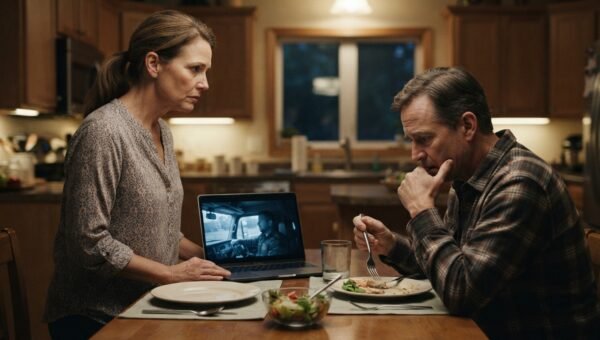
My sister Elaine told me Mom’s savings were almost gone, then asked me to help convince her to move into a cheaper room. Mom was sitting beside us in her blue cardigan, listening carefully, while Elaine spoke as if she weren’t there.
Mom was seventy-nine and recovering from a stroke. She could understand everything, but some words came slowly. Elaine and I had taken turns visiting for months.
I handled appointments and groceries; Elaine handled the bills. We were both named financial agents, and Mom had chosen that arrangement because she trusted us equally.
I trusted Elaine, too. She’d been the one who stayed overnight at the hospital while I drove home to feed my husband after his surgery. When she said the account had dropped below ten thousand dollars, I felt fear first, not suspicion.
“How much is the monthly care bill?” I asked.
“More than Mom can manage,” Elaine said. “The numbers are right there.” She pushed a printed summary toward me. It listed the balance, but not the transactions.
Mom tapped the arm of her chair. “Blue book,” she said.
Elaine smiled too quickly. “She means her old address book. It’s not important.”
Mom shook her head. “Blue. Book.”
I remembered the small blue ledger she’d kept beside the kitchen phone for years. It held birthdays, appliance repairs, and every check she wrote.
I went back to her house that afternoon to look for it. The ledger was in a kitchen drawer under a stack of takeout menus, its cloth cover frayed at the corners.
The last pages were filled in Elaine’s neat handwriting. The entries were labeled “roof,” “insurance,” and “heating.” Each had a check number beside it. I called Mom’s bank from the kitchen and asked for copies of the checks, using the co-agent paperwork we’d filed months earlier.
The first check was for Elaine’s mortgage company. The next went to her homeowners’ insurer. There were seven altogether, totaling just over twenty-six thousand dollars.
I sat at Mom’s table with the blue ledger open in front of me. I remembered Elaine telling us last winter that she’d picked up extra shifts at the dental office. She’d said she was embarrassed about money, then changed the subject. I’d let her.
When I called, she didn’t deny it.
“I was going to put it back,” she said. “The furnace broke, and then Mark’s hours got cut.
The bank sent a notice. I thought I could keep the house until he was working again.”
“You used Mom’s money without asking her.”
“I used it to keep her granddaughter from losing her home.” Her voice cracked. “I was trying to protect everyone.”
That was the part that made it hard. Elaine wasn’t buying jewelry or taking vacations. She was trying to hold together a life that had come apart faster than she could manage. But the care bill was real, and Mom had a right to know what was happening to her money.
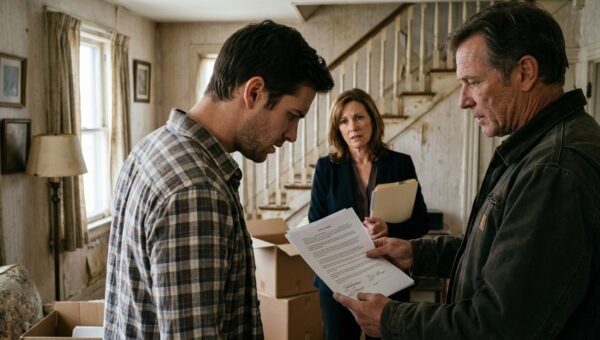
I asked Elaine to meet me at Mom’s the next morning. I brought the ledger and the check copies. Elaine came with a typed repayment plan, offering to start with two hundred dollars a month. She also brought a form asking me to approve a move to the cheaper room.
Mom listened while I laid out the checks one by one. Elaine cried once, then wiped her face and explained about Mark’s hours and the furnace.
Mom didn’t interrupt. When Elaine finished, she looked at me as if I were supposed to say something that would make it all settle back into place.
I told her I would call the bank and ask them to pause any more payments to outside accounts. I said I’d also help Elaine work out a repayment schedule, but I wouldn’t sign the room-change form until Mom had a chance to decide for herself.
Elaine stared at me. “If you freeze the account, the care home could call me about the bill. They’ll think I stole from her.”
“You did take money without permission,” I said. “I’m still your sister. I’m not pretending it didn’t happen.”
Mom reached for the ledger. Her hand shook, but she turned to the last page and pointed to a line I hadn’t noticed. Beside a check number, she’d written: “Elaine—ask me before.”
“I knew about one,” Mom said slowly. “Not all.”
Elaine covered her mouth. I felt the old urge to protect her, the same one that had made me stay quiet when she asked for help with the bills. Then Mom looked directly at me.
“Call the bank,” she said. “But first, ask me what I want to do about the house.”
Elaine lowered the repayment plan, and I reached for my phone. Mom’s hand closed over the blue ledger before I could dial.
“What did you want to tell me about that first check?”
PART 2
Elaine didn’t answer right away. She looked down at her shoes, the small gold buttons on her cardigan catching the light from the kitchen window.
“That first one was before the furnace,” Elaine murmured. Her voice had dropped so low I had to lean forward to hear it. “It was for the property taxes in November. The county sent a final notice. I knew if I waited for you to drive down and talk about it, we would spend three days arguing over budgets while the deadline passed.”
“You still could have called me,” I said.
“You would have worried.” Elaine looked up, her eyes red around the rims. “You always worry about everything being perfectly legal and balanced. Mom didn’t care about balanced. She cared about keeping things steady.”
Mom pulled the blue ledger closer to her chest, her fingers tracing the frayed cloth spine. She looked at Elaine for a long time, neither angry nor soft, just measuring her the way she used to measure fabric before cutting a pattern.
“Taxes are bills,” Mom said. Her voice was thick from the stroke, but the words came out clear enough. “Taking is a secret.”
“It wasn’t a secret from you,” Elaine said, her voice rising in defense. “You signed the power of attorney form in the kitchen here. You told both of us to take care of things if you couldn’t.”
“I told you to help,” Mom said. She tapped the page with one finger. “Not to hide.”
I stood up and walked to the counter to pour a glass of water, letting the silence settle in the room. The kitchen smelled of the weak coffee Elaine had brewed when she arrived. It was the same smell as ten winters ago, when Dad was sick and we sat at this exact table trying to figure out how to pay the pharmacy bills. We had been a team then. Now the ledger between us felt like a line drawn in dust.
“The bank is going to need a formal accounting,” I said, turning back around. “If we don’t document every single one of these checks and set up a legally binding repayment schedule with interest, the care home auditor will flag the missing funds when they do their annual review. We can’t just fix this with a family chat.”
Elaine crossed her arms. “You’re making it sound like a crime.”
“It is a breach of fiduciary duty,” I said quietly. “You know that as well as I do.”
Mom looked at the check copies scattered across the Formica table. She picked up the one addressed to Elaine’s mortgage company, turned it over, and looked at the blue ink of her own signature that had been copied or forged or signed under an old assumption of permission. She didn’t say anything about calling a lawyer. She just set the paper back down in its exact place.
“I want to see my balance,” Mom said. “The real one.”
PART 3
I pulled up the bank application on my phone and handed it to her, holding the screen steady while she scrolled past the totals. Her glasses slipped down her nose, and I pushed them up gently, the way she used to do for me when I was reading by the bed lamp.
“Ten thousand left,” Mom read aloud. Her finger stopped scrolling. “There should be forty.”
“Elaine is going to sign a promissory note,” I said, looking across the table at my sister. “We’ll set up automatic deductions from her payroll account starting next month. It will take three years to replace what she took, but the account will stabilize before winter.”
Elaine nodded slowly. The defiance had drained out of her, leaving only a tired slump in her shoulders. “I can do that. I’ll cut the grocery budget. I’ll stop driving into the city for coffee.”
“You don’t need to starve your kids,” Mom said. She looked up from the phone screen and handed it back to me. “You need to tell Mark what happened. He thinks the bank gave us an extension on the mortgage.”
“He’ll panic,” Elaine whispered.
“Let him panic,” Mom said. “Secrets make people small.”
We spent the next two hours going through the rest of the blue ledger line by line. Every entry from the past fourteen months was checked against the bank statements I downloaded. There were no other major drains, just the seven checks Elaine had justified in her head as emergency loans. By noon, the repayment terms were written out in longhand on the back of a grocery receipt, signed by Elaine and witnessed by me.
Elaine left before lunch, saying she needed to talk to Mark before he got home from his shift. She didn’t hug either of us, but she paused at the screen door and looked back at Mom sitting by the window.
“I’m sorry,” Elaine said to the glass.
Mom didn’t look up from her knitting bag. “Bring the blue book next time,” she said. “We need a new one anyway.”
ENDING
The afternoon sun moved across the linoleum, turning the squares pale yellow where the rug didn’t cover them. I stayed for another hour, helping Mom change the sheets on her cot and putting the leftover soup in the refrigerator.
Before I left, I picked up the frayed blue ledger from the table and slid it into the top drawer beneath the takeout menus where it belonged.
“Drive safe,” Mom said, watching from the doorway as I grabbed my keys.
“I will,” I said. “I’ll be back on Thursday with the groceries.”
She nodded, her hand resting on the wooden arm of her chair, right where she had tapped it that morning when the argument started. The house was quiet again, the kind of quiet that comes after a storm clears out the heavy air, leaving everything looking smaller and sharper in the light.