The text came at 9:14 on a Thursday, while I was kneeling beside Clara Vance’s chest freezer with my phone balanced on a box of trash bags. Detective Miller had written, “We have nine matches.” I read it twice, then looked at the freezer again. I’d been trying to decide whether to call the junk crew.
Two weeks earlier, I’d bought Clara’s house at a county auction for $187,000. I’d lived next door for years, and I knew the place needed work.
The paint was peeling, the back steps sagged, and Clara had died at 82 without any relatives coming forward. I figured I could fix it up slowly. I wasn’t looking for a mystery. I was looking for a house I could afford.
Clara had been quiet, but not unfriendly. She’d worked as a municipal clerk, then retired, and she was the sort of person who kept her receipts in envelopes and her garden hose rolled up right. For the last two years, I’d been restoring my own place. She watched me scrape old paint and replace boards. Sometimes she’d bring over lemonade in a glass jar and ask how I planned to handle the next repair. I thought she was making conversation. I didn’t know she was keeping track.
Her house felt ordinary at first. Dust on the counters. A calendar still open to the month she died. A little stack of mail held down with a chipped mug.
I started with the kitchen because it was small enough to finish in a day, and because I had no idea where else to begin.
The chest freezer sat against the wall. It was old and heavy, so I tried to slide it away from the outlet before calling someone to haul it off. It barely moved. The rubber seal made a soft sucking sound when I lifted the lid.
The freezer was almost empty, except for several taped bundles wrapped in plastic. I honestly thought they were old meat at first. Then I saw the envelopes. Forty-seven of them, stacked flat and numbered in the same neat handwriting. The dates ran across 23 years.
I didn’t open the first one. I called the police.
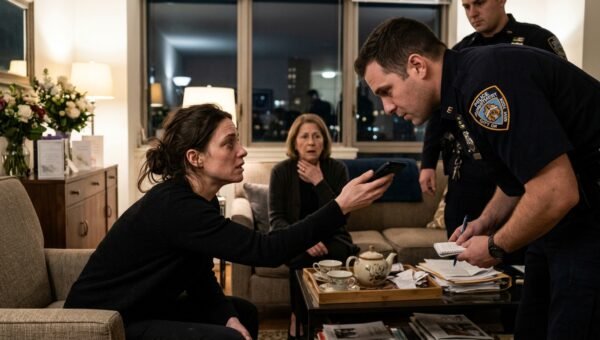
Miller arrived about forty minutes later, with another officer who took photos before anybody touched the bundles. I remember the little blue squares on the floor where they marked the freezer’s feet.
Miller asked if I’d moved anything. I said no, then corrected myself and told him I’d lifted the lid. I felt foolish, like I’d already messed up the one thing I was supposed to do right.
He wore gloves and opened the first envelope carefully. Inside was $5,000 in cash and a Polaroid of a child I didn’t recognize. The next envelope had the same amount. Another Polaroid. Same setup, same handwriting, same careful fold. By the time they’d opened three, I’d stopped trying to find a sensible reason for it.
Miller asked me to wait outside while they logged the rest. I walked around the house and stood near Clara’s back steps. One of the boards squeaked under my shoe. I knew that sound well. I’d heard it when I brought her groceries once, back when her hands had started shaking too much to carry the bags.
At the station, Miller showed me a few of the photos. He didn’t give me the children’s names yet, but he said the department had started checking them against old missing-person reports.
A few hours later, he called. Nine of the photos matched children reported missing in the region over a span of decades.
I asked if that meant Clara had taken them.
Miller said they didn’t know what it meant yet. He told me not to make up my mind before they had the facts. I was grateful he said it, because I’d already started doing exactly that.
Clara’s name was all over the records they pulled. She’d worked in the town clerk’s office during the years some of the children went missing. There were old reports, old files, and a lot of gaps. I kept thinking about the way she’d watched me fix my house, and then feeling ashamed of myself for making that connection. It wasn’t proof of anything.
Three weeks later, Miller came back with a forensic tech. The paper and ink in the envelopes matched. The cash had been handled and stored in a way that might preserve useful prints or other evidence. Miller told me they were treating the freezer as a place where evidence had been kept, not proof that Clara had committed a crime.
That helped, though not much. I still had a house full of her things and a picture in my head of those children, one photo after another. I’d tell myself to stop looking at them. Then I’d go back to the table and look again.
There was one envelope at the bottom of the stack that nobody had opened. It had no number on the front, just my full name in Clara’s handwriting. I knew it was for me before Miller said anything. He asked if I wanted him to take it in for testing.
I said I wanted to open it myself first. I know how that sounds. I’d called the police right away, then decided there was one part I wanted to keep for myself. Maybe I thought I owed Clara that much. Maybe I wanted to know what she’d planned for me before anyone else did.
Miller told me not to touch it with bare hands. I put on a clean pair of gloves, took photographs, and opened it at the kitchen table while he watched. The envelope had the same paper and typewriter ink as the others. Inside was a letter and a hand-drawn sketch of the property.
The letter said Clara expected me to own the house. She wrote that she’d watched me work on the neighboring place for two years, and that I’d always chosen to repair what was still worth saving. She’d worked with her estate lawyer to make sure the house went to auction at a time when I could bid. She couldn’t guarantee I’d win, she wrote, but she believed I would.
Then came the line I still hear in her voice, though she never said it to me in person: “Dig where these are. What you uncover is the proof I couldn’t safely give them.”
The sketch had six Xs marked along the old root cellar floor.
Miller took the letter and sketch after I read them. He didn’t act like he believed Clara just because she’d written it down. He asked about the cellar, the foundation, whether I knew if the floor had ever been replaced. I told him there was a shelf against the far wall and a glass jar on it, empty except for a few rusty screws. I’d noticed it on my first day and hadn’t thought much of it.
He looked at the sketch again. Clara had drawn the cellar’s rough shape and marked where the old supports sat. The six Xs weren’t scattered around the yard. They made a line under one section of the floor. It was the kind of detail I would’ve missed if I hadn’t spent years figuring out where a house had been patched.
The next week, the department brought in a structural engineer. They checked the cellar and the property records. Miller came back with documents showing Clara had been a clerk during the disappearances and had access to records that later went missing. He also told me they’d found notes suggesting the children’s cases had been closed too quickly, or sent off to the wrong office.
Clara hadn’t taken those children. She’d been collecting proof against someone who had.
Her letter explained the rest in small, plain bits. For 23 years, a powerful local figure had brought her $5,000 and a Polaroid every six months. The money was hush money. The photos were tokens meant to scare her into keeping quiet. Clara had kept every envelope instead of destroying them. She’d frozen the cash and photos because she believed the local police would lose or damage anything she handed them.
She’d been a clerk. She knew how things vanished on paper.
The letter didn’t say she was proud of what she’d done. It said she’d been afraid. She’d thought about going to the police more than once, but the person sending the envelopes had influence in town, and Clara believed some people inside the system would protect him. She waited too long. By the time her health started failing, she knew she might not have time to get everything out.
That was why she’d chosen me. Not because I was brave or special. Because I lived nearby, paid attention to the condition of old houses, and had a habit of writing down measurements before I cut anything. She’d watched me work. She’d figured I wouldn’t ignore a clear instruction.
I hated that she’d been right about that, and I hated that she’d put the choice in my hands.
The excavation started on a Monday morning. Miller asked me to stay out of the work area, but I asked if I could help identify the cellar features. He said I could point things out, not handle evidence. I agreed. Then I spent most of the day standing in a place I’d thought would become a laundry room, watching strangers cut into the floor.
They found the old supports first. The sketch matched. The concrete below the floor was newer than the rest, though it had been painted over. When they broke through the cap, they hit a sealed metal trunk.
Miller called me over once the scene was secure. I was still wearing my work gloves. I remember noticing a streak of dirt on my sleeve and thinking I should wash it before I sat on the couch. That’s the sort of thing my mind grabbed onto while the trunk was being opened.
Inside were a master ledger and small belongings tied to the missing children. The ledger listed dates, payments, and names. The items helped connect those entries to the nine cases. It was enough to move the investigation forward. Later, Miller told me the person named in the records was a former town councilman, a man named Dale Rusk who’d been involved in town business for years.
The police arrested him. No dramatic scene. No shouting. Miller said they served the warrant and took him in. After that, the case moved through the courts, and the evidence from Clara’s freezer and cellar helped dismantle the cover-up. The families finally got answers about what had happened to their children.
It didn’t make 23 years come back. It didn’t make Clara’s choices harmless. But the investigators cleared her name after her death. She hadn’t been the one who took those kids. She’d been a frightened woman holding onto evidence because she didn’t trust the people who were supposed to protect it.
The story got out. Reporters came around, and people who’d barely known Clara started talking about how odd she was. I got asked to describe the envelopes. I gave the police everything they needed and declined the interviews. I didn’t want to make myself part of the story. I’d bought a house and found something awful in it. That was enough.
Detective Miller and I stayed in touch while the case went on. We weren’t friends exactly, but we had a careful respect for each other. He’d call when there was something I needed to know. I’d tell him if I found anything else while working on the house. I didn’t find anything else.
The renovation took longer than I planned. I kept the kitchen table, though I sanded it down and sealed the top. I repaired the back steps. The cellar took the longest. The police had to finish their work, then the contractor had to make sure the new floor was safe.
When they poured the new concrete, I stood by the cellar door and watched it settle. I’d kept Clara’s empty glass jar on the shelf the whole time. It had held the last envelope for a few days after I opened it, while I waited for Miller to collect it. Then it was empty again.
I thought I’d feel relieved when the job was done. I did, some. The house was quiet in a way it hadn’t been before, and I could walk through the kitchen without looking toward the freezer. Still, I caught myself listening for Clara’s back steps when I went out to get the mail.
The floor cured, the cellar was cleared, and Miller told me the case had what it needed. I went downstairs that evening and switched on the single bulb. Beside the new square of concrete, Clara’s glass jar sat empty.