PART 1
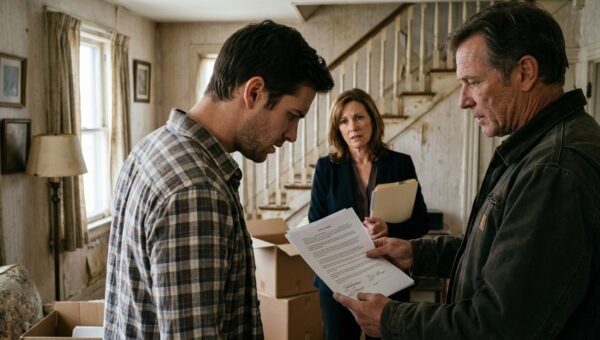
The athletic director’s office smelled of stale floor wax and old paper. He slid the transfer form across his desk so the light hit the second signature near the bottom.
“Did you approve this before you retired?” he asked.
I looked at the letters. My name was spelled correctly. The small curl at the end of the capital letter was mine. The slant matched how I used to sign off on district paperwork before I handed in my keys two years ago. Except I had never seen this form before Tuesday morning.
“No,” I said.
The director frowned, his hand resting on the corner of the paper. “It’s dated October twelfth. You were still heading the desk then. If this was filed internally, Maya’s residency was cleared through the office. That makes her eligible for Friday’s regional final.”
“I didn’t sign it,” I repeated. My mouth felt dry.
“Mrs. Vance, your signature is right here. If there’s a discrepancy in the logs, we need to know now before the athletic association reviews the roster.” He didn’t sound accusatory. He sounded tired, like a man who just wanted his basketball team to play a game without a scandal.
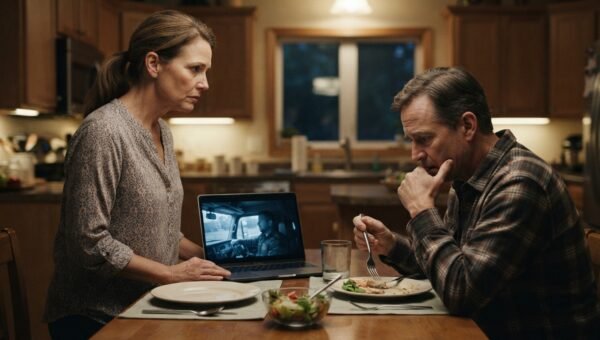
I thought about Dana standing in my kitchen two nights before, holding a plate of untouched toast and asking me to bend the truth about when a teenager had moved into our school district. I had told my daughter no. I had told her I wouldn’t say Maya lived here in August when the lease didn’t start until October.
Dana hadn’t argued back. She had just left a manila envelope on my table and walked out.
Now the school had a document bearing my name, approving a date I knew was false, filed during a month when I was the only person with access to that particular stamp and ledger.
“Can I take that copy?” I asked.
The director hesitated, then slid it toward me. “Keep it quiet, Helen. If the board finds an irregularity in an athletic file, it turns into an audit. I don’t want to ruin the girls’ season over paperwork if we can help it.”
I folded the paper into quarters and put it in my handbag.
When I got home, I didn’t call Dana. I went straight to the spare bedroom I still kept set up the way it had been when she was in high school. At the back of the closet sat my old metal filing box.
Inside were my personal copies of attendance logs, retirement papers, and a spare stamp pad I had brought home when they updated the office equipment.
I pulled out a retirement card the office staff had signed for me three years ago. I laid it next to the copy of the transfer form.
The forged signature on the school form wasn’t just a casual imitation. It was traced. I could see the tiny tremor where the pen had hesitated over the loop of the letter V.
Someone had used my retirement card as a template. And there was only one person who had access to that card, my house, and the exact date the school needed on file.
PART 2
I sat at the kitchen table until the afternoon light turned gray against the window. The house was too quiet. Every time the wind rattled the back screen door, I looked up, half expecting Dana to walk in with her keys and a quick explanation about how there had been a mistake at the school.
Except there hadn’t been a mistake at the school. The school had received what it asked for: a clean signature from the person who used to run the department.
I called Dana at the high school gym. She picked up on the third ring, her voice tight with background noise of bouncing balls and whistles.
“Mom? I’m in the middle of practice. Can I call you back?”
“No,” I said. “Come to my house when you’re done.”
“I have a team dinner at six—”
“Come now, Dana.”
There was a long silence on the line. The sound of a whistle blew in the distance. “Did something happen?”
“Bring the rest of the paperwork you left in that envelope,” I said, and hung up before she could answer.
She arrived forty minutes later, still wearing her coaching jacket over a gray sweatshirt. She didn’t take off her shoes. She stood in the middle of the kitchen, looking at the two pieces of paper I had laid out side by side on the table: my real signature from the retirement card and the forged signature from the school transfer form.
She didn’t reach for her bag. She just looked down at the wood grain between us.
“You went to the office,” she said quietly.
“The director showed me the file,” I answered. “He wanted to know if I remembered approving it. He thought maybe my memory was slipping.”
Dana’s hands went into her jacket pockets. “We needed the clearance, Mom. If the board looked at Maya’s original enrollment date, they would have caught the gap between her mother’s lease and her actual arrival. They would have benched her for the entire post-season.”
“So you signed my name.”
“I traced it.” Her voice didn’t shake. That scared me more than if she had cried. “You had your retirement card on the desk in the den. It took two minutes.”
“You forged an official school document, Dana. Using my name.”
“It’s a basketball game!” Her voice rose, bouncing off the kitchen cabinets. “She’s eighteen. She has a scholarship on the line scouts are coming to Friday night. Her mother has lived out of her car twice this year just to keep her in school. And you’re worried about a stamp on a piece of paper?”
“I worked thirty-one years in that office,” I said. My own voice stayed low, almost flat. “I built a reputation for keeping those records straight. People trusted that desk. And my own daughter walked into my house, stole my handwriting, and used it to commit fraud.”
“Nobody got hurt,” she whispered.
“You don’t know that.”
PART 3
The regional final was played on a Friday night in the damp chill of November. I didn’t go. I sat at home with the kitchen radio tuned to the local broadcast, listening to the announcer talk about the crowd size and the tension on the court.
When Dana’s team won by four points in overtime, the announcer shouted about the star guard’s winning shot. Maya. The girl who had slept on Dana’s couch and whose papers had been pushed through the system with a fake stroke of my pen.
On Saturday morning, the front doorbell rang.
It wasn’t Dana. It was the district superintendent, standing on my porch with a manila folder tucked under his arm. He looked uncomfortable, like a man who had been handed an unpleasant chore before his weekend coffee.
“Helen,” he said when I opened the door. “Do you have a few minutes?”
I let him in. I didn’t offer him coffee. We sat at the kitchen table where the two pieces of paper were still resting under a glass salt shaker.
He didn’t look at the papers right away. He looked at me. “We had an anonymous call from the rival school’s athletic board this morning. They flagged Maya’s transfer paperwork. They noticed the date doesn’t align with the Department of Social Services housing registry for her mother’s previous address.”
My stomach tightened, but my hands stayed steady on my knees. “Go on.”
“When our compliance officer pulled the physical file to verify the approval stamp, he noticed something off about the signature. He brought it to my desk.” The superintendent paused, looking down at the table. “Helen, is this your signature?”
I looked at the superintendent. I looked at the kitchen window where the frost was beginning to melt in the morning sun. I thought about Dana standing in this exact spot twenty-four hours earlier, telling me it didn’t matter because a girl needed to play a game.
If I covered for her now, the school would absorb it, or they wouldn’t. But the forgery would belong to me. My thirty-one years of clean records would end with an investigation into my own integrity, carried out by people I had trained.
“No,” I said.
The superintendent closed his eyes for a single second. “Who had access to your old files?”
“My daughter is a coach here,” I said. “She came by the house last week.”
He nodded slowly. He didn’t look surprised. Small towns are terrible at keeping secrets, and school administrators are usually the last to be fooled by family loyalty.
“The board has to report the discrepancy to the athletic association,” he said softly. “The game will likely be forfeited. And we’ll have to conduct a formal review of the filing.”
“I understand,” I said.
He stood up, picked up his folder, and walked to the door. Before he stepped out onto the porch, he looked back. “I’m sorry, Helen. I know who raised her.”
ENDING
Dana came over two hours later, her face pale and her eyes red. She didn’t knock; she just pushed the back door open and stopped at the threshold.
“The association called,” she said. Her voice was cracked. “They’re forfeiting the win. They’re launching an inquiry into the coaching staff.”
I was standing by the counter, wiping down the wood with a damp cloth. I didn’t stop moving my hand in circles over the surface.
“The superintendent came by this morning,” I said.
Dana pressed her back against the doorframe, her arms crossed tight over her chest. “Did you tell him?”
“I told him the truth.”
“I’m your daughter!” She finally let the anger break through, her voice sharp and thin. “You let them take it all away over a signature!”
“I didn’t take anything away, Dana,” I said, setting the cloth down. I looked at the retirement card sitting near the toaster, the ink faded from years of sitting in the light. “You traded my name for a basketball game. You just didn’t expect anyone to check the receipt.”
She stood there for a long moment, breathing hard, waiting for me to soften, waiting for me to pull out another manila envelope and fix it the way I used to when she was ten and dropped her lunch money in the dirt.
When I didn’t move, she turned around, pulled the door shut behind her, and walked down the steps to her car.
I stayed in the kitchen until I heard her engine start, backing out of the driveway and heading down the empty street.