PART 1
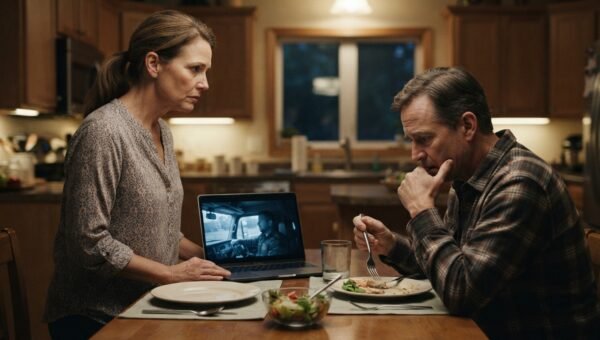
My husband Cal and I have run Millbrook Lanes for thirty-one years, and last Friday he asked me to sign an inspection form saying Lane 8’s pinsetter guard had been working properly. A teenage employee had injured his hand there the night before. Cal said the boy had reached in when he shouldn’t have.
We were alone in the office, with the sound of bowling balls thudding through the wall.
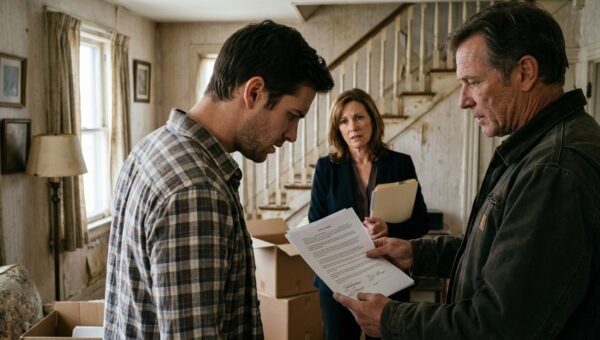
The form was on top of our weekly league schedule. Cal had already filled in my name and the date. All that was left was my signature.
“Why does the insurance company need this today?” I asked.
“Because their adjuster is coming Monday.” He rubbed a thumb over a yellow grease stain on his cuff. “If we look careless, they can cancel us. We can’t replace that machine, and we can’t keep the doors open without coverage.”
I knew the machine had been sticking. For two weeks, it had hesitated before lifting the pins. I’d heard Cal complain about it, but he said the replacement switch was on back order. He’d put a sign on Lane 8 asking customers to use another lane if it jammed.
The boy, Marcus, had been working there since school let out. He was careful. I had watched him sweep the approaches and check the ball returns without being told.
When I called his mother after the accident, she said he was home with three stitches and a splint. She also said he’d been told to clear a jam because the lane was needed for a birthday party.
Cal set a pen beside the form. “We don’t have to make this bigger than it is.”
I didn’t sign. I told him I needed to check the maintenance records first. He stared at me as if I’d just chosen the insurance company over him.
“You know what happens if they shut us down,” he said. “Eleven people lose their shifts. The league teams go somewhere else. There isn’t another bowling alley within forty miles.”
That night, while Cal was at home, I opened the old red ledger we kept under the counter. It was a habit from when we tracked every repair by hand. The newer service invoices were in a drawer, but the ledger had the dates of the calls.
I found three entries for Lane 8: sticking switch, guard loose, machine stopped mid-cycle.
The last entry was dated six days before Marcus was hurt. Cal’s handwriting said, “Cleaned and reset. Watch it.”
I went to the machine room. The pinsetter sat behind its metal guard, all belts and gears and the smell of old oil. A strip of blue tape was still stuck over the safety switch. It was the same tape we used to label boxes. I took a picture, then photographed the serial number and the ledger entry.
When Cal came in the next morning, he saw my phone on the counter.
“You went into the machine room?”
“I wanted to know what I was being asked to certify.”
He didn’t deny the tape. He said the switch had been cutting out every few minutes, and he’d taped it down while he waited for the replacement part.
He’d meant to take Lane 8 out of service, he said, but the birthday party was already there, and the other lanes were full.
“You let a child bowl on a machine you knew was unsafe.”
“I thought I could watch it.” His voice dropped. “I’m not proud of it. But I was trying to get us through the weekend.”
That was the part that hurt most: I believed him. The last year had been a string of repairs we couldn’t afford and league nights that didn’t cover payroll. Cal wasn’t cruel. He was scared, and he’d decided fear counted as a plan.
I called the insurance adjuster and told her I would not sign the form as written. I gave her the repair dates and the photographs. She said she’d make a note of it and asked me to preserve the original ledger. Cal stood at the office door, listening.
“You could have talked to me first,” he said after I hung up.
“I tried. You put my name on a statement that wasn’t true.”
He looked at the blank signature line. “If they cancel us, what do you think happens to us?”
I didn’t have an answer. I did know Marcus’s mother had asked for the incident report, and I knew it had not been filed. I told Cal I would call her before the end of the day.
He left without taking his coat. I sat at the counter with the ledger open, my hand resting on the cracked red cover. Then the front bell rang. Marcus’s mother stood there with her son beside her, his injured hand tucked against his chest.
She held up her phone. “Before you sign anything,” she said, “you need to see what he recorded on his last shift.”
PART 2
Marcus did not come all the way to the counter. He stopped near the rental shoes, looking down at his sneakers while his mother, Evelyn, stepped forward. Her jaw was tight. She had worked twelve years at the regional hospital clinic, and she knew exactly how paperwork worked when someone got hurt on the job.
“I called you this morning,” Evelyn said. “Cal answered. He told me Marcus had violated company rules by going back there alone.”
“I haven’t talked to Cal about that,” I told her honestly. “He didn’t tell me he spoke to you.”
She unlocked her phone screen and handed it across the scuffed formica. On the screen was a video clip, taken from inside the dimly lit pit behind Lane 8. It was short, twenty-two seconds long, timestamped 5:14 PM on Thursday afternoon, two hours before Marcus was taken to urgent care.
In the recording, Marcus was holding his phone in one hand while using his flashlight. Cal’s voice came through the small phone speaker, loud and sharp over the clatter of the nearby pins on Lane 7.
“Don’t turn the main breaker off,” Cal’s voice said. “Every time you kill that breaker, the reset cycle takes ten minutes and the league captains start screaming. Just use the wooden broom handle to push the rake arm back up. If it jams again, do it fast.”
Marcus’s young voice answered, hesitant. “The manual says the power has to be locked out before anybody reaches into the sweep.”
“The manual doesn’t pay the light bill, Marcus. Just clear the pins. I’m right up front.”
The video ended with Cal’s heavy footsteps walking away toward the lounge.
I stared at the black phone screen. The room felt terribly quiet. For thirty-one years, I had believed that whatever Cal lacked in business patience, he made up for in basic decency. When the league had a bowler who lost his job, Cal let him bowl free for two months. When the roof leaked over Lane 12, Cal worked through three nights with tar buckets so we didn’t cancel the youth tournament. But looking at that screen, I saw something else. I saw a man who had backed himself into a corner so deep that he was willing to hand a sixteen-year-old a wooden stick and tell him to risk his fingers to save ten minutes.
“He told Marcus to delete that video right after it happened,” Evelyn said. Her voice didn’t shake. “He told him if the state inspector came in and saw it, we’d both be out of our livelihoods because the alley would close. He said nobody would hire a kid who caused a local business to fold.”
“Marcus,” I said, looking past Evelyn to the boy. “Did you reach in with your hand?”
Marcus looked up. His eyes were red. “The broom handle snapped, Mrs. Miller. The rake came down while the ball return was cycling. It caught my sleeve first. If I hadn’t jerked back, it would have pulled my whole wrist into the chain.”
My stomach turned over.
“Cal told you I was going to sign an inspection report, didn’t he?” I asked Evelyn.
“He told me at noon today that you two had already submitted the clean safety check from Wednesday,” Evelyn replied. “He said the insurance company had already accepted it and that Marcus’s medical bills would have to go under our personal health insurance because the alley wasn’t liable.”
Cal hadn’t just asked me to sign a paper. He had already lied to this boy’s mother and used my name as his shield.
PART 3
I asked Evelyn and Marcus to sit down in the diner booths near the snack bar. I walked back into the office, picked up the desk phone, and dialed Cal’s cell. He answered on the second ring.
“Did you sign it?” he asked. His voice sounded worn down, breathless.
“Where are you, Cal?”
“Down at the bank. I’m trying to see if Donald will extend our credit line by five thousand to cover the parts order.”
“Come back right now,” I said. “Evelyn and Marcus are sitting at booth four.”
Silence hung on the line. Then he said, “Beth, don’t do anything rash. You don’t know the whole picture.”
“I know Marcus has a video from 5:14 PM Thursday,” I told him. “I know you told him to bypass the lockout switch with a broom handle. And I know you told his mother I already signed a clean inspection report.”
Cal let out a ragged breath. “If that video gets out, the insurance won’t just deny the claim. They’ll drop us for fraud. We’ll be personally liable for every nickel of his care, plus the state fines. We lose the building, Beth. Everything we put into this place since 1993.”
“We lose it then,” I said.
“Beth—”
“Get back here, Cal. Or I walk over to the police station myself.”
He was back in ten minutes. His truck door slammed outside, and he came through the double glass doors with his jacket unzipped, cold air clinging to his flannel shirt. He looked at Evelyn, then at Marcus. Marcus looked down at his lap, guarding his splinted right hand.
Cal walked straight into the office, and I followed him, shutting the door behind us.
“You’re going to destroy us,” he whispered. “Thirty-one years. You’re throwing it away for an accident.”
“It wasn’t an accident,” I said. “You made a choice. You taped down a safety switch with packing tape, you ordered a kid to stick a broom into a running machine, and then you put my name on an official statement to cover it up.”
“I was trying to save our business!”
“No,” I said, keeping my voice lower than his. “You were trying to save yourself from admitting we couldn’t afford to run this place safely anymore. You traded that boy’s hand for fifty dollars of lane fees from a birthday party.”
He stepped back as if I’d hit him. His shoulders slumped. The anger seemed to drain out of him all at once, leaving only the stooped, graying man who had spent thirty years patching worn gears with wire and prayer.
“I didn’t think the rake would trip,” he muttered. “I swear to God, Beth, I thought the switch would hold until Tuesday.”
“It doesn’t matter what you thought. Here is what we are going to do.”
I opened the top drawer and pulled out the state workers’ compensation employer injury report, the one Cal had hidden under the league averages. I laid it on the desk next to the red maintenance ledger.
“You are going to sit in that chair and fill out the true first report of injury,” I said. “You will state that the safety switch was taped down, that the machine had jammed three times that week, and that you instructed Marcus to clear it without a lockout. Then you will sign it. And then I will co-sign it as business secretary.”
“They’ll revoke our operating permit,” he whispered.
“Then they revoke it.”
“We’ll have to sell.”
“Then we sell.”
He looked at me for a long time. For thirty-one years, I had managed the books, paid the vendors, and smoothed over his temper with customers, always telling myself that we were partners in every sense. But real partnership doesn’t mean jumping into a ditch just because the other person drove the truck into it.
He sat down. His hands were shaking so hard he had trouble uncapping the pen. He wrote slowly, line by line, filling out the real sequence of events. When he was done, he signed his name on the line marked Owner/Operator.
I pulled the paper toward me, signed my own name below his, and picked up the ledger and my phone.
ENDING
We walked out to booth four together. Cal placed the signed injury report on the table in front of Evelyn.
“This is the official filing,” Cal told her, his voice rough. “The injury happened because I didn’t lock out the machine. Millbrook Lanes accepts full liability through our commercial carrier and state compensation. Your insurance won’t pay a dime. We’ll cover every doctor bill, every therapy visit, and Marcus’s full wages until he’s cleared.”
Evelyn picked up the paper, read every word, and folded it into her purse. She looked at Cal, not with rage, but with a cold, clear finality.
“You should have done this Thursday night, Cal,” she said.
She stood up, took Marcus by his good arm, and walked out the door. The brass bell chimed behind them, the same cheerful ring that had greeted thousands of families on Friday nights.
The adjuster came on Monday morning. I handed her the red ledger, the photographs of the blue tape, and the amended report. She didn’t look surprised; people in her line of work see panic all the time. She informed us that our commercial liability policy would be canceled at the end of the thirty-day notice period, and that the state labor board would conduct a mechanical inspection before the end of the week.
We didn’t wait for them to shut us down. On Wednesday, Cal and I called an emergency meeting with our league captains and told them the remaining winter season was suspended. By Friday, the mechanic from the supply house in Lansing arrived with a flatbed truck to haul away the damaged pinsetter from Lane 8.
The building is listed with a commercial broker now. We owe eighty-four thousand dollars on the equipment loan and the property mortgage, and after the fines and the settlement reserve are settled, there will be very little left from whatever sale price we get. We won’t have the retirement we spent thirty years planning for in the upstairs apartment.
Cal spends most of his days in the garage behind our house, fixing small lawnmower engines for neighbors. We don’t talk about Thursday night very often. We eat dinner at the kitchen table, we wash the dishes together, and we go to sleep in the same bed, but the house feels different now. The trust that held thirty-one years together didn’t snap like the broom handle; it just wore down until there was nothing left to bear the weight.
Yesterday, I went back to the empty alley to box up the league trophies and clear out the office desk. The power was off, and the silence in the long, dark lanes felt unnatural after so many years of crashing wood.
On the counter sat the old red ledger. I ran my fingers over the cracked cover, picked up a black marker, and wrote across the last lined page: *Facility closed. All accounts accounted for.*
Then I closed the book, turned the deadbolt from the outside, and dropped the brass key through the mail slot into the dark.