My thumb was on the button when Greg’s call came in. I’d just set my coffee down, and the phone was halfway to my ear before I noticed how early it was. The wedding had ended a few hours before. I still had a faint red mark across my palm from carrying a box of place cards.
Six months earlier, Alyssa had set a thick binder on my kitchen table and slid it toward me.
Greg was beside her, looking pleased in that nervous way people look when they’ve got big news and an even bigger bill coming.
“We’re thinking three hundred guests,” Alyssa said. “And I thought you could coordinate everything.”
I asked what she meant by everything.
“Vendors, seating, flowers, all of it,” she said. “You don’t work anyway. You have time.”
I had retired from the county library a year before. I still did a few things for neighbors, and I kept my own house, but I wasn’t on a payroll. I’d never thought that meant my days were empty. I looked at Greg, waiting for him to say something.
He rubbed the back of his neck. “It would help us a lot, Mom.”
So I opened the binder.
I can tell myself now that I should’ve set a price right there. I didn’t. I wanted to be useful, and I wanted Greg to be happy.
Those two things had been tangled up for years, and I’d never been good at pulling them apart.
The first month was calls and lists. I found a hall outside town that could fit everyone, got three catering bids, and kept track of deposits. Alyssa wanted a particular florist whose first quote was more than the couple had planned to spend. I called around until I found someone who could do the same colors without charging for every little stem.
“Can you ask them to throw in the small table arrangements?” Alyssa texted.
I did. They agreed.
By the time the invitations went out, I was answering questions from relatives I’d never met. I made a spreadsheet for meal choices and another one for names that sounded almost alike. It was like keeping track of chores before a storm, only the chores kept multiplying.
I don’t know why I remember the florist’s invoice so clearly. Maybe because I had it open on my computer at 11:40 one night while my tea went cold beside it.
I called the florist the next morning and caught a duplicate charge before it went through. That saved them money. I didn’t mention it to Greg. I thought doing a good job was enough.
There were little emergencies, too. The baker had the wrong delivery time written down. One of the groomsmen couldn’t find his suit. A cousin’s food allergy had been missed on the first seating chart, so I called the caterer and changed it before the final count was locked.
When I told Alyssa about the seating mistake, she said, “You’re a lifesaver.”
I held on to that longer than I should have.
As the date got closer, the couple got busier. Greg had work, Alyssa had wedding appointments, and they were both tired. I understood that. I was tired too, but I’d never say that to them. My own mother used to say a job wasn’t done until the last chair was put away. I carried that rule into more things than it belonged in.
A week before the wedding, I sat at my kitchen table with the seating chart spread out and called the venue twice about a table that had been left off the layout. Alyssa was on speakerphone while I worked.
“I can’t have the college friends split up,” she said. “They’re all in the same circle.”
I moved names around again.
“Okay,” I said. “I’ll fix it.”
“Thank you. I knew you’d handle it.”
Greg didn’t say much during those calls. If he was there, he was usually quiet. I told myself the wedding was Alyssa’s thing to manage and that Greg was trying not to get between us. That was generous of me. Or maybe convenient.
The morning of the wedding, I got to the hall before the florist. I checked the place cards, then the menus, then the table numbers. The flowers came in low crates, and I helped carry them in because the delivery driver was alone. I spent most of the day on my feet, fixing things nobody was meant to notice.
One of the place cards had slipped under a folded napkin. I found it because the corner caught my eye when I passed table four. I remember that tiny paper corner. I don’t remember what I ate that day. I don’t think I ate anything before the reception.
The ceremony went well. Greg looked happy. Alyssa looked beautiful, and I’m not saying that to be nice. She did. I was proud of them, even after all those months of calls and lists and second-guessing myself.
At the reception, I took the seat they’d given me at table four. I wasn’t at the head table, which was fine. I had no reason to expect that. I was glad to sit down for once.
Alyssa took the microphone for the thank-you speech. She thanked her parents, the bridesmaids, the best man, a friend who’d helped with invitations, two people from her office, and several friends who had traveled in. Twelve people, by my count. I know I counted because I was trying to stay focused on the speech instead of the fact that my name didn’t come.
She didn’t mention me.
At first I thought she might circle back. People forget things when they’re nervous. But she thanked another friend, smiled at the room, and handed the microphone to Greg.
He looked in my direction. Our eyes met for a second.
Then he looked down.
That was all.
I kept my hands folded in my lap because I didn’t want anyone to see them shake. I didn’t make a face on purpose. I was trying to keep my expression normal, which is not the same thing as succeeding. A woman from the next table asked if I was feeling all right. I said I was tired.
I’d been at the hall for ten hours by then. Still, I stayed until the last family photos were done and the vendors had what they needed. I didn’t want to leave Greg with one more thing to worry about.
Alyssa came over once near the end. She gave me a quick hug and said, “Everything turned out so nice.”
I said, “I’m glad.”
She was already looking past me toward her friends.
On the drive home, I kept replaying the twelve names. I told myself not to be childish. I told myself the day belonged to Greg and Alyssa. That part was true. It didn’t explain why they’d thanked people who had spent an afternoon helping with invitations and left out the person who’d handled the whole event.
At home, I set my purse by the door and stood in the kitchen without turning on the light. The house was quiet. My shoes hurt. I had the binder in the back seat of my car, still full of invoices and notes I hadn’t thrown out.
That’s where the phone call found me the next morning.
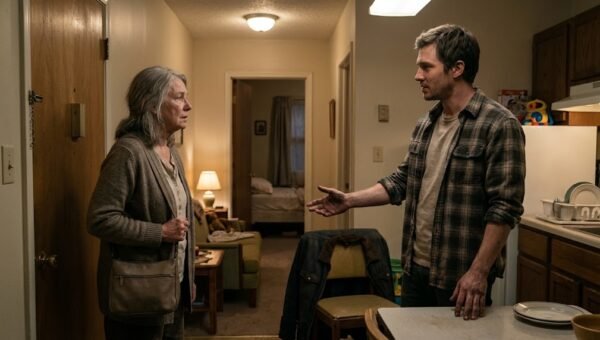
I picked up. Greg didn’t ask how I was.
“I need to talk about last night,” he said.
I sat down. The coffee had already gone lukewarm.
“What about it?”
“Alyssa noticed your face during the speech.”
I pressed my fingers against the mug. “I was tired.”
“You looked like you were miserable.”
“I’d been there since morning.”
He breathed out hard. “You made it awkward.”
I didn’t answer right away. I was still waiting for him to say he’d noticed the work, or that he understood why I’d felt hurt. I waited long enough to hear him shift the phone against his cheek.
Then he said, “If you ever act like a martyr at one of our family events again, don’t bother coming.”
I said nothing.
He kept going. “It was supposed to be a happy night. You can’t make everything about you.”
I wanted to tell him that I had made six months of things about them. I wanted to remind him that I’d saved money, fixed mistakes, and carried flowers with my own hands. I wanted to say his wife had named twelve people and somehow skipped over me.
Instead, I said, “All right.”
He went quiet.
“That’s it?” he asked.
“Yes.”
He hung up.
I sat at the table and watched the coffee get a skin on top. The call had taken maybe four minutes. I’d spent months making sure no one at that wedding had to feel uncomfortable, and my son had called to tell me my hurt was the problem.
That was the part I couldn’t keep smoothing over. I had done it so often that my help had become something they expected, not something they valued. Maybe I’d trained them to see my time as empty. That didn’t excuse what they’d done, but I had to admit my part in it.
I’d been making myself easy to ask.
Two days later, Alyssa texted. They were leaving for Maui and needed someone to store their honeymoon luggage, check on the apartment, and deep-clean before they got back. She listed the things she wanted done like a grocery list.
I read it twice. I was standing by the sink, rinsing a coffee cup. There was no “Would you mind?” There was no mention of the call. Just the next job.
I showed the message to my friend Clara. She’d seen me running around at the wedding, and she’d watched Alyssa give the speech.
Clara read the text and handed my phone back. “Are you going to do it?”
I said, “I don’t know.”
She looked at me. “You do know.”
I didn’t like hearing that. I especially didn’t like that she was right.
Greg called that evening. His voice was more relaxed now, as if the morning call had cleared the air.
“Alyssa sent you the list, right?” he said.
“I saw it.”
“Could you get the apartment done before we’re back? We’re going to be wiped out.”
I looked at the binder still sitting in my car. I hadn’t carried it into the house. I didn’t need to. I knew the weight of it.
“No,” I said.
There was a pause.
“No?” he said.
“I’m not storing your bags or cleaning your apartment.”
“Mom, it’s just a few things.”
“It’s not just a few things to me.”
He started to say something, then stopped. I could hear Alyssa speaking in the background, but not the words.
“We thought you’d want to help,” he said.
“I did help. I planned your wedding for six months. I did it for free. Then I listened to you tell me not to come back if I looked hurt.”
“That’s not what I meant.”
“It’s what you said.”
He went quiet again. I almost filled the space for him. That old habit rose up fast. I could feel myself reaching for a softer version, something that would let him off the hook and get us back to normal.
I didn’t.
“I’m not asking you to apologize right now,” I said. “I’m telling you what I’m available for. No more free work, and no more assuming I’ll say yes.”
He said, “So you’re just done helping us?”
“I’m done being treated like help.”
That came out sharper than I planned. I didn’t take it back.
They came by the next afternoon for the spare apartment key. Greg had the key ring in his hand when he came through my front door. Alyssa stood behind him, holding her phone. They were leaving for the airport the next morning, and the luggage still needed to be put away.
I was ready for them to argue. I’d even practiced saying no again while I made breakfast. But Greg looked tired, not angry. Alyssa looked annoyed, though she kept it mostly to herself.
“You could at least check the place once,” Greg said. “We’ll pay someone if we have to.”
“Then you should,” I said.
“We’ve got enough going on.”
“So do I.”
He looked at me like he was trying to find the old answer in my face. The one where I said not to worry, I’d handle it.
I didn’t give it to him.
Alyssa said, “This feels like you’re punishing us.”
I shook my head. “No. I’m stepping back.”
That didn’t make either of them happy. I wasn’t trying to.
Greg held out the key ring. “Do you still want this?”
“No.”
I took the small silver apartment key off the ring. It was the one they’d given me in case they got locked out, or needed a plant watered, or needed something moved while they were gone. I’d been glad to have it. It had felt like trust.
I set it on the entryway console table.
Greg started to say my name, then stopped. Alyssa’s phone made a little sound in her hand. Nobody picked it up.
They left without asking me to reconsider.
Later, Greg texted to say they’d hired a cleaner and had paid the venue to sort out a final charge on the table rental. He didn’t say how much. I didn’t ask. He also said they’d need to talk about what happened after they got back.
I replied, “We can talk when you’re ready to talk about all of it.”
That was where we left it. Not fixed. Not cut off forever. Just different.
I put the binder in the recycling bin. I spent the next Saturday at the library book sale because I wanted to, not because anyone needed me there. Clara came with me, and we got pie afterward. I didn’t check my phone under the table.
I have to remind myself that loving Greg doesn’t mean I have to prove it by staying useful. I’m still learning that. Some days the old reflex comes back, and I start making a list in my head of what I could do for them.
Then I remember the phone call.
When Greg and Alyssa had gone, I closed my front door and made a fresh cup of coffee. The house was quiet. The silver key stayed on the console table. I sat down and drank my coffee while it was still hot.