PART 1
My daughter asked me to sign a boiler inspection form I knew was false. We were standing in the basement of the apartment building where I had worked as superintendent for twenty-four years, and the tenants upstairs had been without reliable heat for three nights.
“Just confirm the date,” Lila said. She held out a pen. “The owner needs the paperwork before he will approve the replacement part.”
The date on the form was March 8. The boiler service tag said the last inspection had been in January. I had checked it myself the night the heat failed.
Lila used to follow me around that basement in yellow rain boots, carrying the flashlight while I explained which pipe was which. Now she managed the building for a company that owned six properties, and I was retired, living two towns over. We had barely spoken since she took the job. She still believed I had made her childhood smaller by staying late for every burst pipe and broken radiator.
“I can not sign what I did not see,” I said.
She lowered the paper. “You think I am trying to cheat someone?”
“I think the boiler is still broken.”
“I am trying to keep the building open.” Her voice cracked on the last word, then steadied. “If the city condemns it, forty-three people have to find somewhere else to go.
The owner will not spend money on a building he thinks he is losing.”
That was the first thing she had said that sounded like the girl who once slept in the laundry room so a tenant’s child would not be alone during a storm.
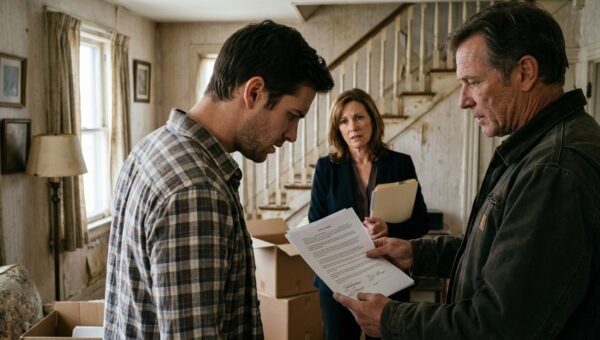
I asked to see the repair records. Lila hesitated, then brought me to the narrow office behind the basement stairs. The old maintenance ledger was still there, its blue cover stained with rust. I recognized my block printing. In February, I had written: “Burner cycling. Call licensed technician before restart.” Below it, someone had added a March 8 inspection in darker ink.
“That is not my handwriting,” I said.
“No,” Lila replied. “It is mine.”
I stared at her. “You wrote it?”
“I wrote the date. The inspection happened.”
“Then where is the technician’s report?”
She rubbed the bridge of her nose. “He came. He would not sign off without a new part. The owner said he would send it. He did not.”
“So you made it look as if the inspection passed.”
“I bought us time.”
She said it plainly. That made it worse.
A radiator clanged overhead. We heard Mrs. Alvarez in apartment 2B call down the stairwell that her bedroom was cold again. Lila flinched, then grabbed her coat. I followed her upstairs.
Mrs. Alvarez had wrapped a bath towel around the pipe beneath her kitchen sink. Water had started dripping from a joint. While Lila shut off the valve, I took a picture of the wet floor, the thermostat, and the paper inspection form. She saw me.
“Do not send those to the city,” she said. “Give me until tomorrow.”
“For what?”
“To get the owner to answer. If you report this tonight, the city could close the building before anyone has a plan.”
“And if I sign, the next person who gets hurt will be standing under a boiler you told everyone was safe.”
She looked away. “You always think there is a clean choice.”
There wasn’t. I could report the false form and risk the tenants being displaced.
I could stay quiet and let a paper claim do the work of a repair. I told her I would not sign, but I would give her until morning to show me a real work order and a technician’s name.
At home, I searched my old files for the boiler company’s number. I found the January receipt tucked inside my maintenance notebook, along with a note I did not remember writing: “Do not let them restart until pressure valve is replaced.”
The next morning, Lila came to my door with a tablet. “I found the call log,” she said. “You need to hear this before you decide what to do.”
The recording began with the owner’s voice, and then he said, “Mae was there when I told you to change the date.”
PART 2
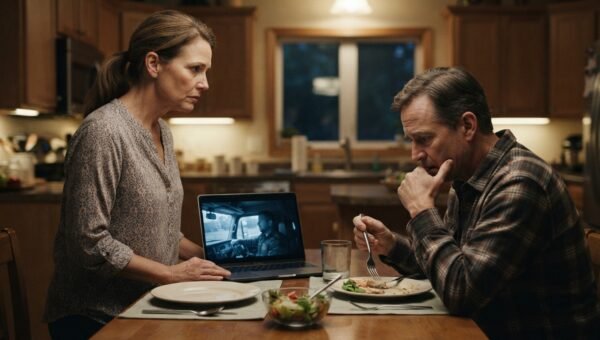
The small speaker on the tablet hissed with static before the owner’s voice cut through the kitchen silence. It was recorded during a phone call from two weeks ago, before the heat went out completely.
“Just put down the inspection date from the quarterly service,” the owner said on the recording. “Mae knows how these old boilers work. If she signs off on the paperwork, the city inspectors will not look twice.”
I pulled my hand back from the table as if the plastic casing of the tablet were hot. I looked up at Lila. Her eyes were red-rimmed, carrying the exhaustion of someone who had not slept since the temperature dropped.
“You recorded him?” I asked.
“I started recording every conversation after he refused the second parts order,” Lila said. She laid the tablet flat between us on the worn laminate. “He told me if the building failed inspection, it was on my license as property manager. Not his. He wanted a scapegoat, Dad. If I refused to falsify the log, he threatened to fire me and claim I neglected the maintenance.”
“And you thought involving me would cover your tracks?”
“I thought if my father, the man who ran this building for twenty-four years, looked at the system and agreed the burner was safe enough to hold pressure for three more days, we could get through the weekend.” Her voice dropped to a whisper. “I didn’t want to lie. I just wanted the heat to stay on for Mrs. Alvarez.”
The justification hung in the air, heavy and familiar. It was the same logic I had used for decades, staying late, patching leaks with rubber tape and wire because management would not pay for a proper overhaul. I had taught her that sacrifice meant absorbing the danger so other people did not have to feel it.
“That does not fix the boiler, Lila,” I said.
“I know.” She tapped the screen, and a second audio file began to play. This one was shorter. It was a voicemail from an inspector at the municipal housing bureau, left late last night. The voice stated that a routine audit of the block’s heating complaints had flagged our address, and an investigator was scheduled to arrive at nine o’clock this morning.
I looked at the kitchen clock. It was eight-fifteen.
“Does the owner know about the audit?” I asked.
“He thinks he has until next month,” Lila said, grabbing her coat from the back of the chair. “That is why he told me to fake the paperwork yesterday. He was trying to beat the audit window.”
We did not talk during the drive back to the building. The morning air was sharp, frost clinging to the dead grass along the highway. When we pulled up to the curb, a city vehicle with municipal plates was already parked behind the dumpster enclosure.
PART 3
The investigator was a woman with a gray wool coat and a clipboard, standing in the basement corridor with Mrs. Alvarez. The smell of unburned natural gas hung faint and sour near the base of the brick chimney.
Lila walked straight toward them, her posture rigid. I stayed back by the boiler room door, holding my old maintenance notebook in my hand.
“Are you the manager?” the investigator asked, looking up from her papers.
“I am,” Lila said clearly. “And this is my father, the former superintendent. We need to show you the actual service logs.”
She did not hand over the fake paper she had asked me to sign the night before. Instead, she reached into her bag and pulled out a manila folder containing the genuine printouts, the owner’s email directives demanding delayed repairs, and the printed transcript of the recorded phone calls.
The investigator took the folder, flipping through the pages while her eyes shifted from Lila to the rusted relief valve on the side of the boiler.
“You altered the service date in the ledger,” the investigator said, pointing to the entry in the blue book.
“I did,” Lila said without flinching. “Under direct instruction from the owner, Arthur Vance. Here is the recording where he orders me to do it, and here are the emails proving he withheld the budget for the replacement valve.”
I watched my daughter standing under the flickering fluorescent light of the basement. She wasn’t the little girl holding my flashlight anymore, nor was she the defensive manager trying to bury a mistake. She had traded her own safety for the tenants, but she had stopped short of letting the owner pin the entire liability on her name.
The investigator listened to a thirty-second clip on Lila’s phone, her expression tightening into a hard professional line. She pulled out her radio and called for an emergency compliance unit, citing mechanical hazard and falsification of municipal safety records.
By noon, the building’s main gas valve had been shut off by the utility company, and notices of temporary relocation were being taped to the lobby doors. The owner’s office was already dodging calls from the city attorney.
ENDING
The basement was quiet again by mid-afternoon, save for the hum of the portable electric heaters the city had brought in for the few tenants who hadn’t left yet for family members’ homes.
Lila was sitting on an upturned milk crate near the workbench, wiping grease off her hands with a rag. I set my old maintenance notebook down on the wood surface beside her.
“The city is going to seize the management rights,” I said.
“I know,” she replied, staring at the concrete floor. “I’ll probably lose my license too, for going along with it as long as I did.”
“You handed over the recordings.”
“It took me too long.”
I pulled a small brass key from my pocket—the spare key to the boiler room door that I had forgotten to turn in the day I retired—and laid it on the wood next to her rag.
“You still have your yellow rain boots?” I asked.
Lila looked down at the key, then up at me, a small, tired smile finally breaking through her tension.
“In the trunk of my car,” she said.
We walked out together into the cold March afternoon, leaving the basement door unlocked behind us.