Mark was blocking the warehouse door while I still had Chloe by the arm.
“She is not going anywhere,” he said.
He had a half-smile on his face, like this was some joke I was too uptight to get. There were kids behind him, most of them looking about Chloe’s age, and the bass was shaking a loose metal panel overhead. Chloe had a bottle of vodka in one hand.
I looked from her to Mark, and for a few seconds I couldn’t make those two facts fit in the same room.
I’d been home folding Chloe’s clean school clothes when I checked the GPS app. That was the whole reason I was at the warehouse. I’d put the tracker in her car after she broke curfew three times and told me she’d been at the library. I didn’t like doing it. I did it anyway, then told myself it was just until she earned my trust back.
At 9:18 on Tuesday night, her car showed up in an industrial lot 30 miles from our house.
The app had a little blue dot. That was all. I stared at it long enough for my phone screen to dim, tapped it awake, and checked again. Chloe had texted me an hour before: “Library. Studying with Jess.” I called her. She didn’t answer.
So I grabbed my keys and left.
I didn’t call Mark. He’d gone out after dinner, supposedly to meet a man from work, and I wasn’t about to waste time checking whether he was home. I drove with the app open in the passenger seat, taking the turn toward the industrial park when the dot stopped moving. I kept thinking there must be some normal explanation. A friend’s house, maybe. A mistake with the map. Anything.
There wasn’t.
The warehouse was dark from the road, but I heard the music before I found the door. The lot had no other cars except a line of teenagers’ vehicles, including Chloe’s. I went in through a side entrance that wasn’t locked. The air smelled like old dust and sweet drinks. Kids were packed around the open floor with cans in their hands. A few of them looked up, then looked away.
I searched faces until I saw Chloe on a worn couch near the far wall.
She was holding a bottle with a $50 price tag still stuck to the neck.
She looked at me, then down at it. Her face changed before she said anything.
“Mom, wait.”
I crossed the room. I was mad, and scared, and not thinking about how many people were watching. I took her arm.
“We’re leaving.”
She pulled back. “I’m fine.”
“You’re holding vodka.”
“It’s not like that.”
I didn’t ask what that meant. I just kept my hand on her arm. Then Mark stepped between us.
I know I’ve said he had a half-smile. That part sticks because it was the same smile he used at home when he thought I was making a fuss over nothing. He looked older than the man I’d kissed goodbye in our kitchen that morning. Not older in his face. Just strange to see him there, like a piece of my house had been dragged into a place where it didn’t belong.
I said his name once. “Mark.”
He lowered his voice, but not enough that Chloe couldn’t hear. “Don’t make a scene.”
I looked at his hand, which was braced against the doorframe, then back at his face. “Move.”
For a second he didn’t. Then I saw Chloe looking at him, not me.
She wasn’t confused about who he was. She knew. That was worse than the bottle.
Mark told me he’d rented the space for the kids. He said some of them had rough homes, and they needed somewhere adults wouldn’t yell at them for every little thing. He said he kept an eye on things. I could see the empty cups, the open bottles, the teenagers who were trying hard not to seem scared of me.
I asked him, “How long?”
He said, “A few months.”
A few months. Not one bad choice. Not a party he’d wandered into. He had keys. He knew the kids. He had made himself part of their nights, and I was standing there learning about it from the mouth of my own husband.
I started to say something about Chloe’s age, and then I stopped because I could feel how many people were listening. I wanted to ask her how often she’d been there. I wanted to ask Mark what he thought he was doing. I wanted to grab that bottle and throw it against the wall. I did none of those things. I kept hold of Chloe and said, “We’re going.”
Mark said, “She can make her own choice.”
“She’s sixteen.”
“She’s not a baby.”
That line got to Chloe. I saw it in her face. Maybe she’d been repeating it to herself. Maybe he’d said it to her before. I didn’t know, and I still don’t know how much she believed him. I only knew I couldn’t leave her there with him and call that respecting her choices.
I pulled her toward the door. Mark put his hand out again, not touching me, but blocking us. I stepped around his arm. He could have stopped me. I think he knew that if he did, every kid in that room would see exactly what he was.
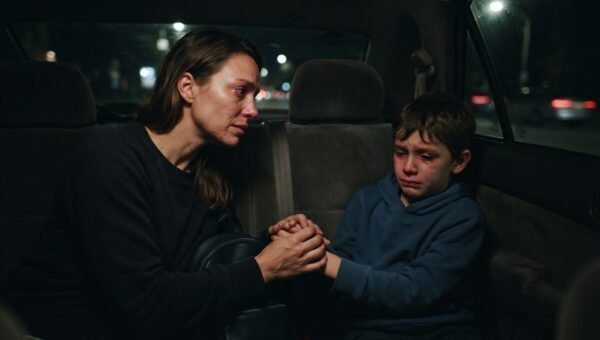
Outside, the cold air hit my cheeks. Chloe came with me, but she didn’t speak until we were both in the car. I locked the doors and set the vodka bottle on the floor between us. My hand was shaking so badly I missed the keyhole once.
For a while, neither of us said anything. I could still hear the music from inside when I started the engine. Chloe kept looking at the bottle.
Finally she said, “Dad said it was safe.”
I gripped the steering wheel. “You knew he was there?”
She rubbed her thumb along the edge of her sleeve. “I knew he helped run it. I didn’t know you’d come.”
That answer hurt, but not in the same way as the sight of her sitting beside him. She hadn’t been tricked into every part of it. She’d lied to me, gone there, and taken the bottle. I wasn’t going to pretend otherwise. Still, she was sixteen, and Mark was her father. He had a house key and a joint bank account and my trust. He’d used all of that to make himself the adult she could get away with anything around.
I had to keep reminding myself of that during the drive. Not because it made what Chloe did fine. Because I was already turning all my anger on her, and that would have been easier than looking at Mark.
“I’m sorry,” she said.
I said, “We’ll talk at home.”
“I didn’t think it was a big deal.”
“It is.”
She went quiet. I didn’t press her. I was not proud of how sharply I’d said that, but it was the truth.
When we got home, Mark wasn’t there. He came in about forty minutes later, using his key like this was still an ordinary Tuesday. I’d put the vodka on the kitchen counter. Chloe was upstairs. I stood beside the counter with my phone in my hand, the GPS app still open.
Mark looked at the bottle. “You could’ve called me.”
I laughed, one short sound I didn’t mean to make. “I didn’t know you were there.”
“I’m trying to help those kids.”
“You let our daughter drink.”
“I didn’t hand her the bottle.”
That was the sort of thing he said when he wanted the conversation to become smaller. One bottle. One night. One parent overreacting. I told him I’d seen the room, the kids, the way Chloe looked at him when he stepped in front of me.
He sat down at the kitchen table. He said the kids didn’t have anywhere else to go. He said he was doing something useful. He said I’d never understood how hard it was to be a father to a teenage girl.
I asked him if he thought that made this okay.
He looked down at his hands. Then he said he’d been going there since fall. He used some of our money for rent and supplies. He told himself it was better than letting kids drink somewhere without an adult around. He said he knew I’d say no, so he hadn’t told me.
There it was. Not a misunderstanding. Not a secret he’d been waiting for the right moment to share. He knew I’d say no, and he made sure I couldn’t stop him.
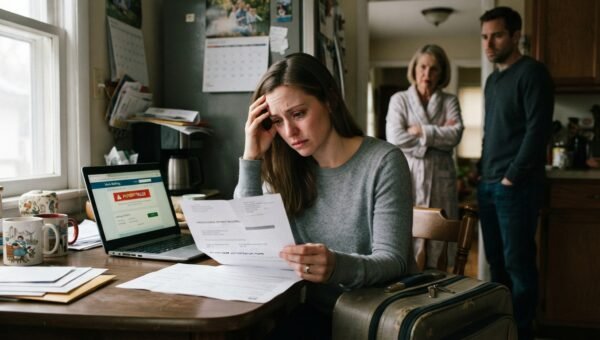
The next morning, I called my sister and asked her to take Chloe for the day. Then I called a lawyer. I’d rather say I handled it calmly, but I didn’t. I cried in the laundry room, got mad at myself for crying, and called the lawyer back because I’d forgotten to ask what to do about the joint account.
Mark stayed at the house for two nights. We spoke only about basic things. He asked whether I’d told anyone. I said I’d told my sister. He said I was making this sound worse than it was. I said I wasn’t going to argue about the size of it with him.
A lawyer helped me set up separate finances and start the separation paperwork. Mark moved into a rented place. I changed the locks after he took his things, not because I thought he’d come back to hurt me, but because I couldn’t stand the old key still working. The warehouse arrangement ended after I told him I’d report the drinking and his role in hosting it if he kept trying to make the kids’ safety my problem.
He didn’t fight me on that. He said I was taking his good intentions and making them ugly. I told him good intentions didn’t make him honest.
Chloe and I had a harder time.
For the first few days, she gave me short answers. I took her phone for a week and made her give me the car keys at night. She called that unfair. I told her it probably was, but I wasn’t ready to act like nothing had happened. I also told her she could talk to me without getting yelled at. I had to say that twice, because I’d already yelled.
She finally told me Mark had been giving kids rides and paying for snacks. He called the warehouse a place where nobody had to pretend to be perfect. She said it felt good to have him on her side when I was asking about curfew and school. She said she didn’t think he’d let anything bad happen.
I said, “He should have told me.”
She looked at me and said, “He told me not to.”
I wanted to ask why she obeyed him. I wanted to remind her that I was her mother. Instead I took a breath and told her she should have called me if she felt unsafe. She said she knew. She was sorry. I believed her, but trust doesn’t come back just because someone says the right thing once.
We agreed to check in by text if plans changed, and she’d keep the car at home if she couldn’t tell me where she was going. I promised not to use the tracker as a substitute for asking her directly. We wrote the rules down because both of us had started arguing about what we thought we’d agreed to.
Mark signed the separation papers. Chloe signed our small honesty agreement, too. It wasn’t some grand promise. It said she’d tell me where she was going, and I’d listen before deciding what the consequence should be. We both knew a piece of paper couldn’t fix us. We signed it anyway.
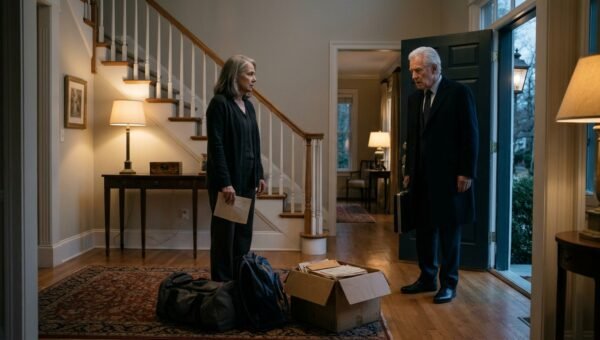
The morning Mark took the last box, Chloe sat across from me at the kitchen table. I’d made coffee. She’d put her car keys beside the agreement, right where I could see them. The house was quieter, but it didn’t feel peaceful yet. I had to remind myself that quiet and safe weren’t the same thing.
Chloe reached over and slid the keys toward me.
“I’m going to tell you the truth next time,” she said.
I put my hand on the keys. I didn’t tell her I believed it. I told her I was glad she came home.