At 9 p.m., my son told me I wasn’t welcome at his dinner. I was standing in my bedroom in a navy dress, with Arthur’s pearls in my hand, and I had to read the text twice before I understood it.
“ You’re not invited. My wife doesn’t want you here.”
I’ve changed the spacing in my head over the years, but not the words. I had been ready to leave for my son Wesley’s townhouse.
The dinner was supposed to start at nine. I’d paid $98,600 toward their bills that year, and I still remember thinking I should bring the lemon cake I’d made. That’s the sort of thing I worried about.
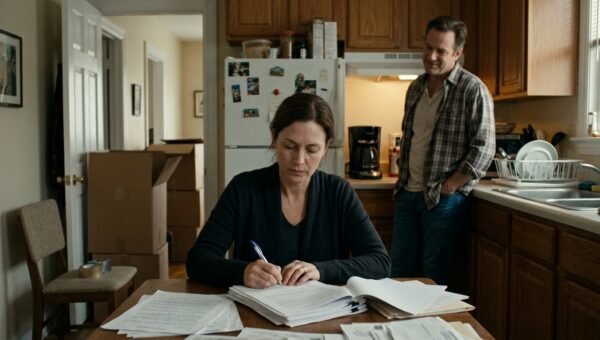
I put the pearls back in their box. Then I sat at the kitchen table while rain tapped the glass and opened the manila folder marked WESLEY. I didn’t call him. I didn’t call his wife. I wanted to know what I had actually paid for, before I let myself say anything.
The folder was thick enough that the flap wouldn’t lie flat. I’d kept it for fifteen years, first because I was careful with money, then because there were too many papers to throw away. Preschool. Tuition. Mortgage help. Insurance. Repairs. Club dues. I had receipts, copies of checks, and notes in my own handwriting. I’d made the list so many times I knew the shape of it, but that night I started at the beginning.
I paid Wesley’s preschool bill when he and his wife were short. I helped with the tuition because he said the degree would get him a better job. When they bought the townhouse, I covered part of the mortgage until they got settled. They never quite got settled. The roof needed work, then the car needed work, then a payment was late. Each time, Wesley called me and said it was temporary.
I don’t mean I was tricked every time. I wanted to help. I liked being the person he called. I liked hearing my granddaughter’s small voice in the background, asking when I was coming over. And if I’m being plain, I liked that my help made me hard to leave out. I didn’t say that to myself back then. I only thought, family helps family.
I had told myself the club dues were just for a year. I’d covered them because Wesley said it mattered for work, and his wife said their friends all belonged.
I wasn’t invited to most of the gatherings there. I knew that. I told myself it was because I was older and didn’t care for late nights. At the time, that answer sat well enough.
At some point after midnight I stopped sorting the papers. I had a stack of receipts on one side of the table and the old ledger open in front of me. The total for that year was there in blue ink: $98,600. I checked it twice, then checked the bank statements against it, because I didn’t want my anger doing arithmetic for me. It was right. Fifteen years of help, and I was still standing in my kitchen in a dress I’d bought for a dinner I wasn’t allowed to attend, staring at the costs of a life I had helped pay for while my place in it could be canceled by text.
I slept badly. I didn’t cry, exactly. My eyes kept watering, and I blamed the kitchen light even after I’d turned it off.
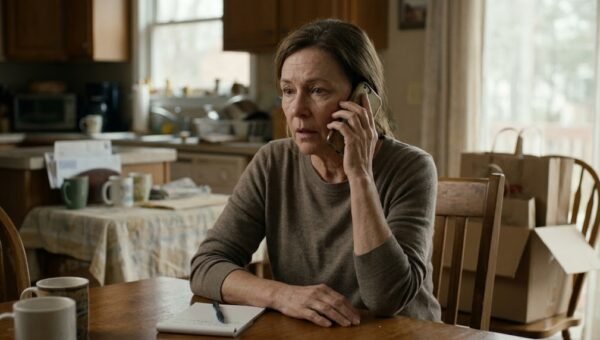
At 6:47 the next morning, my granddaughter called. I knew it was her before I answered because she always called early when she was excited. She asked whether I was coming to dinner. The dinner was still happening, apparently. I asked if her parents had said I wasn’t coming.
She went quiet for a second. Then she said she didn’t know. I told her I loved her and that I wouldn’t be there. I kept my voice even because she was a child and none of this was hers to carry.
“Grandma, are you coming?”
“I love you, sweetheart. I won’t be there today.”
She asked if I was sick. I said no. I couldn’t bring myself to tell her that her father had let his wife send me away from a dinner I’d helped pay for. It would have been true, but it wouldn’t have been fair to make her hold it.
When we hung up, I kept the phone in my hand for a minute. I could call Wesley and ask him to explain. I could ask if he meant it, or if he’d sent the text in a hurry, or if he would have invited me if his wife hadn’t objected. I knew the answers wouldn’t change what I’d read. I called my bank instead.
My bank manager, Lydia, had known me for years. I told her I needed to review every recurring payment coming out of my accounts. She didn’t ask me to defend why. She set a time for me to come in that morning and said she’d have the records ready.
I took the folder with me. The pearls stayed on the kitchen table. I didn’t want to wear them to the bank, and I didn’t want to put them away yet.
Lydia had the payments on a screen when I arrived. I sat down and put my hands in my lap while she went through the list. There were 174 active payments. Some were automatic transfers. Some went straight to companies. There were mortgage payments, insurance, school costs, repairs and club dues. All of them came from my accounts.
“Are all 174 still active?” I asked.
“Yes,” Lydia said. “Every one of them.”
I looked at the list. I had assumed some things had ended, or that Wesley had taken over a few. I was wrong. Lydia showed me the dates and the amounts. She also showed me that there was no other savings account linked to these payments. There was no second source set up to catch them if mine stopped.
I asked her to check the total again. She did. It wasn’t an error. I’d been carrying the whole arrangement so quietly that even I had stopped seeing how much of it there was.
Lydia asked whether I wanted to stop all the payments. I said yes. She explained which forms I’d need to sign and what would happen to the scheduled payments. She didn’t rush me. That mattered. I read each page. I asked her to explain two lines I didn’t understand. Then I signed every stop order.
My hand shook once, on the last one. I pressed the pen down and finished my name.
I wasn’t trying to punish my granddaughter. I made sure the school costs I’d already paid were covered through the end of the month. I wasn’t trying to make a scene at Wesley’s house or embarrass anyone in front of his friends. I simply wasn’t going to keep sending money into a home where I’d been told I wasn’t wanted.
Lydia asked if I wanted to leave the folder with her. I said no. It belonged with me. I put it in my bag, and the meeting was over.
Three weeks earlier, Wesley had called about the club dues. He said his wife was worried they’d look out of place if they dropped the membership. I told him I’d cover it. I didn’t ask why I was paying for a place where I apparently wasn’t welcome. That was the kind of question I saved for later, and later kept moving.
Wesley called that afternoon. His name came up on my phone while I was back in the kitchen. I let it ring twice, then answered.
“Mom, what did you do?”
His voice was sharp and confused. The mortgage payment had been rejected. A couple of other drafts hadn’t gone through. He said the club had called, and his wife was upset because a payment was due. I didn’t interrupt him. I listened until he ran out of breath.
“I stopped the payments,” I said.
“Why would you do that?”
I looked at the folder on the table. It was closed now. “You got a text from me last night,” I said. “Remember the one you let your wife send?”
He said his wife hadn’t meant it the way it sounded. I asked him how else I was meant to take it. He said she’d been stressed about the dinner. He said there were people from the club coming, and she didn’t want things to get awkward.
I asked what was awkward about me being there.
He didn’t answer at first. Then he said she didn’t want their friends knowing that I paid for so much. She said it made them look like children. She wanted to keep that part private, and she didn’t want me around their social circle.
So that was it. My money could be there. I couldn’t be.
I asked Wesley whether he knew that was why I wasn’t invited. He said he knew she didn’t want me there, but he thought I would understand. He said he didn’t want a fight with his wife over one dinner.
“One dinner?” I said.
He started talking about the mortgage, the insurance, the payments that had just failed. He asked whether I could turn them back on while they worked out what to do. I told him the bank had stopped all 174 payments. I would not restart them. He said I was his mother. I said I had been his mother every day of those fifteen years, and I had also been his backup plan.
He went quiet. I could hear a television somewhere in the house. I don’t know what was on. It sounded cheerful, which was an odd thing to notice.
“I can’t fix this for you,” I said.
He said he’d call back. I told him he could call me, but he couldn’t call me for money. I didn’t say it to hurt him. I said it because I needed him to hear the rule without any soft edges around it.
I haven’t put the payments back. Wesley and his wife have had to decide what they can afford and what they can’t. I don’t know every detail, and I don’t need to. I still speak with my granddaughter. I tell her I love her, and I don’t ask her to take sides.
I’ve started looking over my own accounts with the same care I gave Wesley’s. I’m going to use my money for my health, my home and the people who want me there. It isn’t a grand plan. It’s just my money, and I’m old enough to know I don’t have to explain every dollar.
The rain cleared later that day. I sat by the kitchen window with Arthur’s pearls around my neck and the WESLEY folder closed on the table. I left it there until evening. Then I put it on the shelf, and I didn’t open it again.