The call notification from Sadie’s teacher lit up at 3:26 on a Thursday, while I was in a secured planning room at Joint Base Langley-Eustis. I nearly silenced it. We were in the middle of a briefing, and personal phones were supposed to stay put away. Then I saw the school number and stepped into the hall.
“She’s safe with me, but she was waiting outside the locked gate in the rain,” Mrs. Dorsey said.
I was already moving before she finished. I told my supervisor I had a family emergency, grabbed my keys, and drove out with my hands tight on the steering wheel.
I kept thinking there had to be some mix-up. My parents, Frank and Carol, had picked Sadie up every Thursday for almost a year. They knew the time. They knew which gate.
At 3:48, I pulled into the school lot. Rain kept tapping the windshield while I looked for the office door. The lot was nearly empty. Sadie came out with Mrs. Dorsey, her pale-blonde hair stuck to her cheeks and her blue coat soaked through. Her sneakers made a wet squeak when she ran to me.
“I waited like I was supposed to,” she said into my jacket.
“I know, honey. I’ve got you.”
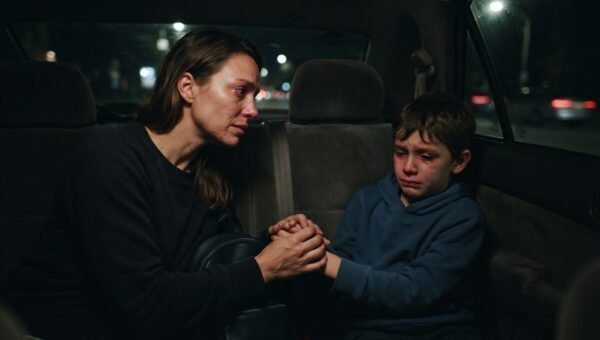
I held her there longer than I needed to. I could feel her shivering through my shirt. Mrs. Dorsey gave me the incident report and told me what she’d seen. No one had come to the gate. Sadie had waited by herself until a staff member noticed her and brought her inside. The pickup log showed no sign-out from my parents.
I asked Sadie if she’d called them. She shook her head.
“I thought Grandma was coming,” she said.
That was the part I kept hearing all the way home. Not the rain, not the wet shoes, not even the locked gate. She’d expected them. I’d told her they would be there.
I used to think the Thursday pickups were one of the few ways my parents made things easier for me. I worked long hours, and my job didn’t always bend around a first-grade dismissal bell. My sister, Dana, had two kids of her own, both busy with school and activities. My parents said they wanted to help everybody.
I was helping them, too. That part matters.
Over the years, I paid their mortgage shortfalls, car insurance, utilities, grocery bills, and a few repairs they said couldn’t wait. I covered expenses for Dana when she was “between paychecks,” which seemed to happen a lot.
I didn’t keep a neat total in my head. I used automatic transfers because it was easier than having the same money conversation every month.
There was a yellow legal pad in my desk where I’d written down a few of the bigger payments. I used to check it when a new bill came up, then stopped. I thought of it as family money, not a debt. I didn’t ask for receipts. I didn’t want to be the daughter who made everyone prove they needed help.
By the time Sadie was six, I’d paid out $381,640. I only knew the exact number because I sat down that night and added it up.
At home, I got Sadie into dry clothes and made her hot chocolate. I checked her hands and feet, then called the school back to make sure I had the report right. Mrs. Dorsey confirmed the time and said two staff members had seen Sadie waiting.
I asked for copies of the sign-out log and the incident form.
“I’m sorry this happened,” she said.
“Thank you for staying with her.”
Sadie sat on the kitchen stool with her socks tucked under her legs. She was quiet, not crying. I wanted to call my parents right then and ask what kind of people leave a six-year-old outside in the rain. Instead, I put her dinner in front of her and waited until she’d eaten.
I didn’t want her to hear me yell. I also didn’t want to pretend nothing had happened.
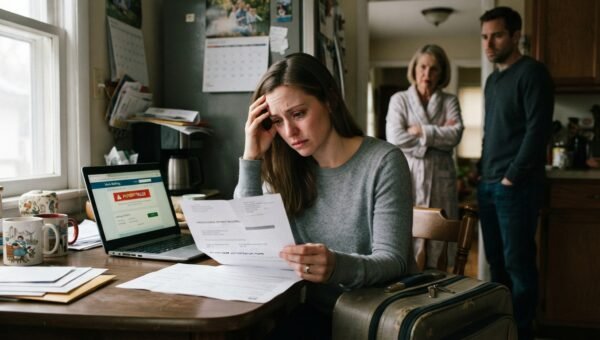
When she went to bed, I opened my banking app and pulled up the recurring payments. One by one, the amounts came up. The mortgage help. The electric bill. The credit card I’d put in my name for emergencies. The monthly transfer to my parents. The payments for Dana that I’d been told were temporary.
I added them again. Then I checked the older records because I thought I must have made a mistake.
$381,640.
I sat at the table for a long time with that number on the screen. I kept thinking of the yellow legal pad, how I’d once written “help Mom and Dad” beside a payment like that explained anything. I wasn’t angry only because the money was gone. I was angry because I’d made it easy for them to treat my help as something they were owed.
I canceled the scheduled transfers and froze the card. I removed my account from the bills I was paying. It took longer than I expected. Some websites asked me to confirm twice. One asked whether I was sure I wanted to stop paying the electric bill.
I was sure.
At 8:17, my mother called. I let it go to voicemail. Then my father called. Then Dana. I didn’t answer any of them. I sent my parents one message: “Sadie is safe. I’m not discussing this tonight. I’ve stopped all financial support.”
My mother replied, “You’re making this bigger than it is.”
I put the phone face down and went to check on Sadie.
The next morning, she asked if Grandma and Grandpa were picking her up that afternoon. I told her no. I said I’d handle it from now on. I didn’t explain the money or the calls. She nodded and went back to her cereal.
I arranged after-school care through the school, then changed my work schedule where I could. It wasn’t easy. It was still easier than handing my child back to people who thought she could wait outside a locked gate.
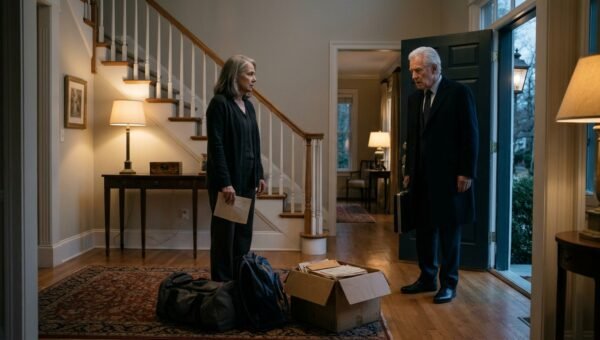
Three weeks later, my parents asked me to come over. Their credit card had been declined at the grocery store, and one of their utility payments had bounced. My father said he wanted to “clear the air.” I brought the incident report and a printout of the canceled payments. I didn’t bring Sadie.
Dana was there when I arrived. She kept rubbing the edge of her phone case with her thumb. My mother had a stack of bills on the table. My father looked at the printout before he looked at me.
“You stopped everything?” he said.
“Yes.”
“Even the mortgage?”
“I stopped all of it.”
My mother pushed the bills into a straighter pile. “We thought you’d calm down.”
“I’m not upset about a missed pickup. Sadie was left outside in the rain.”
“We didn’t leave her there,” my father said. “We had to take Dana’s kids.”
I looked at Dana. “Where?”
She stared at the table. “Their enrichment program. It was out of town, and the ride was complicated.”
“You knew Sadie was waiting?”
My mother took a breath. “We thought she could wait or find a teacher.”
“She was six.”
“We had to get the other kids there,” my father said. “They needed the space in the car.”
I looked down at the report. The little square for “adult pickup” was blank. I had read it so many times I knew exactly where the pen mark ended.
“You could’ve called me,” I said.
“We didn’t want you to make a fuss,” my mother said. “You’re always working.”
“So you left her at school instead?”
My father rubbed his forehead. “We made a bad call. It wasn’t like we meant for her to be out in the rain.”
I believed that. They probably hadn’t pictured her shivering by the gate. They’d pictured a quick choice, a problem pushed onto the teacher, onto me, onto Sadie. That didn’t make it better.
Dana finally spoke. “Mom said you were covering the pickup. I didn’t know they’d leave her there.”
I asked her to show me the messages. She hesitated, then unlocked her phone and passed it across the table. I scrolled through the exchange with my mother. They’d talked about the drive and the activity. My mother had asked if Dana’s kids were ready. Dana had replied that they were. Then my mother had written that she’d “sort out Sadie later.”
There it was. Not a missed turn. Not a dead phone. A choice.
My father said, “We did a lot for you, too.”
I looked up. “What did you do for me?”
“We helped with Sadie,” my mother said. “We took her Thursdays.”
“You didn’t take her Thursday.”
“Once,” she said. “And we’ve done plenty before.”
I asked if they thought the money I’d sent was payment for the pickups. They didn’t answer right away. My mother looked at my father, and he gave a tired little shrug.
“We’ve put up with a lot,” she said. “Your life is always so complicated.”
I didn’t understand what she meant. “What does that have to do with Sadie?”
My father tapped the printout. “We thought you knew how much we’d done. We thought you owed us some help.”
“By leaving my daughter outside?”
“No,” he said, then stopped. “Not that. We thought you could manage. We thought Sadie could wait.”
That was the reason. They’d taken the money for years, and somewhere along the way they’d decided it bought them the right to rank my child last. They didn’t say they hated her. They didn’t need to. They’d made their choice, then expected me to cover the cost of it.
My mother’s voice got softer. “We’re your parents. You can’t just shut us off.”
“I can stop paying your bills,” I said. “I have.”
“You’re going to punish us over one afternoon?”
“I’m protecting Sadie. The money’s done. So are the pickups.”
My father said the mortgage was due in nine days. My mother said they didn’t know how they’d manage the bills. I knew the worry was real. I also knew I’d been making sure they never had to face it for years.
“You’ll have to make a plan that doesn’t depend on me,” I said.
My mother started crying. My father said I’d regret this. Dana asked if I could at least keep helping with the kids’ fees until she got things sorted out.
“No,” I said. “You need to make your own arrangements.”
Nobody said much after that. I left the report on the table and took my printout with me. My parents didn’t apologize to Sadie. They didn’t ask when they could see her. I didn’t ask them to.
Three weeks later, the school had a regular pickup plan in place. I worked out the days I could be there and paid for after-school care on the rest. It cost money I used to send somewhere else. I knew where it was going now.
My parents had to speak with their bank and service providers. Dana had to arrange rides for her kids herself. I didn’t step in when she called to complain that the activity schedule was hard to manage. It was hard. That didn’t make it mine to fix.
I still get calls from my parents. Sometimes they leave a message about a bill. Sometimes my mother says she misses Sadie. I don’t answer every time. I don’t block them from making their own choices, but I’m not sending money to keep the old arrangement alive.
Sadie doesn’t ask about the rainy day much. Once, she told me she didn’t like the gate because it made her feel “small.” I said I understood. I didn’t tell her she should forgive anybody. She’s six. She can decide what she remembers when she’s older.
Tonight, she’s on the living room rug working on a puzzle. Her blue coat is dry on the hook by the door. My phone buzzes on the counter with my mother’s name on the screen. Sadie finds the corner piece she’s been looking for and presses it into place.
I let the phone buzz while I sit beside her.