The card was the detail that didn’t fit. It was folded in half and tucked against the door of my supply closet, right where I kept the mop heads. Kids left me notes sometimes, mostly to say a bathroom sink was clogged, but this one had my name on it in careful pencil.
I’m 58, and I’ve been the custodian at the same elementary school for fourteen years. I notice things because noticing is most of the job.
A loose hinge. A wet spot by the drinking fountain. A kid pretending not to look at the lunch cart when the day is almost over.
For nine years, every Friday at 2:30, I packed eight brown bags. Each one got a sandwich, a piece of fruit, a granola bar, and a juice box. I paid for it myself. By the time the report came, I’d spent more than $6,200. I never told anybody, which was partly pride and partly because I didn’t want the children to be known as the hungry ones.
I opened the card on Tuesday morning. It started with, “Mr. Rivera, if they fire you, we just want you to know…” Then the writing stopped. There was more on the other side, but I was called to a classroom before I read it. I put the card in my shirt pocket and went to fix a jammed pencil sharpener.
The hearing had been set for Friday afternoon. The trouble started the Friday before, when Mrs. Jensen, a new teacher, saw me putting the bags behind the coats in her classroom. She asked what I was doing. I said I was leaving food for a few children to take home.
She looked at the bags, then at me. “You can’t leave food in my room without approval,” she said. I told her I understood. She said she had to report it. I knew she was following the rule. I also knew exactly what the rule had done before.
On Monday, Principal Vance’s office handed me a notice summoning me to a disciplinary hearing. The words “possible termination” were on the first page. Arthur Jenkins, our union shop steward, read it with me in the break room. The coffee had been sitting on the warmer too long and tasted burnt, but I drank it anyway.
Arthur said, “They want you to take an early exit.” I asked if he meant resign. He said the district would call it a quiet resolution. I told him I wasn’t going to say I’d done something wrong when I had fed children who had no dinner at home. He didn’t argue. He just folded the notice neatly and said he’d be at the hearing.
I’d first asked the school about a weekend food program nine years earlier. That was after I saw two boys putting cafeteria scraps into their pockets on a Friday. One of them was trying to wrap a roll in a napkin without the lunch monitor noticing. I had watched him do it twice, and that second time I knew I couldn’t pretend I hadn’t seen.
I wrote a request for a small pantry. Nothing fancy. A few bags to go home with children whose families could use them.
The district sent back a memo about liability, allergies, and food handling. I remember the word “risk” because it was underlined in the copy I kept.
The answer was no. I didn’t make a scene. I went back to cleaning the cafeteria and tried to get on with my day. But the boys were still there on Friday, and the next Friday, and so were other kids. So I started buying food at the grocery store after work.
Eight bags was what I could afford without messing up my rent and car payment. Sometimes I bought the granola bars when they were on sale. I kept the receipts in a shoebox at home, mostly because I save receipts for everything. I told myself the bags were temporary. Then a week became a month, and a month became a year.
I kept the routine quiet because I thought that was the kindest way. I put the bags where the kids could pick them up without the rest of the class watching. I never asked what happened to the food. I didn’t want a child to have to explain their family to me.
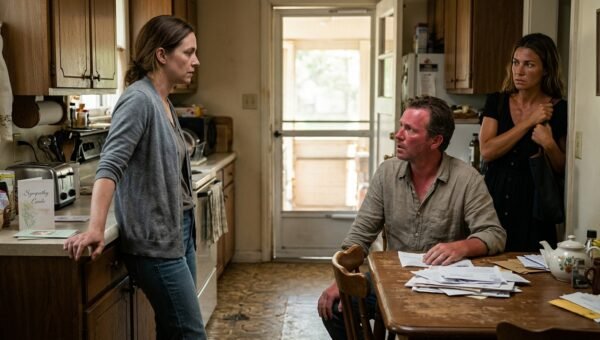
On Wednesday, Arthur stopped by my closet. He had seen me holding the card, though I hadn’t told him what it said. He told me the district would rather I resign than make the hearing public. I said I’d think about it. That was true. I was tired, and I didn’t have much money saved.
After work, I went home and took the shoebox down from the top shelf. Under the receipts was my carbon copy of the old request. The yellow paper had softened at the folds. The stamp across the bottom read: “DENIED: LIABILITY / FOOD HANDLING RISK.” It was signed by the district office in 2017.
I sat at my kitchen table with the memo beside the grocery receipts. The total came to more than $6,200. I checked the math, then checked it again, though I knew it wouldn’t change. It was a lot for me. It was also the cost of keeping the bags going without asking anyone to look at the children who needed them.
That was when I took Maya’s card out of my pocket. I’d kept meaning to read the rest. I don’t know why I put it off. Maybe I thought the first part was enough.
The card said, “Every Friday, your brown bag is the only reason my little brother and I had dinner on Saturdays.” She’d added that her brother’s name was Tommy, and that he used to save part of the sandwich for Sunday morning. I read that part twice. I didn’t know what to do with my hands, so I set them flat on the table.
I’d thought I was giving each child a little help for the weekend. I hadn’t known a bag could be divided that way, or that one sandwich might need to last past Saturday. I was ashamed of how little I knew, and ashamed that I had kept the whole thing to myself. The bags had been quiet, but the hunger wasn’t small.
On Thursday, Maya’s mother, Elena Cruz, came to the school office after work. I wasn’t there when she first arrived, but Arthur told me what happened. Maya had cried at home over the hearing, and Elena asked why. When she found out the food had come from me, she demanded to speak to Principal Vance.
Elena works double shifts. There had been months when she was dealing with hospital visits and trying to keep up with bills at the same time. She had thought the school bags came from a program. When she learned I had paid for them myself, she got angry. Not at me, Arthur said. At the district.
She called two other parents whose children had taken bags. They agreed to come with her to the hearing. Elena also asked Maya if she wanted to come. Maya said yes.
Friday afternoon, the hearing started at one. The room was too cold, and the plastic cup of water in front of me had a crack near the rim. Principal Vance sat across from me with an HR staff member. Mrs. Jensen was there too. Arthur took the chair beside mine.
Vance described the district’s food-handling rules. HR brought up allergies, unmonitored food, and the risk of a child getting sick. I didn’t argue about the rules. I understood why schools had them. I also understood what it meant to follow them when the official request for help had already been refused.
Vance asked me to sign a statement admitting I had distributed food without authorization. He said it might help the district resolve the matter without termination. I looked at the blank line where my name was meant to go.
“I’m not signing that,” I said.
Mrs. Jensen sat very still. I thought she looked uncomfortable, but I couldn’t read her face. She had seen the bags in her room and made a report. From her side, that was a plain thing to do. From mine, it had brought nine years of hidden work into a conference room as if the children were the problem.
At 1:45, there was a knock. Vance looked toward the door and told someone to come in. Elena entered with Maya and two other parents. Arthur stood to make room. Elena carried several empty brown bags, folded flat, and a yellowed piece of paper.
She set the bags on the table first. Then she put the old denial memo beside them. The paper made a small scraping sound against the tabletop.
Elena said her children had eaten from those bags during stretches when she was working nights and days close together. She said the district had known families were struggling because parents had asked for help. She wasn’t asking anyone to feel sorry for her. She wanted to know why the man who had fed her children was facing termination while the school had refused to make a safe, legal program.
No one answered right away. The air conditioner kicked on. I could hear it, and I could hear Maya’s sleeve rubbing against the chair as she moved closer to her mother.
I brought the shoebox of receipts from under my chair. I had brought it because I didn’t want the district to act like I had made up the years or the cost. The receipts were faded and some had come loose from the rubber band. I put them beside the memo.
Arthur also had copies of the old request and the school’s free-lunch and attendance records. He didn’t claim those records proved every child had gone hungry on weekends. He said they showed the district had known there was a gap and had never fixed it.
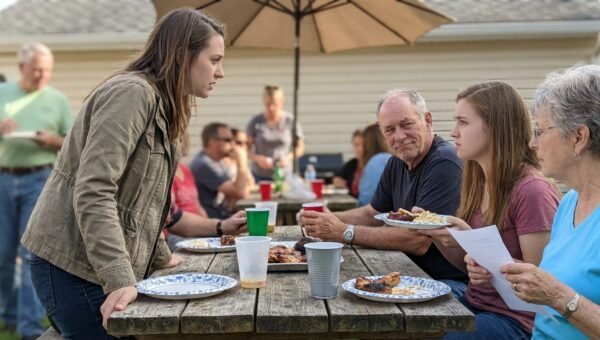
Elena spoke about her children. One of the other parents talked about a Friday when her son came home with food and didn’t ask what was for dinner. Maya stayed beside her mother, holding the card with both hands. The story I had kept private was no longer mine alone.
Mrs. Jensen finally looked at me. Her shoulders had dropped, and she was rubbing the edge of her folder with her thumb. She said she had thought the bags were a safety issue, and she was sorry she hadn’t asked more before filing the report. I believed she meant it. I didn’t tell her it was all right, because it wasn’t all right yet.
Vance looked at the memo for a long time. He had spent years talking about policy and risk as if those words could keep a child fed. Now the old denial was sitting in front of him next to the empty bags. He didn’t have a quick answer.
The district withdrew the charges. My personnel file was cleared, and the termination threat was taken off the table. The board approved an official weekend backpack program with the county food bank. They could follow food safety rules, record allergies, and make sure the food reached the kids without making me pay for it from my wages.
They named it the Rivera Weekend Pantry. I asked them not to put my name on it, but the families wanted it that way, and I didn’t keep arguing. Mrs. Jensen signed up to help stock it each week. She came to my closet afterward and apologized again. I nodded. We both had work to do.
I still work at the school. I still check the cafeteria floor for dropped food and fix the doors that stick. The difference is that I don’t have to hide eight bags behind a row of coats or hope nobody notices me carrying them.
The first Friday the pantry opened, I went to the cafeteria at 2:30. The approved packs were set out in the cubbies, all marked and ready to go. Sun came through the high windows and fell across the brown paper. Maya passed me on her way out. She smiled, then hurried after her friends.
I placed eight district-approved pantry packs into the open cafeteria cubbies. No closet door between me and the children. Just the bags, ready to go home.