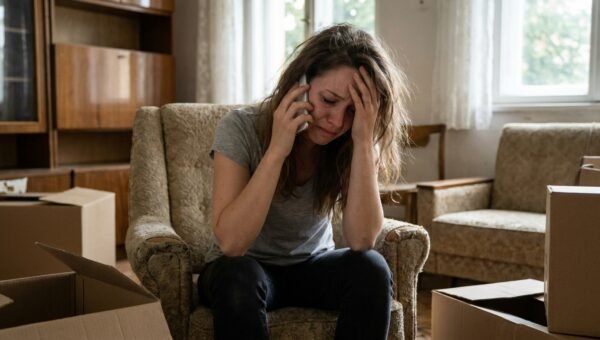
By the seventh night, I was curled under sheets soaked through with sweat, shaking so hard my jaw hurt. I could hear Luca in his home office, the blue light from his two screens showing under the door. I called his name and had to wait a few seconds before I could get the words out.
“I need to go to the emergency room.”
Luca came to the doorway, looking tired in a way that made me feel like I was asking for too much. “You’re probably not in immediate danger, Jessi.
If we go now,” he said, then stopped and rubbed his forehead. “We’ll be there half the night. Let’s wait until tomorrow.”
He’d said that every day for a week. I used to think Luca was the kind of person who’d bring tea and check your forehead before you asked. I can still picture the chipped blue mug he kept for me. But that night I couldn’t lift my head without the room tilting, and my right ankle hurt under the band he’d fastened there.
I called a cab while Luca went back to his screens.
The band was the first thing I noticed when I tried to put on a sock. It was thick and black, with a hard plastic case on the outside and a metal lock that didn’t look anything like a medical clasp. Luca had called it a compression therapy band. He said it could track my temperature and the blood flow in my ankle while I had the flu.
“It’s just a monitor,” he’d told me. “Don’t take it off.”
I’d believed him. I’d even let him lock it on with a little tool from the bathroom cabinet. I didn’t ask why a simple monitor needed a key. I know how that sounds now.
The fever had started the morning after Luca brought the band home. He said he’d gotten it through work and wanted to test it. He was an electrical engineer, and his company made equipment for defense research. He talked about sensors and readings often enough that I’d stopped asking questions.
On the first day, I had chills and a sore throat. Luca made soup, set the blue mug beside me, and said, “You need to stay in bed.” By the third day, I was sweating through my pajamas, and my ankle had started itching under the band.
“Maybe it’s the elastic,” I said.
“It’s not elastic,” he answered. “It’s a medical-grade wrap. You’re probably reacting to the fever.”
I asked him to take it off so I could wash the skin underneath. He told me not to mess with the lock.
That should have been enough to make me wonder. Instead, I was sick and tired and trying not to be difficult. Luca said going to a clinic might lead to extra tests, insurance questions, even a quarantine if they thought I had something contagious. He spoke gently, like he was protecting me from a hassle.
By the fifth day, I couldn’t walk to the kitchen without holding the wall. The skin around the band was red and shiny. I mentioned it again, and Luca looked at it for maybe two seconds.
“It’s pressure from the wrap,” he said. “Don’t scratch it.”
I wanted to believe him. A person can make a lot of excuses for someone they share a home with. I did. I told myself he was worried and didn’t know how bad I felt. I said a small prayer and tried to sleep.
On the seventh night, I reached for my phone and called a cab. Luca was still in the office. I could hear him typing.
“You’re leaving?” he called out.
“I’m going to the ER.”
“Jessi, wait until tomorrow.”
“I can’t.”
He came out then, but he didn’t come close enough to help me stand. His eyes flicked down to the ankle band and back to my face.
“You’ll be fine,” he said. “Just sleep.”
I used the wall to get down the hall and out the front door. The cab driver helped me into the back seat. I remember the cold vinyl under my legs and the driver asking twice if I needed him to call someone.
“I’m going to the hospital,” I said. “Please just go.”
At the emergency room, I couldn’t answer the intake questions in full sentences. The nurse took my temperature, checked my blood pressure, and brought a wheelchair. My fever was high, and they said my blood pressure was dangerously low. A nurse put an IV in my arm while another person asked when I’d last eaten.
“I don’t know,” I said. “Yesterday? Maybe.”
They moved me into a treatment bay. Dr. Aris Vance asked me to lift my pant leg so he could look at the ankle. He cut through my sock with small shears. The sock had stuck to the skin in one place, and when he peeled it back I sucked in air through my teeth.
The skin was swollen and red. There was a deep, wet-looking sore beneath the black case. Dr. Vance stopped moving. He leaned closer, then looked at the metal fastener.
“That’s not a medical device,” he said.
He reached for the call button. “Call security and the police right away.”
I thought he meant because I was in danger from the infection. Then I saw him reading the numbers stamped along the edge of the case. His face had gone very still.
“What is it?” I asked.
“I’m not sure yet,” he said. “But it has a tamper lock and a serial number I recognize.”
He told the staff not to cut into the unit. A security guard came in, then another person in protective gear. They kept talking to each other in low voices, and I could hear the words “alert” and “hazard warning.” A nurse adjusted my IV and told me to focus on her voice.
“I’m right here,” she said.
I held on to that. My ankle hurt, my head was full of cotton, and the fever kept dragging my thoughts away. But I could see the serial number on the band whenever I looked down. It had been under my sock for a week.
Officer Daniel Briggs came in after hospital security. He asked if I knew what the device was.
“Luca called it a compression monitor,” I said. “He put it on me.”
Briggs wrote that down. He asked who Luca was.
“My husband.”
They took the device off after the hospital team had checked it and confirmed it could be handled safely. I was too weak to watch closely. I heard a sharp click, then a soft scrape as they lifted it away from my skin. My ankle felt lighter, but the sore underneath kept bleeding through the gauze.
The serial number was checked against a regional registry. The unit had been reported stolen from the secure lab at Luca’s company during an active internal investigation. The alert said it was a high-grade tracking device, with a tamper-warning system and a hazardous battery notice. I didn’t understand all of it at first. I understood enough to ask what Luca had done.
Briggs didn’t guess. He told me they were still checking the facts.
I was admitted for IV antibiotics. The infection had spread beyond the skin, and the doctors said bacteria had entered my bloodstream. While they treated me, I started remembering things I’d let slide. Luca’s office door had been locked most of that week. He’d asked me to stay in the house, even when I said I needed help. Every time I suggested a doctor, he found a reason to wait.
The device had been tracking my location and sending out a signal. The investigators explained that Luca had altered it to make it look as though he was home during off-hours breaches at work. He’d been suspected of taking hardware from the lab. Keeping the tracker at our house helped him build an alibi: he could claim he was home caring for a sick, quarantined wife.
I kept trying to match that explanation to the man I’d married. The blue mug. The soup. His hand on my forehead the first day. Maybe he’d been scared of getting caught. That didn’t make what he did less wrong.
The hospital had the band. The police wanted to know where Luca kept the key and what else he might have taken. I remembered the small tool he’d used to lock it onto my ankle. It was in the bathroom cabinet, behind the spare toothpaste.
I gave Briggs the location. Then I gave him the access code to Luca’s office computer, which I knew because Luca had once asked me to restart it while he was out. I didn’t know what they’d find there, but I was done helping him keep things hidden.
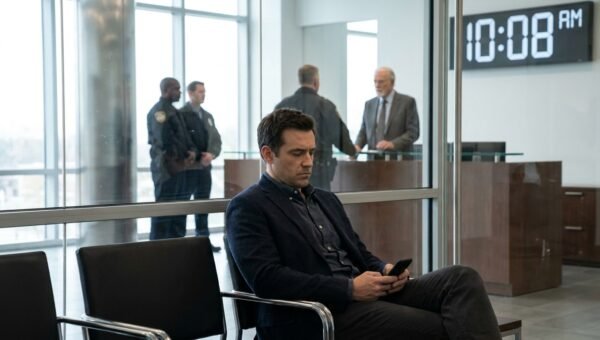
Luca arrived at the hospital later that day. I was awake, though I was still weak enough that sitting up made me dizzy. He came down the hall with his coat still on and asked the desk staff where I was.
“I’m her husband,” he said. “I need to see her.”
A security guard told him he’d have to wait. Luca got louder.
“She’s confused,” he said. “She’s had a fever for days.”
Dr. Vance came over. Officer Briggs was just behind him. Luca looked past them toward my bed.
“Jessi, tell them this is my medical property,” he said. “They don’t know what they’re doing.”
I turned my head toward him. My throat was dry, and my voice came out rough.
“He locked it on my leg,” I said. “He told me not to remove it.”
Luca shook his head, like I’d said something silly. “You don’t understand.”
“I understand you told me to wait seven days.”
He asked them to let him collect the band. That was when Officer Briggs showed him the removed device, sealed in a protective case with the serial number facing out.
Luca stopped talking.
Briggs asked if he wanted to explain why stolen company equipment had been locked onto me. Luca said he was trying to protect his work and that the device was only supposed to be temporary. He said he hadn’t known the lock would hurt me.
I remembered the way he’d looked at my ankle and told me to leave it alone. “You knew it was hurting,” I said.
The officers arrested him there for aggravated reckless endangerment and possession of stolen contractor assets. I didn’t make a scene. I didn’t tell them to go easy on him. I watched him being led away, and I felt bad for him for about three seconds. Then I remembered the cab ride, and the way I’d had to drag myself out of the house.
The police found more evidence on Luca’s work drive and in his office. He was denied bail because of concerns he might flee while the hardware theft case was being investigated. His company fired him. The marriage was over before I left the hospital, though the paperwork took longer.
A social worker helped me contact a family law attorney. I signed a statement for Officer Briggs and asked for an emergency protection order. I told the lawyer I didn’t want Luca calling me or coming to wherever I went next.
The antibiotics brought the fever down, but the sore on my ankle took time to heal. I needed physical therapy to get my strength back and help with the stiff skin around it. I moved into a small place where Luca didn’t have a key. For a while, I still reached for my phone when I heard a car outside.
I don’t say I forgive Luca. Maybe someday I will, maybe I won’t. Forgiveness isn’t the same as giving someone another chance to hurt me. I know that now, even if I wish I’d known it before I needed a cab.
The morning I was discharged, the light was coming through the blinds, and the room was quiet except for the monitor beside my bed. My ankle was bare against the clean white linen. The screen showed 98.6 degrees.