PART 1
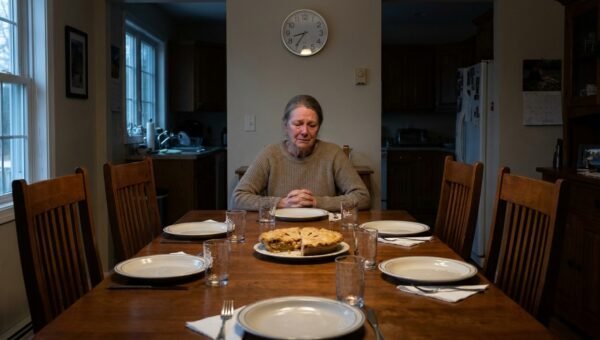
The envelope from the county recorder office sat on my kitchen table for three days before I opened it. I kept walking past it, wiping down counters, watering the African violet by the window, telling myself it was just another tax assessment or some flyer about sewer line insurance. I am sixty-eight years old, and since my husband Arthur passed away five years ago, official mail always feels like bad news waiting to be read.
When I finally slit the top open with a butter knife, the letter stated that a secondary lien had been recorded against my property for thirty-two thousand five hundred dollars.
My vision narrowed. I sat down at the Formica table because my knees felt suddenly hollow. Arthur and I paid off this three-bedroom ranch in Ohio thirty years ago. We scraped and saved through factory layoffs and bad winters so that when we got old, nobody could ever take our roof from over our heads. We didn’t have pensions, but we had this house.
Six months ago, my forty-two-year-old daughter Chloe sat right across from this table crying into a mug of coffee. She told me her boutique downtown was drowning under back taxes and high supplier bills. She begged me to help her secure a small personal loan, swearing up and down that her business was just one good quarter away from turning the corner.
I told her I couldn’t risk a loan against my fixed income. I remember my exact words. I told her, Chloe, I can help you with groceries or chip in five hundred dollars from my savings, but I cannot put my home on the line.
She looked me in the eye, squeezed my hand, and said she understood completely. She said she would figure something out with her bank or find a silent partner. We hugged, and she told me she loved me.
Now, holding this official county document, I looked at the signature block at the bottom of the attached disclosure statement. There was my name, shaky and cramped, and right beside it was a notary stamp from the UPS store down the road where Chloe used to work part-time.
I didn’t call the police right away. I didn’t even call Chloe. I walked to the hallway closet, pulled down the heavy metal lockbox Arthur bought at a hardware store back in 1998, and dumped the contents onto the bed.
Among the insurance policies, old tax returns, and my birth certificate, I found the folder containing the home equity paperwork Chloe had brought over for me to sign when I had the flu back in November.
She had told me they were medical release forms and power of attorney papers just in case I needed someone to make healthcare decisions while I was sick in bed with the bronchitis. I trusted her. I didn’t put on my reading glasses. I just signed where she pointed her red manicured finger.
The house was quiet, save for the hum of the refrigerator. I picked up my landline phone, hands shaking so badly I dropped the receiver twice before I managed to dial her number.
She picked up on the third ring, her voice bright and rushed. “Mom? I’m right in the middle of inventory. Can I call you back?”
“Chloe,” I said, and my voice sounded like dry paper. “You need to come over here right now. Bring the rest of the loan paperwork. All of it.”
There was a sharp silence on the other end of the line. The bustling background noise of her shop vanished instantly.
“Mom, what are you talking about?” she asked, her voice dropping an octave into that defensive whine I used to hear when she was twelve and caught lying about her chores.
“I am holding the lien notice from the county,” I told her, my chest tightening with a cold, heavy pressure. “You have twenty minutes. If you aren’t at my front door, I am calling the sheriff and filing a report for forgery and elder fraud.”
The line went dead with a sharp click before she could answer.
PART 2
Chloe didn’t take twenty minutes. She pulled her silver SUV into my driveway twelve minutes later, tires crunching loudly over the gravel. I watched her through the sheer kitchen curtains. She sat in the driver’s seat for a full minute, hands gripping the steering wheel, staring straight ahead before she finally opened the door.
When she walked through the back screen door, she didn’t look like a successful business owner. Her hair was pulled back in a messy clip, and her coat was buttoned crooked. She walked straight to the kitchen table, her purse clutched against her chest like a shield.
“You shouldn’t have gone through my business files,” she started, her voice defensive and high-pitched. “You’re making a mountain out of a molehill, Mom. It’s just a temporary bridge loan. The commercial real market is shifting, and once my spring line drops, I’m going to refinance the whole thing out of your name. You were never actually at risk.”
“At risk?” I stood up from the table. For the first time since Arthur died, I didn’t feel old and fragile. I felt cold clear through. “Chloe, you forged my signature on a legal instrument to borrow thirty-two thousand five hundred dollars against my unencumbered home. If your boutique fails, and it has been failing for three years, the bank takes my house. Where was I supposed to live? In your stockroom?”
“I was desperate!” she shouted, slamming her leather purse onto the Formica counter. The coffee mugs rattled in the cupboard. “You have this house sitting here completely paid off with no mortgage, and I was about to lose everything I built. My whole life is in that store! Is a little piece of paper really more important to you than your own daughter?”
“It isn’t a piece of paper, Chloe. It’s my security,” I said, my voice dropping until it was almost a whisper. “Your father worked fifty hours a week at the stamping plant for thirty-eight years so I wouldn’t have to worry about where I’d sleep when I got old. And you sat at my kitchen table while I was sick with the flu and lied to my face.”
She crossed her arms, her jaw working furiously. “Well, yelling at me isn’t going to undo it. The loan is already funded. The money went straight to my commercial creditors. It’s done.”
“It’s not done,” I said, reaching for my landline. “I called the county clerk before you got here. They told me that because the notary seal was applied without my physical presence or proper ID verification under state guidelines, we have grounds for immediate fraud invalidation. But the clerk said I have to file the affidavit with the sheriff’s department attached to a formal complaint.”
Color drained entirely from Chloe’s face. Her bravado cracked instantly, replaced by sheer panic. She lunged forward, grabbing my wrist before I could lift the receiver.
“Mom, no! Don’t do that!” she cried, tears finally spilling over her eyelids. “If you involve the police, the bank will call the note immediately. The commercial accounts will freeze. I’ll be arrested for fraud, Mom! Do you want your only daughter to go to prison?”
I pulled my arm back gently, looking down at the hand she had used to guide my pen across those fraudulent papers six months ago.
“You should have thought about that before you stole my name,” I said.
PART 3
I gave her forty-eight hours to start untangling the mess she created.
Those two days passed in a blur of gray rain and silence. I didn’t answer her frantic phone calls on Saturday. Instead, I sat at my kitchen table with my ledger book, listing every contact number for the regional bank’s fraud department and the county title office. My neighbor Dave, a retired postal inspector who lived across the street, came over on Sunday morning with a cup of coffee and helped me review the copies of the lien filing.
“She used a mobile notary service certificate that lapsed two years ago,” Dave said, pointing a calloused finger at the bottom stamp. “This isn’t just an internal family disagreement, Martha. This is felony-level document fabrication. The bank’s internal legal team is going to spot this the moment an audit hits, but if you don’t file the affidavit yourself, they might treat you as a co-signor accessory.”
That afternoon, Chloe pulled back into the driveway, accompanied by her husband Mark, a quiet man who worked for the county road department and usually stayed out of family financial dramas.
When they walked in, Mark looked sick to his stomach. He didn’t sit down. He stood by the back door, holding his baseball cap in both hands.
“Martha, I swear to God I didn’t know,” Mark said, his voice thick with embarrassment. “Chloe told me you agreed to back a small business line of credit. When I saw the papers, she said you had signed them at the UPS store while I was at work. If I had known she forged your signature, I would have stopped it myself. We put our second car up as secondary collateral yesterday. We’re liquidating some inventory from the back warehouse, and we managed to secure a personal consolidation loan through our credit union to cover fifteen thousand of it right now.”
Chloe stood behind him, red-eyed and silent, staring at the floorboards.
“It’s not fifteen thousand, Mark,” I said evenly. “It’s thirty-two thousand five hundred dollars, plus whatever processing fees and interest have accrued over the last six months. My house stays clean, or the fraud affidavit goes to the prosecutor tomorrow morning. Those are your two choices.”
Mark nodded slowly, looking over at his wife with a look of cold disappointment that told me their marriage was facing a reckoning far heavier than my mortgage lien.
“We’ll sell the secondary delivery van and the extra commercial shelving units,” Mark said quietly. “We’ll clear the rest of the balance within thirty days. I’m having the bank draw up the full release of lien paperwork tomorrow, and I will personally bring you the certified receipt showing your title is clear.”
Chloe opened her mouth as if to argue, to plead for more time or a softer penalty, but one look at Mark’s face shut her down. She swallowed hard, wiped her nose with the sleeve of her coat, and nodded.
ENDING
Three weeks later, the official release of lien document arrived in the mail, stamped, sealed, and verified by the county recorder’s office.
Mark brought it over himself on a Tuesday evening, along with a cashier’s check for six hundred dollars to cover the filing fees and the cost of the title search I had to commission.
He didn’t stay long. He drank half a cup of instant coffee, apologized one more time without making excuses for Chloe, and walked back out to his truck.
I took the release papers, walked down the hall, and placed them back inside the heavy metal lockbox in the closet. I locked the lid with the small silver key, listening to the satisfying click of the tumbler falling into place.
The African violet on the kitchen counter was blooming with three bright purple flowers. I picked up the small green watering can, gave the soil a careful splash, and looked out the window at the quiet street where the neighborhood maples were beginning to bud in the spring air. My house was mine again. But the key to the lockbox stayed right where I could see it.