PART 1
The envelope arrived on a Tuesday morning while Arthur was still down at the hardware store. It was a thick, heavy cream-colored packet from the county recorder’s office, addressed only to both of us as joint tenants. When I sliced it open with the kitchen pairing knife, I expected to see our annual property tax assessment or maybe a notice about the drainage easement near the creek. Instead, I pulled out a recorded warranty deed dated three weeks prior, transferring our forty-acre south pasture to a timber company three counties away.
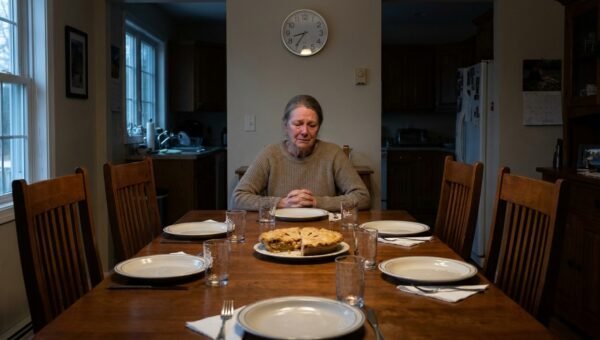
My knees felt weak, so I pulled out one of the ladder-back chairs from the kitchen table and sat down hard. I stared at the signature line at the bottom. Arthur’s signature was there, bold and steady, right where it always was. Next to it was my own name, written in a cramped, shaky handwriting that I knew instantly I had never produced. Someone had practiced my cursive. They had matched the loops on my capital letters and the way I cross my lowercase t’s, but they had missed the slight hitch in the middle of the ‘n’ that I picked up from my mother.
We had lived on this land for thirty-four years. Arthur inherited the homestead from his uncle back when our oldest daughter was just starting grade school, and we spent every summer clearing brush, fixing fences, and building the house room by room with money we saved from my job at the county library.
That south pasture was supposed to go to our daughters when we were gone. It was the only security we had left besides our modest social security checks, and now, according to a legal stamp from the courthouse, it belonged to a corporate lumber outfit for eighty-five thousand dollars.
I didn’t call the police right away, and I didn’t call our daughters. My hands were shaking so badly I dropped my coffee mug on the linoleum floor, and it cracked right down the middle, spilling dark coffee across the white tiles. I spent twenty minutes on my hands and knees scrubbing that coffee up with a dish towel, my heart hammering against my ribs like a trapped bird.
When Arthur walked through the front door at noon carrying a brown paper bag with a ham sandwich from the diner, I was still sitting at the kitchen table with the deed laid flat between my salt and pepper shakers.
He took off his canvas cap, wiped his forehead with his red handkerchief, and stopped dead in the doorway.
He didn’t look surprised. That was the thing that hurt worse than the forged signature or the missing land. He just looked tired, like a man who had been expecting a tedious chore to finally be over.
“You got the paperwork then,” Arthur said, tossing his cap onto the coat hook by the door.
“Arthur,” I said, and my voice sounded thin and small, like a stranger’s voice coming from across an empty room. “What did you do to our land?”
PART 2
Arthur walked over to the counter, set his lunch bag down without opening it, and pulled out the wooden chair opposite mine. He didn’t sit down right away. He ran his calloused thumb along the backrest, staring out the window toward the garden where my tomato plants were just starting to turn red.
“We were drowning, Martha,” he said, his voice low and flat. “You didn’t see the notices coming in from the bank.
The equipment loan on the tractor went south three years ago when interest rates jumped, and I kept rolling it over. If I didn’t clear that title and sell the timber rights and the pasture before the end of the quarter, they were going to foreclose on the whole homestead. House included.”
I stared at him, trying to fit the man sitting across from me with the person who had quietly signed my name to a legal document. “You forged my signature, Arthur. You sat at the kitchen table with a pen and copied my name like a common criminal, and you didn’t even have the decency to talk to me about it.”
“If I talked to you, you would have panicked,” he said, and there was a flash of defensive stubbornness in his eyes that I had seen a thousand times over thirty years of marriage. “You would have said we should fight it, or sell the house, or go talk to a lawyer who would charge us five thousand dollars just to tell us we’re broke. This way, we saved the roof over our heads. The house is clear. We own this kitchen and the yard.”
“For now,” I said, standing up so fast my chair scraped loudly against the floorboards. “You sold forty acres of our family heritage to some corporate outfit for eighty-five thousand dollars, and I’ll bet half that money is already gone toward debts I didn’t even know we had.”
“Most of it went to clear the bank lien,” he admitted, looking down at his boots. “There’s about twelve thousand left sitting in a cashier’s check down at the First National.”
I didn’t scream. I didn’t throw another coffee mug. I walked past him, grabbed my denim jacket off the peg, and picked up my car keys from the ceramic bowl by the front door.
“Where are you going?” Arthur asked, standing up as I reached for the doorknob.
“I’m going to see Brenda at the bank, and then I’m going down to the county courthouse to talk to the district attorney about a forged deed,” I said, looking right into his eyes. “Because if you think you can sell our future behind my back and just ask for forgiveness later, you don’t know me at all.”
He didn’t follow me out. When I slammed the screen door behind me, I could hear him sinking back down into the wooden chair, the wood groaning under his weight.
PART 3
Brenda at the First National bank looked almost as shaken as I was when I laid the warranty deed and the bank statement on her mahogany desk. She had known Arthur and me since our girls were in pigtails, and she handled all our local accounts.
“Martha, I saw the wire transfer come through last month,” Brenda said quietly, adjusting her glasses as she scanned the routing numbers. “Arthur told me you were well aware of the transaction and that you were currently out of town visiting your sister, which was why he brought the paperwork in alone with your signature already notarized by young Toby over at the insurance agency.”
My blood went cold in a different way. “Toby notarized it without me there?”
“He shouldn’t have,” Brenda said, shaking her head. “Toby is young, and Arthur told him you were laid up with a bad hip and couldn’t make the trip down the stairs. It was irregular, Martha. Highly irregular.”
We spent the next two hours untangling the mess. Brenda pulled up the account logs, and the truth came out in cold, hard numbers. The eighty-five thousand dollars from the timber company had hit our joint account, but forty thousand of it had immediately been siphoned off to pay off an old commercial loan from a machinery dealer in the next county—a loan Arthur had taken out five years ago to buy a combine harvester we never actually needed. Another twenty thousand had gone to pay off credit card debts that Arthur had been hiding in a separate post office box in town.
The twelve thousand he claimed was sitting in a cashier’s check? It was actually sitting in a separate account opened solely in Arthur’s name just three days ago.
When I left the bank, I didn’t go home. I drove straight to the county courthouse and sat down across a metal desk from a tired-looking investigator named Miller who smelled faintly of spearmint gum and old paper. I handed him the deed, the bank printouts, and a stack of old cancelled checks from my personal checking account so he could compare my real signature to the forgery on the county record.
Investigator Miller didn’t make grand speeches or promise me swift justice. He just looked at the papers, sighed, and wrote down my phone number on a yellow legal pad.
“A forged deed is a felony in this state, Mrs. Davis,” he said, tapping his pen against the desk. “Once we verify with the notary that you weren’t present, we can file an injunction to freeze that remaining account and start the process to invalidate the transfer. But I have to warn you, once the state gets involved, this isn’t something you can just smooth over at the dinner table. It’s going to tear your family right down the middle.”
“It’s already torn,” I told him, standing up and buttoning my jacket. “Just do your job.”
By the time I drove back up our gravel driveway that evening, the sun was dipping below the tree line, casting long, bruised shadows across the empty south pasture where the timber crews had already started marking trees with bright orange spray paint.
ENDING
Arthur was sitting on the front porch step, staring out at the empty fields with his hands empty and his shoulders slumped. He looked smaller than he had that morning, an old man who had tried to play the hero and ended up destroying the very foundation he was trying to protect.
I parked the Ford beside the pump house, turned off the ignition, and sat in the quiet cab for a long minute. The glove compartment still held a faded photograph of our two daughters sitting on the fence rail in that exact south pasture back when they were little girls, laughing at a stray calf.
I got out of the truck and walked up the wooden steps. Arthur didn’t look up until my boots hit the second board.
“The investigator is opening a file on the forgery,” I said, my voice steady and cold. “And the bank has frozen the remaining funds in your separate account.”
Arthur swallowed hard, his Adam’s apple bobbing in his dry throat. “Are you going to divorce me, Martha?”
I didn’t answer him right away. I reached into my pocket, pulled out the house key I had carried for over thirty years, and laid it gently on the porch railing between us. Then I opened the screen door and walked inside to pack a bag for the motel in town.